Massive prehistoric predator — related to T. Rex — discovered in Kyrgyzstan. See it

While the Tyrannosaurus rex may be the face of Hollywood’s dinosaur dynasty, it is just one species from a large — and dangerous — family.
T. rex come from a group of carnivorous dinosaurs known as theropods that walk on strong back legs and have shorter front limbs, ranging in size from a bird to a 6 ton monster.
Now, that family has gained a new member.
In 2006, paleontologist Aizek Bakirov discovered the first pieces of bones from an ancient animal, according to an Aug. 21 news release from the Staatliche Naturwissenschaftliche Sammlungen Bayerns, or the Bavarian State Natural History Collections.
Based on the rock deposits at the western Kyrgyzstan mountain site, it was determined the bones were from the Middle Jurassic period, around 165 million years ago, researchers said.
The site was then excavated over the course of 17 years, and both Kyrgyz and German researchers uncovered skull bones, vertebrae, parts of a shoulder and forelimbs, teeth and an almost complete pelvic girdle from two different animals of the same species, according to a study published Aug. 21 in the Zoological Journal of the Linnean Society.
Most important, the researcher teams discovered large back limbs, according to the release, suggesting that the massive animal was between 26 and 30 feet long.
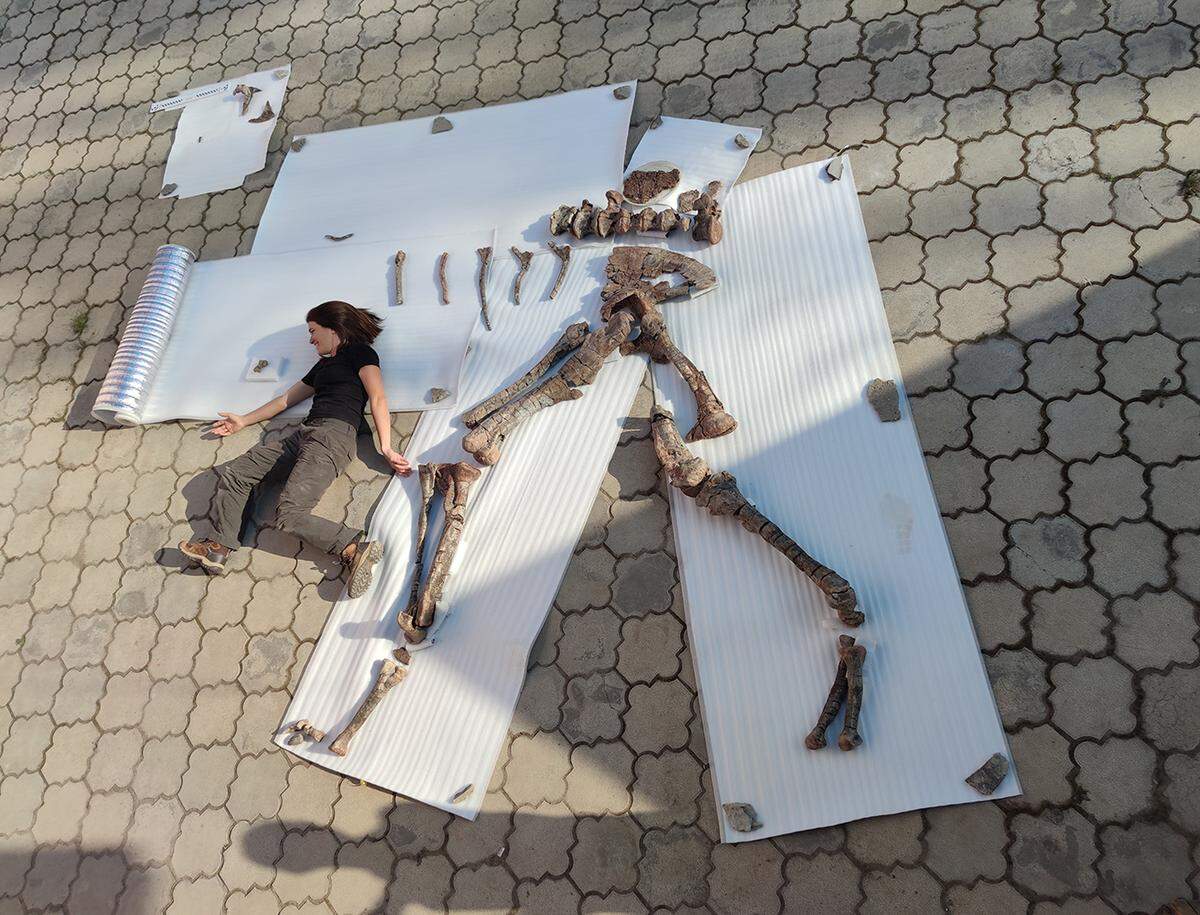
When the bones were compared with other known theropods, they didn’t match. It was a new species.
“Examination of the internal bone structure revealed that the large specimen was an almost adult, at least 17 years old and certainly already sexually mature, while the smaller individual is a juvenile,” according to the release. “Maybe a parent animal was on tour with its young 165 million years ago.”
The animal is not only a new species but also the first in its genus.
It has been named Alpkarakush kyrgyzicus, honoring the place it was found, according to the study.
Alpkarakush is “a mythological large bird that often comes to the help of heroes in critical moments in the ‘Manas’ (epic), one of the central mythological elements in Kyrgyz culture,” researchers said.
Researchers said the new species can be easily identified by its “impressive” and “extremely protruding” post-orbital bone, or the bone behind the eye opening that acts as the “eyebrow.”
Evidence on the same bone suggests a horn would have stemmed from just above the eye on both sides of the head, researchers said.
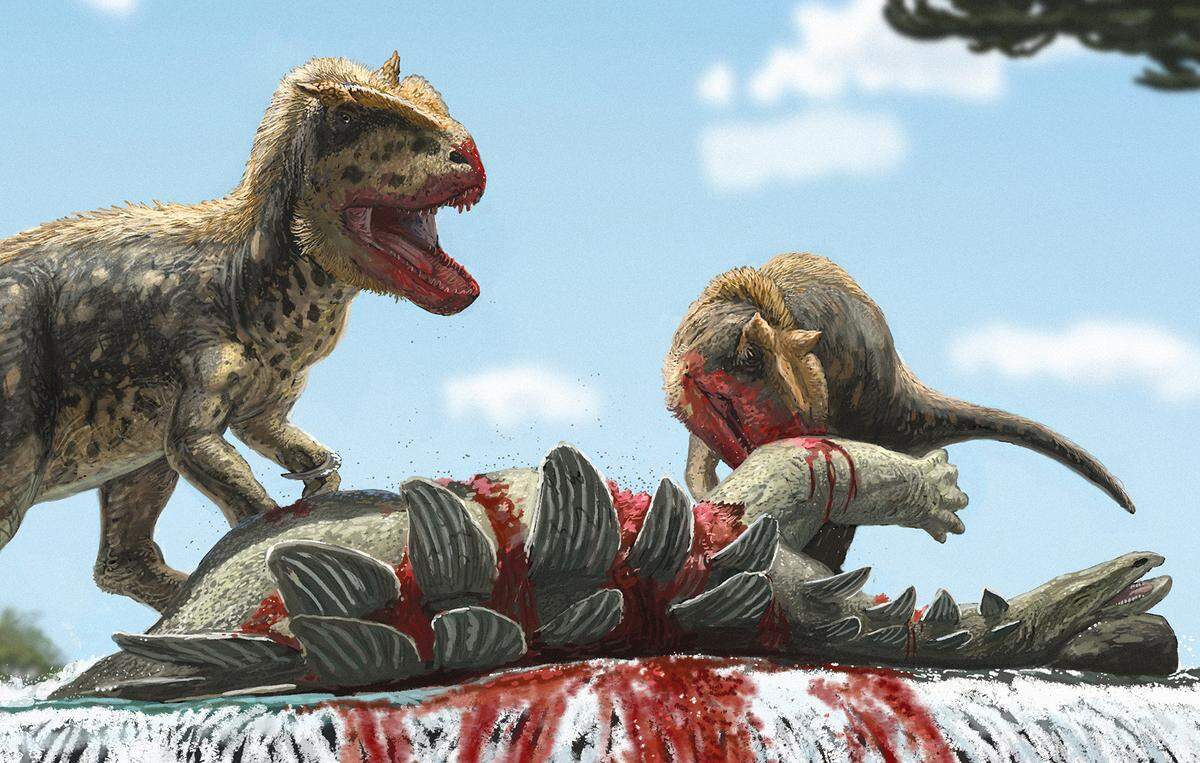
Within the theropod group, A. kyrgyzicus belongs to the me-triacanthosaurids, predatory dinosaurs from East Asia, researchers said. Paleontologists believe this group originated in the east before spreading across Asia and into Europe.
“Although the affiliation of Alpkarakush with the metriacanthosaurids is not necessarily a surprise, this discovery closes a huge gap in our knowledge of the Jurassic theropods. It leads us to important new insights into the evolution and biogeography of these animals,” lead author Oliver Rauhut said in the release.
Despite being distantly related, A. kyrgyzicus and T. rex lived tens of millions of years apart and in different regions of the world.
The new species is the first theropod to be found in Kyrgyzstan, and if displayed, would be the first original dinosaur skeleton from the country to be exhibited.
The bones were discovered outside the town of Tashkumyr in western Kyrgyzstan, near the border with Uzbekistan.
This story was originally published August 22, 2024 at 12:48 PM with the headline "Massive prehistoric predator — related to T. Rex — discovered in Kyrgyzstan. See it."