
Prehistoric new species — predator of the skies — may be crucial ‘missing link.’ See it
As a small mammal foraging around in the leafy undergrowth during the Jurassic period, you would always be on the lookout.
Reptilian predators were everywhere during the age of the dinosaurs, but the biggest threat wouldn’t come from the ground.
It was flying.
Pterosaurs were species of prehistoric reptiles with winged bodies and beak-like mouths capable of snatching small animals and insects off the ground. Some pterosaurs — “the first animals after insects to evolve powered flight” — were as big as an F-16 fighter jet, and others were barely the size of a paper airplane, according to the American Museum of Natural History.
Pterosaurs haunted the skies for millions of years, beginning around 200 million years ago.
But the pterosaurs that lived at the beginning of the Jurassic period look different from those alive 55 million years later, according to a July 4 study published in the journal Palaeontologia Electronica.
Now, a researcher has discovered a species new to science — and possibly the “missing link.”
A “unique and extraordinarily preserved complete skeleton” of a pterosaur was discovered in the Bavaria region of Germany in 2011, according to the study, and researcher Frederik Spindler, from the Dinosaurier Museum Altmühltal in Denkendorf, Germany, believes it belonged to a pterosaur during the late Jurassic period.
Soon, however, he noticed that something was different.
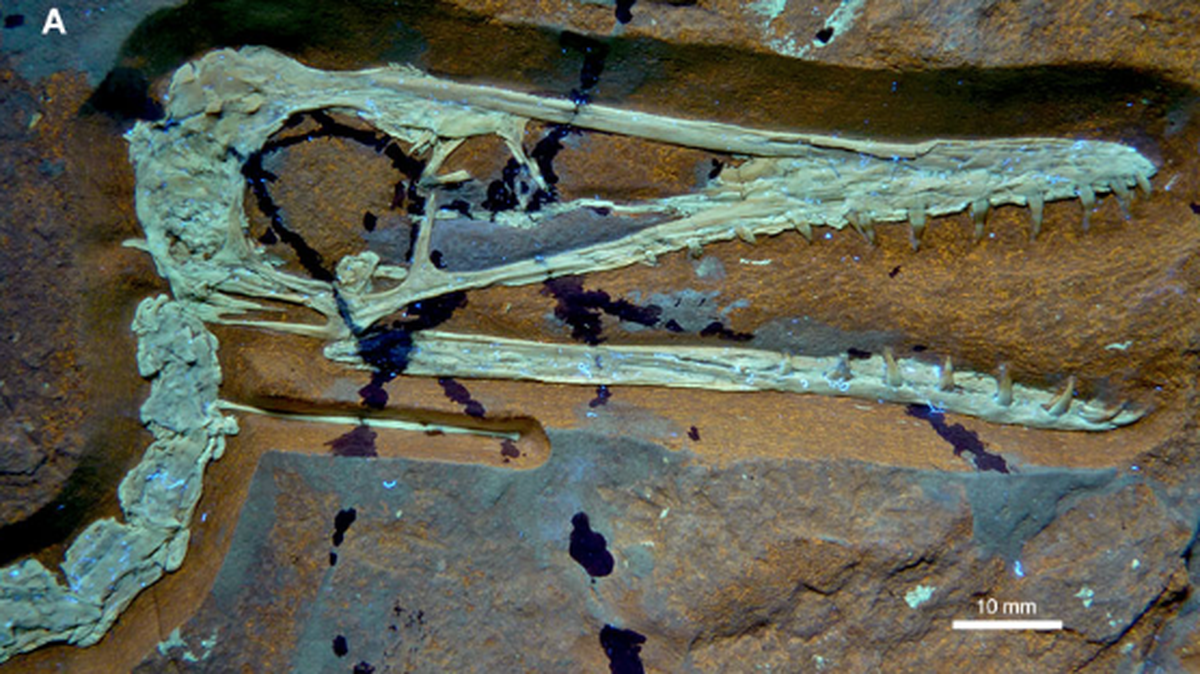
“Fossils found in Upper Jurassic limestones from Bavaria are frequently auto-fluorescent,” the study author said, so by shining a specific light over the fossils, Spindler said could get a more accurate picture of the animal.
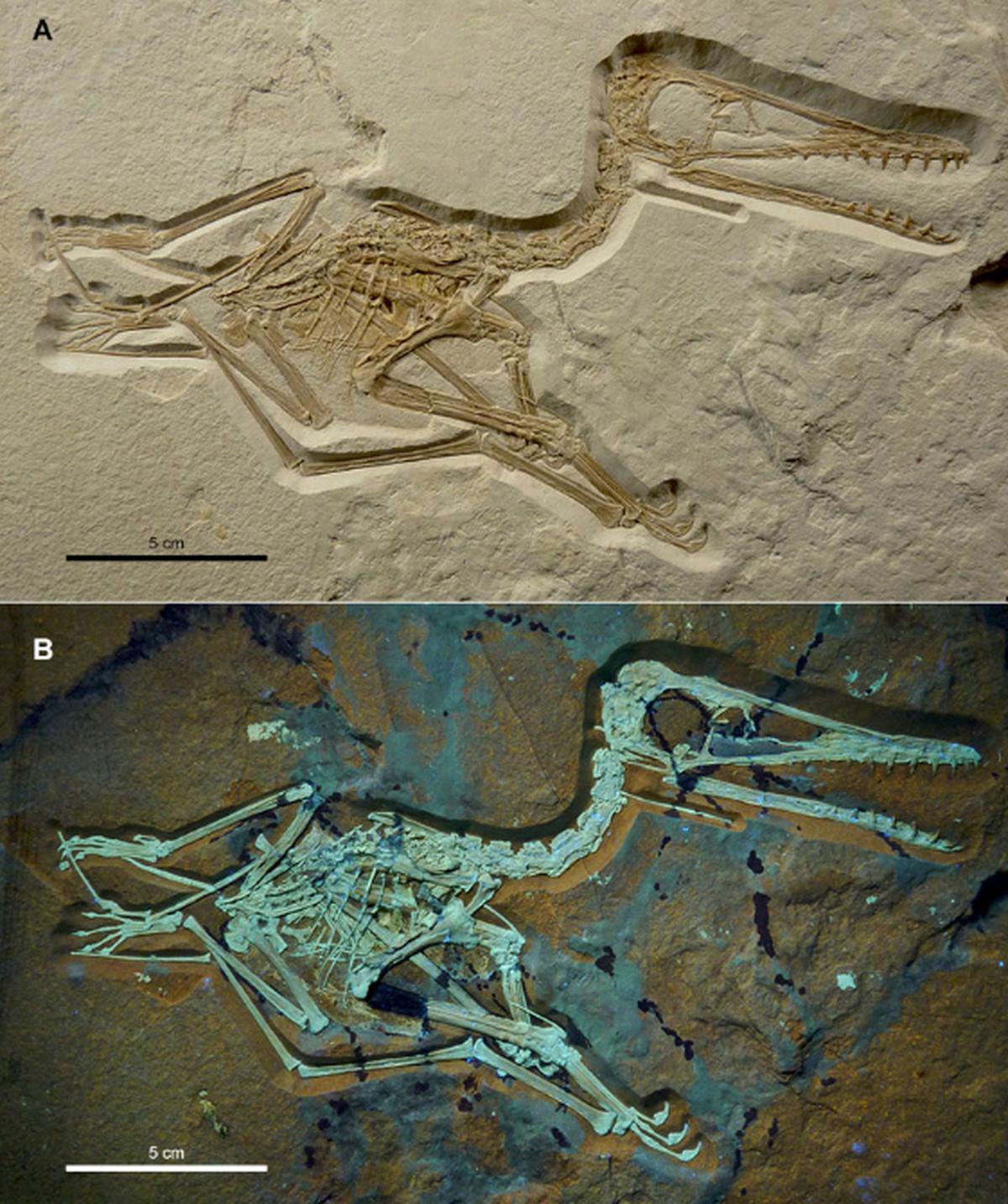
Despite the suspected age of the pterosaur, it had some physical features that more closely resembled species that lived millions of years earlier, according to the study.
The species had “the stiff tail and foot-attached wing of the oldest pterosaurs with the long neck and one-holed skull of later pterosaurs,” the journal said in a July 23 Facebook post.
With attributes from both, it’s likely that this species was a step in the evolution that occurred during the Jurassic period, according to the study.
It was described as a new species, Propterodactylus frankerlae, meaning “forerunner” and honoring Petra Hahn (born Frankerl), the wife of Stephan Hahn who discovered the fossil, according to the study.
Spindler believes that changes to the pterosaurs’ skulls likely came first as multiple holes in the skull merged into one, followed by changes to the way the animals fly as the wings no longer attached to the body at the feet.
The new species also had the “stout tooth crowns” of early pterosaurs, according to the study.
Spindler said changes in the jaw to make it easier to catch fish also likely evolved during this time, into a “somewhat pasta tong-like jaw.”
Pterosaurs “do not fit into straight evolutionary trends, but appear more mosaic-like,” Spindler said, and changes to the skull, jaw and wings were likely driven by a changing diet.
The fossil was found in Painten, in southeastern Germany.
This story was originally published July 25, 2024 at 5:48 PM with the headline "Prehistoric new species — predator of the skies — may be crucial ‘missing link.’ See it."
