‘Large’ dinosaur discovered along cliffs of Normandy. See the new ‘dragon’ species
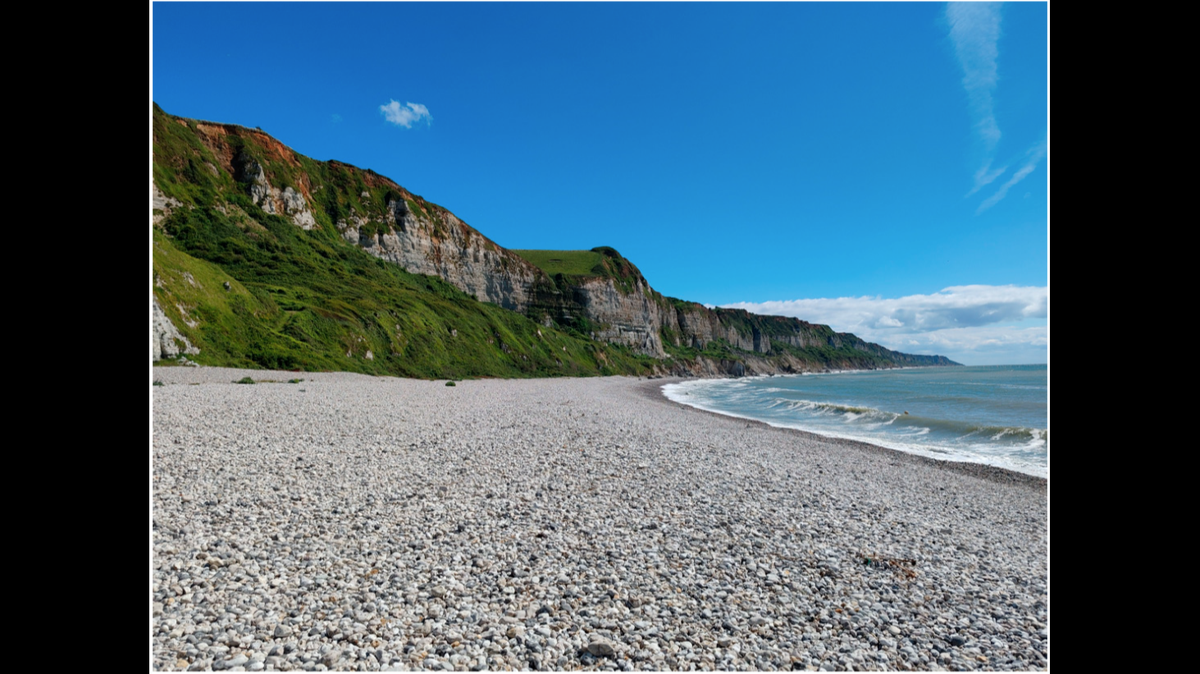
The northern beaches of France are no stranger to making history.
Now, a new discovery has been made along their chalky cliffs — and it’s prehistoric.
During studies on the geology of the area and the potential life that lived at the same spot millions of years ago, researcher Nicolas Cottard found two blocks of stone, according to a study published Aug. 19 in the journal Fossil Studies.
The first, found in 2021, contained fossilized bones that looked as if they belonged to the back end of a large animal, according to the study. The second, found in 2023, had more bones from the same creature from the front of its body.
Cottard donated the pieces to the Muséum d’histoire naturelle du Havre, without knowing what he had just discovered.
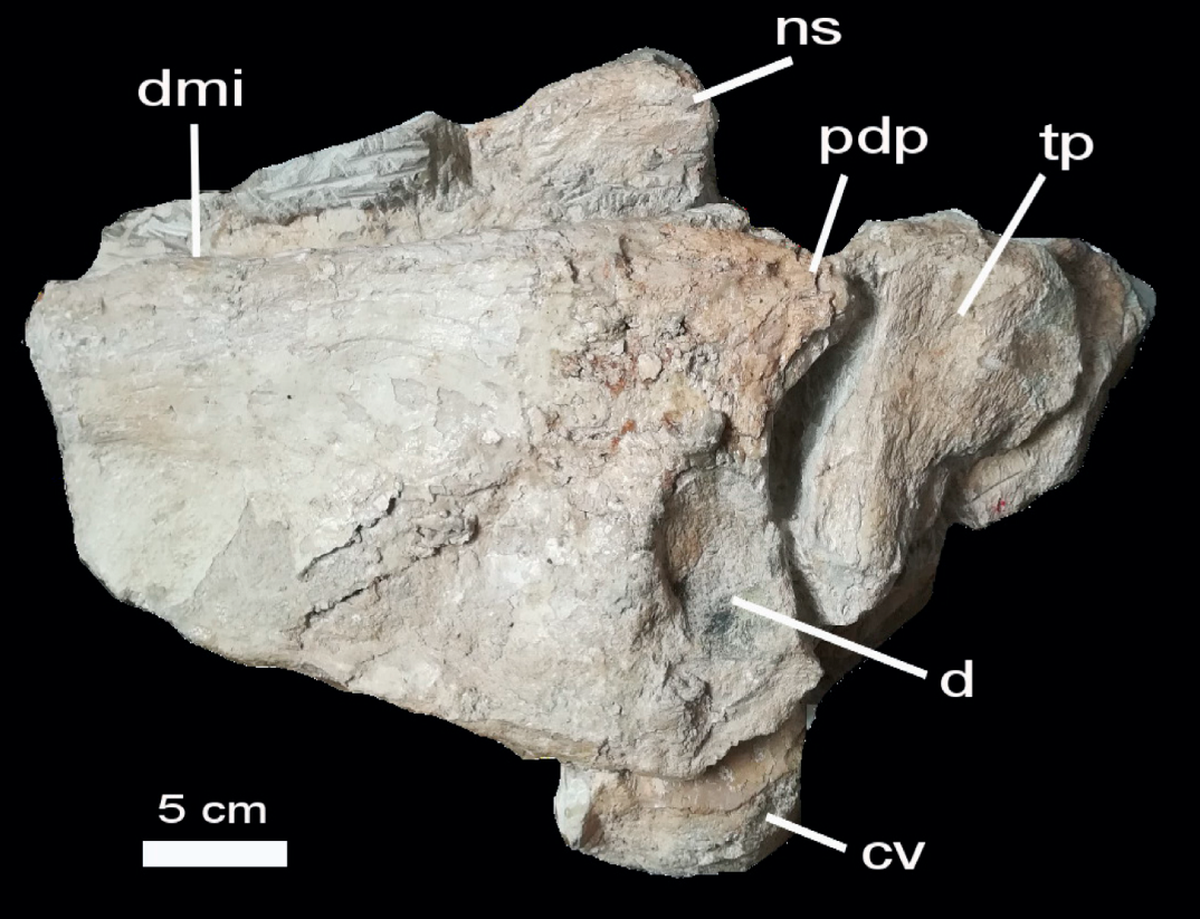
The bones were chipped from the stone and examined by researchers, who identified a sacrum (a triangular bone at the bottom of the spine that connects to the pelvis), two ilia (the sides of the pelvis), a first caudal vertebra (a bone at the very bottom of the spine) and an isolated tooth, according to the study. There were also some poorly preserved bones that might have been ribs, researchers said.
When they compared these bones to other known species, they didn’t quite match.
The tooth was also in an odd location, researchers said. The “blade-like” shape was found close to the pelvis in the block of stone, which researchers said was unusual and could be interpreted one of two ways.
“Either it belongs to the same individual as the postcranial bones, which implies that it was detached from the jaws and somehow became displaced to its present position during fossilization,” according to the study, “or it belongs to another individual that consumed the carcass, either as a predator or a scavenger.”
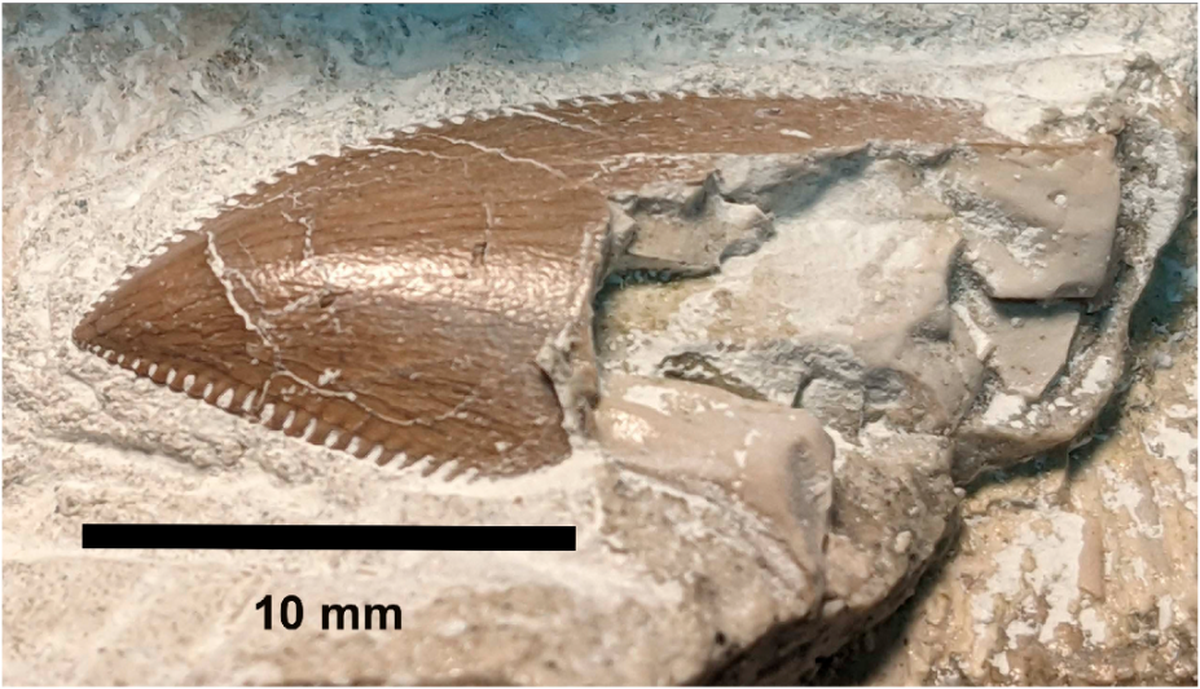
The creature would have been on the bottom of the prehistoric Chalk sea for quite some time, researchers said, so the tooth would likely have had to be stuck deep enough into the body of the animal to remain with it through fossilization, and cannibalism has been documented by a large prehistoric predator before.
The bones belonged to a new species of abelisaurid theropod, according to the study, and a “large” one.
Caletodraco cottardi, the new species, was a big predatory dinosaur that walked on its back two legs and had short front limbs, according to the study.
Its name refers to the Caleti, a Celtic tribe that once lived in the same region of Normandy, and draco, meaning dragon in Latin. It also honors the original discoverer, Cottard.
By using the size of the bones, researchers estimate the dinosaur was about 20 feet long, what they considered a “middle-sized abelisaurid.”
Caletodraco cottardi lived at the beginning of the upper Cretaceous era, around 101 million years ago, according to the study.
“The discovery of (the new species) shows that dinosaur remains, although exceedingly rare, do occur in the Chalk of the Anglo-Paris basin and that a careful search for fossil vertebrates in these marine formations can yield surprising and important results,” researchers said. “... C. cottardi is one of the earliest known (of its kind) and its occurrence in Europe leads to reconsider biogeographical history of this group of theropods.”
The fossils were discovered at the Chalk cliffs at Saint-Jouin-Bruneval in Seine-Maritime, Normandy, France, on the northern coast of the country along the English Channel.
This story was originally published August 20, 2024 at 11:08 AM with the headline "‘Large’ dinosaur discovered along cliffs of Normandy. See the new ‘dragon’ species."