North Carolina is recruiting 243 jobs projects. It’s his job to close the deals.

READ MORE
Open Source Conversations
Business and tech reporter Brian Gordon talks to leaders of some of the most influential institutions in the Triangle to learn how they’re handling challenges, including state and federal funding cuts, while still serving North Carolina and beyond.
Expand All
Even the state ranked No. 1 for business loses more jobs projects than it wins.
Competition for new factories and corporate offices is fierce as rival states top each other with incentive offerings. Still, it is the job of Christopher Chung to keep North Carolina’s batting average high.
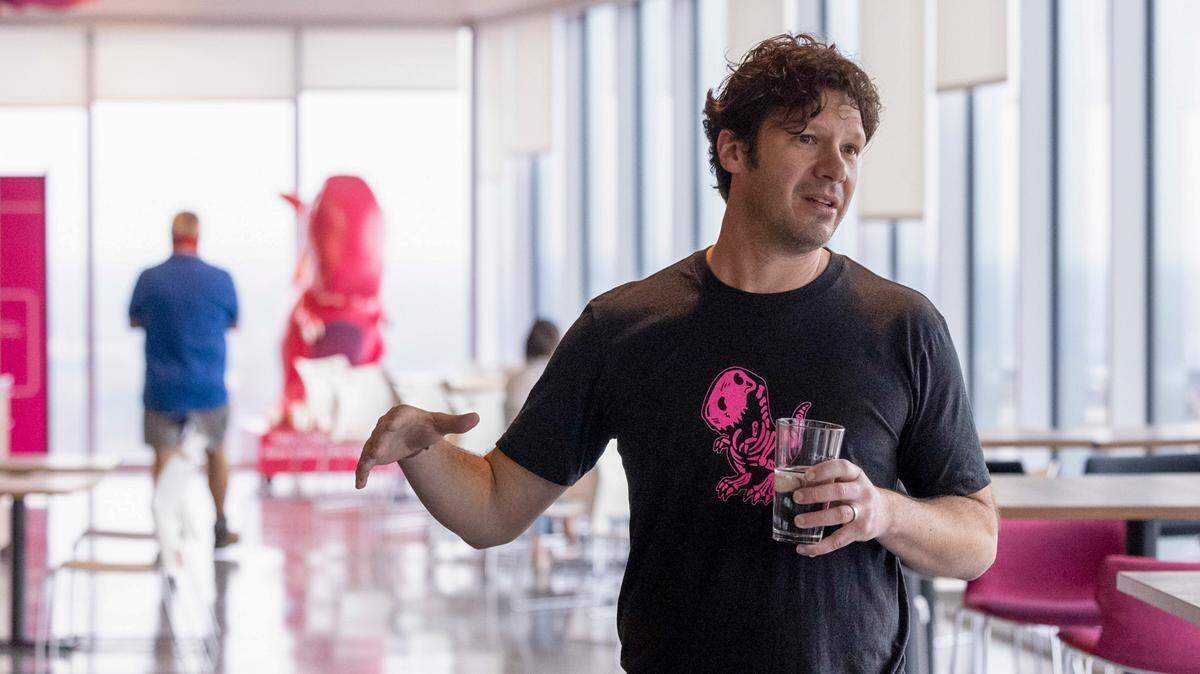
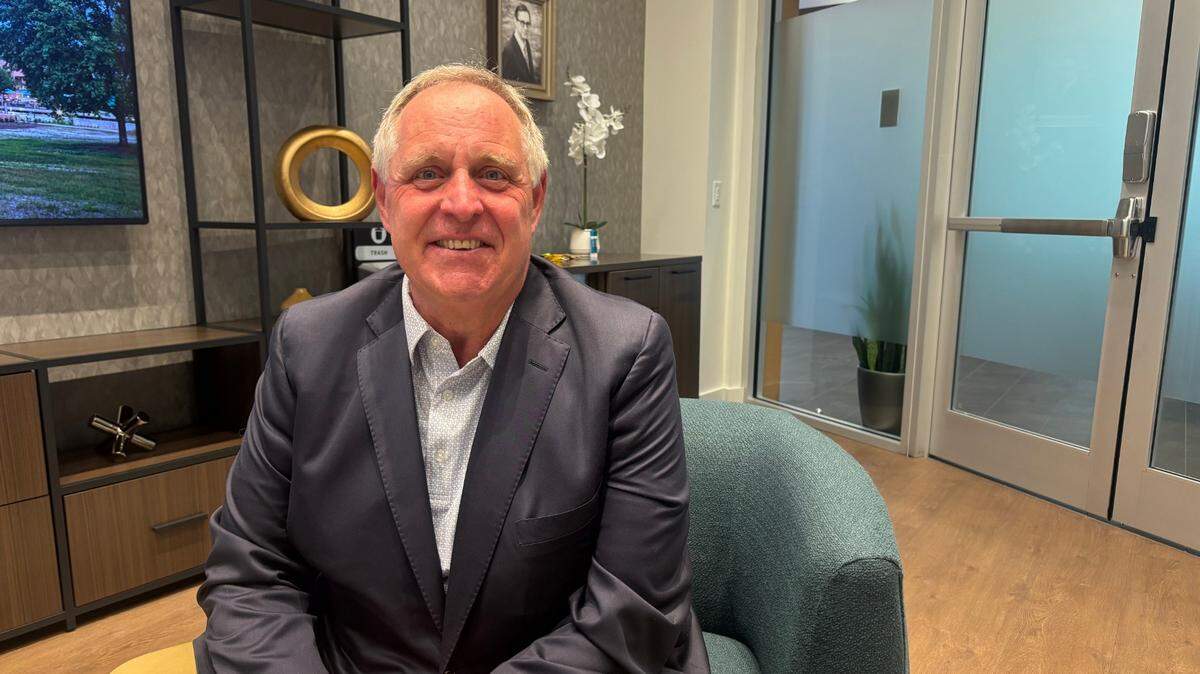
Chung is the CEO of the Economic Development Partnership of North Carolina (EDPNC), a public-private group that attracts new companies and encourages existing companies to expand in the Tar Heel State. Last week, his team celebrated North Carolina again topping CNBC’s annual list of best states for business.
In an interview with The News & Observer the next day, Chung shared how many $1 billion-plus projects the state is now recruiting, what the transition from Biden to Trump has meant for clean energy jobs, and the number one reason companies pick other states over North Carolina.
The conversation has been edited for clarity and length.
N&O: Top line pipeline numbers. How many jobs projects is North Carolina competing for? How many of those projects promise an investment above $1 billion?
Chung: So, it’s 243 active projects right now that we’re working together with the Commerce Department and our local partners. About three-quarters of those are business recruitment deals where it’s a company that doesn’t have a presence here today that we’d be trying to attract. The other quarter of the deals are incumbent employers that we’re working with on a potential expansion in their existing operations.
N&O: What’s a ballpark sort of success rate that you all hope for?
Chung: If it’s an existing employer expansion, I would say we probably win two out of every three of those, or greater, because you’ve got a little bit of that power of incumbency, so to speak. You don’t have to convince them about what the business climate and workforce are in North Carolina.
So it’s not as much of a jump ball as it would be where a company is contacting half a dozen states and saying, ‘Hey, we’ve got this factory we’ve got to put somewhere, and we’ll entertain offers from this dozen states that could be a fit.’ I would say we’re having a really good year if we can bat .250 to .300 on those business recruitment deals.
N&O: We were ranked number one in business, so I imagine we have a pretty successful hit rate. But when we do get dumped late in the process, and the companies do explain why, is there a common reason?
Chung: We used to lose a lot more commonly due to incentives, where another state just put a more robust incentive package on the table. But I will say, full credit to both the executive branch and the legislature for making us much more competitive over the past decade when it comes to incentives. Both our off-the-shelf tools like the JDIG program, as well as, when necessary, special legislation that’s done to (support) the really big deals. So I see (incentives) come up much less often today as a reason. (The Job Development Incentive Grant program is the state’s primary tool for attracting new businesses. It usually provides a substantial tax credit if the new company meets investment and hiring goals.)
I’d say that the number one reason still continues to be there’s a better site somewhere else. It just fits the needs (of a company) a little bit better than what we have available here in North Carolina today.
When our folks close out projects as losses, they have a dropdown menu, and they can say what reason best explains this company’s decision to forgo North Carolina. And the number one reason is usually in that real estate category.
Trump policy shifts and tariffs
N&O: You’ve talked about how federal policy helped influence the number of clean energy jobs we were getting during the Biden administration. Has that pipeline completely dried up and now it’s defense and other things? How have you seen the administrative change change the pipeline?
Chung: There are really two sectors where that kind of shift in the federal policy landscape would show up on our doorstep, and that’s the automotive sector, because so much of automotive investment in recent years has been around electrification and all the supply chain that goes into EVs.
The other sector is just clean energy, writ large, and that could be everything from solar panel assembly to hydrogen fuel cell systems or nuclear SMR component, wind turbine part manufacturing.
Right now, if I’m looking at these 243 active projects, the top sector for these deals is life sciences. That’s about 15% of our project activity is attributable to something like biotech, pharma, medical device, that sort of thing. But the next biggest category is still energy.
Energy had been the biggest sector for a while. Now it’s still second biggest, but that is one spot down from where it had probably been for most of 2024.
N&O: Do you sense any nervousness among companies that announced North Carolina projects that were inspired or propelled by Biden-era federal policy?
Chung: I think uncertainty is never good for any company. And so in that limbo period where companies aren’t sure what becomes the law and when and what doesn’t — that kind of uncertainty can actually be worse than actually just knowing, OK, there’s legislative or there’s not legislative support for these programs.
We talked with one project a little bit earlier this week, and they have not initiated construction yet on what they had announced here in the past couple of years. And it was basically a status check conversation for us to understand, where are they on their timetable. Do they still plan to move forward? And at least in this one anecdotal conversation, they still see a market in the United States long term. And while the incentives are obviously helpful at the federal level, you wouldn’t want to base a project solely on that alone.
N&O: How do you hear tariffs come up in conversations with potential companies?
Chung: I’d say the tariff news was much more salient three months ago. Now that those tariff actions have been postponed a couple different times, I’m sure most of those companies are still wondering where it’s all going to land and what it’s going to look like when it’s finalized, but it isn’t coming up with the regularity in conversation that we had first three months ago before basically just in responding to this unprecedented slew of tariff actions that we’ve never really done as a country.
Now that it’s been three months and none of them has really gone into effect — if anything, it’s been pushed back a little bit to allow more time for these bilateral negotiations — I wouldn’t expect for us to be hearing a whole lot.
N&O: Do you get a sense that tariffs have brought jobs back to the US in some capacity and if so in what types of industries?
Chung: I would say it’s probably a mixed report card so far.
We have seen companies that are exploring the possibility of a U.S. facility in case these tariffs go into effect, they at least have some of the due diligence on how to respond to that.
Then on the negative side of the report card, we’ve definitely seen some companies where the uncertainty, the ongoing uncertainty around this, has caused them to slow down or pause any investment decisions until they get greater clarity around where this is all headed and what the impact is.
How to stay ‘No. 1 for business’
N&O: CNBC has its own metrics, but why do you think we are the best state for business?
Chung: I still think it comes down to workforce and talent. Every industry still depends on having access to the best and brightest human capital, and I think we just have such a strong value proposition around the talent and workforce availability here.
Not just the folks that are coming out of our educational systems and the people who are already working in our industries of the state, but we continue to be this magnet for in-migration of people who move here from the Midwest or the Northeast or California, elsewhere in the Southeast.
.jpg "IMG_5657 (1).jpg")
N&O: What do you worry could keep us from scoring as highly next year?
Chung: CNBC keeps its methodology very guarded throughout the process, which is understandable, so we never know. If we aren’t number one or we drop for whatever reason, we’re always going to try to understand where are we getting dinged on, and are the things we are getting dinged on within the realm that can be addressed by public policy or legislation or something like that, right?
I would say that because talent is what has gotten us in the top five and top three over the years, I’m not worried about that. I hope that all of our policymakers, our legislators, our state officials, continue to focus on what are ways we can produce a workforce that’s as prepared as possible for what industry is looking for.
This story was originally published July 21, 2025 at 5:00 AM with the headline "North Carolina is recruiting 243 jobs projects. It’s his job to close the deals.."