NC Commerce leader says state needs to take ‘shots on goal’ to land big jobs deals
North Carolina Secretary of Commerce Lee Lilley has something to boast about when he attends this week’s International Paris Air Show.
Last Thursday, the Tar Heel state secured the largest jobs project in its economic development history: More than 14,500 positions and $4.7 billion promised at Greensboro’s Piedmont Triad International Airport by the southern California aviation startup JetZero.
The company wants to reimagine passenger aircraft with flatter, wider frames that its founders say will fly more efficiently. But the hard part, Lilley acknowledged, comes next.
“One thing we tell companies, we tell the General Assembly, we tell everyone is that that’s the beginning,” he told The News & Observer the day after the announcement from his office in downtown Raleigh. “We don’t walk away when the project is announced.”
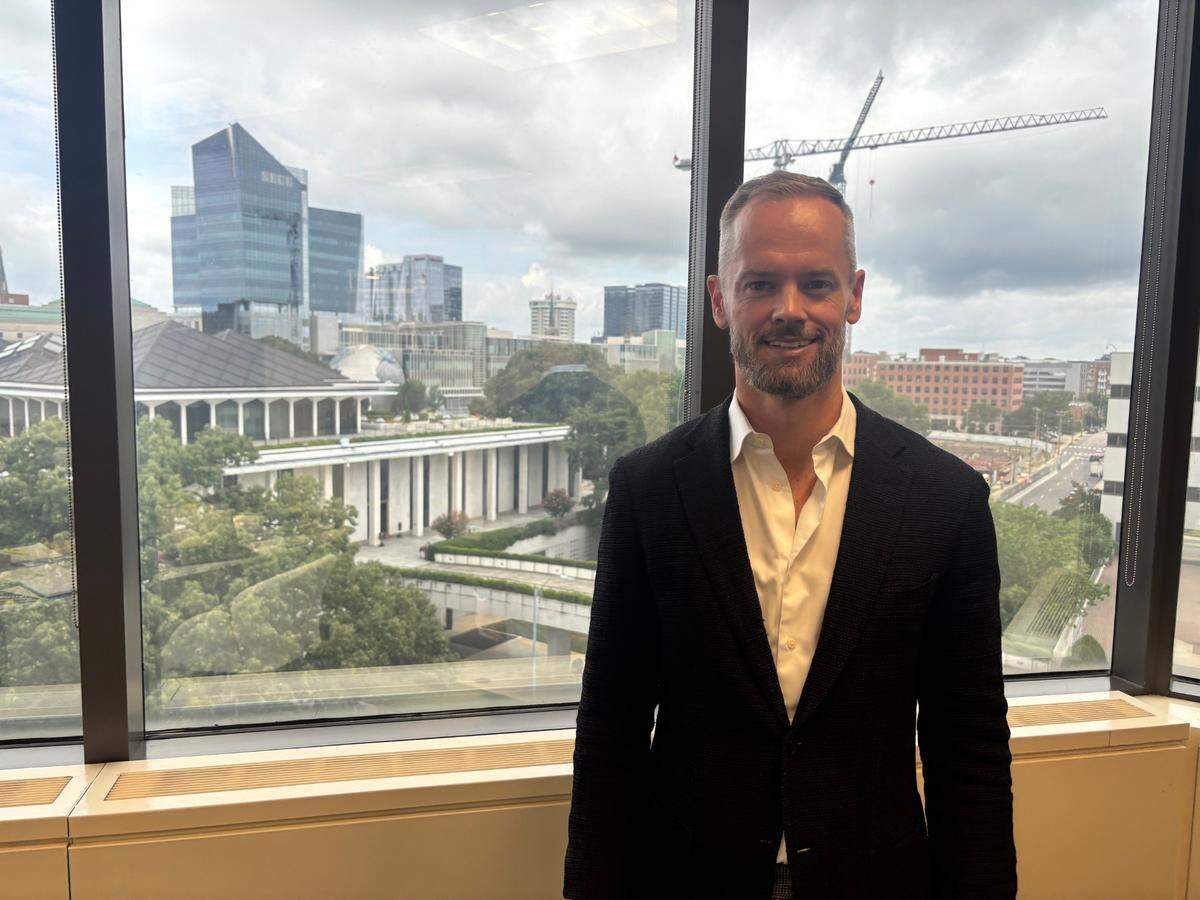
Lilley, a former top economic advisor to Gov. Roy Cooper, is five and a half months into his role as commerce secretary for Gov. Josh Stein. Before heading to France, he spoke with The N&O about JetZero, what companies could be next, how Stein contrasts from Cooper on economic development and the ways business recruitment has shifted under President Donald Trump.
The conversation has been lightly edited for clarity and length.
N&O: Yesterday was not a run-of-the mill large announcement. It’s an eye-popping figure of over 14,000. What sold you on JetZero’s potential to reach such heights?
Lilley: We do a fair amount of vetting for everything that comes through the door. And certainly when we get to the stage where they’re talking about discretionary state incentives, there’s a thorough process in the JDIG (job development investment grant, the state’s main economic incentive tool) where we’re going to evaluate financials and talk to a lot of different people who know a lot about the company.
But on this one, given the scale of it, given the ambition, I think we really wanted to — both sides, JetZero did the same with us — vet who they are and just how legit is this project. And I think during the course of this, we all grew not only comfortable, but really confident in what they’re going to do.
And that involved talking to other players in the industry. Talking to the United States Air Force, which has got a grant with them for about $235 million to say, “You know, do you guys really think that this is as legit as they think it is?” And they said, “Yes. Not only do we think it’s legit. We think this is really where the future is for this space for aircraft production.”
N&O: So it’s a bet on passenger planes looking different going forward?
Lilley: Blended wing design is not a new aerospace design. You can see it flying around in other applications. It’s just never been applied to large passenger travel, whether that’s commercial, which would be the bulk of that, but also potentially in defense.
The other thing I’ll mention, which I think has great synergies for the state, is the outside of this plane is going to be based on a stitch composite, and that’s something North Carolina already knows a lot about because of our textile legacy and our textile innovation and engineering that goes on at the university system.

N&O: This could have promised 8,000 jobs and still been the highest commitment ever. Why not just 8,000, 9,000? How do you come to such a high number?
Lilley: It comes from their own projections about what they will need, and you’ve seen, perhaps, some of the diagrams of what the production facility will look like. The first thing, they’re going to need a lot of engineers. A couple thousand aerospace engineers. That many engineers is just the base of what you’re doing. Then you think about all the techs, you’ll need electricians.
This is an aircraft, if you want to think about a synonymous aircraft, a Boeing 757 or 767, serves this market. It’s got a long range, about 5,000 nautical miles. It’ll be a workhorse plane for a lot of carriers. And when you need a workhorse, you’re going to need to produce a lot of planes. To do a lot of planes with only one production facility, you’ve got to have a lot of bodies.
‘A little bit about shots on goal’
N&O: I‘ve heard you talk about expectations before with some of these job announcements that — due to business cycles, time, all these things that are hard to predict — don’t come to fruition. So is there a risk of such a high (jobs) number? When you look at VinFast, the 7,500 jobs gets thrown out there, and as of this point, they have zero.
Lilley: It’s not just large job projects. There are modest, relatively speaking, job projects that, due to the business cycle, don’t reach what they hope to reach in terms of employment and investment. That happens somewhat regularly.
What we try to do is protect against that downside risk. Both with the way we structure JDIG, which as you know, is performance-based.
And then on the public side, the investment we’re making in the public infrastructure at PTI airport, just as we have in other projects, we build in protections there. We are investing in things that are public infrastructure — whether it’s water or sewer, the site, buildings, things that, whether it’s JetZero or someone else — that will benefit what we think is a growing airspace cluster in and around the Triad region.
Sometimes economic developments are a little bit about shots on goal. We don’t take every shot, but we try to take the ones that we think are going to be most successful.
N&O: What then is the downside of us taking these more moonshots?
Lilley: Look, this is capital that could go to other needed things around the state. And (JetZero) is one where the General Assembly, who’s an extraordinary partner in this project, has committed to sizable appropriation ($450 million) to the public infrastructure.
Why take shots on riskier startups?
N&O: This is upfront spending. So what is the philosophy of that with early-growth companies? Most companies in the JDIG history have not reached their original goals. And so what is the message to taxpayers on why these upfront investments are worthy?
Lilley: Because they’re investments in public infrastructure. So these are the types of things that we might ordinarily invest in over a longer time horizon at a place like PTI. We might invest in additional site preparation. We might invest in something like an airport hub or a composite center. And we might do that over 20 years, but instead, we’re going to do this in a compressed time frame to respond to market.

N&O: There’s a difference between companies that have done the thing that they’re saying they’re going to do, and then startups that are inherently more high risk, high reward. So, Boom Supersonic in Greensboro and VinFast, for example. VinFast, I think it’s fair to wonder about the future of that site, just given the company’s struggles to break into the North American market. And Boom, it has its first job creation deadline by the end of next year.
Lilley: We have a great history of adding job projects with very mature companies, very mature industries. That’s great because those tend to be really durable, predictable job cycles.
What we also think is important, and not just Gov. Stein and the Department of Commerce, but I think also the General Assembly, is to help invest in a culture of innovation in North Carolina.
When you invest in innovation, there’s — when you have it working right — a flywheel outcome to this. There will be people that work at Boom, there will be people who work at JetZero, who probably want to start their own company someday. Whatever it is they do. Whatever part of the innovation cycle they’re part of. They are entrepreneurial. They’re ambitious.
Business recruitment shifts under Stein and Trump
N&O: I know you can’t say any company names, but is there anything else in the jobs pipeline that has you excited?
Lilley: Yeah, lots, actually. Just to think about the cycle. Towards the end of last year, because of the market, because of the election, everything else. There was a lot of project work that just kind of stayed put. To see where everything was going to go. So we had a bit of a glut in our project pipeline. That glut has sort of trickled out a little bit to start the year.
I think also as companies are trying to understand what the tariff marketplace is going to look like. What capital markets are going to look like. And the more those questions are answered and settled, I think the more confident companies are in making large-scale capital investments in places like North Carolina.
N&O: You were in economic development in the Cooper administration. My overall question is the difference between the Stein administration and the last one? Both internal differences, and then maybe even more of a factor is the obvious difference in external factors with the administration change in Washington.
Lilley: The easy thing to talk about here is transition from one gubernatorial administration to the next, and I think there’s been a very smooth transition between Gov. Cooper and Gov. Stein. And I think they share a lot of values around economic development.
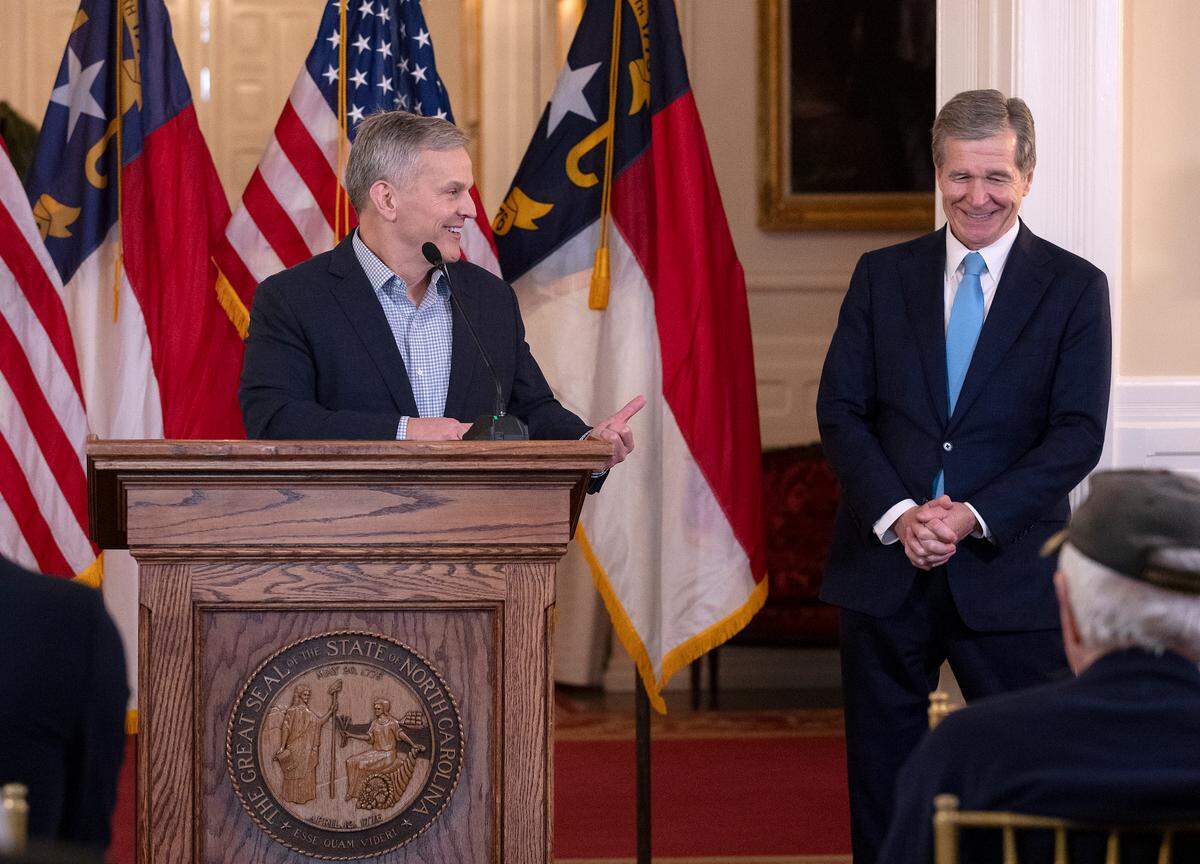
N&O: Just keeping with the internal. What is Stein’s overall mission, and in what way is that unique at all?
Lilley: In terms of what we are doing here, I think a lot of the things are similar to the previous administration.
I think if you want to think about some pivots, we continue to focus on energy opportunities here in the state. But some have changed. I mean, just because the way the federal marketplace is changing. Offshore wind is maybe not as much of a priority. We’d love it to be, because we think we’re in a great position in North Carolina, but the market’s going to struggle because of choices made at the federal level.
If federal investment is really shifting somewhat out of a clean energy space, one thing we think it’s going to shift towards is defense and defense technology. North Carolina should be a leader in that. We’re one of the largest military footprints in all the United States. We have special operations command down in Bragg, where the finest war fighters in the world come back every day and have been in the field and know what they really need.
N&O: Have you seen projects pivot in real time due to the federal administration change?
Lilley: It’s changed a little bit. I mean, one thing that we want to do is try to help the companies that have already invested here or plan to invest here. So the governor had a letter this week that he sent to Washington talking about preservation of some of these components of the (Inflation Reduction Act) that we think are essential to domestic manufacturing.
This story was originally published June 17, 2025 at 7:30 AM with the headline "NC Commerce leader says state needs to take ‘shots on goal’ to land big jobs deals."