Pendo CEO talks vibe coding, IPO market and how to keep your job in the AI age
READ MORE
Open Source Conversations
Business and tech reporter Brian Gordon talks to leaders of some of the most influential institutions in the Triangle to learn how they’re handling challenges, including state and federal funding cuts, while still serving North Carolina and beyond.
Expand All
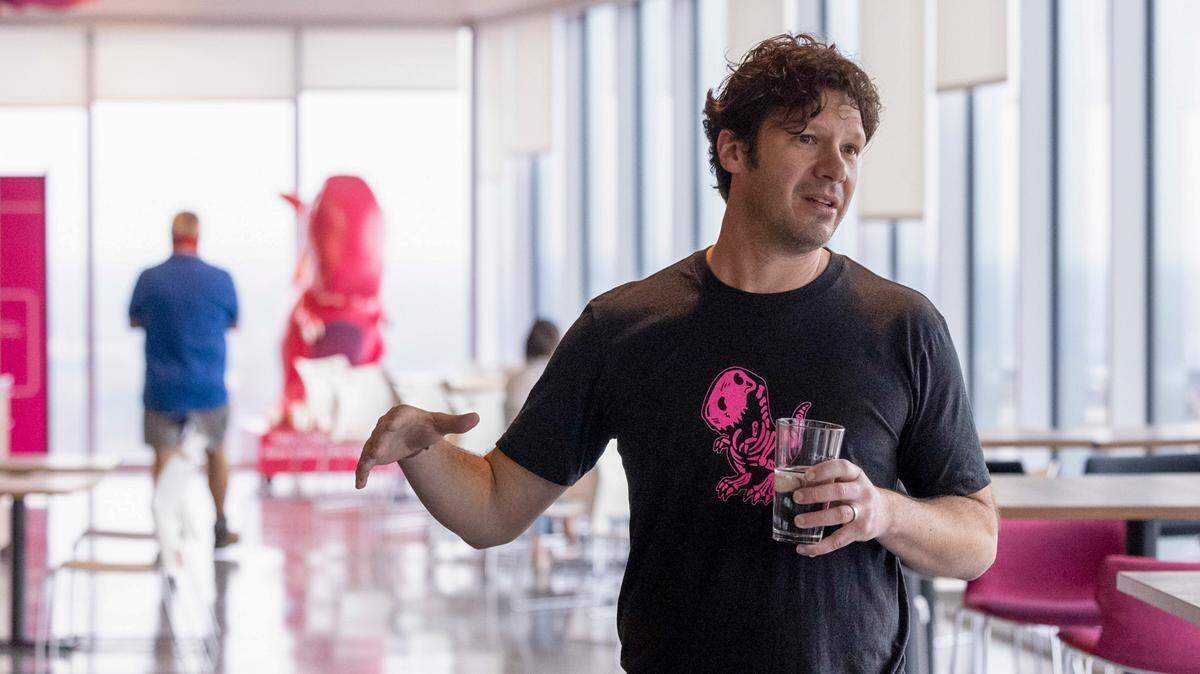
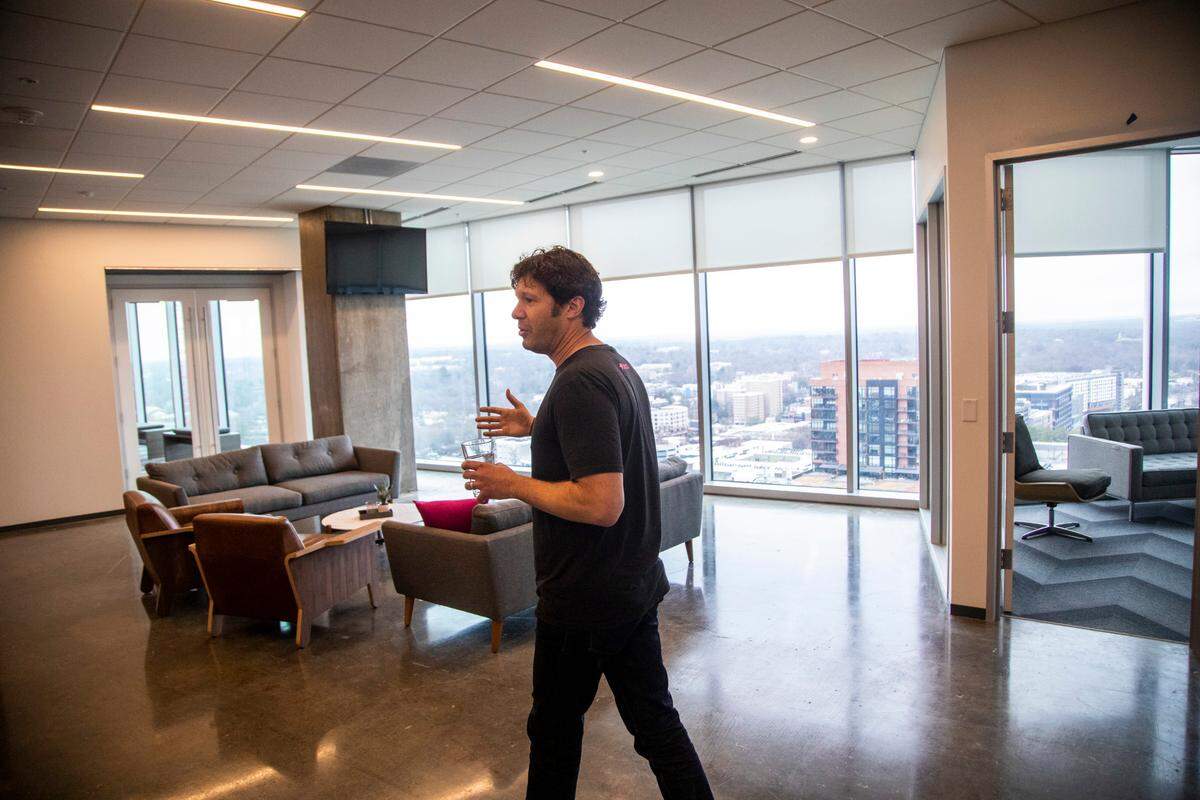
From the top floor of the downtown tower that bears his company’s name, Pendo CEO Todd Olson discussed running a software business that measures how businesses’ software runs. This objective isn’t new; Olson cofounded the Raleigh product analytics startup a dozen years ago and has since steered it to become the Triangle’s third-most valuable private technology company, with offices on four continents and roughly 850 employees.
But software — both the kind Pendo uses and the kind it examines — is evolving as never before. Artificial intelligence has made it easier for Pendo’s business clients to create fluid platforms for their own customers to see, engage with and talk to. Even non-technologists can now use so-called vibe coding to develop apps by typing prompts into AI models.
“If you think about what Pendo does, we help measure and improve software,” Olson said during an interview last week with The News & Observer. “So if software, the way people are experiencing it, changes, we need to change how we’re measuring software.”
Will Pendo tackle these challenges as a public company? Olson shared his perspective on the persistent IPO question. He also reflected on AI job displacement and the value of Triangle-raised tech companies remaining headquartered in the Triangle.
This interview has been edited for length and clarity.
N&O: To the layman, could you explain what the shift from the cloud to AI means for Pendo?
Olson: If you look at Pendo’s success, when we started roughly 12 years ago, we rode sort of this cloud-software wave. That’s what really fueled a lot of our early growth. ChatGPT really exposed us, that you can go in and sort of ask software to do what you want. So, it’s very outcome-oriented versus very click-oriented.
The second thing is that AI is also starting to attack one of the constraints we’ve seen in our economy for years, which has been labor. When we started Pendo, and still up until a few years ago, (finding talent) was one of the biggest challenges we’ve had.
But AI is starting to challenge this labor constraint. Our engineers are using AI code generators, and it’s augmenting their work and making it more productive. Now, I’m not saying that we’re replacing software engineers with AI, but we are seeing an increase in throughput. So, that means each engineer is able to produce just a little bit more. And as that starts to happen, that’s creating lots of opportunities within companies.
N&O: I am curious about people’s concern about AI job displacement. There’s a labor shortage on one hand but also displacement questions.
Olson: I think everyone’s going to have both questions. I think the key for any knowledge worker, white-collar worker, is that it’s going to be very helpful to be AI fluent and AI knowledgeable, and you’re just going to be better than folks who aren’t.

N&O: What are the benefits and pitfalls of vibe coding on how Pendo operates?
Olson: It speaks to what I think is obviously a major shift. It’s been hard to find people to write code and be software developers. There’s always sort of a scarcity of computer science grads.
And now you can go in to one of these systems and type in what you want software to do, and it’ll just generate the whole app for you. And that’s essentially what vibe coding is. You basically type in a prompt or description of the system that you want, and it’ll just generate the app.
I will still liken it to like a junior programmer. lt makes real mistakes. And depending on the software of what you’re doing, I would be very cautious. Would I be using vibe-coded software to build a bridge? No, probably not.
Where we see it most applicable would be, I’d say, non-mission critical internal applications and or just prototypes.
N&O: Being in the AI age, and vibe coding kind of fits into this, the software is just constantly fluid. Whereas before it was relatively static in the cloud, speaking generally. How does Pendo use AI to meet this current reality?
Olson: So, here’s the good thing. It is more fluid, and it can change much, much faster. But I do think in this new world that data analytics and experimentation, like putting something out there, measuring it, and getting data and feedback is still the most important part of the process.
The way I think about Pendo’s opportunity is, can we help customers scale that without hiring a (human) forward deploy engineer? A lot of smaller companies don’t have the resources or capital to hire one.
Getting too big to (easily) buy
N&O: I’ve heard that homegrown companies struggle to scale without selling off to larger companies based elsewhere. What were the pressures Pendo faced along the way to exit?
Olson: Our strategy has been from day one, we want to be a significant company. We want to be sort of a company of consequence, so to speak, is the term I like to use. And wanting to be a company of consequence, we’ve kind of gone after it. We raised money accordingly. So, when you raise money at the clip that we did for the period of time, it continues to raise the bar on what a successful exit looks like.
Each raise means it gets a little bit harder and a little bit more expensive to do an exit, to the point where now you’re at our scale. Like, there’s not a lot of companies that can acquire companies in the billions of dollars.
N&O: Were there opportunities to exit along the journey?
Olson: Not a full-on acquisition, but again, we haven’t tried to. We’ve had people sort of poke in here and there. But again, we have made it difficult by how we’ve grown and scaled the business.
N&O: What do you think is the benefit of the Triangle having its own companies headquartered here?
Olson: I think when you’re headquartered in a certain city, usually you have some sort of critical mass of senior leadership. It also attracts more and more people here. When we host an event, most people go to HQ. So, it brings more people into the region. It gives more exposure to the region, more hotels for the region.
Of course, when you have the set of leadership here, we are going to be more biased towards local, community-oriented events, because it’s our home. It’s not just my company’s location. My kids are all born and raised here. I care about my home, not just for now, but for the future.
Where Pendo fits in the modern IPO market
N&O: What pressure are you feeling in terms of an exit now? Either through an IPO or sale?
Olson: I don’t feel any pressure right now. I feel pressure to make sure we help our customers transition to being an AI company. I don’t feel pressure to exit. Now look, if we’re really successful capturing this AI wave, and it drives a lot of growth, it will have more options going forward. But I feel good about our position right now.
N&O: As you embrace more AI, how would the company look different than it does now in 2026?
I would love to see a momentum release, where we’re not only delivering on accelerated top-line growth, but we’re doing it with roughly the same head count.
How big can we get with roughly the same head count? It won’t mean we won’t grow head count at all. I’m sure we will. But roughly similar-ish head count. So, what that means is, we start looking at our efficiency metrics looking like a whole heck of a lot better, and that’s just more attractive to investors.
N&O: How has the IPO consideration changed over the past few years?
Olson: Well, it’s fascinating. I think it’s less about Pendo’s readiness. It’s more about the market’s readiness.
The market is really favoring really large companies right now. Not just the Magnificent Seven, which is driving a lot of the gains in the market, but just in general, bigger companies are more highly sought after. I think we got to keep executing, keep accelerating growth, and either the market’s going to change and start looking at sort of small, mid-cap companies again, or we’re just going to continue to get bigger and bigger and bigger.
N&O: Was there a test case? Who determined now isn’t a good time for smaller IPOs?
Olson: What they’re doing is they’re looking at all the 2021 IPOs. Which was a record year, and 75% are trading under their IPO value. So that is the test case people are looking at. I think when that cohort does better, or the rest of us get bigger, I think you’ll see that’s ultimately the test.
We talk to all the banks, like, all the time. I would say it’s still the most likely path, if I had to pick a path. It’s just you got to be patient.
N&O: What’s the benefit of Pendo going public?
Olson: The benefit of an IPO, I think obviously, it’s liquidity to shareholders. That’s one of the most obvious benefits. But I think the brand visibility we would get, in particular, would be very, very beneficial for us succeeding in the large enterprise (market). So, we sell large enterprises. I think Pendo is still a newish thing. People don’t all know what we do. People know what Epic Games does, as an example. I think it would be a huge benefit to us.
Uniquely NC is a News & Observer subscriber collection of moments, landmarks and personalities that define the uniqueness (and pride) of why we live in the Triangle and North Carolina.
This story was originally published September 23, 2025 at 5:30 AM with the headline "Pendo CEO talks vibe coding, IPO market and how to keep your job in the AI age."