FHI 360 gutted by Trump USAID cuts. CEO on about how the NC nonprofit can survive.
READ MORE
Open Source Conversations
Business and tech reporter Brian Gordon talks to leaders of some of the most influential institutions in the Triangle to learn how they’re handling challenges, including state and federal funding cuts, while still serving North Carolina and beyond.
Expand All
The shape of her organization’s balance sheet this year makes clear why Tessie San Martin used the word “crisis.”
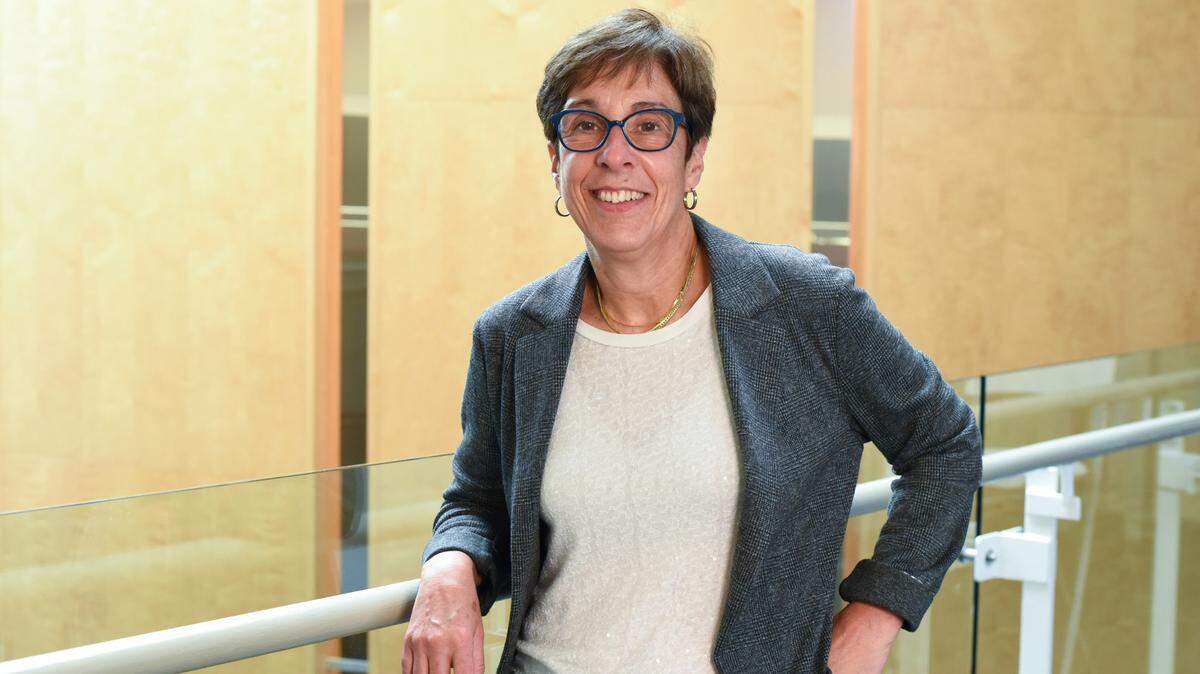
San Martin is the CEO of FHI 360, a long-time research nonprofit in downtown Durham that focuses on international health, civil society, and education programs. Until recently, a quarter of its projects addressed HIV/AIDS, tuberculosis and malaria. Along with RTI International, FHI 360 made the Triangle a hub for American foreign assistance.
More than 80% of the organization’s $870 million annual revenue had come from the federal government, with its biggest funder by far having been the U.S. Agency for International Development.
When the Trump administration gutted USAID (which officially closed Monday), FHI 360 lost roughly half its revenue, San Martin said, leading to immediate furloughs and eventual layoffs affecting more than a quarter of its 4,000-person global workforce. Many projects stopped, and the government froze some payments for work FHI 360 had already completed.
How does a major U.S. international assistance organization survive in 2025 and beyond?
“Altruism will get you only so far,” San Martin said Friday, as she spoke with The News & Observer from Washington D.C. through a video call.
The conversation has been lightly edited for clarity and length.
N&O: What did the elimination of USAID funding mean for your employees worldwide?
San Martin: We basically handed termination notices to pretty much almost everyone overseas, thinking that as we knew more that we would rescind some of those notices. But we had to very quickly figure that out. Then in the US, it led to immediate furloughs.
We also reduced salaries for the people that stayed. Pretty drastic salary reductions. My own salary still is at, I think, 47%. And other senior people reduced to 30% and so on. We stopped even pension contributions. We reduced those to a minimum. So everything was on the table to enable us to survive.
And what did that mean for the actual work that overnight was stopped?
San Martin: It depended. There were some cases where we were supposed to be delivering treatment or medicines. Well that suddenly had to stop. In some cases, people thought that they could still come in to a clinic, which was in part funded by the US government.
In some cases, honestly, we were running some clinical trials that stopped. That’s problematic, because you have research subjects, people that are in the middle of a clinical trial and and then you have to stop it suddenly.
When I spoke to the RTI International CEO Tim Gabel a few days ago, he talked about pivoting to new market opportunities like defense and the private sector. For FHI 360, which is so international assistance-focused, are there pivots? Are there new markets? What comes next?
San Martin: Of course, there are pivots. And I don’t know that I would use the word pivot. There is a lot of work that we continue to do for the U.S. government. There’s a lot of work in foreign assistance that we continue to deliver for the U.S. government, primarily around global health security, work around HIV treatment and other infectious diseases that is continuing to be funded.
What agency within the government is continuing to fund that?
San Martin: It used to be USAID. And now it’s being subsumed under [the U.S. Department of]State. There is work that is continuing under other government agencies as well. So it hasn’t all been zeroed out.
For your employees who are remaining: What kind of emotional toll have you sensed it’s taken on the employees and what message do you tell them?
San Martin: Look, you have to look forward, but you also have to acknowledge. You asked the question, what have you lost? We’ve lost colleagues. We’ve lost important life-saving work that we were doing that we’re not able to do anymore. So we have always tried to make sure that we’re leaving enough room. So we had an all-staff meeting — it used to be like every week in the middle of the emergency — just so that I could talk to everyone and answer as many questions as possible. Because in a crisis, communication is rule one.
Pitching the profit advantages of foreign assistance
When you’re talking to non-government donors, is the overall pitch a humanitarian one? If charity is the right word. Or how much of it is that it could help your business?
San Martin: I’m an economist by background. Look, it’s not to say the humanitarian part is not important. At the end of the day, for these things to be to resonate and be sustainable, there has to be a real business interest.
At the end of the day, we make investments overseas that honestly cost pennies on the dollar so that we can prevent having to spend millions of dollars here on preventing or treating or curing the same diseases.
I can see why that pitch would work for a government, because that’s ultimately a government problem. So when you’re not talking to the federal government, how do you make that argument connect? Why would a company see an economic value?
San Martin: In may be related in some cases to a workforce issue or a challenge that they have overseas, right? This is about keeping our people safe or our people healthy and reducing absenteeism, for example. It is about productivity.
What do you think is motivating that trend internationally and especially in the U.S. of looking more inward?
San Martin: I think that there are all kinds of things that are happening here, including the fact that there are a lot of needs domestically. For the longest time, there was this happy confluence; doing work overseas is good for us domestically, so we’ll do it. And then that kind of stop. But it’s a pendulum that has always been swinging. And that’s the other thing. This moment may feel unique, but it’s not.
‘Spending a dollar in Liberia’
How do you view the international assistance landscape now? Do you think there’s any going back to how it was even last year?
San Martin: Well, it depends what you mean by going back? Are we going back and reestablishing USAID? That is gone, and as of next month, subsumed wholly into the State Department. And I don’t think that gets unraveled for a very, very long time.
What is the pitch for foreign assistance? What’s the value?
San Martin: This question has been asked, certainly by the current administration, and many senior people on (Capitol) Hill. And my answer is: We’re spending a dollar in Liberia to do surveillance and prevention of Ebola so that we don’t have to spend $100 here. Because the reality is,we’re living in a globalized world, and viruses don’t really care about borders or passports or anything else.
At the end of the day, it is a smart investment for our country, or any country to be investing in foreign assistance.
This story was originally published July 1, 2025 at 9:25 AM with the headline "FHI 360 gutted by Trump USAID cuts. CEO on about how the NC nonprofit can survive.."