NCDOT has reopened roads damaged by Helene, but most work still lies ahead
AI-generated summary reviewed by our newsroom.
- NCDOT restored major road access Western North Carolina after Hurricane Helene damage.
- Repairs so far are temporary and will give way to permanent roads and bridges by 2028.
- New infrastructure aims to improve storm resilience in challenging mountain terrain.
READ MORE
Healing from Helene
On Sept. 27, 2024, remnants of Hurricane Helene devastated Western North Carolina, killing 108 people and leaving a nearly $60 billion clean up bill statewide. In the year since, the people of Western North Carolina have made progress putting their beautiful part of the state back together.
Expand All
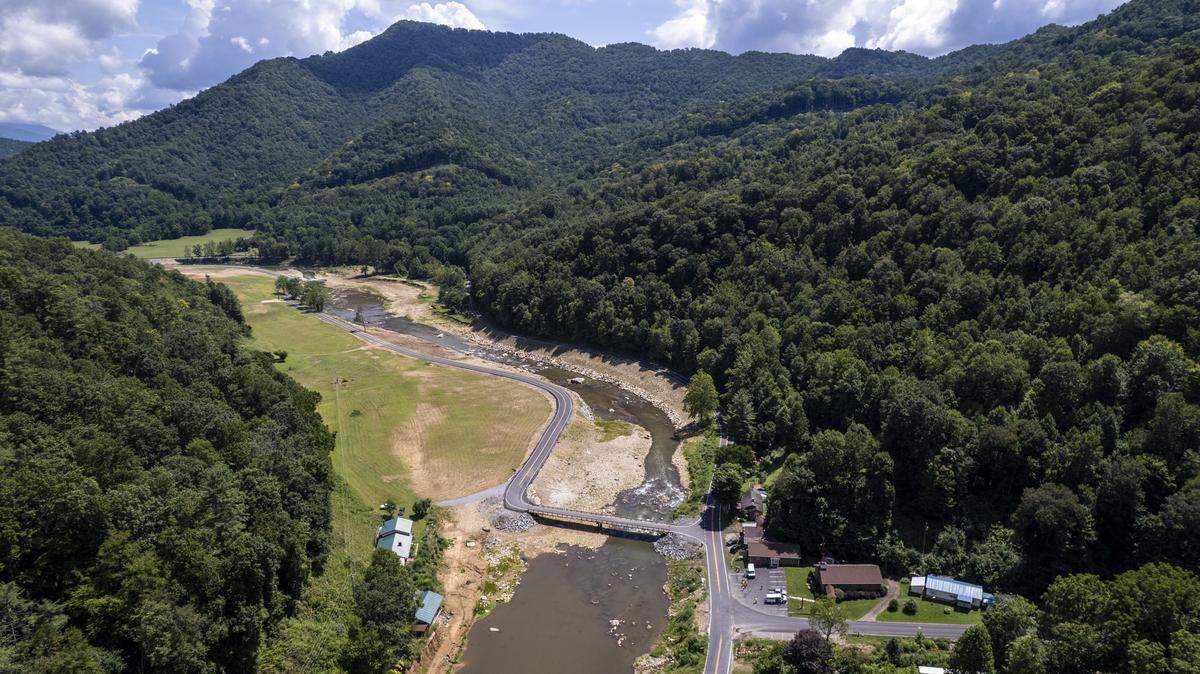
If you drive up U.S. 19W along the Cane River in Yancey County for the first time this fall, you might have a hard time understanding how the remnants of Hurricane Helene have changed this narrow valley in the North Carolina mountains.
Houses damaged or destroyed by Helene a year ago are mostly gone, as are the cars, truck trailers and other debris once strewn along the riverbed. The highway that winds along the Cane is newly paved in many places, atop embankments lined with fresh stone.
“A lot of this was nothing — no roadway whatsoever when we came in,” says Chris Deyton, an engineer with the N.C. Department of Transportation. “All of that’s been put back in what I think was an incredibly short amount of time. So it’s hard to imagine what we first saw that day after the storm.”
Despite all the progress, Deyton adds, the state still has a lot of work to do to fully rebuild roads and bridges in Western North Carolina.
Deyton is a Yancey County native and second in command at NCDOT’s Division 13, a seven-county area that includes Asheville and the mountains and valleys north and east of it. The region got some of the worst wind and rain from Helene, and Deyton says Yancey was probably hit hardest of the seven counties in his division.
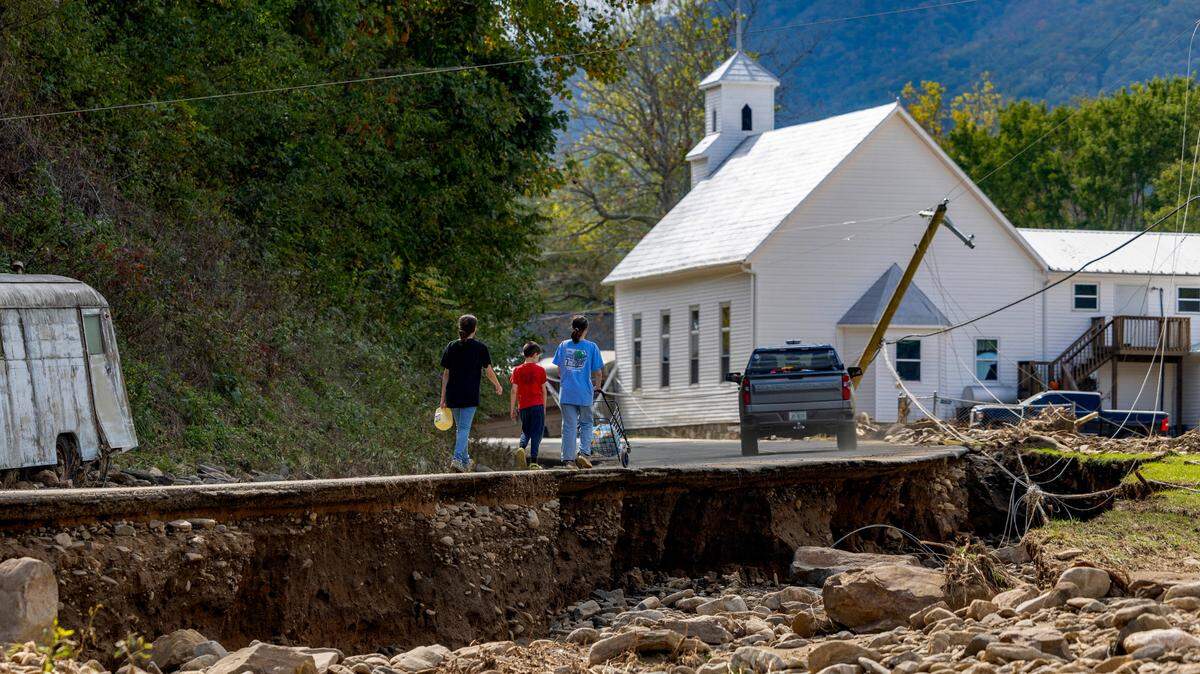
The storm dumped up to 31 inches of rain on the south side of the county, sending torrents of water down mountainsides into creeks and streams and eventually the Cane and Toe rivers that flow toward Tennessee. Roads that weren’t smothered in landslides or washed away by raging floodwaters were covered with fallen trees.
No community and almost no road in the county of 18,500 residents was spared, Deyton said.
“There was nowhere that we’re like, ‘OK, we don’t have to worry about this part because they’re fine,’” he said. “It was, “We’ve got to do everything. We’ve got to hit every road. We’ve got to work on every community.’”
‘Bumper to bumper dump trucks’
NCDOT’s strategy throughout Western North Carolina in the days and weeks after Helene was to try to provide access to every community — every place with a name and a church or general store, but also the clusters of homes up each mountain or down each valley. That often began by clearing a track just wide enough for an all-terrain vehicle.
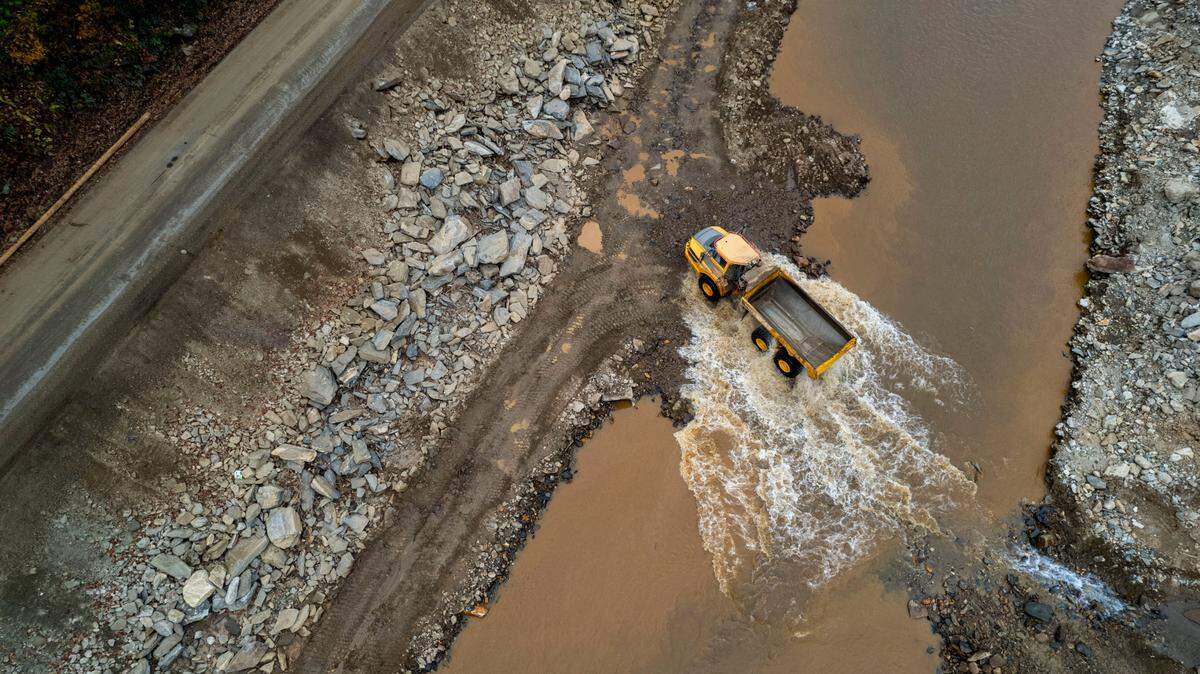
Residents played a big role in those early days, using their own chainsaws and skid-steer loaders to clear fallen trees near their homes. But it wasn’t long before NCDOT crews from across the state and contractors from across the country poured into the region.
Gary Phillips watched from his flood-damaged home where Little Creek Road branches off from U.S. 19W. The Cane River left only the concrete foundation of Riverbank General Store in front of his house and almost no trace of the old stone building across the road where his grandfather once ran a store.
Like others in this valley, Phillips said he was impressed with how NCDOT responded.
“It wasn’t a day or two, they were coming down the road with dozers and stuff,” he said as he cooked a pot of corn on a camp stove outside the travel trailer where he’s living while his house is repaired. “All the way around the curve, way down through there and all the way up to the fire department, there was bumper-to-bumper dump trucks.”
The trucks carried stone from nearby quarries that NCDOT used to rebuild miles of roadbed where the river had stripped away everything down to bedrock. By mid-January, nearly four months after the storm, there was at least one lane of 19W open from near Burnsville to the Tennessee state line, Deyton said.
By early March, it was two lanes, paved, end to end. Only three roads officially remain closed in Yancey County, none of them critical to providing access to homes or businesses.
Dagan Bartholomew, a construction contractor who lives on nearby Butter Sop Road, says he thinks the new 19W is actually in better shape than what was there before.
“It’s nothing short of a miracle, in my mind,” Bartholomew said, pausing as he crossed a temporary bridge connecting the Little Creek community with the highway. “I’m amazed that we have these roads and we’re driving around. Because if you were here, none of this was here. This was all gone. So it’s quite amazing that we have this.”
Road building is far from finished
Most of what NCDOT has rebuilt in Western North Carolina is temporary, good enough to provide access to residents, utility trucks, contractors and first responders. But not up to the department’s current highway standards.
That’s clear from driving along 19W. While the pavement is smooth and black, there aren’t proper shoulders in many places and no guardrails, even where the road drops right off into the river.
Tommy Hall lives in the Bee Log community and works at the county trash and recycling drop-off center on 19W across from the Egypt and Ramseytown Fire Department. He thinks NCDOT has done an “excellent job,” but wishes it would put guardrails back up.
“Because it’s pretty dangerous,” Hall said, “especially at nighttime and rainy time coming around these curves.”
Many people think NCDOT is done with road repairs when in fact it’s just getting started, Deyton said. With access restored, the department is now working on the engineering, designs and permits to build permanent roads and bridges.
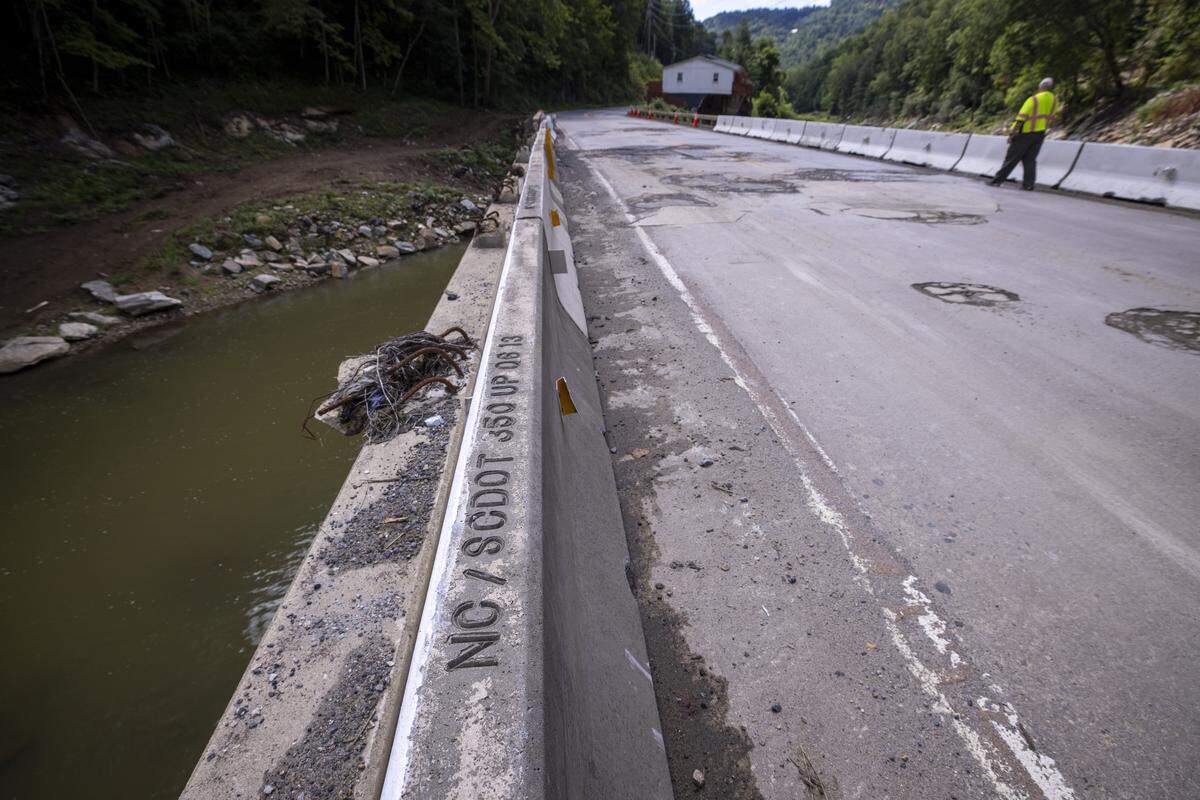
In Division 13, NCDOT has spent about $600 million on Helene repairs so far. By the time all the permanent roads and bridges are in place a few years from now, the department expects it will have spent $2.5 billion in just this seven-county area, Deyton said.
The scope of the work ahead is daunting. NCDOT plans to replace 93 bridges damaged or destroyed by Helene in Division 13, Deyton said, which is more than 10 times as many as it normally does in a good year.
‘Are they going to withstand another Helene?’
The biggest expense in rebuilding roads through the mountains, Deyton said, will be stabilizing the slopes — either the hillside above the road, the embankment below it or both.
The challenge will be finding ways to hold the earth in place when flooding rains fall. That means more stone rip-rap and concrete walls. New bridges will have wider openings for water to pass underneath, with fewer supports to catch trees and debris in a flood, the way the old ones did.
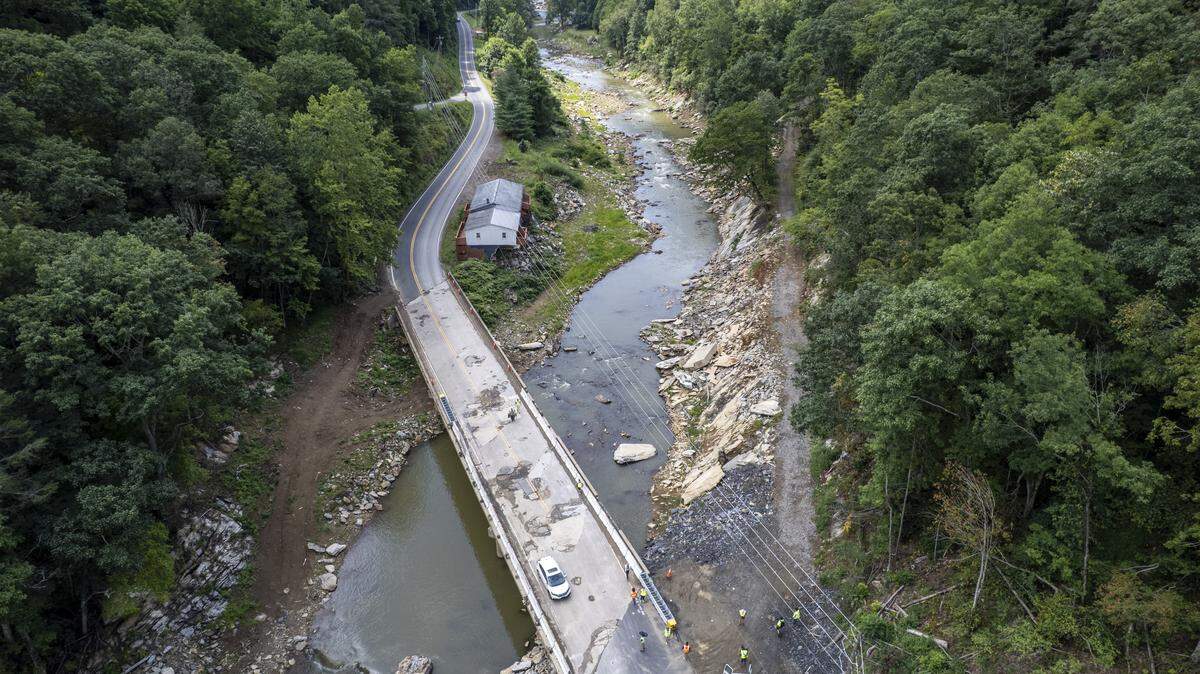
The goal is to make the new roads and bridges more resilient in future storms, Deyton said.
“Are they going to withstand another Helene? That’s not really something that we can design for,” he said. “A 1,000-year storm is just unreal to think about. But the majority of what we’re expecting to see, we should be able to survive those with minimal damage.”
NCDOT will largely build roads back where they were. In many places it doesn’t have much choice because of the rugged terrain. But the department also doesn’t want to take property from people who lost so much already from the storm, Deyton said.
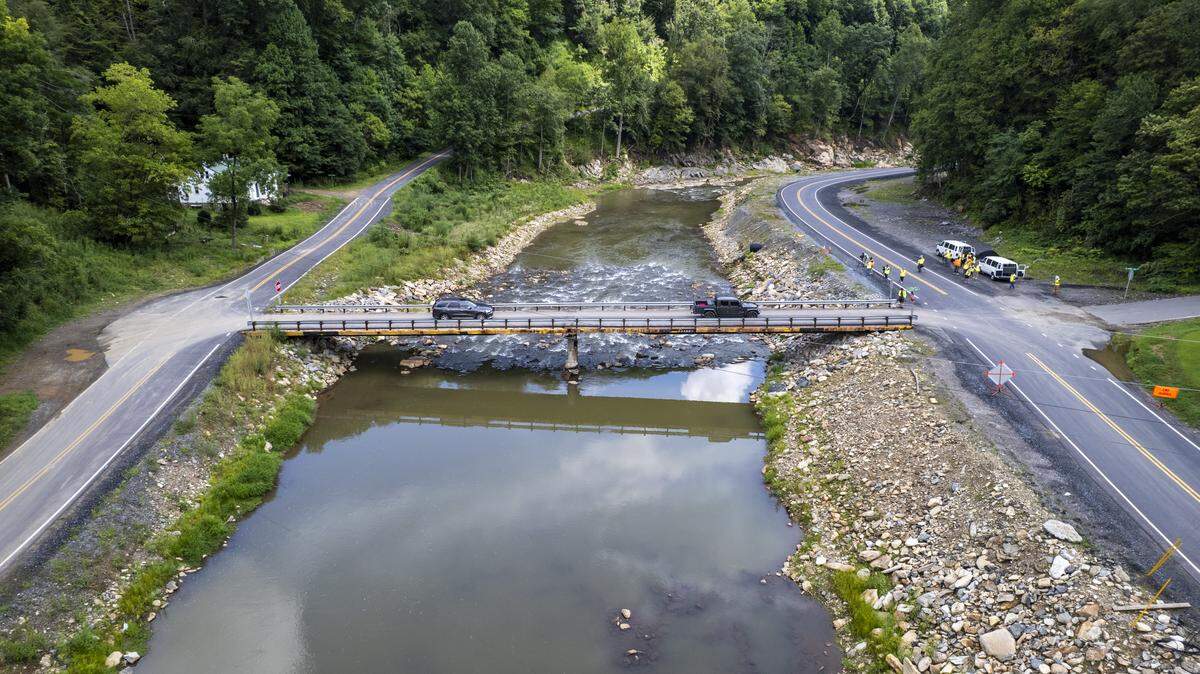
But there will be exceptions. A section of Little Creek Road near Gary Phillips’ house slid into the river, and NCDOT must decide whether to build back the roadbed along a steep mountainside or build a bridge farther downstream. For now, residents of about 100 homes cross the Cane on a temporary bridge made of old railway flat cars.
For those familiar with U.S. 19W and the Cane River, the changes since Helene are obvious. Trees that lined the river are missing, and the riverbed is twice as wide in many places. Homes, barns and other buildings, including the office at NCDOT’s Division 13 maintenance yard, are gone.
There’s also an underlying anxiety that’s hard to shake, Deyton said.
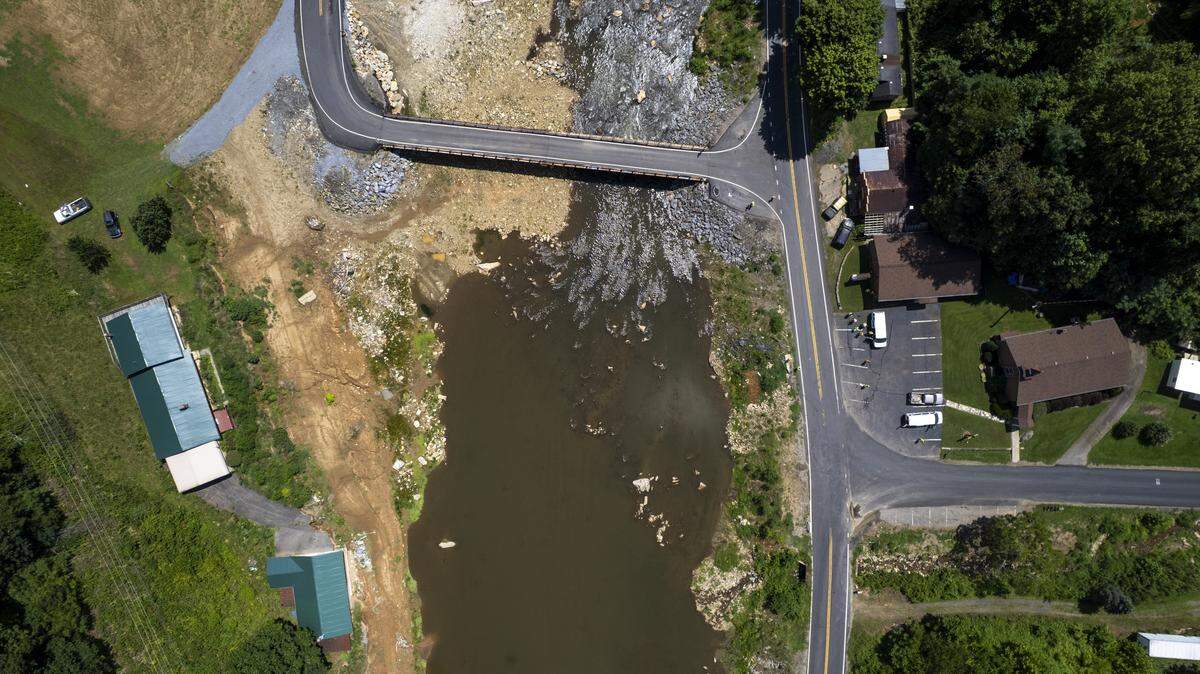
“We have come a long way. A lot of people’s spirits are a lot better now,” he said. “But there’s still that issue of, if it starts raining, what’s it going to be? What are we going to have? What’s this going to hold for us? Hopefully that will go by in time, but there’s going to be scars for years to come in a lot of communities.”
This story was originally published September 22, 2025 at 5:00 AM with the headline "NCDOT has reopened roads damaged by Helene, but most work still lies ahead."