Helene damaged 73,000 NC homes. Some people are ‘losing hope’ waiting for help
AI-generated summary reviewed by our newsroom.
- Helene damaged over 73,000 NC homes; many remain to be repaired after one year.
- Renew NC launched to speed recovery; it has completed just one home rebuild.
- Nonprofits outpace state aid, restoring 431 homes using private funds and volunteers.
READ MORE
Healing from Helene
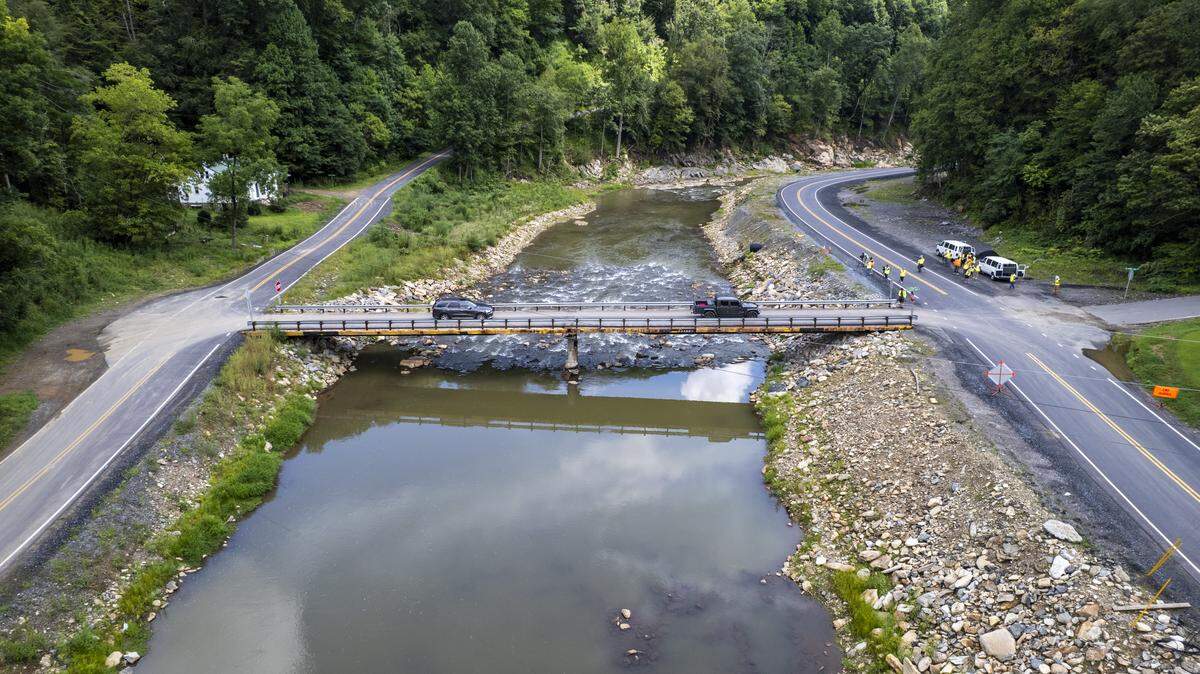
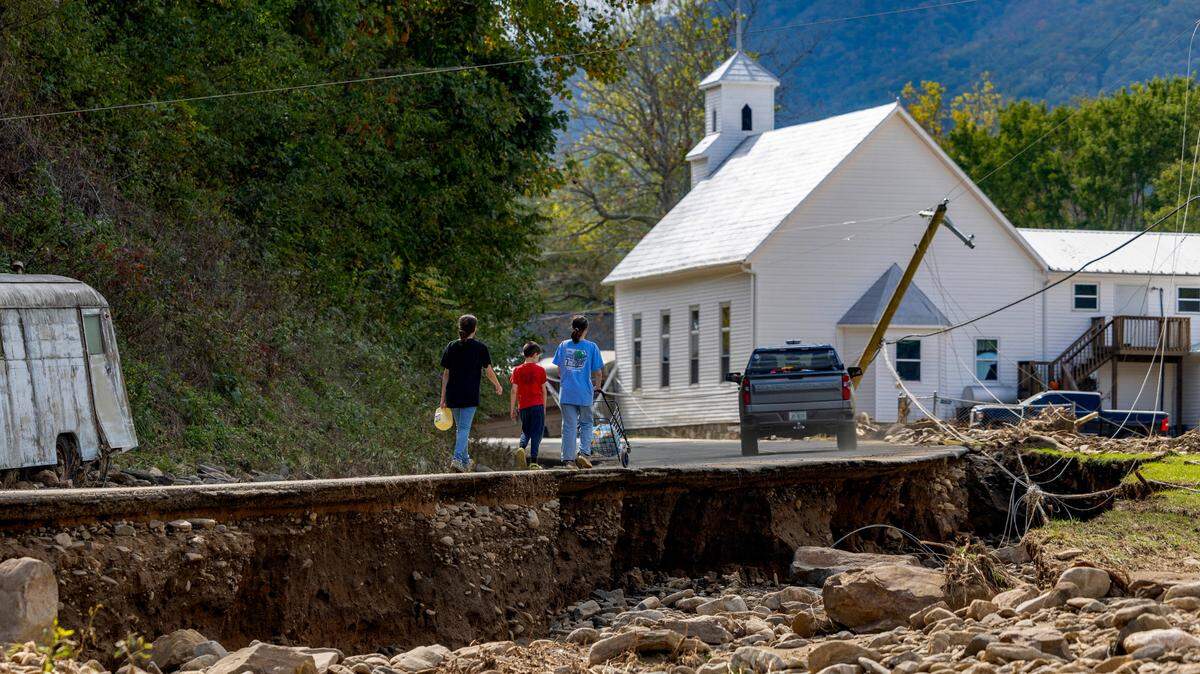
On Sept. 27, 2024, remnants of Hurricane Helene devastated Western North Carolina, killing 108 people and leaving a nearly $60 billion clean up bill statewide. In the year since, the people of Western North Carolina have made progress putting their beautiful part of the state back together.
Expand All
A year after Helene, North Carolina’s new housing program funded with federal dollars has managed one completed repair.
State officials point to the late August milestone as evidence recovery is moving faster than after past storms, with Gov. Josh Stein’s office touting that North Carolina was the first Helene-affected state to launch its home renovation and reconstruction program, the fastest since Hurricane Sandy, to begin rebuilding.
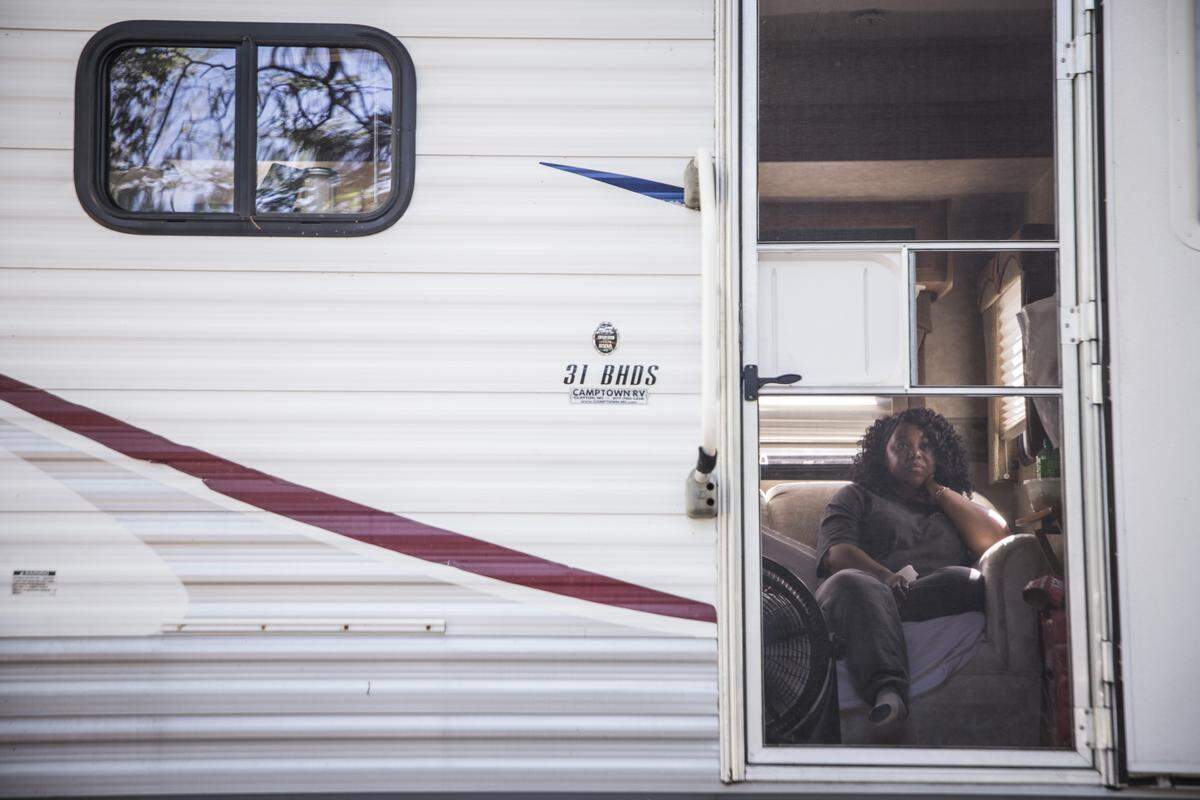
But across the mountains, thousands remain in precarious situations — renters forced from destroyed homes, families crowded into campers or cars, and survivors scraping together help from the Federal Emergency Management Agency, insurance, loans, nonprofits and churches.
For many, that support only goes so far, and the struggle has stretched a year.
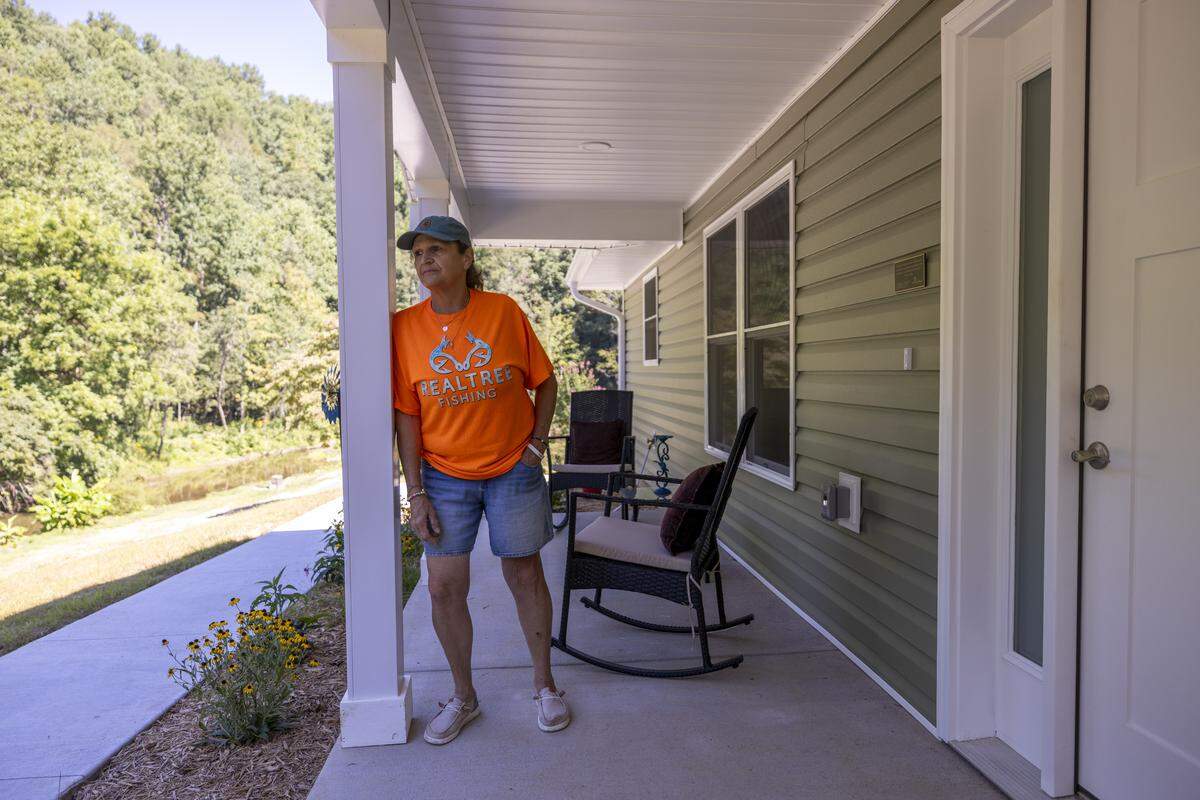
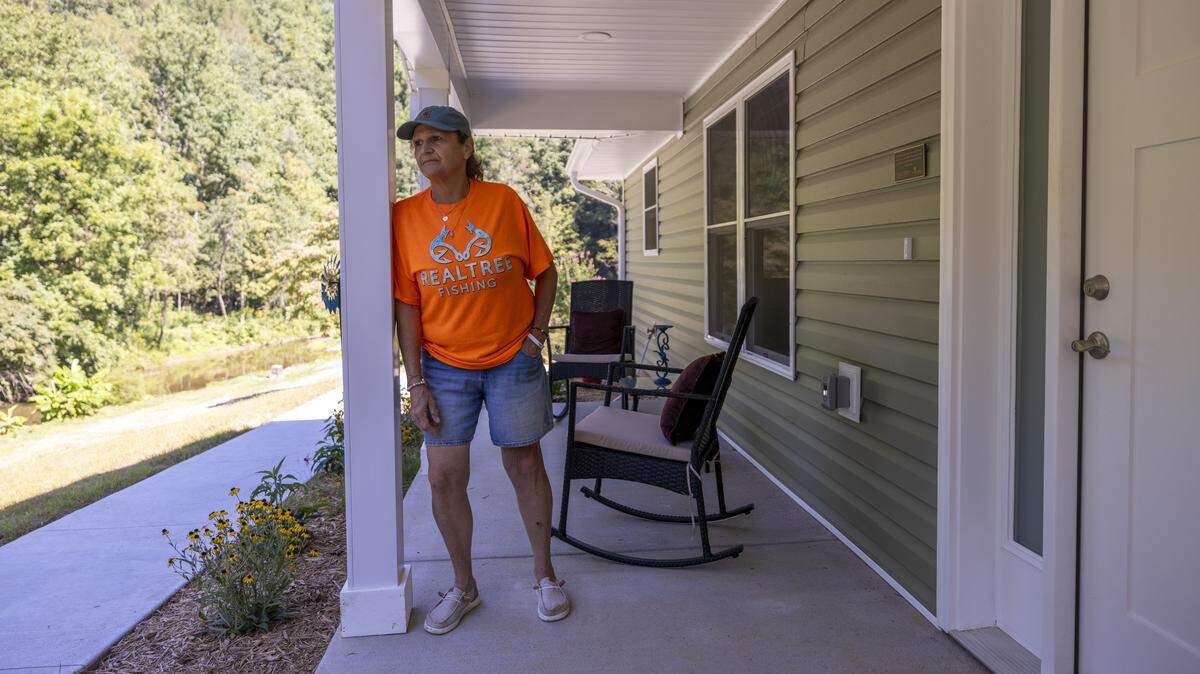
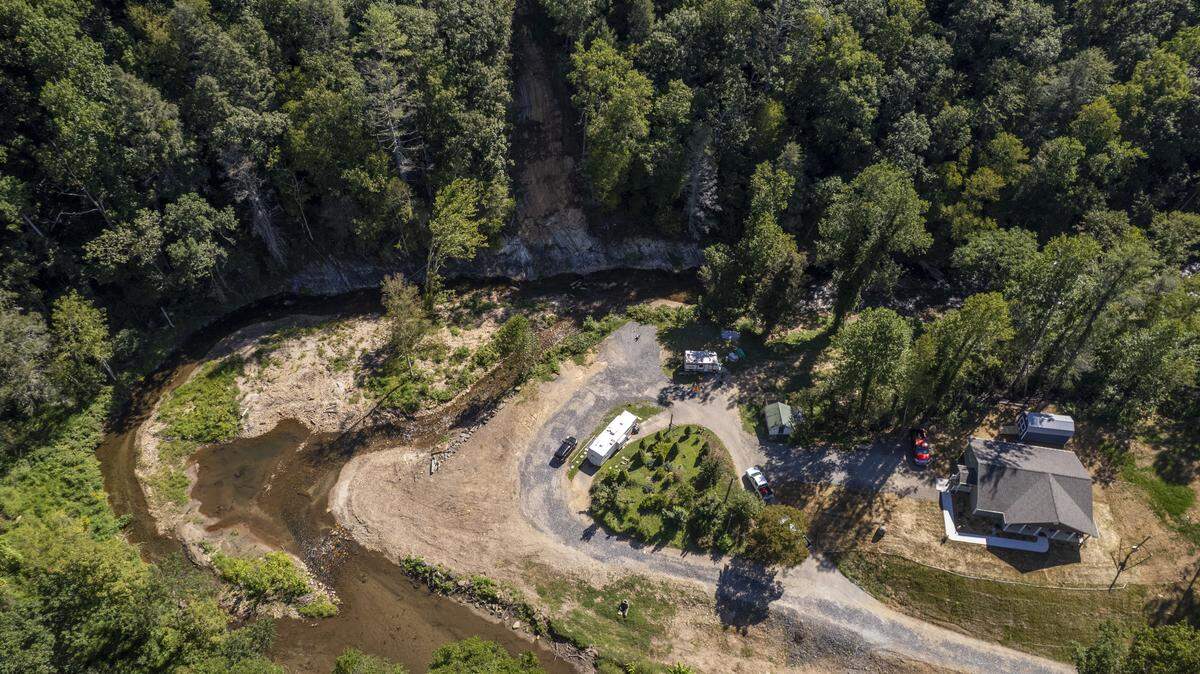
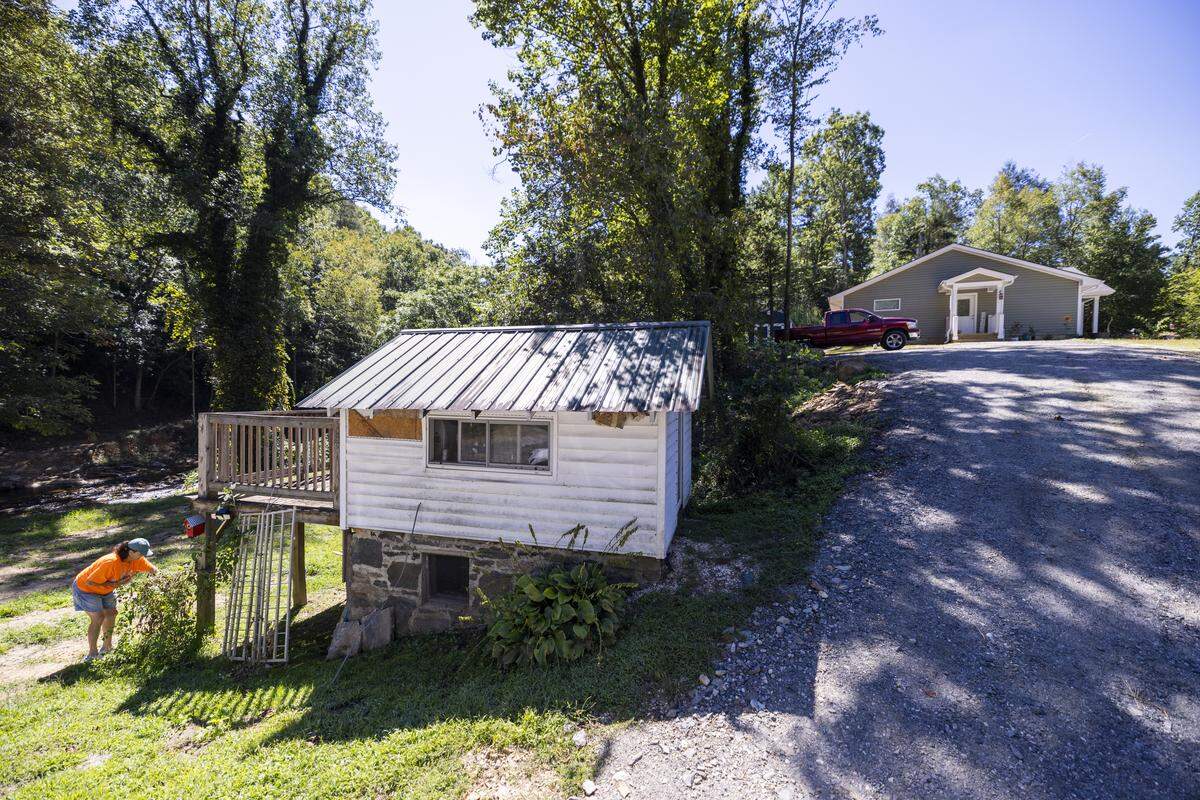
In Clyde, a town of just over 1,300 residents with 575 housing units, 92 homes were heavily damaged. Roughly 50 owners have applied for a federal buyout, a handful have chosen to rebuild, and some “have walked away and not even mucked out their homes,” Town Manager Joy Garland said.
In December 2024, the state’s Office of State Budget and Management estimated Helene damaged more than 73,000 homes, including 8,800 that were seriously damaged or destroyed, at a cost of $15.4 billion.
“They’re losing hope. It’s sad. It’s taking a hit on their mental well-being, and sometimes their physical well-being as well,” Garland said. “They’re just in limbo.”
.JPG "IMG_CLYDEHELENE-NE-10162_3_1_F9PHM3DQ_L852435386 (1).JPG")
Of those rebuilding in Clyde, a few have applied to the state’s new home renovation and reconstruction program, she said.
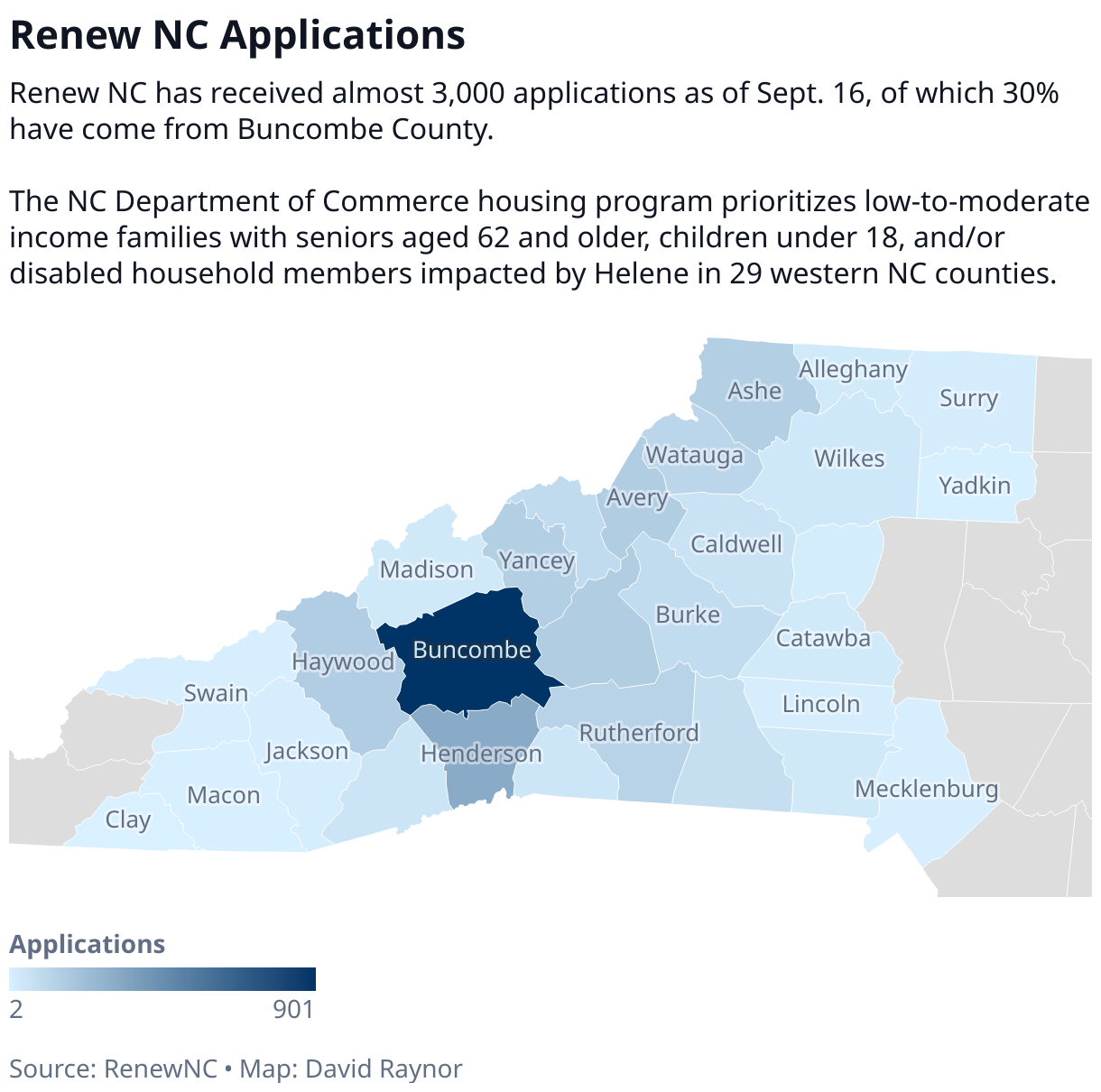
The Renew NC single-family housing program prioritizes low- and moderate-income families, the elderly, and people with disabilities and is designed as a “last resort,” North Carolina Secretary of Commerce Lee Lilley told The News & Observer in late August.
“That doesn’t mean we can go slowly,” he said.
Concerns tied to history of recovery in NC
The state has released data supporting its claim that recovery was moving faster — at least initially — than in recent years.
But concerns remain that early gains may not last and the program could still face the same delays that plagued recovery after Hurricanes Florence and Matthew.
ReBuild NC, launched under former Gov. Roy Cooper, has drawn heavy criticism for delays, with many survivors still waiting years later. Matthew struck in 2016 and Florence in 2018.
As of early September, ReBuild NC has completed 3,818 homes. That includes 622 of about 1,150 projects that had been pending as of late January, with work expected to wrap up in 2026, according to a Rebuild NC spokesperson.
Instead of routing Helene housing recovery through ReBuild NC, Democratic Gov. Stein created a new division within the Department of Commerce on his second day in office. Through Renew NC’s programs, the new division will manage more than $1.4 billion in federal Community Development Block Grant funds. Of those, $807 million support the single-family housing program. Stein has asked Congress for more money, including for housing.
Beyond the $1.4 billion for the state, Asheville separately received $225 million, mostly earmarked for infrastructure but with some set aside for housing, and reached an agreement with the state letting residents apply directly to Renew NC’s program.
The state submitted its action plan for those funds in late March and received approval about a month later. Applications opened in June. By early August, about 1,000 households had applied; that number has since almost tripled. Apart from the single rebuild completed, none of those have started construction yet, a state dashboard shows.
Officials say avoiding delays will be key. ReBuild NC cited shortages and supply-chain delays as major obstacles. “We spend a lot of time working on how we reduce or eliminate bottlenecks,” Lilley said. “They pop up in environmental review, they pop up in inspection, they pop up in availability of construction materials … The main thing that our team is tasked with doing is solving those problems.”
For Rep. Mark Pless, a Republican representing western counties, it’s not enough.
“They put all-new people in place to do this. All new processes in place to do this,” Pless said. ”So until they start demonstrating that they are getting something accomplished, we can’t really gauge whether it’s going to be Matthew, Florence, again.”
Pless, who sits on the legislature’s hurricane response subcommittee, said its members get continual updates on Florence and Matthew but “we get no updates from the governor’s office on what’s going on with Helene, because there’s nothing going on.”
Lawmakers scheduled a late September hearing. Updates are expected then.
Renew NC relies on outside firms. In May, the state awarded Horne LLP a three-year, $81.5 million management contract. Construction work itself is handled through separate contracts with builders.
Horne’s selection has drawn scrutiny from lawmakers. The firm previously managed ReBuild NC’s casework, a contract not renewed after complaints about poor service.
With Renew, “every 10 to 14 days, they’ll get proactive outreach from our team to say, there’s the update on your application. Here’s where we are prioritizing,” Lilley said.
Jonathan Krebs, Stein’s senior recovery adviser for Western North Carolina, worked at Horne until last year, though he said he took no part in procurement. Horne was also ordered to repay the federal government after allegations it received improper disaster recovery payments for work in West Virginia in 2017 and 2018.
Stephanie McGarrah, who leads recovery efforts at the Department of Commerce, has defended the choice, saying other bidders failed to submit financial evidence and that Horne ranked highest “by far.”
Newsline NC also reported several construction companies tapped are facing or have faced federal lawsuits.
Lilley told The N&O, “I think it’s very difficult to find somebody in the space who hasn’t faced some sort of legal challenge at some point, and we’ve done a pretty thorough procurement and due diligence on all of our contractors.”
What’s different now after Helene?
Officials say Renew NC will hold builders to timelines and charge them for damages. Those “who perform on time and on budget are going to get more work, and the ones that don’t are not,” Lilley said.
Rebuild NC could also assess damages, but faced criticism in 2022 from Republican lawmakers for not doing so. A spokesperson said since February 2023, the program has assessed daily damages on delayed projects, with contractors across 164 projects accepting nearly $1 million to date.
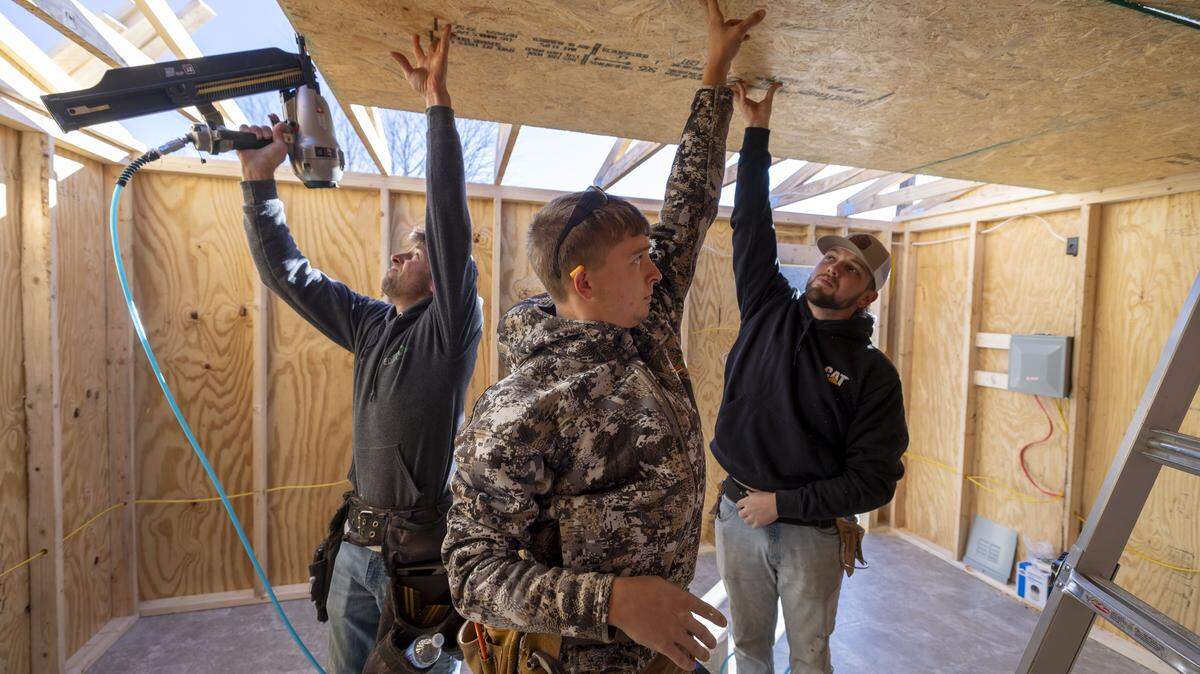
The Renew NC program sets deadlines for different projects: 150 days for a full reconstruction, 60 days for replacing a manufactured home, 30 to 120 days for repairs depending on size, and 30 days for a demolition. These timelines begin once the contractor receives a formal notice to proceed.
Lilley said a change is simplifying choices for survivors. ReBuild NC offered many options that slowed work, while Renew NC uses standardized floor plans, he said.
Lilley said families still get homes sized to their household needs but without lengthy decision-making, adding that so far “there’s not been any sort of broad pushback” on this by applicants.
Also gone are long-term hotel stays, which ReBuild NC provided once construction started. “As we streamline the program, we don’t anticipate people having extended stays outside of the home or wherever it is they’re staying today. They just need to have a home that meets their needs, that’s safe and stable, and that has enough room for the families,” Lilley said.
Lawmakers can also provide aid. But Pless said they’re unlikely to approve more until the scale of need is clearer, though they could revisit the issue in spring or sooner if agencies flag gaps.
He pointed to $128 million already appropriated by the legislature, noting it hasn’t yet put families back in their houses. The commerce department said much of that money was obligated to Horne, allowing the state to begin accepting homeowner applications, but the state may be able to get federal funding and redirect that state money to other needs.
After the first home repair, Lilley said the next step is moving more families through environmental review and into construction “within the next weeks and months.”
But winter weather could slow progress. “It’s hard to keep an aggressive pace when you have a lot of snow, ice and rain,” he said.
Nonprofits moving faster
Nonprofits, meanwhile, have moved quicker to get reconstruction underway.
One is BeLoved Asheville. In late August, co-directors Amy Cantrell and Gustavo “Ponkho” Bermejo stood in their Black Mountain neighborhood, pointing to homes their group had rebuilt and crediting successes to community ties.
When the storm struck, they drew on such ties and years of affordable housing work to respond quickly — hiking into remote hollers little known to others, flushing toilets for elders when water systems failed and doing welfare checks. At the peak, they said, they were serving about 15,000 people a day across the region.
“We are not people that only build kitchens,” Bermejo said. “We are people that care about the community.”
That approach contrasts with programs that require applicants to fit narrow criteria, they said. “We don’t sit somebody down in front of paperwork,” Cantrell said. “We sit on the steps, we talk with them. Sometimes we cry with them, and begin to tease out what’s going on.”
They recently rebuilt the riverside mobile home of a woman who initially resisted new construction, fearing higher taxes and insurance costs.
“Oftentimes, the low-hanging fruit is to go and talk to the county government and say, ‘This is an elder in your community who lost everything to Helene — can you reduce or waive her taxes?’” Cantrell said.
According to Renew NC’s website, families are responsible for paying higher property taxes and obtaining insurance once construction is complete. One year of flood insurance is covered if the home is in a floodplain.
Linda Brown, a 68-year-old retiree from Marshall, lost her mobile home and has been relying on FEMA rental assistance, which she hopes will last through March.
She’s working with Madison Alliance for Rebuilding Communities to expand a small surviving studio on her property into a tiny home. Brown said the approach gives her enough space to live in while keeping property taxes lower — something she worries newer, larger rebuilds could make unaffordable for other storm survivors.
“If the flood comes back in, it’s like, OK, I tried this. Didn’t work. I’m out of here now,” she said.
BeLoved Asheville has marked its 100th rebuild or repair. The group started home rebuilds in October. Bermejo said they raise money through donations and fundraising, and also rely on people in their network or the area to do work at discounted rates or sometimes for free. Cantrell said there was a “drastic drop off” in volunteer help and donations about five months ago.
The group asks the question: “How do we get people back home as quickly as we can? How do we provide quality housing, how are we looking at being flood resilient?” Cantrell said.
They also plan to build another affordable housing community — with one in East Asheville nearing completion — and in December bought land in Swannanoa, outside a flood zone, to do so, Cantrell said.
They also weave art and salvaged pieces into houses they rebuild or repair, which they see as part of the healing from the trauma of the storm.
Cantrell said she hopes Renew NC staff spend time in the communities they serve. “In general, institutions kind of come from outside and put a program on top of a community,” she said.
As they packed up to drive to another repair site, a group of children pressed against the window of BeLoved’s relief truck, Esperanza — Spanish for “hope” — and handed them an invitation to their parents’ wedding.
Several other nonprofits have stepped in, including Samaritan’s Purse. Luther Harrison, a vice president of the group, said 30 mobile homes have been delivered with 16 families moved back in; 36 new houses are under construction; and 40 home repairs are complete. He stressed that “there’s still a lot of needs out there.”
The state has also provided $6 million to nonprofits. That’s led to 431 homes rebuilt or repaired.
Asked why nonprofits are able to move faster, Lilley said he didn’t know the details of each home but noted many could have been rehabilitations instead of full reconstructions. “A lot of times what you’re gonna end up with in our program is you just couldn’t find somebody else to do the work … because the work was too expensive or too complicated.”
“Our program is different. It has federal requirements,” he added. “I think we could make those requirements more streamlined and easy, but as it is, we have found the fastest way through them, and we’re going to deliver for Western North Carolina.”
Needs visible; homeless shelters packed
And just three months away from winter, needs remain visible.
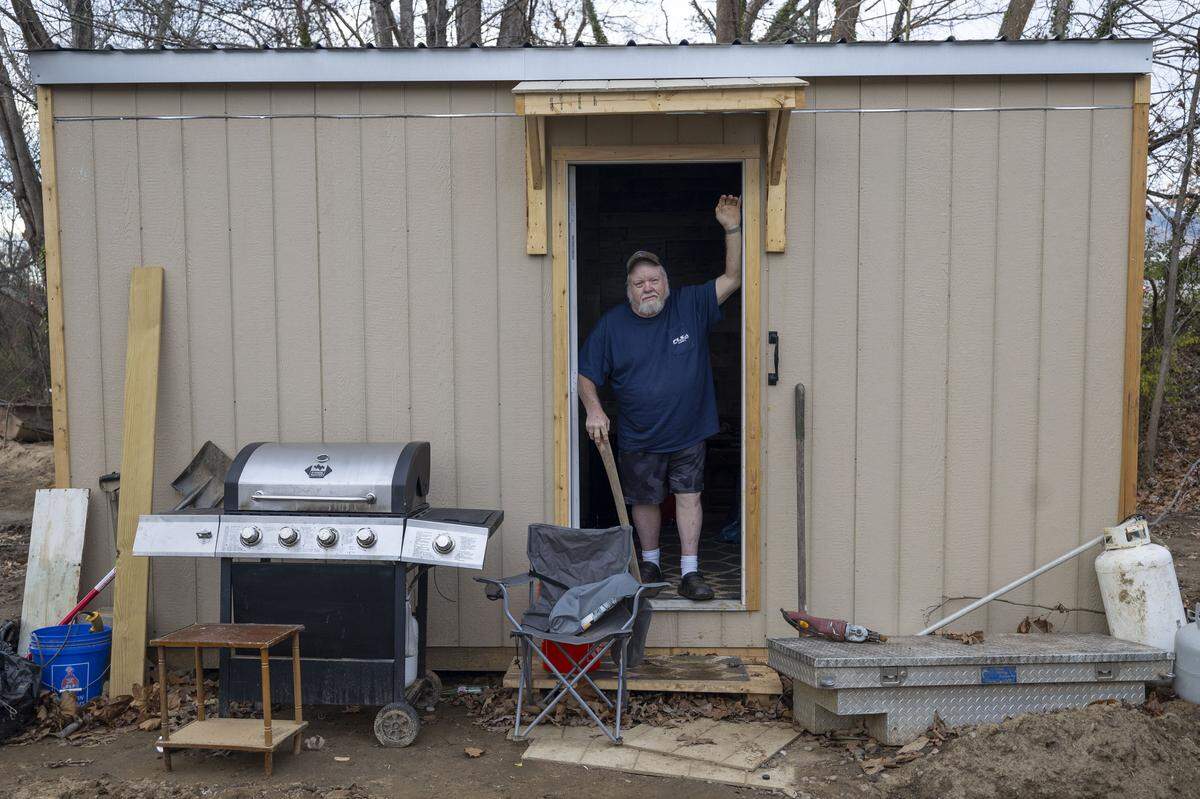
Pless said he visited a Haywood County home with Matt Calabria, director of the Governor’s Recovery Office for Western North Carolina, and met residents living in donated campers. State leaders assured him they would work with those families before winter. Counties are coordinating with GROW NC to connect people to resources.
“I know of none that have fallen through the cracks, but it’s a massive number, and it’s going to take some time,” Pless said.
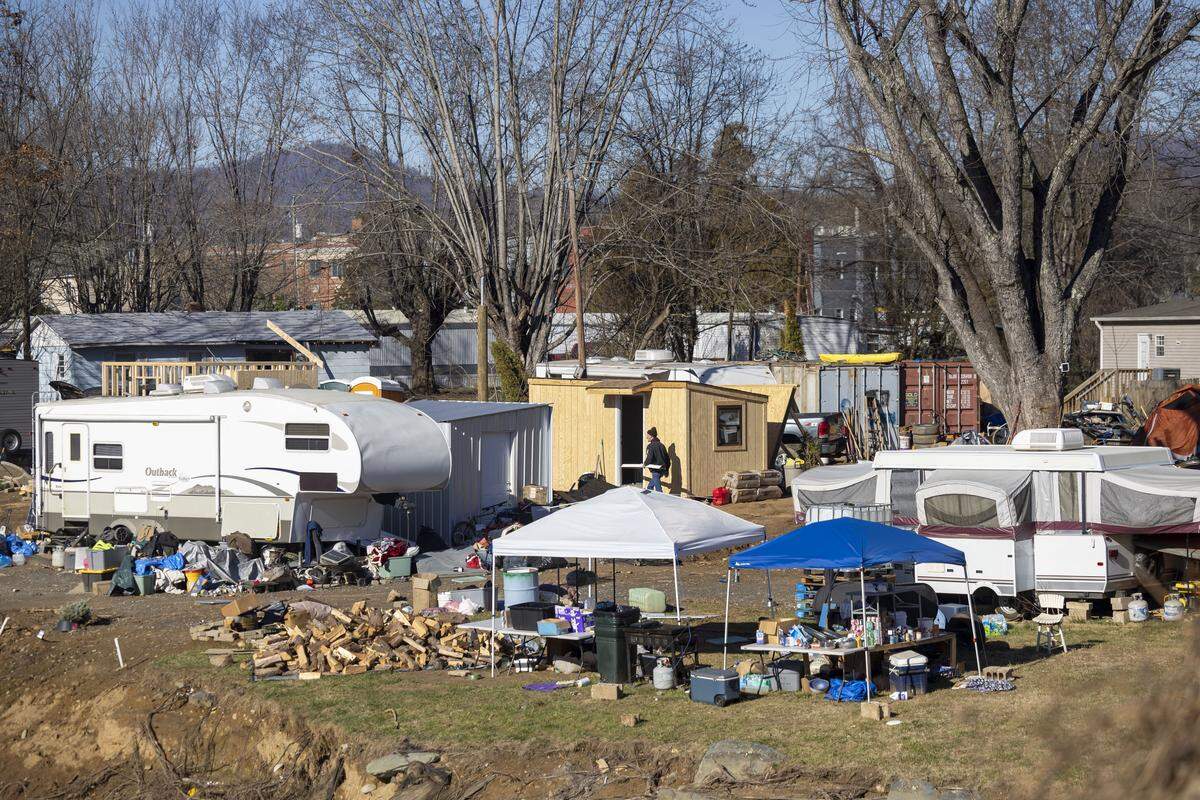
In Buncombe County, homelessness coordinator Lacy Hoyle said Helene’s effects are still visible. Demand for services has surged.
“Our emergency shelters were already pretty well utilized before Helene,” she said. “They’re pretty full almost all the time these days.”
Point-in-time data collected in January in the area found 35% of unsheltered people in the area linked their homelessness to the storm.
Cantrell said BeLoved NC is seeing more homeless people, with many living in cars.
“Often people are seeking help, but they just don’t fit in the correct boxes,” she said. “Folks fall through the cracks.”
Garland, meanwhile, worries for the people affected by Helene in Clyde but also for the future of the town as it loses residents, affordable housing and a tax base.
The town is exploring options to build new subdivisions but has not yet found land. Clyde tried a similar approach after 2004 floods, when it partnered with Haywood County nonprofits to create the 44-home Barefoot Ridge subdivision.
Buyouts, however, have long been slow. None of the 11 Clyde homes damaged by Tropical Storm Fred in 2021 had been purchased by the time Helene hit — including Garland’s father’s, which he patched up just to stay in until the buyout finally went through.
She said she’s gotten questions about whether Clyde will exist a decade from now.
Her answer: “Of course Clyde will exist. It may look a little differently, but we will exist. We’re going to continue day by day to fight for what we can get for our community and learn to be more resilient going forward.”
This story was originally published September 22, 2025 at 5:00 AM with the headline "Helene damaged 73,000 NC homes. Some people are ‘losing hope’ waiting for help."