As Biden commutes death sentences, advocates hope Cooper will do the same in NC
READ MORE
The Final Days of the Cooper Administration
After eight years in office, the tenure of North Carolina Gov. Roy Cooper is coming to a close. Here’s coverage from The News & Observer that looks at the Democrat’s two terms and what’s next.
Expand All
As Biden commutes death sentences, advocates hope Cooper will do the same in NC

After 2 terms as governor, Cooper looks back at how NC became ‘a clean energy epicenter’

As NC Gov. Cooper leaves office, he’s learned from battles with legislature, business

In his farewell address, Roy Cooper touts North Carolina’s ‘great comeback story’

Roy Cooper’s life after the mansion: Sweaters, sports, driving and perhaps the Senate
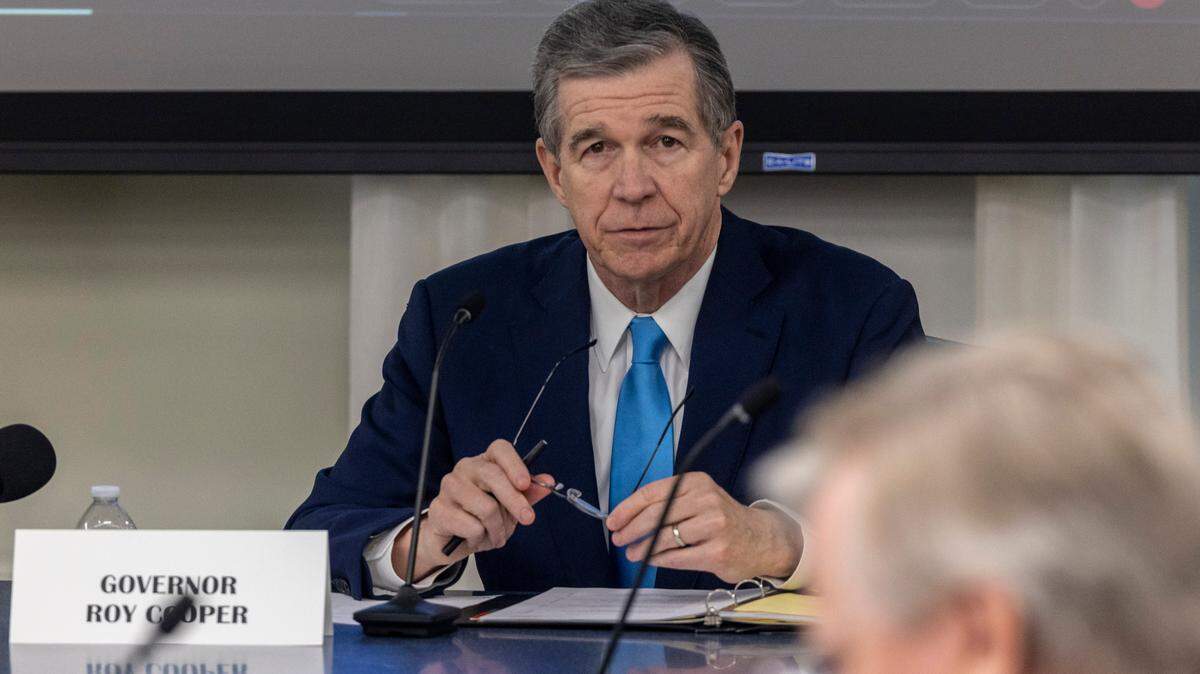
As Gov. Roy Cooper prepares to leave office, advocates are anxiously waiting to see if he grants more clemency in the final days of his term.
That includes possible additional pardons and commutations for people serving prison sentences, but advocates who have spent years pushing for an end to the state’s use of the death penalty are hoping Cooper will also commute the death sentences of the 136 people on death row, changing them to prison terms.
The movement to extend clemency to the state’s death row population has been growing for years, and now, advocates and inmates who have petitioned for clemency or challenged their sentences in court are waiting to see if the outgoing governor will take more action before a new governor is sworn in.
It comes as President Joe Biden on Monday commuted the sentences of 37 of the 40 men on federal death row to life without the possibility of parole, amid calls from religious and civil-rights groups, The Wall Street Journal reported.
“Make no mistake: I condemn these murderers, grieve for the victims of their despicable acts, and ache for all the families who have suffered unimaginable and irreparable loss,” Biden said in a statement.
“But guided by my conscience and my experience as a public defender, chairman of the Senate Judiciary Committee, Vice President, and now President, I am more convinced than ever that we must stop the use of the death penalty at the federal level.”
North Carolina continues to sentence people to death, including as recently as last year, but hasn’t executed anyone since 2006.
Before that, in the years after Cooper was first elected attorney general and took office in 2001, the state executed 27 people, according to the Death Penalty Information Center.
In 2022, the N.C. Coalition for Alternatives to the Death Penalty launched a campaign calling on the Democratic governor to commute all death sentences to prison terms, and use his authority “to send the powerful message that North Carolina is turning the page on this archaic practice.”
The campaign has included billboards, rallies and a two-week-long, 136-mile walk between Winston-Salem and Raleigh this fall, to raise awareness of the 136 people on death row.
Supporters of the campaign include former prisoners who were exonerated after serving time on death row, and people who have lost family members to murder.
Monday, Cooper pardoned nine people and commuted the sentences of six more, though none of the people are on death row. In a statement, he said he “plans more clemency announcements before the end of the year.”
In response to questions from The News & Observer about whether Cooper will grant more clemency, including to any death row inmates, Ben Conroy, a spokesperson for the governor, said “the Office of the Governor, including the offices of Executive Clemency and General Counsel, are continuing to review all petitions for clemency, including those seeking commutations of death sentences.”
Before Monday, Conroy said that in his eight years in office, Cooper had so far issued 20 commutations and 23 pardons.
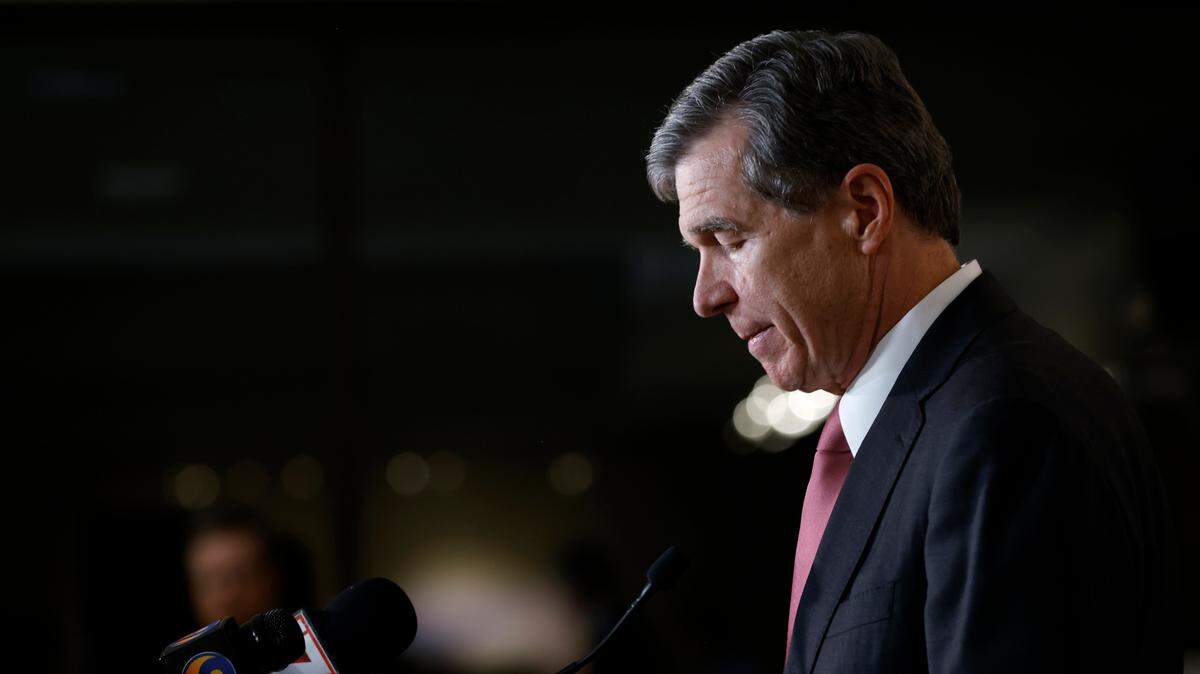
In December 2022, as civil rights groups and advocates were holding rallies outside the governor’s mansion and marching in downtown Raleigh calling on him to more frequently use his clemency powers, Cooper commuted the sentences of six people in prison, and pardoned four others who were convicted decades earlier.
He took additional action in December 2023, then issued commutations and pardons this year in July. And in November, he granted a pardon of innocence to a Pitt County pastor who served eight years in prison for a robbery he didn’t commit. The pardon made the pastor eligible for $400,000 in state compensation.
NC has fifth-highest death row population in the country
Wanda Bertram, a spokesperson for the Prison Policy Initiative, a think tank that wants Cooper to commute all death sentences, said the end of a governor’s last term in office presents a “slim window during which most outgoing executives will do clemency,” since many elected officials continue to see it as a political liability.
Unlike some governors who are potentially closing their political careers, however, Cooper has been considering a run for U.S. Senate in 2026.
Bertram said Cooper has an opportunity to take more action on clemency than most other governors, with North Carolina’s death row population being the fifth-highest in the country.
“He has not stuck only to people who were convicted of nonviolent offenses, which is kind of a common tack for particularly liberals to take these days; he’s issued some commutations to people convicted of murder, which I think is commendable,” Bertram said.
“When it comes to clemency, this is supposed to be a form of mercy that is available, theoretically, to anyone, so no one’s case should be off the table,” she said.
Matthew Charles, a senior policy advisor at Families Against Mandatory Minimums, a nonprofit advocacy group that seeks to reform prison sentences, said clemency is a “powerful tool that’s rarely used by governors and the president, and the privilege was given to them for a purpose, but they need to start utilizing it.”
“Whenever you grant somebody clemency, you’re saying you’re showing this person grace, you’re showing this person mercy, you’re giving them an opportunity to reunite with their family,” Charles said.
“And it is our strong belief that anytime you take a woman or a man away from society and incarcerate them, you need to do it with the best intention in mind, especially if that person doesn’t have a life or death sentence, of reuniting this person with his family, with his children, with his spouse, and with his community,” he said.
Charles, a North Carolina native, spent 22 years in federal prison for selling crack cocaine and illegally possessing a firearm. He was initially released in 2016, but prosecutors fought his release, saying he did not qualify, and he was ordered to report back to prison. His lawyers finally secured his release in 2018, under the provisions of the federal First Step Act, which had recently been signed into law.
“Anytime that you make a person go in and serve their entire sentence, or close to 80% or 85% of their sentence, then that person has no incentive to be rehabilitated,” Charles said. “He has no incentive to produce any good behavior. So, therefore, that makes for not only a dangerous situation for prisoners and staff behind the walls, but also for society when that person has been released.”
Could the Racial Justice Act end up in court again?
Advocates say there is particular urgency to commute death sentences before Cooper leaves office because of the possibility that a 2020 ruling by the N.C. Supreme Court that allowed inmates to challenge their sentences under the Racial Justice Act could be overturned.
The law, which was passed by Democrats in the General Assembly in 2009, allowed inmates on death row to challenge their sentence if they believed race was a factor in jury selection or sentencing. Inmates who successfully proved discrimination would have their sentences reduced to life.
Four death-row inmates — Marcus Robinson, Tilmon Golphin, Christina Walters, and Quintel Augustine — successfully challenged their sentences under the law in 2012, and had their sentences commuted to life without parole.

In 2013, the General Assembly, which was then under Republican control, repealed the law. Lawmakers who supported amending and later repealing the law said the death penalty was a necessary deterrent.
After the N.C. House voted to scale back the law in June 2012, Republican Rep. Paul “Skip” Stam of Apex said doing so was “necessary to end the moratorium on the death penalty.”
“The death penalty acts as a deterrent only if it is used,” Stam said, according to NBC News. “The death penalty will obviously not deter if the state only pretends to have a death penalty and never carries out the sentence.”
Former Rep. Nelson Dollar, a Cary Republican, said during floor debate that the law was well-intended but was giving convicted killers — regardless of race — an opportunity to try to avoid the death penalty, The N&O reported at the time.
“This is about monsters,” Dollar said. “Monsters. Evil people doing unspeakable, inhuman acts. That’s what this is about.”
A door ultimately remained open to Racial Justice Act claims moving forward, when the Supreme Court ruled in June 2020 that inmates who had filed challenges before the law was repealed could still be heard in court.
Earlier this year, lawyers for Hasson Bacote, a Black man who was sentenced to death in 2009, argued that there was a clear pattern of racial bias in jury selection, and that people of color have historically been excluded from being chosen to serve on capital juries, during a two-week hearing in Johnston County.
The case, which is the first to be heard since the Supreme Court’s ruling four years ago, could impact not just Bacote but more than 100 other inmates on death row, according to the Death Penalty Information Center.
But even after Superior Court Judge Wayland Sermons reaches a verdict, the case could be appealed and end up at the state’s highest court, which has had a Republican majority since 2023.
Gretchen Engel, the executive director of the Center for Death Penalty Litigation, which is part of Bacote’s legal team, said that she’s hopeful he will prevail with the pending verdict, but said it’s likely the state would appeal.
“That might give them the opportunity to revisit that 2020 ruling,” Engel said, referring to the Supreme Court. “And obviously the people who were dissenters in that case now command a majority.”
‘The death penalty is not making communities safer’
Engel said one of the reasons she’s hopeful Cooper will take action on death sentences is because “he is a person who really cares about racial justice, and I think the death penalty is a racial justice issue.”
She said she has been encouraged by some of the steps Cooper has already taken toward that cause, including appointing more women and people of color to judicial positions, and establishing the Task Force for Racial Equity in Criminal Justice in 2020.
“He has an opportunity to look at basically 50 years of history of how the death penalty has played out in North Carolina,” Engel said. “And I think he’s somebody that cares about public safety, and cares about evidence-based solutions to problems and serious policy discussions, and can see that the death penalty is not making communities safer.”
One of the task force’s recommendations was to create the Juvenile Sentence Review Board, which Cooper did through executive order in April 2021.
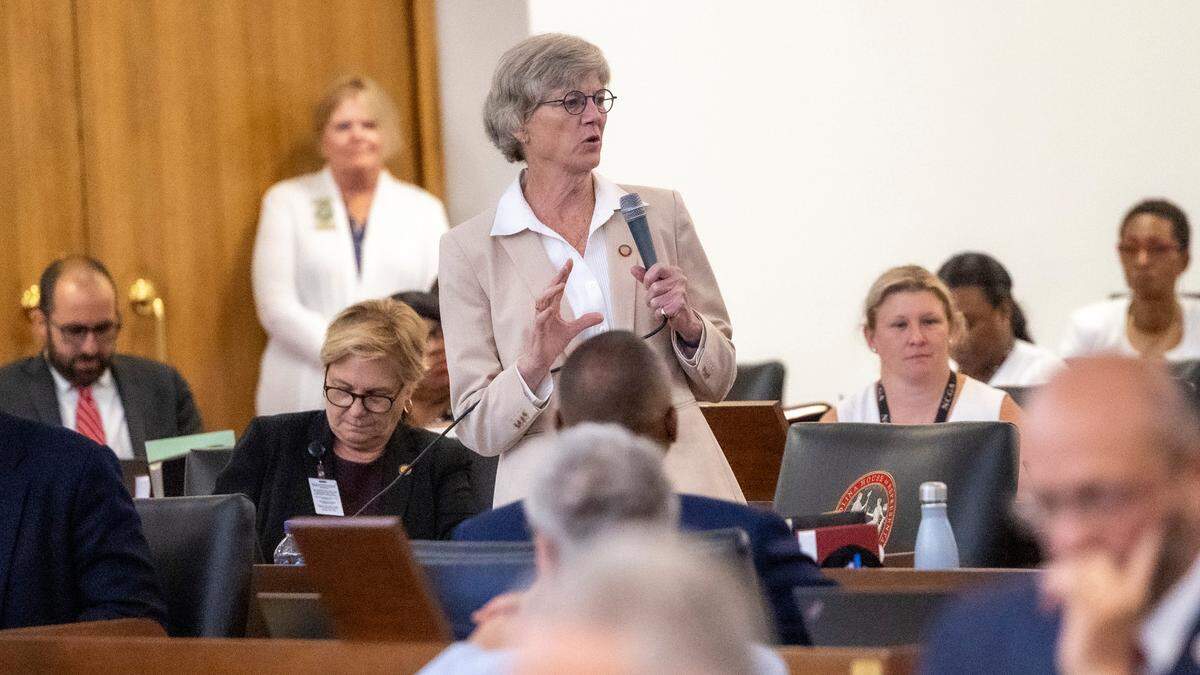
State Rep. Marcia Morey, a Durham Democrat who has chaired the review board since it was formed, said it was a “bold move” by Cooper.
She said the board has reviewed more than 200 cases, and said Cooper has carefully reviewed its recommendations. Most recently, in November, he commuted the sentences of four people at the recommendation of the board.
Morey, who was a district court judge for 18 years before being elected to the General Assembly, said that whether it’s a juvenile sentence or a capital case, the conditions that lead to crime are almost always the same.
“It involves people who have had mental illness and no treatment, childhood trauma, lack of support, poverty,” Morey said. “So, when you grow up and have no control over your life in a situation like that, when you’re a teenager, bad things happen.”
“And I think clemency is about looking at the time that has been served, and also some belief in the redemption of people,” she said.
This story was originally published December 23, 2024 at 5:00 AM with the headline "As Biden commutes death sentences, advocates hope Cooper will do the same in NC."