NC has 136 people on death row but has had no executions since 2006. Here’s why
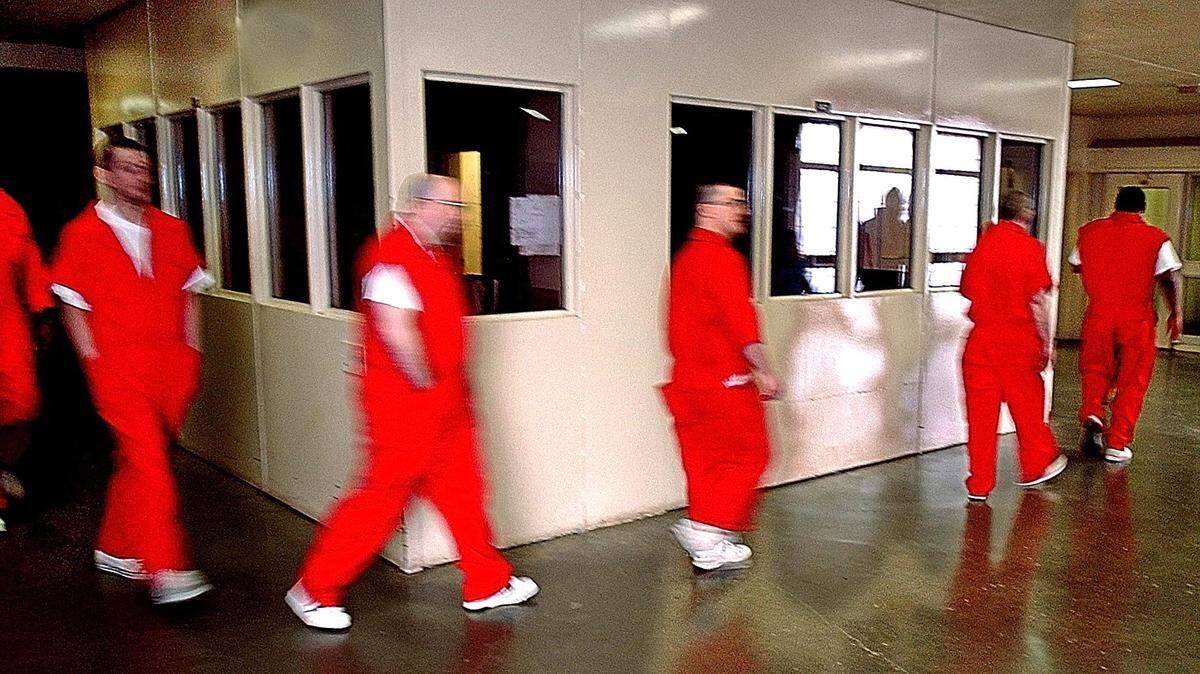
The Supreme Court of North Carolina’s decision last week to uphold the death sentence of a man convicted of killing two people in Raleigh in 2016 raises the question: When was the last time a person was executed in the state?
Samuel Flippen, 36, was executed by lethal injection on Aug. 18, 2006, for the murder of his 2-year-old stepdaughter, The News & Observer previously reported.
In the almost two decades since, death sentences have continued to be handed out, but none have been carried out.
In the early days of the Tar Heel State, executions were typically left to local governments. It wasn’t until 1910 that the state assumed responsibility, The N&O reported last year. From then on, besides a four-year pause in the 1970s when the death penalty was illegal nationwide, North Carolina steadily carried out executions.
According to a 2021 report by an Appalachian State University professor, from 1977 to 2007, North Carolina ranked sixth in the nation for the number of death sentences handed out and 17th in the country for executions compared to the number of death sentences given.
“Historically, North Carolina was a leading death penalty state,” the report stated.
Medical board objection
That changed in 2007, when the state medical board forbade doctors from doing anything more than observing executions, leading to a lawsuit from the N.C. Department of Adult Correction. The state Supreme Court ruled in 2009 that the board couldn’t prevent doctors from participating, but the legal battle had already led to an unofficial moratorium on executions that remains in place today.
Additionally, a series of legal challenges over the Racial Justice Act, which passed in 2009 but was repealed in 2013, has further complicated matters.
Under that law, race could not be considered in implementing the death penalty, and inmates could challenge their sentence if they believed race was a factor in jury selection or their sentence.
Though the law was repealed, the state Supreme Court ruled in 2020 that inmates who had filed a challenge under the act before its 2013 repeal could be heard in court. An outcome is still pending in the case of Hasson Bacote, the first inmate whose Racial Justice Act case has been heard since that ruling.
Death sentences declining
Some argue the lull in executions has been for the better. Robin Maher, the executive director of the Death Penalty Information Center, a national nonprofit that educates the public on the death penalty, said North Carolina is one of many states to slow down on executions.
“New death sentences and executions have been declining for decades, and North Carolina is consistent with this trend,” Maher said via email. “Nationally, public support for use of the death penalty remains at a 5-decade low, and a 2019 poll found 75% of registered voters in North Carolina support alternatives to the death penalty.”
That poll, conducted by Public Policy Polling, found that, when presented with a list of five possible sentences for those convicted of first-degree murder, 25% of the 501 people surveyed preferred the death sentence, while 54% preferred some version of life in prison without parole, 18% preferred a “lengthy” sentence with the option of parole and 3% were unsure.
“In 2024, we saw several high-profile cases of death-sentenced prisoners with credible evidence of innocence, and the 200th exoneration from death row,” Maher said. “The death penalty is also expensive and resource intensive, which means that many prosecutors are being more selective when deciding whether to invest taxpayer dollars in pursuit of a death sentence.”
According to the N.C. Department of Adult Correction, there are 136 people on death row, including two women. The women are housed at Raleigh’s N.C. Correctional Institute for Women, while the men live in Raleigh’s Central Prison.
This story was originally published December 19, 2024 at 7:00 AM with the headline "NC has 136 people on death row but has had no executions since 2006. Here’s why."
CORRECTION: Editor’s note: This story has been updated to reflect that the Death Penalty Information Center is not an advocacy group. The News & Observer apologizes for this error.