
What a change in employee status in the last NC budget means for some state workers
READ MORE
The State of the State Employee
The stability of a state government job has long been a draw, along with the salaries, bonuses and benefits of public service. But with a nationwide staffing shortage, recent inflation chipping away at salaries and North Carolina lawmakers scaling back those benefits, the state has work to do to find — and retain — its workforce. Plus, who’s employed by North Carolina and why were some of their jobs just reclassified?
Expand All

‘Make it worth their while to stay.’ In labor crunch, how will NC keep state workers?

What you should know about being a state employee in North Carolina
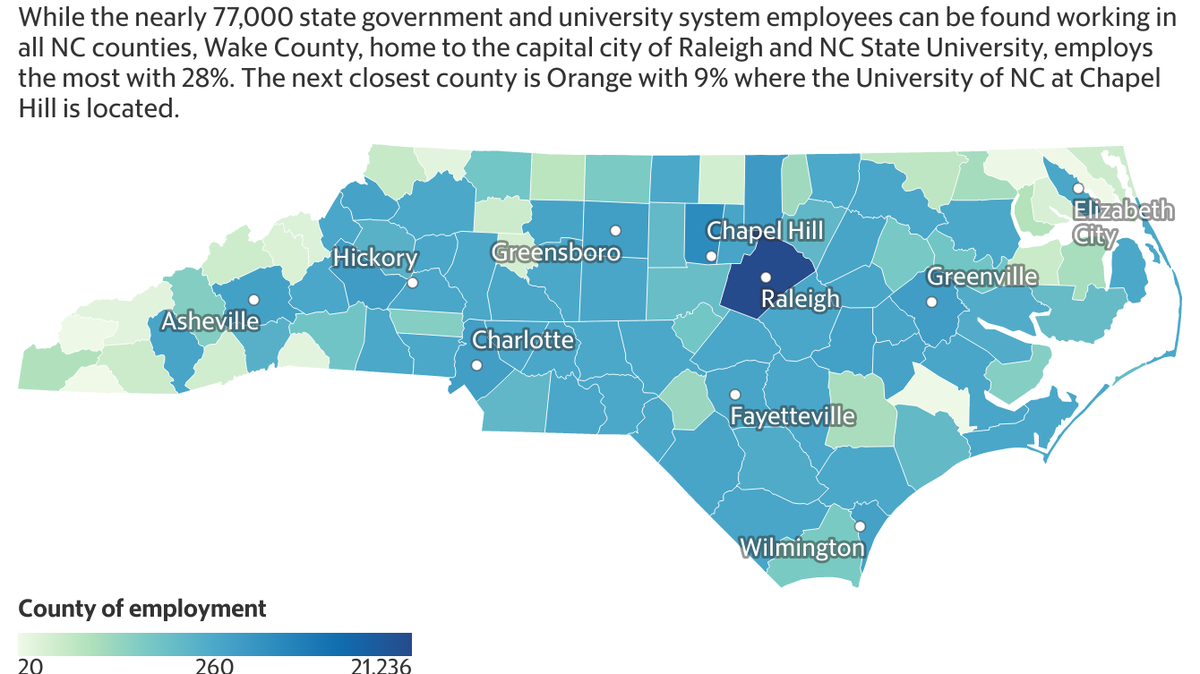
How many people work for the state of North Carolina? Where? Here’s the breakdown.
)
What a change in employee status in the last NC budget means for some state workers
When the 2021 state budget became law, it ended a years-long stalemate between North Carolina’s Democratic governor and the Republican-majority state legislature that resulted in long-awaited raises and bonuses to state employees.
But down in the details was a provision that changed the lives of some state employees in a way some think is for the worse.
More N.C. Department of Health and Human Services workers have become exempt from the Human Resources Act, meaning they lose the grievance process available to nonexempt employees.
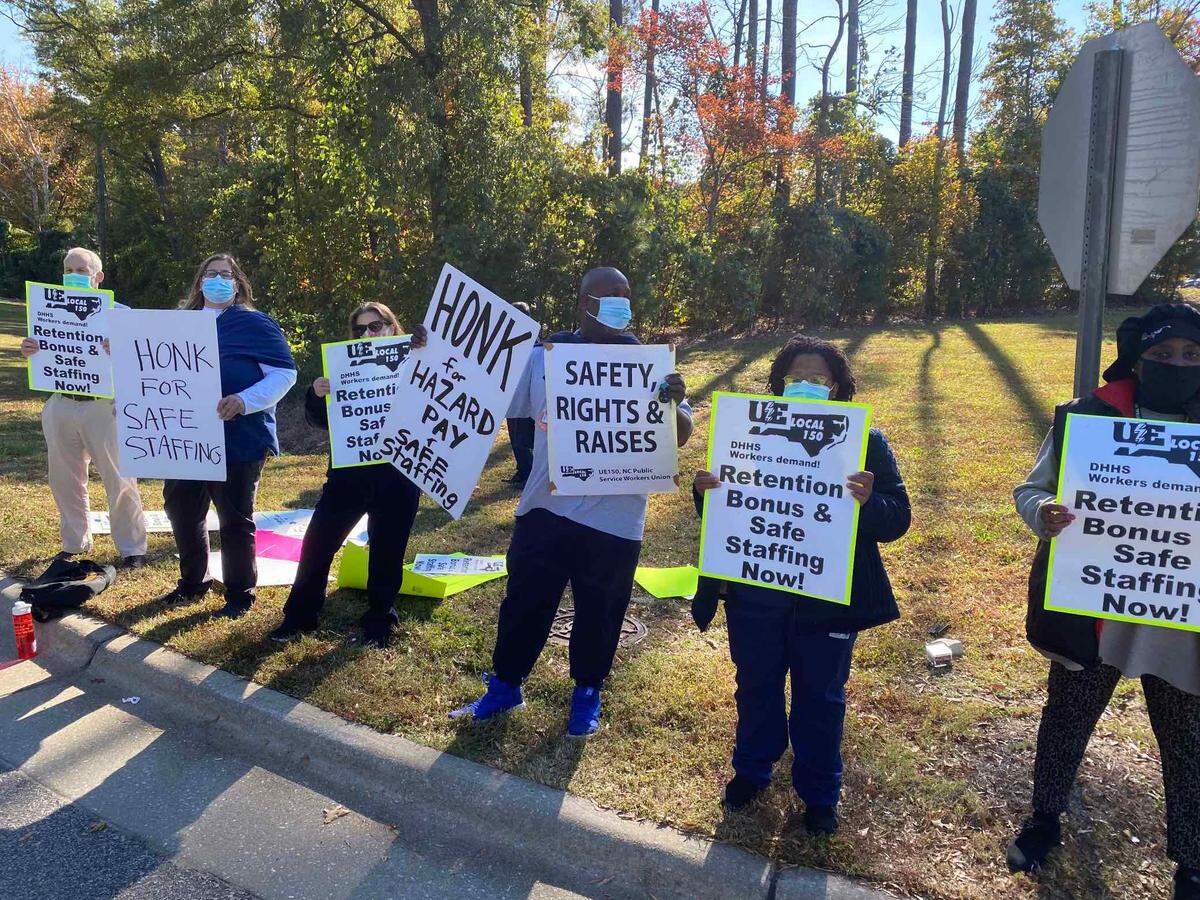
UE Local 150, the service workers union, opposes the change, and other employees are worried about what it means for their jobs and recruitment and retention of state employees.
There are different types of exempt and nonexempt employees who work in state government. Higher-paying positions are often exempt, including policy-making and managerial jobs. That means they are at-will employees and do not have the same process of recourse if they have a grievance.
The new provision making more DHHS employees exempt included nurses and physicians at state-run mental health facilities, which are having high staffing shortages.
Those jobs could potentially be filled sooner because of the shorter advertising time and less restrictive salaries.
Ronnie Condrey, special adviser to the head of the Office of State Human Resources, said jobs that are exempt from the Human Resources Act are not required to be advertised before being filled.
“There are also different policies about setting salaries,” he said, which means pay can be, but isn’t necessarily, higher than in nonexempt positions.
The Division of State Operated Healthcare Facilities sent out a letter to employees in February telling them the change “allows for additional flexibility in HR processes including the ability to shorten and adapt hiring timelines for future employment needs and apply appropriate classification adjustments efficiently.”
Employees were told to acknowledge the letter, though there is no option to opt-out of the new policy.
Dr. Rakesh Patel, a physician at Central Regional Hospital and the president of the Butner Area chapter of UE 150, predicts the change will affect how employees communicate about their needs and problems.
In an interview earlier this year, he said that upper management gets “very upset when people are protesting or talking to the press.”
The union has been vocal about staffing shortages and other needs of workers.
“I don’t think anyone will be talking [when] we become at-will employees,” he said in an interview in January, before employees were informed about the change.
Chances of a fix
The State Employees Association of North Carolina, which lobbies at the General Assembly, says DHHS could address the issue in a way that leaves the provision in place but could add protections.
SEANC Executive Director Ardis Watkins said that instead of new legislation to bring back the grievance rights that were in the law before the 2021 budget was signed into law, policy changes might be able to achieve the same end result.
SEANC spokesperson Jonathan Owens said Sunday that they “believe DHHS leadership is working in good faith to make sure employees’ rights are protected. We have no intention to go to lawmakers to solve this issue when we believe DHHS leadership is committed to employees.”
Watkins said that SEANC generally has a policy of being against exempting anyone from the Human Resources Act. She said they’d like to see the system get fixed so that the state can hire people with their grievance rights in place, and still be able to fill positions quickly.
“The bottom line is that it’s not a good thing for the employee. You want to be non-exempt,” said Owens.
The legislative session starts on May 18.
This story was originally published May 15, 2022 at 6:00 AM with the headline "What a change in employee status in the last NC budget means for some state workers."
CORRECTION: This story has been updated to correct how the exempt employees issue could be addressed. SEANC advocates for a DHHS policy fix, not a legislative one.
.jpg)