
‘Make it worth their while to stay.’ In labor crunch, how will NC keep state workers?
READ MORE
The State of the State Employee
The stability of a state government job has long been a draw, along with the salaries, bonuses and benefits of public service. But with a nationwide staffing shortage, recent inflation chipping away at salaries and North Carolina lawmakers scaling back those benefits, the state has work to do to find — and retain — its workforce. Plus, who’s employed by North Carolina and why were some of their jobs just reclassified?
Expand All
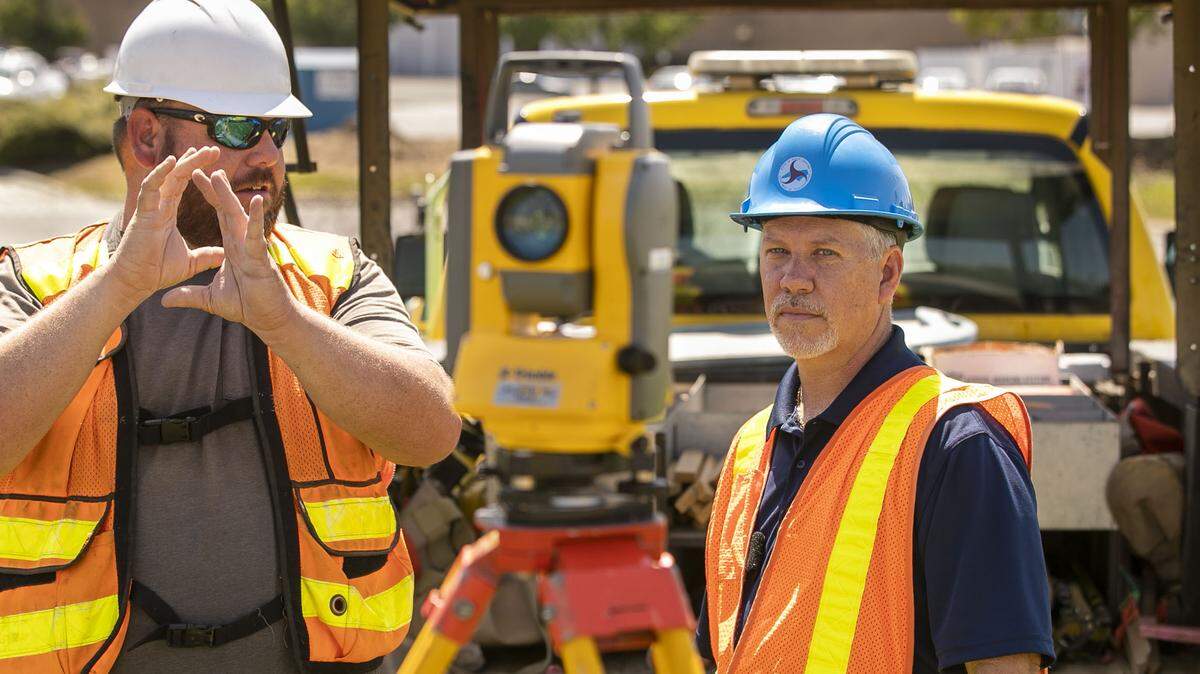
‘Make it worth their while to stay.’ In labor crunch, how will NC keep state workers?
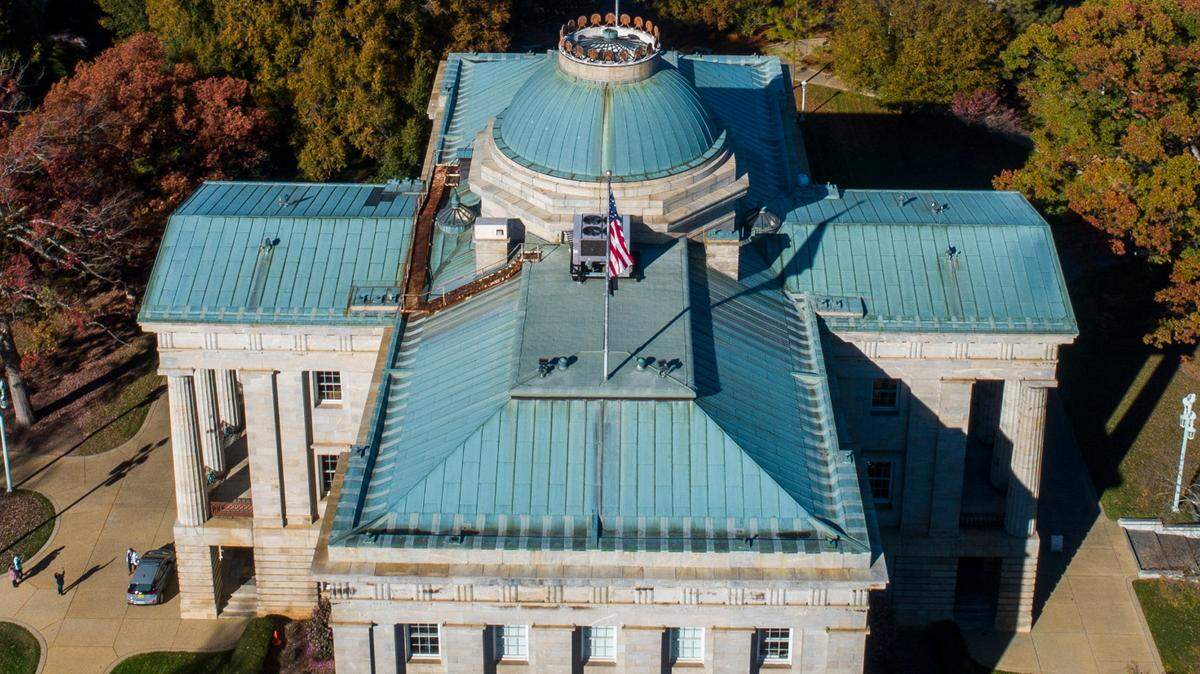
What you should know about being a state employee in North Carolina
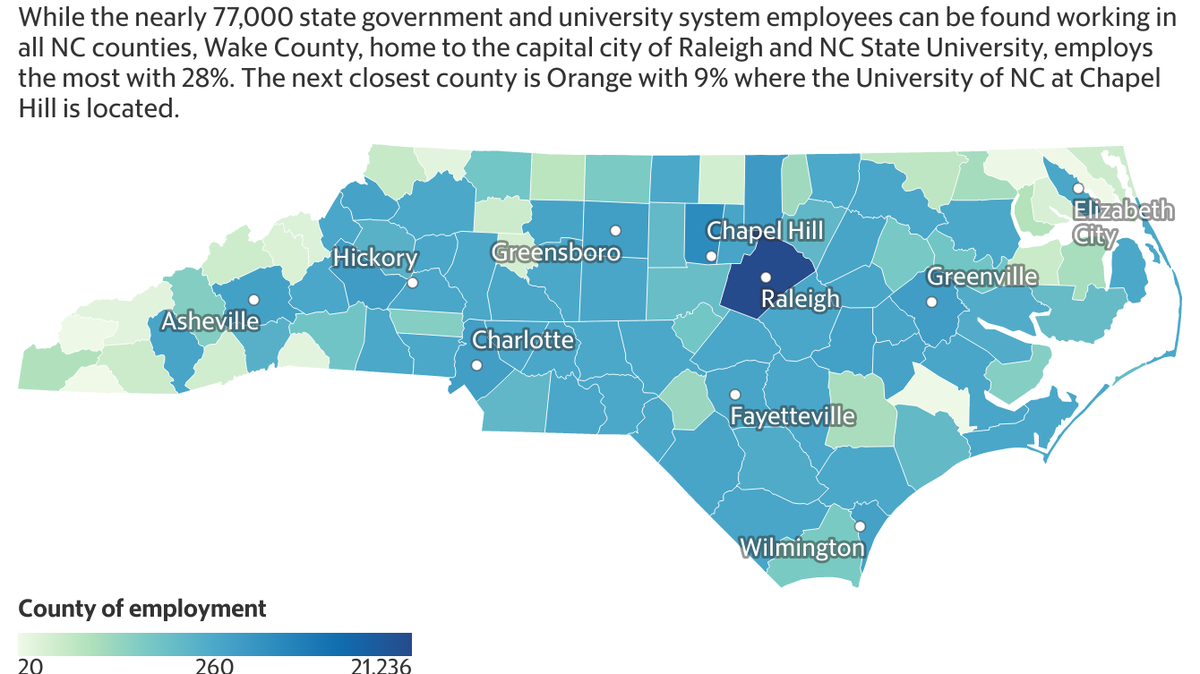
How many people work for the state of North Carolina? Where? Here’s the breakdown.
)
What a change in employee status in the last NC budget means for some state workers
At the downtown Raleigh office of the state Department of Agriculture, there are signs of tradition: A train track runs around the ceiling, a colorful quilt hangs on the wall and a tractor sits in the lobby. There’s a full-size replica front porch complete with rocking chairs.
There are also signs of change. Before the pandemic, 250 people worked in the building, deputy agriculture commissioner N. David Smith said. Now it depends on the day. Some people come into the office every day now, others four, three or two days a week, or only for special meetings.
With recent turnover, about 15% of the agency’s jobs are vacant, Smith said earlier this spring. Job application totals have dropped by half, he said, shrinking the pool of prospective employees to fill those jobs.
Other changes are longer in developing. Smith said the conventional wisdom that working for the state is a good career path is still generally true, given the benefits like the state health plan and retirement. But newer workers don’t stay their entire careers anymore, he’s noticed, and for them, “state employment is not a desired place to be anymore.”
“Everything has changed,” he said.
What hasn’t changed: If you’re looking for a job, state government is hiring.
The stability of a state government job has long been a draw, along with pay, benefits and public service.
But with recent inflation chipping away at salaries and lawmakers scaling back those benefits, the state has work to do to keep employees on the job — especially as so many other places are hiring, from newcomers to the state making a big entrance, like Apple and Toyota, to existing employers racing to keep up with a labor shortage.
Like many workplaces as the country emerges from the pandemic, state government has worker shortages. The workforce is about 80,000 people, including state agencies and university employees. And as of late April, more than 1,400 job positions are accepting applications online.
There is a 20% vacancy rate across state government jobs, State Budget Director Charlie Perusse said this past week.
Shortages have been most acute in the Department of Health and Human Services and the Department of Public Safety, but are felt throughout the workforce.
Those who have ridden out the pandemic at work have felt it in different ways.
From helping colleagues figure out remote meetings to handling the influx of people coming to state parks, to working in a prison or a hospital or a state agency headquarters in downtown Raleigh, state employees interviewed by The News & Observer give a window into the state of the state employee.
What keeps workers in state jobs?
A common theme is that the pay could be better and the benefits used to be. Many work for North Carolina because they enjoy what they do. Still, the private sector beckons.
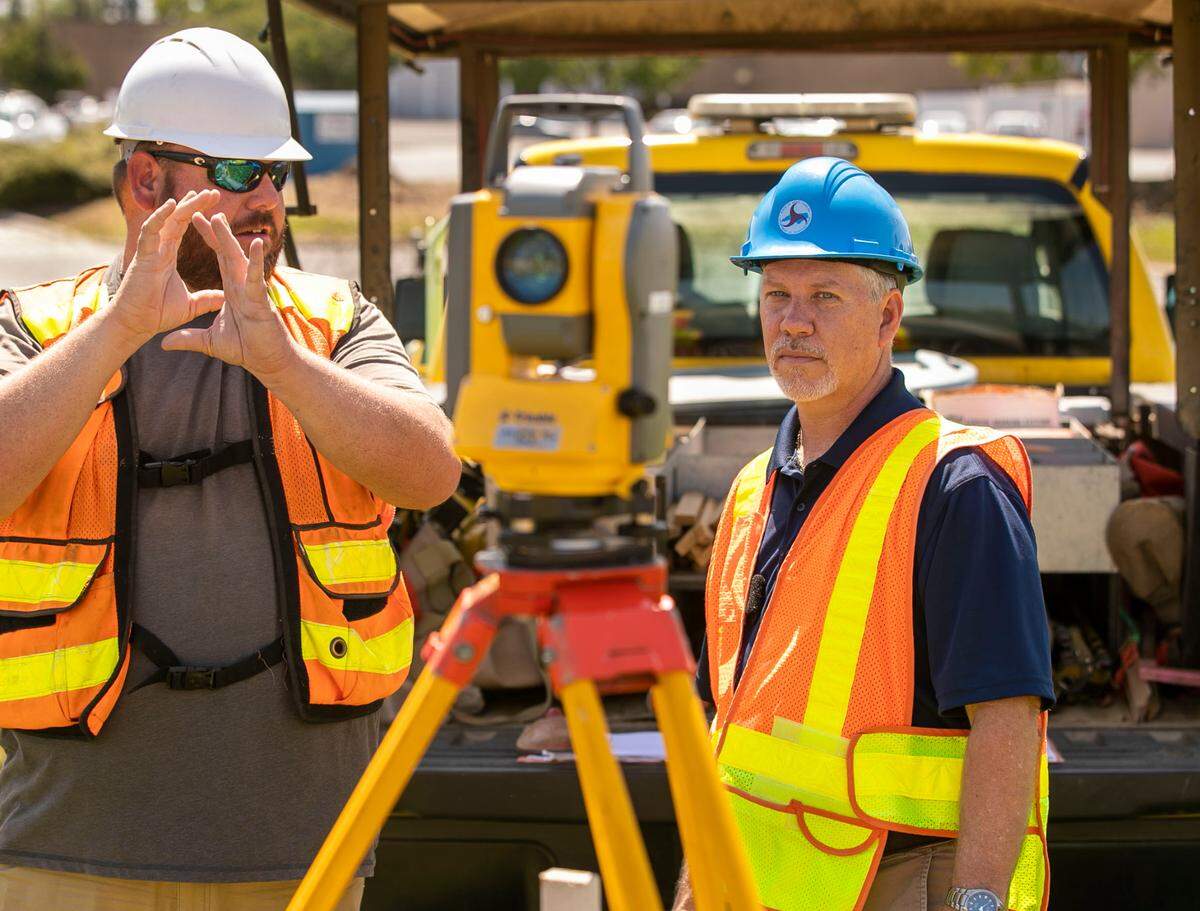
Dan Cumbo, 52, started his career working for the state, left twice for the private sector and came back. The N.C. Department of Transportation resident engineer works in Sampson County.
He did surveying for the Interstate 40 project in 1989 while he was an N.C. State student.
“I was hooked. It was all I wanted to do after that,” he said.
Even though he left briefly in his 20s and then for a longer period of time in his 40s, he came back to NCDOT for the pension and the work-life balance.
All told, he’s worked for NCDOT for 18 years, including a stint in the Wilmington district. He’s from Clinton, so his current job was a homecoming.
“In a state government job, you have to have a work-life balance. There’s no question there’s a lot of dedicated, hardworking state employees giving it their all, and more,” he said. “And you can still have a life.”
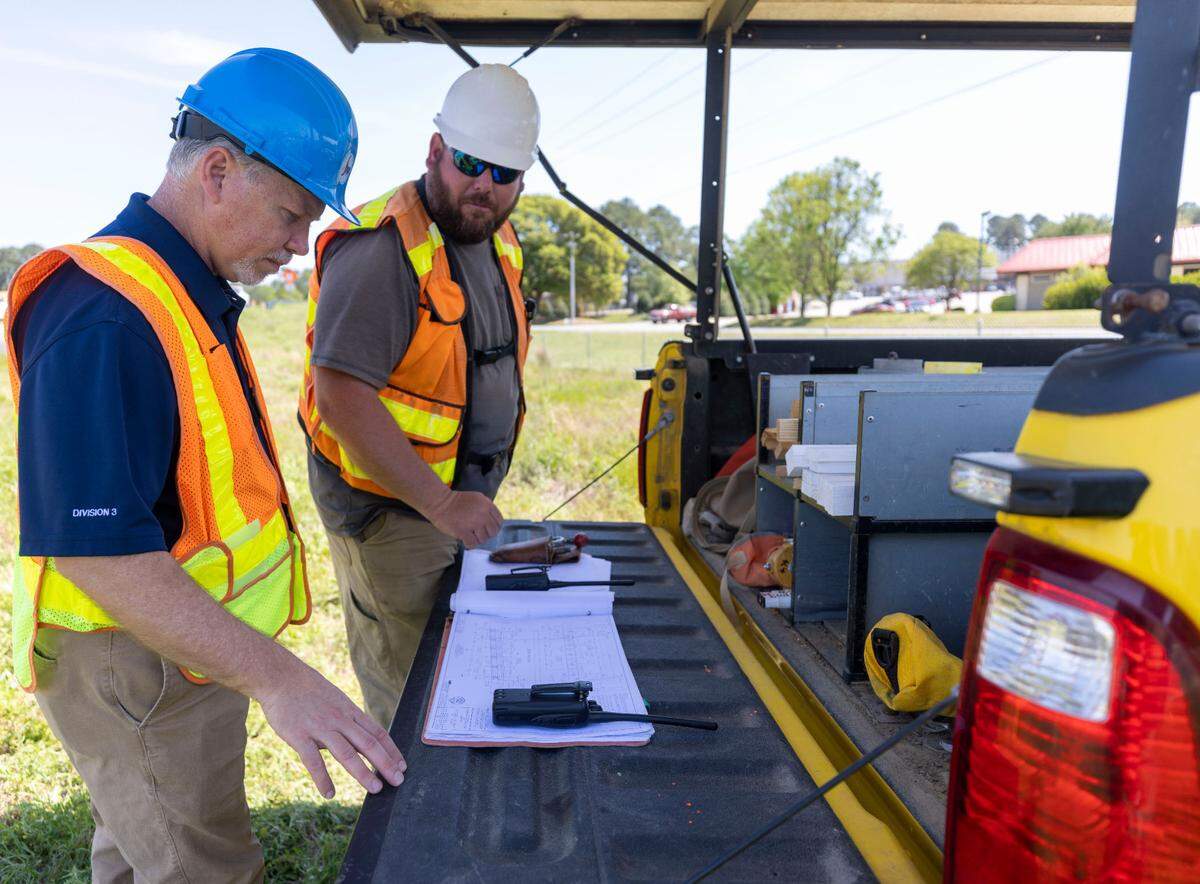
On a recent afternoon, Cumbo and project inspector Mark Holland were on a Clinton job site where a footer was being installed for a bridge going in as part of the widening of N.C. 24 to a four-lane highway. The road project has shortened a commute between Clinton and Fayetteville from 45 minutes to 25 minutes, they said.
Holland, 51, has worked in the same NCDOT office in Clinton, which is about 63 miles south of Raleigh, for 27 years. He grew up nearby in Salemburg.
“I enjoy it. You get to see something accomplished,” he said about his job.
About 30 people work in the engineering office, including Cumbo, Holland and contractors. There are job openings at NCDOT and that location too, just like all the other state agencies.
Work in that office has changed because of the pandemic. When computers are replaced now, laptops are chosen over desktops. Documents are sent digitally instead of using the long rolls of paper plans, though those are still used on site, as they were before the pandemic.
Last year, Cumbo had a tough bout with COVID-19. His wife did, too, and has taken much longer to recover. Cumbo was hospitalized and was out of work for weeks. His wife was sick for months.
When he caught COVID-19, “I didn’t really think I would get sick, but it was really, very bad,” Cumbo said, calling it the sickest he’s ever been in his life. “I just recommend everyone get vaccinated.”
Dealing with staff shortages
Early in the pandemic, in the spring of 2020, people were urged to spend more time outdoors. But that put a strain on the state parks, forcing some to close temporarily. That year ended with a record high in parks visitation, the N&O reported in early 2021.
Crystal Lloyd, 32, has worked for State Parks for a decade.
She got her first job with the parks at age 16, as a summer job.
“That’s when I discovered everything a park ranger does,” she said, from being law enforcement to an emergency responder and educator. And she gets to be outside all day.
“The folks before you say, ‘Oh, you gotta get a state job, that’s a good job,’” she said. So she did, and went to N.C. State University for a degree in parks, recreation and management.
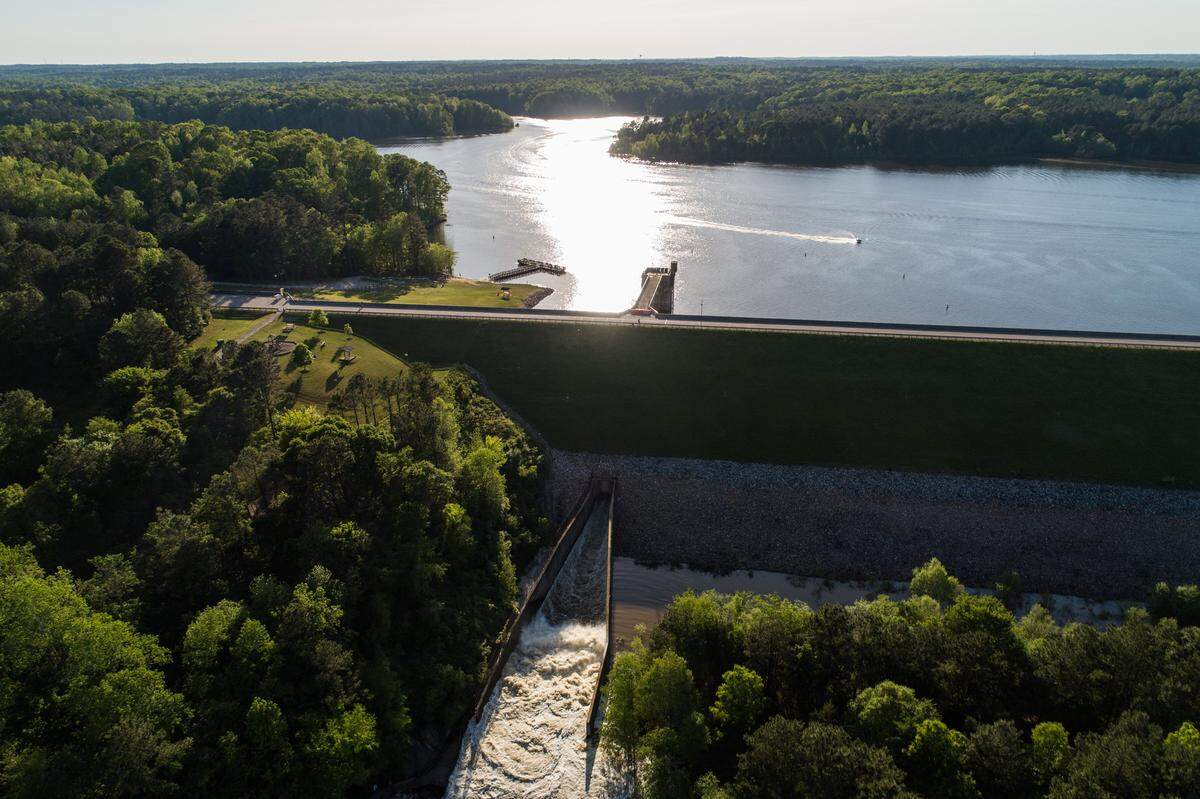
Now she’s a parks superintendent at Falls Lake. It is busy there every weekend now, though not quite at the levels of 2020 and 2021. Staffing shortages mean fewer people to handle the work. Lloyd said they are “extremely understaffed.”
Lloyd was interviewing 10 job candidates the day she was interviewed by The N&O, and had another 10 lined up for the day after. She said there’s room for improvement in State Parks’ salaries, especially for field positions.
“The 2.5% (legislative raise) this and next year, it’s better than nothing, and it is better than the years when they just gave us bonus leave.”
Before Lloyd’s promotion she was out in the field more, but now that staffing is short, she’s back outside more often and needing to work weekends.
“I love state parks. I’m extremely passionate. I can’t think about anything I’d rather do with my life,” she said.
Lloyd ticks off a list of all the reasons she loves what she does, from meeting the park visitors and hearing their stories to being able to connect with the outside world.
A reason to stay
The average North Carolina state worker is middle-aged, at 46.
Public-sector workers’ median length of time at their jobs is six-and-a-half years, which is nearly twice the median for private-sector employees, according to pre-pandemic data from the U.S. Bureau of Labor Statistics. The agency reports that one factor is age, because about three-fourths of government employees are age 35 and older, compared to three-fifths in the private sector. Employees stay longer in federal and local government than state government, which has a median tenure nationwide of about five-and-a-half years.
Jessica Bynum-Hudson started working for the state when she was 21. She expected to stay a few years. But 16 years later, she’s still a state employee, still working in the prison system, and doesn’t plan on leaving.
“To be a state worker I believe it’s where the heart is. (It’s about) where you live, and you want to make a change in the community around you,” said Bynum-Hudson, 38.
Working in a prison, she said, is not like what you see on television.
“It’s something that’s never going to change: we’ll always have prisons and jails. It’s about how can we make them better?”
She said it is about building up a person so when they get out they have what they need.
“Offenders, when they get out, can they work from home? Can they get a job? Are they able to get an appointment? Have to drive far?” are all questions to answer.

“I love my job. I wouldn’t be here 16 years if I didn’t love it. It’s a very demanding job and long hours,” she said. “I love the stability. I love that it made me a better person.”
The stability and pay allowed her to buy a home and take care of her family.
Bynum-Hudson said that new workers don’t get the same benefits as they used to, though, including new hires after 2021 who won’t get health care upon retirement. Several employees interviewed by The N&O, even though they started before the benefit was dropped, cited it as a reason that future hires would be more difficult.
Recent legislative raises to catch up corrections employees were wonderful, she said. More employees would stay, she said, if they were given more pay and benefits, as well as training and whatever else they need to do their jobs.
“Make it worth their while to stay,” she said.
Half a century working for the state
Perhaps the best example of retention is the longest-serving employee of the Department of Agriculture and Consumer Services: Smith, the deputy commissioner. He has worked for leaders whose names are now on buildings. He’s about to hit 50 years of service with no plans to retire anytime soon. He plans to celebrate that August milestone anniversary by going to work.
Smith, 71, grew up on a farm in Johnston County where they grew tobacco, corn and cotton. Now his brother runs it as an agritourism pick-your-own strawberries farm.
Smith graduated with an engineering degree from N.C. State University in 1972 and went to work for the department that same year. He spent much of his career as director of the Standards Division before becoming deputy agriculture commissioner in 2004.

The return to in-person work, for those state workers who went remote during the pandemic, has been an agency-by-agency and boss-by-boss decision.
“We’re still trying to figure out the best model, and that’s where we’re still struggling internally,” Smith said. He said that the recent high gas prices add to the struggle of determining remote vs. in-person work. He lives in Raleigh and said he has a great remote work setup at home, but prefers going to his downtown office.
The answer to keeping employees, as Smith sees it: Money.
“I think the state salaries have really suffered. ... The state is so slow to make that change, to recognize a problem to fix, and get on and fix it,” Smith said.
During the pandemic, the pool of prospective employees has shrunk.
From 2019 through 2022, the raw number of applications to the Department of Agriculture has dropped by 50%, he said.
The rate of turnover is a bigger problem than the vacancy rate, Smith said, and is caused by employees retiring, moving to the private sector or moving to other state agencies.
Being the IT person during the remote era
James Willamor works in information technology for the N.C. Community Colleges System.
The first month of remote work in the spring of 2020 for most employees was a “little bit of a learning curve,” he said. It was a challenge for some to get used to using Zoom and Microsoft Teams, and “it kept us pretty busy.”
“During Covid basically everybody was remote for about a year,” he said, except for those who had to come into the office to physically cut checks or check the printer.
This year, people in his downtown Raleigh office work in-person a few days a week and remote other days.
Most state jobs are back to in-person full-time now. As of March 1, 74% of state employees worked on-site, with 14% remote and 11% a hybrid of in-person and remote, according to the Office of State Human Resources. Those percentages do not include university employees.
For Willamor, he likes being able to work both in-person and remote, especially with high gas prices. He does a lot of hands-on IT work, so only so much can be done remotely, he said, and he only lives 10 minutes outside of downtown, where the NC Community Colleges System building is located.
He said he’s glad to see everyone again, even though as an introvert he thinks he weathered the pandemic better than others. He likes his colleagues and being able to do things like going to get lunch downtown.
Willamor was a work-study student at Stanly Community College and then worked there for nine years. He then moved up to the system office for his job the past six years.
A father of two children in elementary school, Willamor, 42, said working for the state is good for raising a family because he’s off for state holidays, the same days his children are off from school.
He finds his job rewarding.
“I see a lot of people my age and younger job-hopping and whatnot,” Willamor said, but with 15 years as a state employee, he’s thinking longer-term. While the gig economy might mean more money, he likes the benefits like the state health plan and retirement he’ll get as a government employee.
While he’d rather legislative raises for state employees be tied to inflation or cost of living, he remembers the years during the Great Recession when employees did not get any raises.
There are staff shortages at the Community Colleges System, but not enough for Willamor to notice an impact. A lot of people have recently retired, and there are “a bunch of new faces” of recent hires.
“It’s definitely a place that’s hiring,” he said.
Working for DHHS during a pandemic
The Department of Health and Human Services is also hiring.
When the pandemic first arrived in 2020, Tammy Finley wondered how seriously to take media coverage. A traveling nurse, she was offered a lot of money to go to New York City. That’s when she knew it was real.
She didn’t go. Instead, she stayed in North Carolina, where she works as a nurse supervisor at Black Mountain Neuromedical Facility.
“I was worried in the beginning because we were waiting on the vaccine. Once I got my vaccine and the booster, it took a lot of worry off,” Finley said.
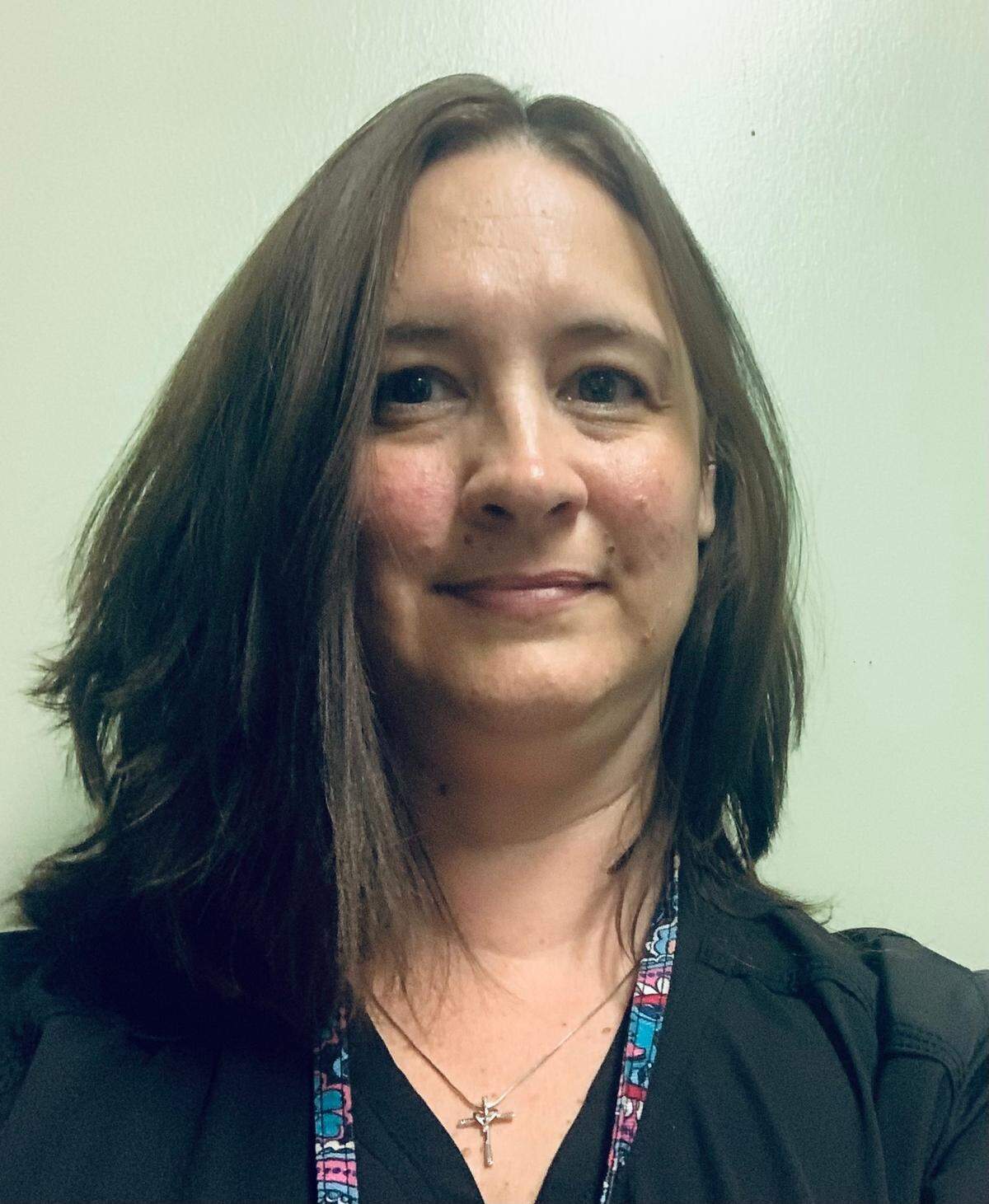
Finley said she’s concerned about a provision in the 2021 state budget that makes licensed medical personnel like registered nurses and physicians exempt from the State Human Resources Act. Being exempt means you don’t have the same grievance rights nonexempt workers do. She’s an at-will employee now.
The State Employees Association of North Carolina hopes the problem can be solved through policy changes.
DHHS has significant staffing shortages, in particular at state-run mental health facilities, the N&O previously reported.
Her facility is hiring all the time, she said.
“Pre-Covid we had a waiting list for people trying to get a job at this facility. We had the luxury of picking applicants, the best candidates. Now, we don’t really have anybody applying,” Finley said. She thinks the reason is the job market.
“If you want a job, you can find one. If you want to find your niche, try several different places, you can,” she said.
Private facilities pay bonuses immediately, she said.
Balancing pay with other needs
Finley has worked for the state for about 20 years total, both full-time and part-time, as a certified nursing assistant and a registered nurse. She has also worked in the private sector.
She likes working for the state for the “pay, benefits, insurance. Time off is great, I can’t complain about that. As far as comparing the private sector with the state, the state is still better.”
“Pay is better in the private sector, but you have to balance what is more important to you,” Finley said.
Staff shortages have put the burden on some employees who have to work overtime to fill the gaps, or they are filled by traveling nurses.
Buba Sabally is a CNA, or health care tech, at Central Regional Hospital in Butner. He has worked a lot of overtime this year because of the need as well as wanting to earn extra pay.
Sabally, 52, moved here from Zambia and has been a CNA for 16 years, the past eight working for the state. He said he is living the American dream.
“I came to America as an immigrant. I have something that never dreamed that I would have, and America gave it to me. I’m able to take care of myself and my family. I did engineering back home and became a CNA from scratch,” he said.
In his current job, Sabally takes care of elderly people. He said helping people is part of the American dream, too. He loves what he does, and he loves the teamwork of his colleagues.
“When I leave home I go to my other home, which is my job,” he said.
Sabally is a member of UE Local 150, a union. North Carolina has the second-lowest union rate in the country, and state law bans collective bargaining for state workers.
Sabally said the key to recruitment and retention is through raises.
“It’s a good job to work for the state, but in another way too, it’s not money-making,” he said.
Lloyd, the park superintendent, thinks whether or not someone would want to work for the state depends on the person and what their goals are.
“If their goals are to be rich and make a lot of money, working for the state isn’t it,” she said. “But … you know what you’re going to do every day if you work for the state.”
This story was originally published May 15, 2022 at 6:00 AM with the headline "‘Make it worth their while to stay.’ In labor crunch, how will NC keep state workers?."
CORRECTION: This story has been updated to correct an earlier version about solving the exempt employees issue. SEANC advocates for a DHHS policy fix, not legislative.
.jpg)