A timeline of North Carolina’s 2021 budget battle
READ MORE
Your Share of the Budget
With NC’s new state budget, everyone should see a bit extra in their bank accounts. When it comes to income taxes, anyone who files their taxes with a standard deduction will pay less next year, and possibly nothing at all. Every teacher in the state will get at least a $2,300 bonus and every state employee will get at least a $1,000 bonus. What’s in it for you? This is The N&O’s special report.
Expand All
The timeline of the latest North Carolina state budget starts two and a half years ago. The last state to pass a budget in 2021, North Carolina did not pass a new comprehensive budget at all in 2019.
Politically, the Old North State has divided government: Gov. Roy Cooper is a Democrat, and Senate leader Phil Berger and House Speaker Tim Moore are both Republicans.
Here is a timeline of important dates in the 2021 state budget process.
March 24:
Cooper releases his budget proposal.
June 8:
House and Senate announce agreement on total spending amount.
June 25:
Senate passes Senate Bill 105, its proposed budget, 32-17.
July 1:
Fiscal year starts. A new budget is supposed to take effect on this date.
Aug. 12:
House passes its budget proposal, 72-41.
Aug. 19:
Members finalized for the House and Senate conference committee on the budget, and conference negotiations begin.
Sept. 29:
The conference committee, having reached agreement between the House and the Senate, sends a budget offer to Cooper.
Oct. 4:
Cooper sends a budget counteroffer.
Oct. 19:
Legislature sends a counter-counteroffer.
Oct. 20:
Moore tells reporters that he doesn’t have the votes in the Republican House caucus to pass a budget that includes Medicaid expansion.
Oct. 22:
The “Big Five” meet for an in-person budget negotiation over a quiche breakfast at the Executive Mansion. They are Cooper, Berger, Moore, Sen. Dan Blue and Rep. Robert Reives.
Oct. 27:
Cooper sends a counter-counter-counteroffer.
Nov. 9:
Cooper sends another offer just about Medicaid expansion.
Nov. 10:
Republicans tell reporters that there is no budget deal but enough for both sides to claim victory, and they will move forward with a legislative budget on Nov. 15. Cooper tweets a statement that “a number” of his priorities will be in it, including increased education spending.
Nov. 15:
Cooper and his staff see the proposed legislative budget in the morning. Republicans are briefed on the legislative budget in the morning. The budget bill is posted online in late afternoon. Republican leadership thinks that the governor will either sign it that week or wait 10 days and let it become law without his signature.
Nov. 16:
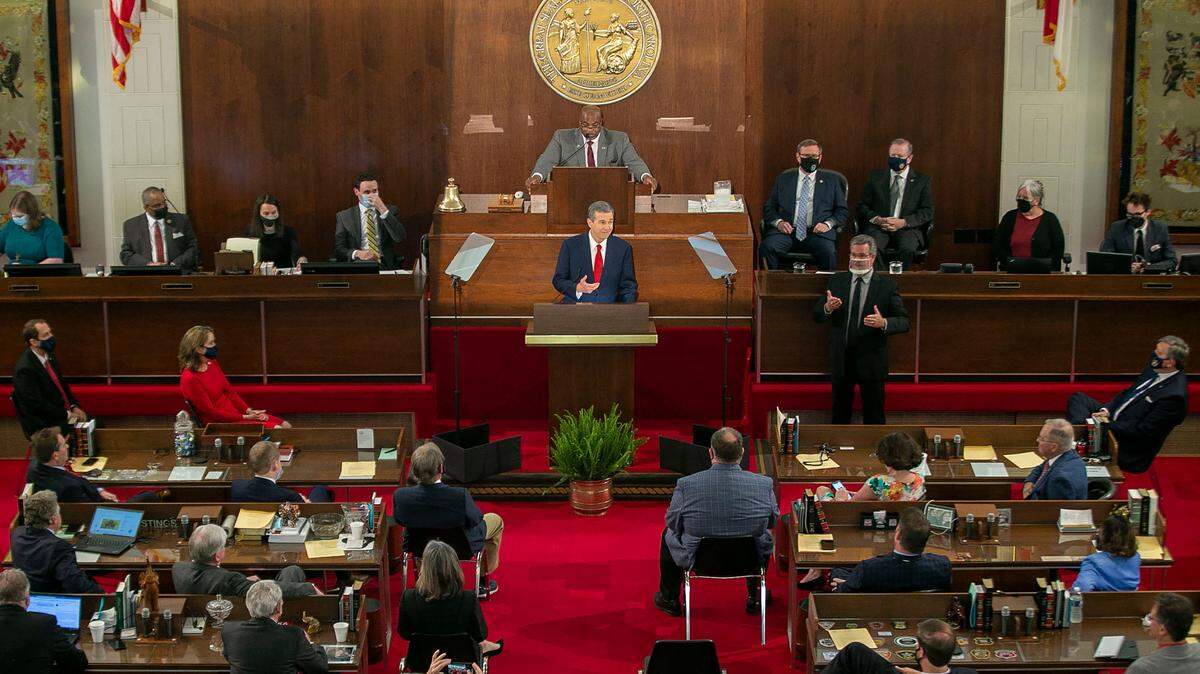
With the Senate set to take its first vote on the budget at noon, Cooper holds a news conference at noon in the Department of Administration building across the street from the Legislative Building, where he tells reporters that he would sign the budget.
That afternoon, the Senate passes the budget in an initial vote, known as second reading, with bipartisan support: 40-8.
Nov. 17:
The Senate takes its final vote, called third reading, and approves the budget 41-7. The House takes its second-reading vote on the budget, and it passes 104-10 with bipartisan support.
Rep. Jason Saine, one of the head budget negotiators, says even though there wasn’t a deal, no one ever “took their ball and went home.”
Nov. 18:
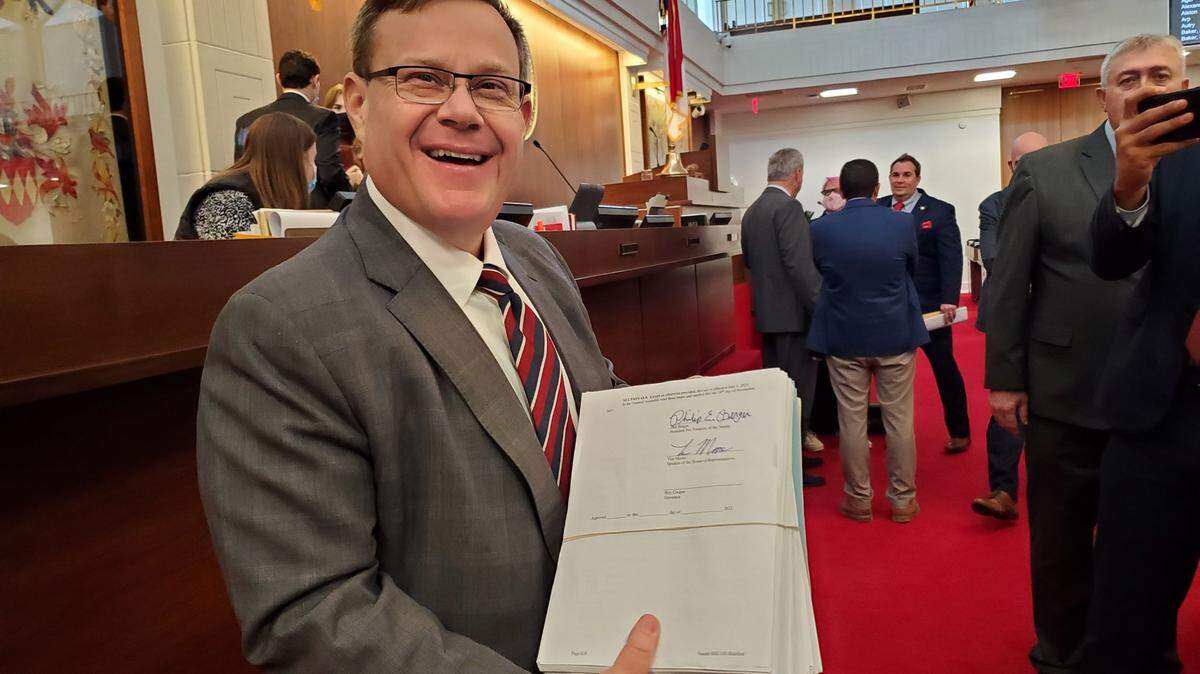
The House, and thus the General Assembly, takes its final vote 101-10 on the budget late in the morning. Berger comes to watch the final vote. Berger and Moore sign the budget. It goes to Cooper’s desk. At 3:30 p.m., the governor’s office announces via a news release that Cooper has signed it into law.
This story was originally published December 1, 2021 at 6:00 AM with the headline "A timeline of North Carolina’s 2021 budget battle."
.jpg)