UNC professor challenged top health officials about COVID-19 guidance. She was right.
READ MORE
The News & Observer Tar Heel of the Month
The News & Observer’s Tar Heel of the Month honors residents who have made significant contributions to the Triangle, North Carolina and beyond. At the end of the year, a Tar Heel of the Year is named. Do you want to nominate someone? Email metroeds@newsobserver.com.
Expand All
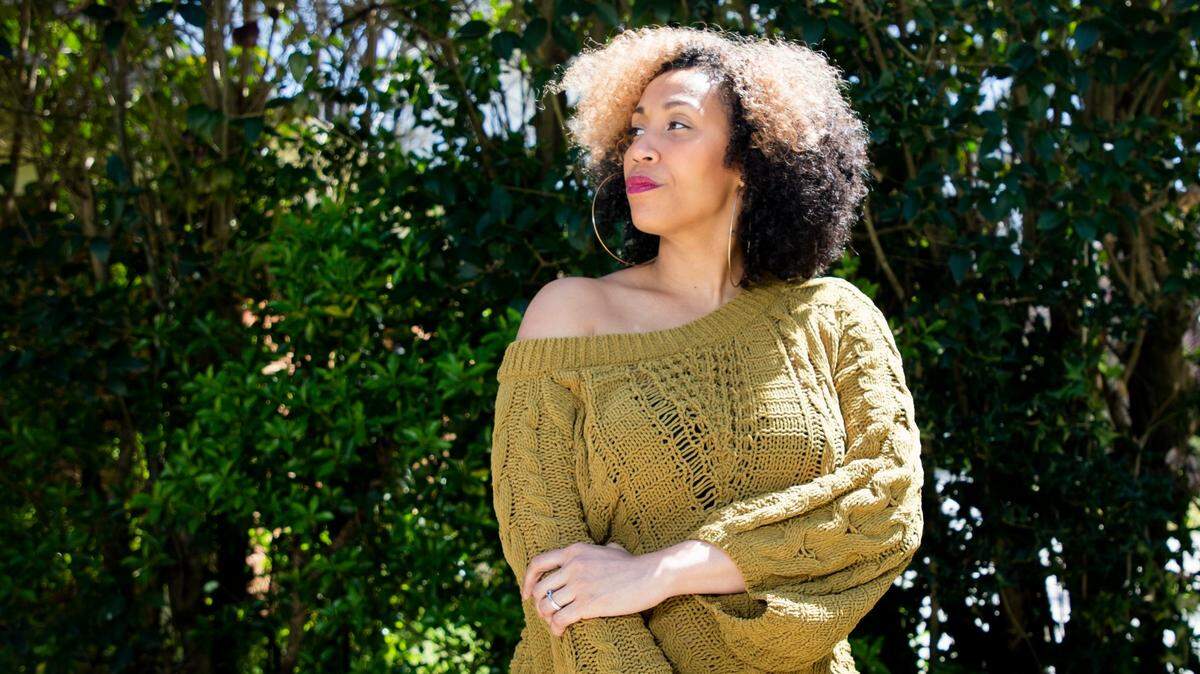
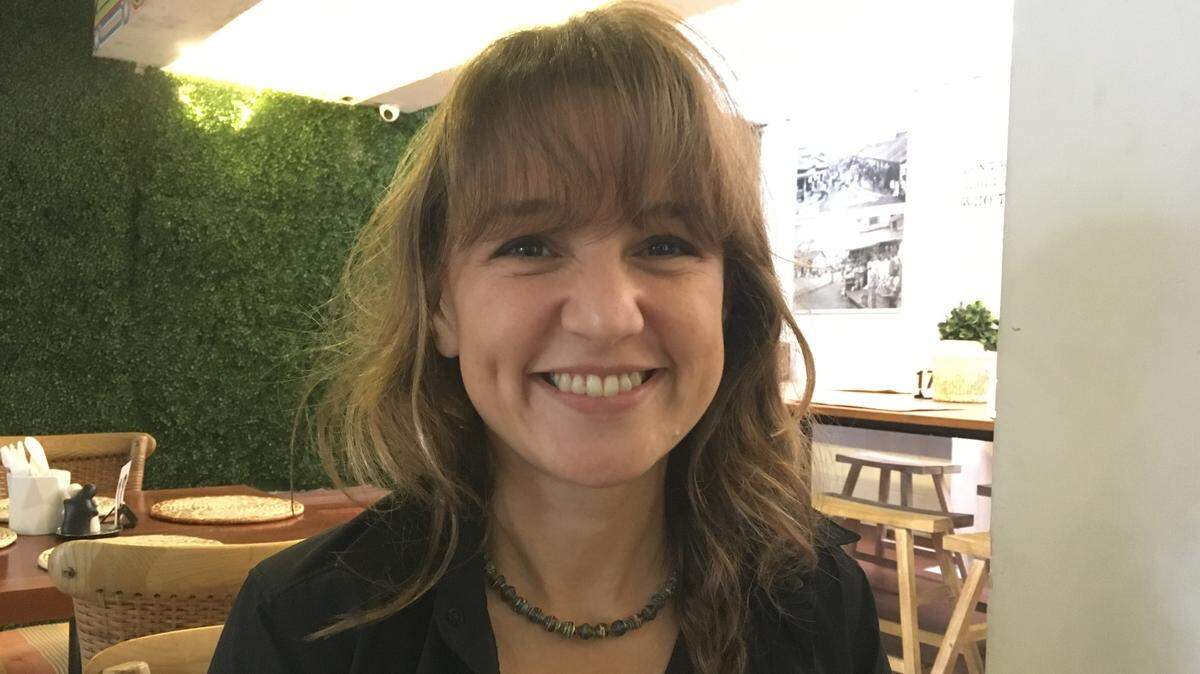
Just over a year ago, on Jan. 25, 2020, UNC-Chapel Hill associate professor Zeynep Tufekci tweeted a warning about a new virus spreading in China that neither she nor many other people knew about. It had infected about 1,000 people and killed 41 at the time, closing schools and shutting down a major city.
“... this epidemic will take [place] under conditions of widespread mistrust and well-oiled misinformation channels. What a challenge,” she wrote.
Now, as the COVID-19 pandemic surges on, it’s clear she was right. As a tenured professor with international influence and a moral duty, she spent most of her time the past year fighting against misinformation, despite the risks of challenging the global health authority.
Tufekci is not an epidemiologist or public health expert, and she could not predict how infectious or deadly the coronavirus and COVID-19 would be at the time. But her extensive research on the social impacts of digital technology and misinformation, how humans interact with each other and the sociology of pandemics proved to be essential in her efforts to help mitigate the spread of this virus that has killed more than 2 million people.
Instead of conducting lab experiments related to COVID-19, she used her platform on Twitter and in the opinion sections of Scientific American, The Atlantic and The New York Times to inform the public with practical advice about what to do and why. Her guidance often contradicted or preceded what global and national health experts were saying at the time.
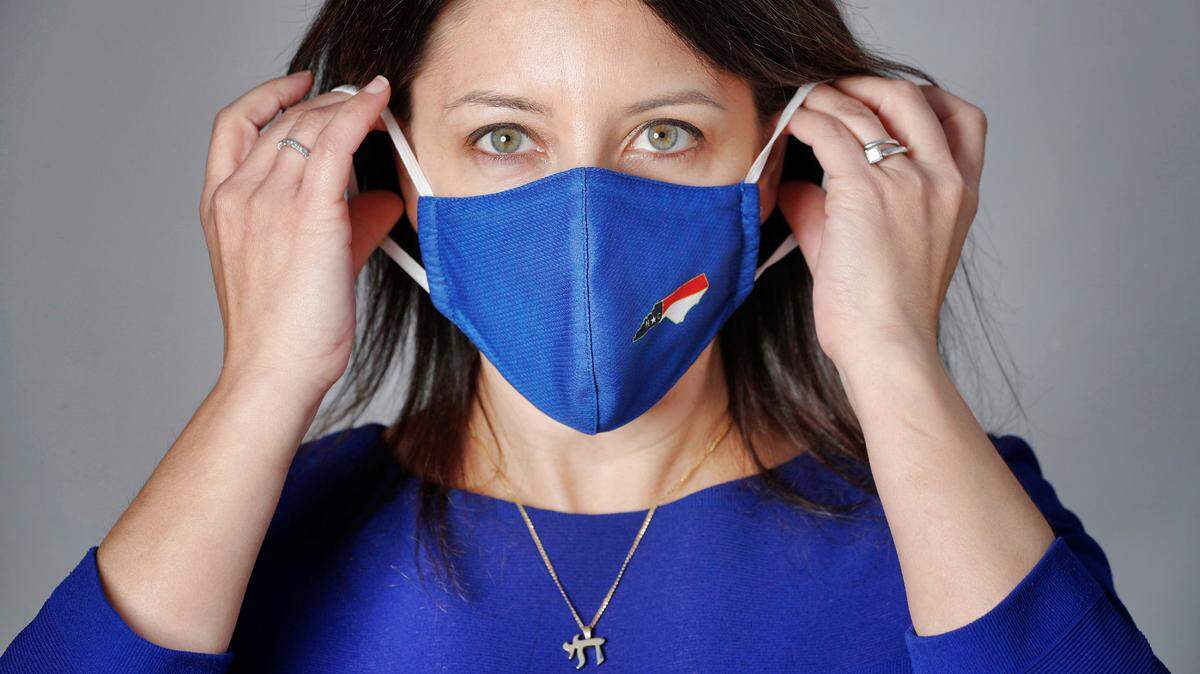
Most notably, she challenged the CDC and advocated for face masks in a March 1 tweetstorm to her more than 400,000 Twitter followers. A couple weeks later, she criticized public health authorities for telling the general public they didn’t need to wear face masks in a March 17 Op-Ed article for The New York Times.
Tufekci argued their message made them untrustworthy and “providing top-down guidance with such obvious contradictions” would backfire and fuel misinformation. And “of course masks work — maybe not perfectly and not all to the same degree, but they provide some protection,” she wrote.
“I never thought in a million years I’d be writing something that basically said the World Health Organization and CDC and medical establishment in the United States and Europe are wrong,” Tufekci said in a Zoom interview with the News & Observer.
But, she did. And she was right — becoming “perhaps the only good amateur epidemiologist,” according to The New York Times.
“I look back on my year of writing and almost everything I wrote became guidance or part of public health policy either in the U.S. or globally,” Tufekci said.
In April, the CDC officially recommended everyone wear masks in public, and two months later the WHO updated its guidance.
For her work to keep the public informed and help stop the spread of COVID-19, Tufekci is The News & Observer’s Tar Heel of the Month, which honors people who have made significant contributions to North Carolina and the region.
“It’s been very gratifying in that so many people have written to me and said ‘this was useful,’ because this was practical science-based advice that they were not getting from their own officials,” Tufekci said.
Providing practical COVID-19 guidance
Tufekci is an associate professor at UNC-Chapel Hill’s School of Information and Library Science and a principal investigator at Carolina’s Center for Information, Technology and Public Life. She’s also a faculty associate at the Berkman Center for Internet and Society at Harvard.
She put her own research on hold and pored through hundreds of research papers and consulted with epidemiologists and medical experts to synthesize the emerging evidence about the coronavirus.
Throughout the past year, Tufekci told people they should cancel travel, skip holiday gatherings and wear face masks to help flatten the curve and prevent hospitals from getting overwhelmed. She suggested keeping parks open and encouraging people to go to beaches, instead of shaming them for it. She wrote about aerosol transmission and the importance of keeping windows and doors open for better ventilation.
“In a pandemic, what’s the point of being a professor with tenure if you’re not going to use that privilege to say we need to really think through this, we need to do better,” Tufekci said. “You have to contribute what you can, and this is what I could do.”
People had so much information and misinformation coming at them from so many channels — from social media to the news to the White House. As an interdisciplinary scholar with sharp communication skills, she was well-equipped to bridge the gap between scientific research and people’s everyday lives.
“Somebody needed to read those papers and say to the general public here’s what it means for you,” Tufekci said.
She took North Carolina’s state motto “to be rather than to seem” seriously, she said.
More recently, her articles explain the new, more contagious coronavirus variants and advocate for a more streamlined vaccine rollout with mass vaccination sites.
Tufekci described the current fight against the COVID-19 pandemic as a race.
The virus has been running at a certain speed and we’ve been catching up to it, getting closer as we’re vaccinating millions of people.
But with the new variants, now all of sudden the virus “has little springs on its shoes,” she said. We’re facing a surge and the virus spreads better in the cold, dry air of winter, when more people are also spending more time inside.
“We have to become even more careful,” Tufekci said.
That means wearing N95 masks, double masks or a triple-layer cloth mask, following public health guidelines and stay-at-home orders and getting vaccinated.
“Once enough people are vaccinated, this is going to go down dramatically and life is going to get back to normal sometime in the near future,” Tufekci said. “We have our solution but the solution is not going to happen overnight.”
Changing global policy
Tufekci grew up in Turkey and worked as a computer programmer before earning her Ph.D. from the University of Texas at Austin, where she studied the intersection of sociology and technology. She was also a Andrew Carnegie Fellow and a fellow at the Center for Information Technology Policy at Princeton University.
Tufekci moved to North Carolina in 2011 to work at UNC-Chapel Hill. She has spent more than a decade researching how digital media has shaped social movements like the Arab Spring, how Facebook and Twitter are regulated, how people in power use artificial intelligence, surveillance and personal data, and how misinformation spreads online.
As a professor, Tufekci used pandemics to teach students in her introduction to sociology classes about globalization, exponential growth and how connected people are.
She was familiar with basic epidemiology terms like R0, pronounced “R naught,” which is a mathematical term that indicates how contagious an infectious disease is, and had studied how the SARS epidemic was addressed.
So, in January 2020, when she started hearing about this mystery viral pneumonia in Wuhan, China, she knew it could be dangerous.
Tufekci recently had done research in Hong Kong and had friends and colleagues who were jolted by what was happening in China. She took note of the Chinese government abruptly shutting down a city of 11 million people. And she started reading academic papers implying that people with mild or no symptoms were spreading the novel coronavirus.
But she didn’t see the same sense of urgency or explanation of the gravity of the situation when she looked to national newspapers, the Centers for Disease Control and Prevention and the Trump Administration. When she warned her friends and colleagues, who were still going to conferences and traveling for fun, they sent her articles saying that she was panicking for no reason.
That’s when she decided to write a COVID-19 “preparation guide” in an article published by Scientific American in February 2020. It took off, particularly on Twitter.
“If you read it now, it’s absolute common sense, basic epidemiology and public health advice at the beginning of a potentially difficult period,” Tufekci said.
She has seen the overwhelming evidence that people were spreading this virus without being sick. And sociologically it made no sense, because if you’re supposed to wear a mask only when you’re sick then you’ll be stigmatized, she said.
She argued it would break people’s trust to advise them not to wear masks unless they have symptoms.
There’s no question the science was already there about the importance of face masks, she said.
“It’s not like we learned about this later and changed our guidance,” Tufekci said. “We were late.”
She co-authored a pre-printed scientific journal article last spring, recommending that public officials and governments strongly encourage the use of widespread face masks in public. She also co-authored a letter signed by more than 100 prominent academics to petition the WHO to change its policy.
Tufekci said she had the gift of time, the way journalists writing daily stories do not. And she had the practice of talking to the public in a way that scientists don’t have.
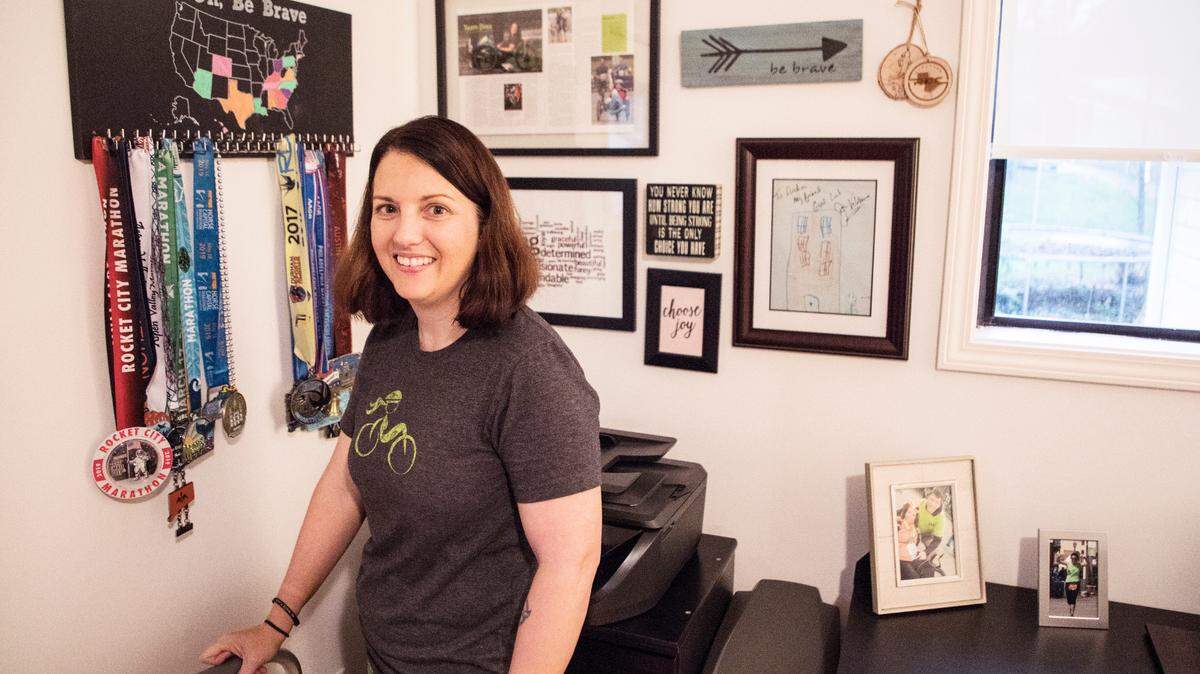
Like many Americans, Tufekci worked from home for most of 2020 and shared an “office space” with her 11-year-old son in Carrboro.
She said it was pretty quiet while he was doing his school work remotely, and much easier than juggling preschoolers at home like other parents.
The only problem was when he wanted to chat with his buddies playing Minecraft and she was on a conference call with World Health Organization officials.
“They’re mining for diamonds, and I’m like, Can you keep it down?’” Tufekci said.
In June, the WHO changed its guidance, and face masks became a staple of everyday life.
Tufekci said she kept writing because it was necessary. She said she’ll stop when she feels the public health guidance is clear. She said she’s optimistic about the Biden Administration’s vaccination plans and frequent COVID-19 press briefings, where scientists and top health officials speak directly to the public.
She hopes this year shows that academics’ skills are important to having a healthy society and that breaking the silos to bring people from different backgrounds together is essential.
“The problems in the world don’t come in a single discipline,” she said.

Using sociology to control a pandemic
As medical experts studied the virus and government officials debated how to manage it, having sociologists at the table to explain human behavior can provide insight about how to communicate the risks and safety measures.
“A disease or a virus isn’t working on its own, it’s working in a society with people and with inequalities,” Tufekci said. “You can’t just examine the virus on its own like it’s purely a medical problem.”
Don Taylor, a professor in the Sanford School of Public Policy at Duke University, had been following Tufecki’s work before seeing her articles about the pandemic. He said she offers a reasonable way to think about the spread of an infectious disease because of her basic understanding of epidemiology combined with her study of communication, how democracy movements have started and how ideas spread.
Sometimes science and epidemiology can be over-simplified when looking at exposure and disease in a very yes-no perspective, Taylor said.
But sociology is much more about understanding how groups function and behave, he said, which is an important part of handling health issues like pandemics.
While Tufekci isn’t the only one to offer coronavirus outreach, she played an important role in getting the word out about COVID-19 precautions, face masks and vaccines.
Taylor said Tufekci’s outside perspective, which may oversimplify or miss some of the scientific nuance of this virus, makes her a good communicator of the bottom line and what human beings should do.
“She’s very much communicating in the spirit of harm reduction, which is a classic public health perspective,” Taylor said. “When you can’t get totally rid of risk, try to reduce it as much as possible. And that often comes about by lots of people making lots of small changes.”
A big and small impact
Tufekci said the most rewarding part of her work over the past year has been hearing from people who are making changes.
“I have an inbox full of people … who told me they started masking, even before the guidelines, because of my article or they convinced somebody else,” Tufekci said.
Some told her they canceled travel plans or convinced elderly relatives not to take that vacation on a cruise ship. Others started opening their windows or met friends outside, instead of a living room. Even governors called and asked her about backward contact tracing, she said.
“It’s been a limiting year and it’s a tragic year,” Tufekci said. “But personally I feel like I’ve done everything I could do to make a positive contribution with what I had.”
Her efforts proved to be effective in changing public health guidance across the world and in her own neighborhood.
One day last year, Tufekci went grocery shopping with her son and stepped out of the car with her mask in hand.
“Mom, you have to put your mask on, it’s the law,” her 11-year-old said with urgency.
She assured him that no one was nearby in the parking lot and said she was about to put it on.
“No, you have to set the right example,” he told her, referencing the state mask mandate.
Tufekci said she was annoyed at his scolding at first, but then smiled and thought, “This is great, my job is done.”
This story was originally published January 29, 2021 at 1:48 PM with the headline "UNC professor challenged top health officials about COVID-19 guidance. She was right.."