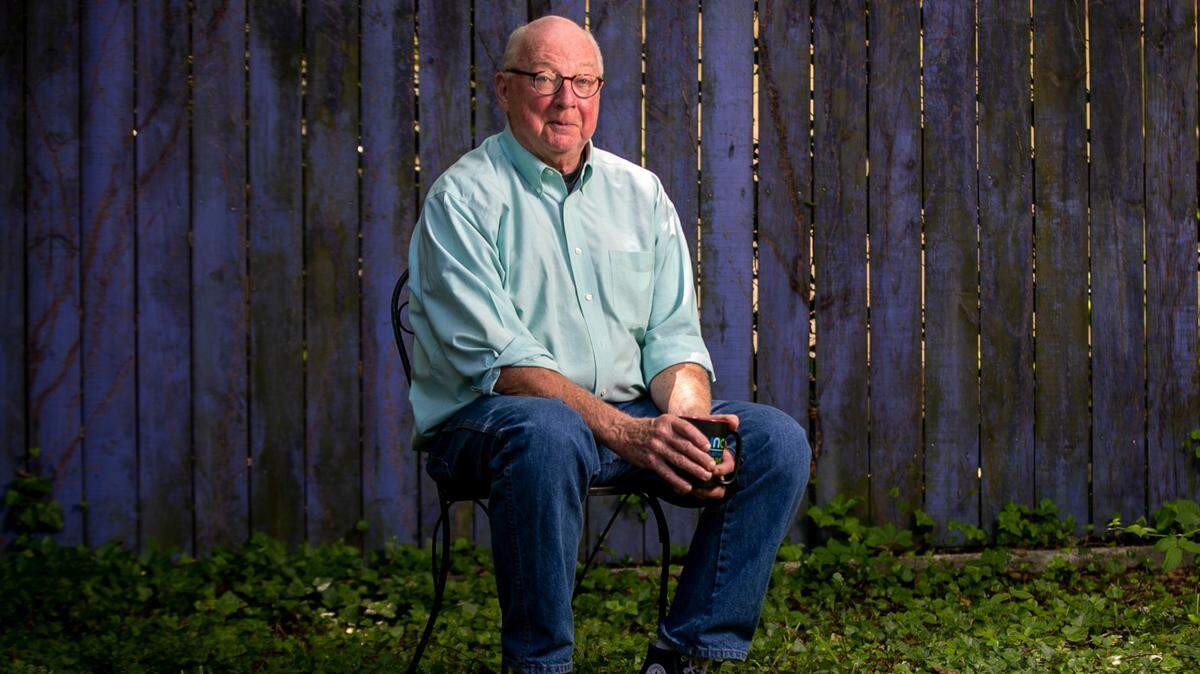
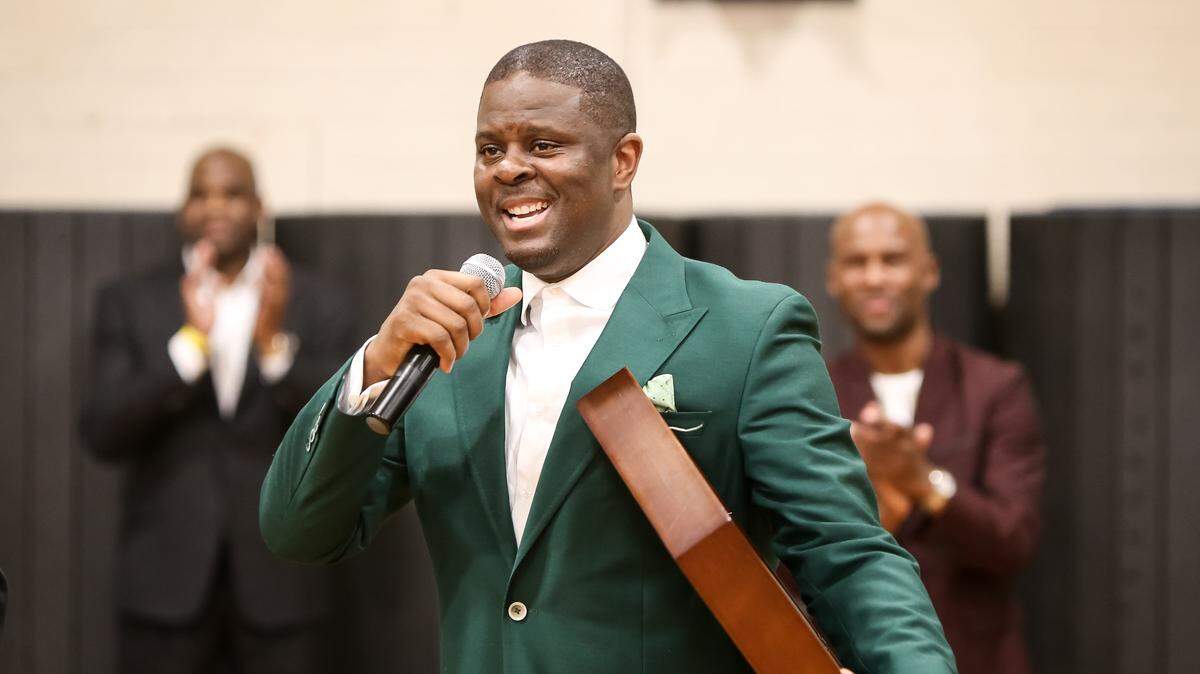
‘I’m a storyteller.’ Tim Stevens reflects on life as N&O sportswriter, preserver of history

READ MORE
The News & Observer Tar Heel of the Month
The News & Observer’s Tar Heel of the Month honors residents who have made significant contributions to the Triangle, North Carolina and beyond. At the end of the year, a Tar Heel of the Year is named. Do you want to nominate someone? Email metroeds@newsobserver.com.
Expand All
Tim Stevens says you “had to be there” to really understand him.
Late night print deadlines. A “mammoth” newspaper circulation. A reporter covering every high school in Wake County.
“The golden age” of newspaper journalism, says Stevens, in which print was the ultimate media authority, is the world from which he comes from as a former News & Observer sportswriter and editor.
It’s also a world that, in many ways, he was born into.
As a teenager, he began to look at the pen and paper for a future, covering his first school sports game at 15 years old for The Raleigh Times. After all, his older brother had worked at that paper, and his mother was an editor of The Garner News.
“I’ve never had a desire to do anything else,” Stevens, 69, told The News & Observer in an interview. “I never applied for a job, never asked for a job. I just was there.”
Stevens looks back at a 48-year career with thousands of stories written as a former high school sports writer and editor for the Raleigh Times and later on, The N&O with which The Raleigh Times merged for good more than 30 years ago. He retired in 2015.
“For years, I covered everything,” he said. “The high schools were always the most important.
“Because it doesn’t matter to me who wins the Stanley Cup, it doesn’t change my life. I don’t care who wins the NCAA basketball, it doesn’t change my life. But what happens to high school kids, the lessons they learn, the way they are coached, has a tremendous impact on my life. That’s our future voters, the character that they gain, and to me, it was just very important.”
In 2020, Stevens was inducted into the North Carolina Sports Hall of Fame, representing a crowning achievement for the lifelong Garner resident.
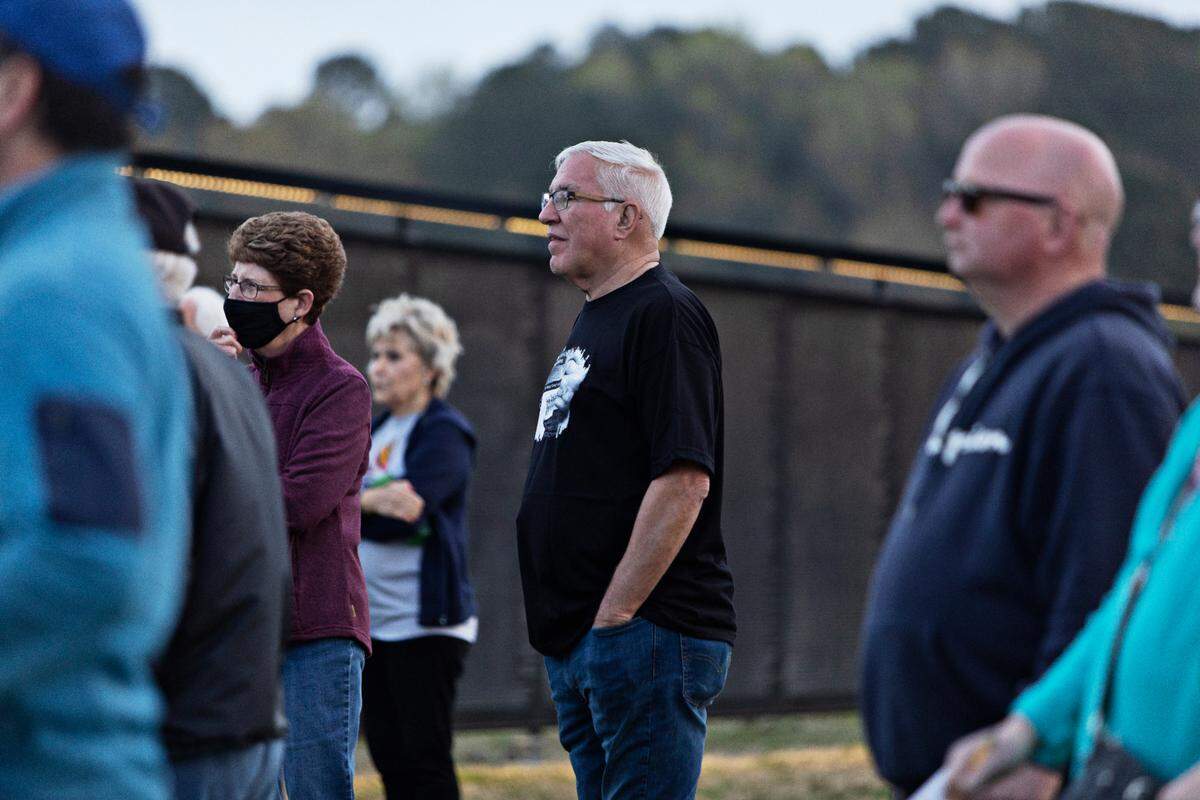
Today, Stevens still tells stories beyond the newspaper — in documentaries about how North Carolinians contributed to the Vietnam War; in writing and directing church and history plays; and in bringing “The Wall That Heals” to Garner, a scaled-down but still powerful Vietnam Veterans Memorial.
Much of his artistic and community-driven work is through his Christian nonprofit, Show N Tell Ministries.
For telling and preserving the community’s stories — on and off the field, in and out of the arena — so that others may experience their impact, Stevens is The N&O’s Tar Heel of the Month, which honors people who have made significant contributions to North Carolina and the region.
Here are excerpts of our conversation.
What did you want to be when you grew up?
“I thought about being a lawyer, I thought about being a historian. I enjoyed those things. The way I got into sports is I messed up my knee playing football when I was in the eighth grade. And that was the end of it ... knee injuries back then were different than they are now. And mine wasn’t that bad, but it got worse and worse through the years. And so, being able to play was gone.
“When I was 15, (The Raleigh Times) asked me, ‘Would I cover a game?’ My mother had been the editor of The Garner News, and my older brother had worked at the Raleigh Times. And they just kind of took me.”
What achievement are you most proud of?
Getting inducted into the North Carolina Sports Hall of Fame “was the highest thing that I could think about aspiring to. And it sounds kind of weird to say that, during the career, that’s what you wanted. Yeah, it was, it seemed to be the highest thing ...
“I’m pretty sure the high school (sportswriter) is not going to win a Pulitzer. I enjoyed what I was doing and thought it was valuable what I was doing, and I got to write about sports. And so many sports writers had to write about politics, and money and strikes and all this kind of stuff, and I didn’t have to.
“So I thought the greatest thing that could possibly happen to me would be induction into the North Carolina Sports Hall of Fame. So when that happened, it was just kind of amazing. But the thing about it ... it’s amazing at the same time, but you sit there and say, ‘This award is not for me, it’s for all these guys that went out and covered games with me, for all these guys have worked with me, all these guys that have taught me. They’re the ones that earned it.’ I just received it for them.”
How do you see your role in your Garner community?
“It’s just an extension of what I’ve always done — I’m a storyteller. When I worked at the paper, I told stories. I wrote primarily about sports. I wrote about all kinds of stuff. I wanted to write a story that not only gave you information but also entertains you.
“I was taught that the average reader will read (a story) until they get to the first boring sentence. One boring sentence, and they’re gone. And so then I started writing plays, same thing, I’m telling a story. But I’m doing it through a stage.
“And then I got to tell a story on the documentary. I wrote Christian plays ... then I started writing plays about Garner’s history ... When I grew up, (the population) was 5,000, 4,000 people. And now we’re at over 30,000 and staring hard at 50,000. And (people) had no idea that we have a history.
“And so I wrote about the Civil War in Garner .... I wrote about World War II. I wrote about the year that Garner won the football championship in 1987 .... and I wrote about the integration. The same thing with bringing The Wall That Heals, the impetus was that I’d written a play about Vietnam.”
What does leadership mean to you?
“Leadership should be servant. What can I do for you? How can I help you? It should be, ‘Here’s a vision. Let’s move toward this together. What can I do to make your life better? What can I do to serve?’ But at times, leadership is also saying ‘That’s not part of this vision.’ We can’t do everything, we have to make decisions and try to treat people as human beings.”
Who is a role model or inspiration for you?
“Well, the most important person, of course, is my wife, Donna. She is a much better person I am. She is extremely attractive, and why she married me, I will never know. I’m glad she did.
“I was raised knowing that community service was very important. You’re supposed to serve in the community. My mother was one of those saintly women. She worked at the library. And she probably worked there 40 years. And she did a storytime with kids. So literally, they were thousands and thousands of kids in Garner that she read stories to. Everybody loved Mrs. Stevens.”
What would you tell your younger self if you could go back in time?
“What I would tell that 15-year-old, I would probably say, ‘You aren’t that talented, you aren’t that good. And you’re going to have to overcome that by working hard.’ .... What I’d tell him is that it’s going to be okay. I think that for most people, high school were their greatest years.
“I sit back and I look at high school and it was very, very difficult when you’re trying to decide what kind of person you’re going to be. Sometimes the most popular people are the ones who are doing things that you’ve been raised that you shouldn’t be doing. Now, am I going to try to be popular and go along with this? Or am I gonna do what I think I’m supposed to do?
“And I would just tell me, ‘You’re okay. It’s all right. Just trust me, it’s going to be all right. Keep trying to do the right thing.’”
Get to know Tim Stevens
What was the last book you read? “Origin: A Genetic History of the Americas” by Jennifer Raff. A book about how humans in the Americas came to be.
Which famous person, living or dead, would you invite to dinner and why? “Eric Liddell. He was one of the protagonists and one of the heroes in the movie ‘Chariots of Fire.’ He ran in the (1924) Olympics. He was the one that when they we’re having the semifinals on his 100 meters on a Sunday, he refused to run on a Sunday. And so they switched him over and he ran over 400 meters and he set a world record in one day. And then he was in World War II. He was a missionary to China. And he refused to leave. And he stayed there. Unfortunately, when the Japanese took over the country, he was put in a concentration camp. And he died. He was just one of the most amazing people alive ... he lived his faith every day.”
Favorite childhood memory? “I used to like to play with storytelling. As a small child, I had little plastic men, army men, cowboys, all this kind of stuff. And one of the best things that can happen to me was to be punished to go to my room and play by myself all day. I’m fine with this, but that would be just to have the opportunity to play with those, tell stories. So that’s what kind of makes me think I’ve been a storyteller all my life.”
Favorite quote: “Success is not defined by power, prestige or wealth.”
A perfect day: “Get up, have some kind of biscuit, unsweetened iced tea. Get to write. Have a good day writing, right through to late afternoon. Do something with Donna. Find something good on television — which is almost impossible — and watch that with her.”
BEHIND THE STORY
MORENominate a Tar Heel of the Month
The News & Observer’s Tar Heel of the Month honors residents who have made significant contributions to the Triangle, North Carolina and beyond. At the end of the year, a Tar Heel of the Year is named. Do you want to nominate someone? Email metroeds@newsobserver.com.
This story was originally published May 27, 2022 at 5:40 AM with the headline "‘I’m a storyteller.’ Tim Stevens reflects on life as N&O sportswriter, preserver of history."