In the Crook’s Corner kitchen, Bill Smith followed a legend. Then he became one himself
READ MORE
The News & Observer Tar Heel of the Month
The News & Observer’s Tar Heel of the Month honors residents who have made significant contributions to the Triangle, North Carolina and beyond. At the end of the year, a Tar Heel of the Year is named. Do you want to nominate someone? Email metroeds@newsobserver.com.
Expand All
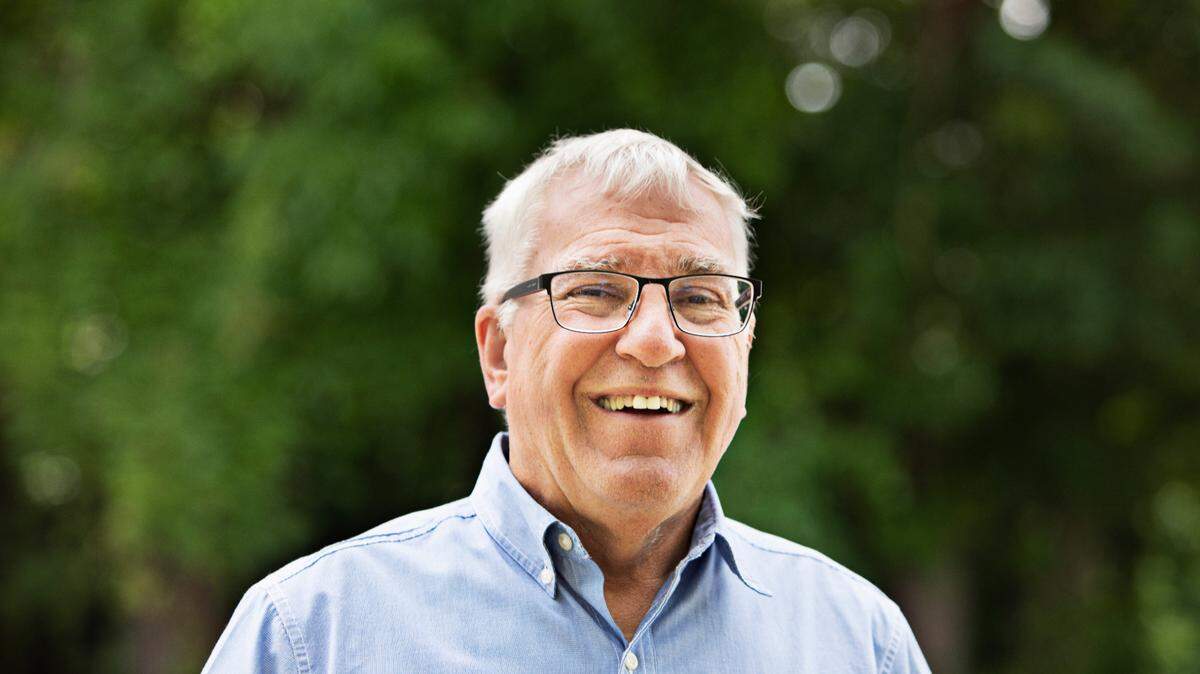
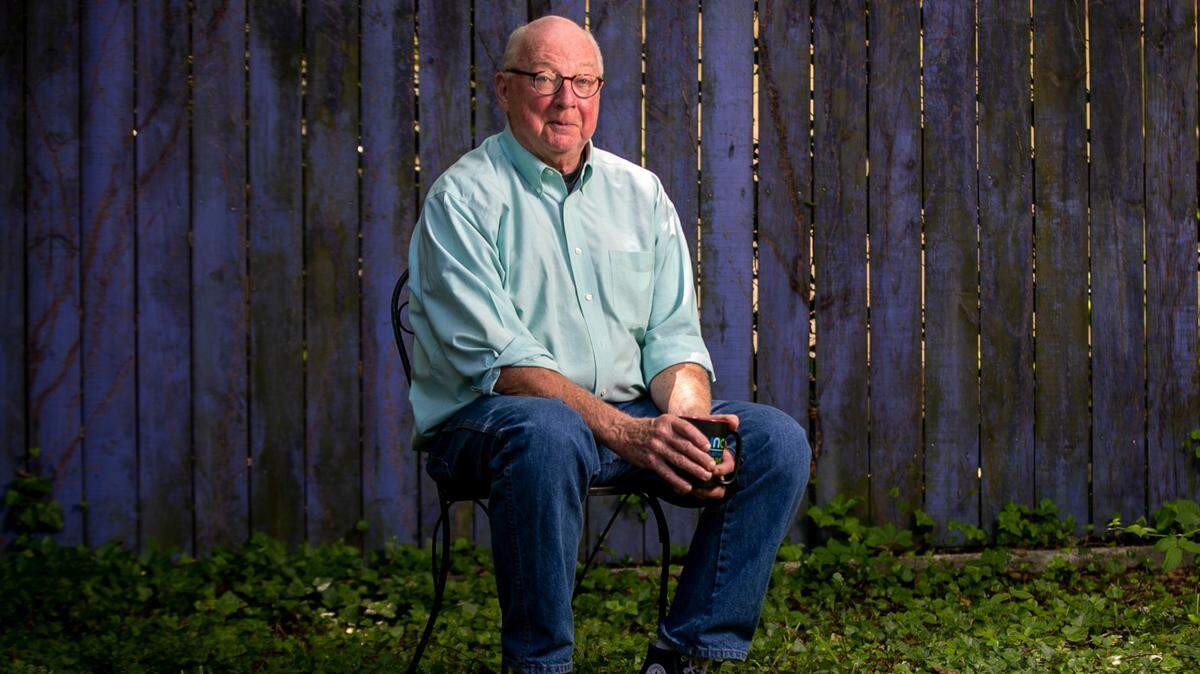
There’s a vine of ivy reaching into Bill Smith’s kitchen. He keeps the door open in the summer. And while he didn’t invite the vine in, because how do you invite a plant to do anything, once it got there all the same he decided he liked it and left it alone.
Though it is bursting, there’s always room in Smith’s kitchen. To live a life of seasonality, as Smith did for 25 years as the chef of Chapel Hill’s iconic restaurant Crook’s Corner, means being open to whatever comes through the door.
That used to mean wild persimmons by the bushel, handfuls of mint, jalapeño peppers that turned out to be shishitos — whatever the sun, rain and North Carolina soil grew that week.
Recently, though, Smith has welcomed a fight through the door, focusing a lifetime of civil rights activism on the causes of immigration and LGBTQ equality. The line between feeding people and protecting them is fairly thin, he said.
“In a way it’s the same thing, it’s looking after people,” Smith said. “Whatever opportunities come your way to look after people, you should take them, be it feeding them or giving them money when they’re broke or making sure they’re not homeless or defending people from unfair attacks. It seems to me it’s something you do.”
For his role in shaping modern Southern cooking and his activism on immigration and LGBTQ issues, Smith is the News & Observer’s June Tar Heel of the Month, which honors North Carolinians who have made significant contributions to the state and region.
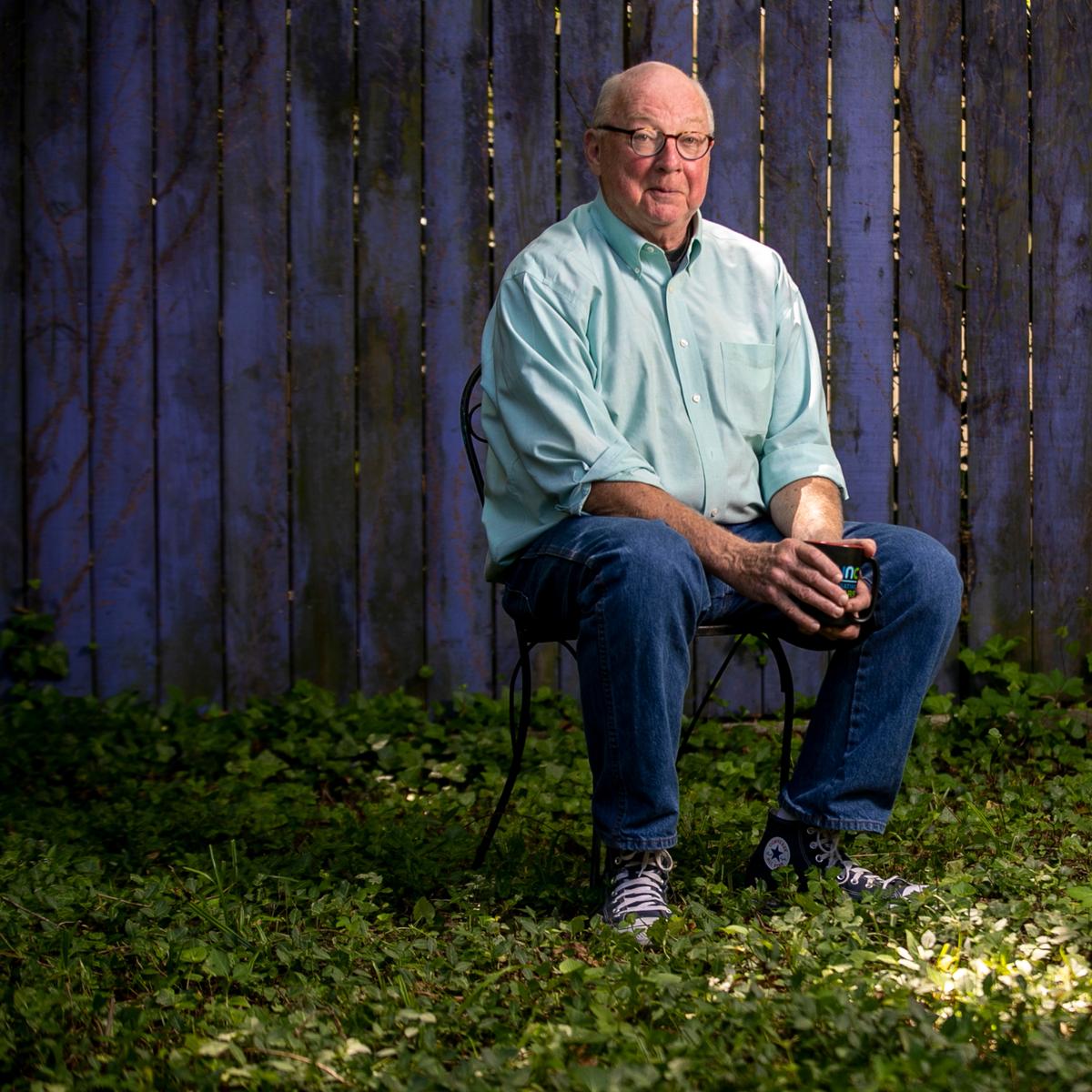
Smith took over the Crook’s Corner kitchen after the death of the legendary Bill Neal, who had co-founded it with Gene Hamer. Smith presided over the famous kitchen for more than two decades, carrying on the restaurant’s legacy of celebrating Southern food and deepening its menu with dishes from the waters of New Bern, where he grew up, and reflecting North Carolina’s Latin American influence on what a Southern dish can be.
“He’s just had a very strong voice in shaping, celebrating, interpreting, reimagining the Southern culinary grammar,” said Marcie Cohen Ferris, UNC-Chapel Hill professor emeritus of American Studies.
At the 2014 Southern Foodways Alliance symposium, the late celebrated North Carolina writer Randall Kenan called Smith a “culinary John the Baptist” in spreading new ways of thinking of Southern food. But Kenan noted that Smith didn’t preach.
“Bill neither over-explains or apologizes, he simply offers,” Kenan said.
Born at the table
As a boy, Bill Smith’s great-grandmother fed him tripe and called it fish, avoiding the way the mind can sometimes think it knows how something like a cow’s stomach might taste before trying it.
Smith ate it happily, as he did most things. He said it was at his great-grandmother’s table where he first learned to love food, fed by a family of home cooks who viewed the world through their plates. If they weren’t cooking or eating, Smith said his family was talking about food, praising the neighbor with the best cheese biscuits and gossiping about the one who under-salted their corn.
“I always expected my food to be good because it always was,” Smith said. “The dinner table was the place where you were supposed to enjoy yourself. Have a good dinner, but have a good time.”
Seasonality was happenstance, Smith said, as there was no other way to cook at the time. Blackberries arrived in summer, corned ham was served in winter, a season to savor and a season to wait.
Smith’s culinary education was separated by nearly 30 years. He was never allowed to help in the kitchen as a kid beyond fetching blackberries.
“I wasn’t allowed to stir the gravy,” Smith said.
Smith had moved to Chapel Hill for college and after moments as a Broadway dancer, a server and a rock club owner, he started working at La Residence, the restaurant opened by Bill and Moreton Neal. He said he learned classical French technique on the job, cooking working class French dishes like coq au vin. He eventually rose to head chef.
After Neal died from AIDS in 1991, Smith was later hired to run the kitchen. He inherited a star of Southern food and said it was overwhelming initially.
“I was in the weeds from the start,” Smith said.
But steadily he said he called on the dishes of his youth and began to serve Southern food as he knew it from the coast of North Carolina.
“You observe your whole career,” Smith said. “You don’t think about it or write it down, but you notice it and it sticks in the back of your mind. Observation is key to this profession, you tuck it all away.”
Famous recipes
Smith’s dishes at Crook’s were often poetic and emotional and matter of fact.
From a honeysuckle bush next to the restaurant, Smith performed the sort of culinary magic trick that avant garde chefs dream of, creating honeysuckle sorbet. Thousands of honeysuckle blossoms are steeped in water and turned into ice, distilling the memories of millions of Southern childhoods into a dessert.
“It brings me back to running around barefoot,” former Crook’s Corner owner Gene Hamer said.
Smith made 700 servings this year for Crook’s, not the most ever, he said, but a lot. Smith learned long ago to make too much out of fear of disappointing anyone.
“The town is really childish about it,” Smith said.
With a dish like Crook’s Picnic Plate, Smith aimed to break the heat of July by serving cold fried chicken, deviled eggs, potato salad and a thick slice of watermelon. It’s summer on a plate, likely best with a cold Pabst Blue Ribbon, Smith’s favorite beer. But Hamer said it’s also a dish that broadens seasonality beyond just what’s coming out of the fields and gardens in North Carolina.
“It also pairs with a memory,” Hamer said. “I grew up, as many people did, going to Sunday church dinners and picnics.”
It was Hamer’s idea to call Smith’s banana pudding, “A Really Good Banana Pudding,” separating it from the thousands served everywhere across the South at restaurants, gas stations and potlucks and seeming to scream “You haven’t had banana pudding like this before.”
“The crunchiness of the meringue with the smoothness of the custard and the texture of the banana and vanilla wafers, it’s a very complex dish,” Hamer said.
Two Bills
Hamer knows Crook’s has been struck by lightning twice. The first time, he and Bill Neal elevated Southern food out of caricature and into a cuisine rivaling French and Italian. The second was Smith, called by the same name as his predecessor, raised on the cooking of grandmothers, but from the coast instead of a farm.
“Both Bills were invaluable to the restaurant,” Hamer said. “They changed Southern culinary history.”
At Crook’s, Hamer said Smith’s menus reflected North Carolina in real time, particularly influenced by Mexican cooks in the kitchen. Over time dishes got spicier, fried oysters were breaded with maseca, a dish of bay scallops added Mexican hominy instead of the mushier version Smith said he ate growing up.
“He doesn’t see immigration as intrusive,” Hamer said. “He sees it as broadening and enriching our fabric, the fabric of our culture and of our country.”
Ferris said Smith and Crook’s continually reexamined what it meant to eat in North Carolina and the South.
“We have an evolving flavor profile in this state,” said Ferris, who is a founding member of the SFA and previously served on its board. “Who North Carolinians are changes. The flavor of our state changes in powerful and delicious ways.”
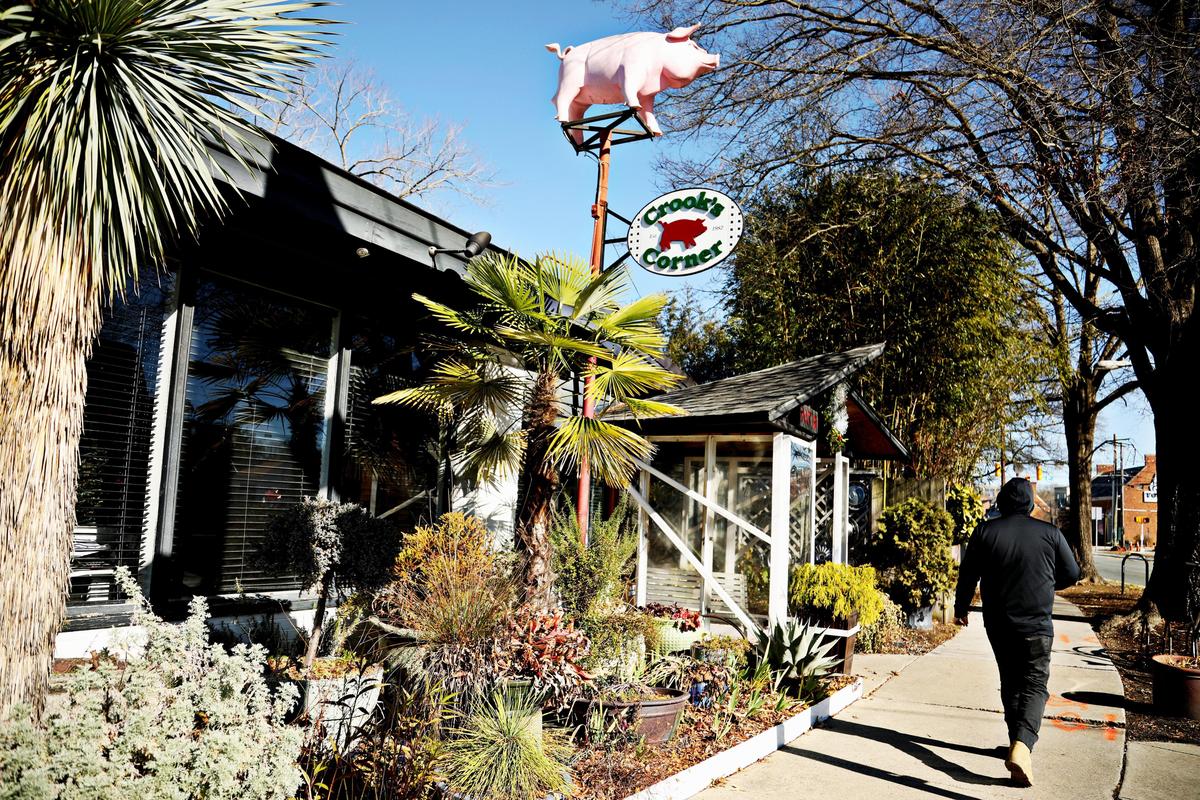
Crook’s closing
This month, the owners of Crook’s announced that it was closing after four decades.
“With an incredibly heavy heart I must share the news that we are closing,” the restaurant wrote in an email. “The position we find ourselves in, exacerbated by the COVID-19 crisis is no longer tenable.”
Smith got the news of Crook’s closing the night before the rest of the world. That evening, he rode his bike home down Franklin Street, stopping at a red light to snap a quick picture of the now-empty building where he’d spent most of his professional career, the kitchen that changed the course of Southern food in America, and his own life.
He posted it to Instagram without comment, the image somewhat blurry in the low light of the streetlamps.
“It was sad,” Smith said. “It’s a huge chunk out of Chapel Hill. It was a gathering place for so many things. It was more than a restaurant, it was a hub.”
Immigration activist
Smith’s views on immigration were formed in the kitchen. When he started working at La Residence early on he met refugees from Vietnam in the dish room. In his cookbook “Seasoned in the South,” Smith explains how immigrant communities often find work in American restaurants, writing, “You can wash dishes in any language.”
As immigrants from Latin America, often Mexico, began arriving and working in kitchens, Smith said they began to become his friends and family, and eventually their causes became his own.
“They were in my kitchen when I got here,” Smith said. “I treated them just like anyone else and we got to be buddies. And then when people started picking on them, that pissed me off. ... I don’t care where anyone comes from. As far as I’m concerned, there are two countries in the world. One is full of jerks and then (one where) people who try not to be.”
Smith knows not everyone sees it that way.
In the early 1990s, Smith said he sponsored two immigrant families from Mexico for residency in the U.S., under an amnesty program that existed at the time. Smith said he saw daily the hope and optimism of immigrants working for a better life.
“These people still believe in the American Dream,” Smith said. “Even after the way they’ve been treated the last few years, they still believe it. They think, ‘We’ll stick it out, everything’s going to be better.’” It’s sort of breathtaking, but they buy it. They bought it when they got here and they still do.”
When President Donald Trump took office, pledging to take a hard line on immigration and referring to some Mexicans as “rapists and drug dealers,” Smith said he panicked. He started a GoFundMe campaign to raise just-in-case money for families he cared for.
The campaign still continues, but has instead helped support families through the COVID-19 pandemic, chipping in for rent and bills for a year after layoffs. More than 300 donors have contributed, collecting more than $30,000. Bella Bean Organics and Coon Rock Farm contributed another $10,000 in produce and meat, and one couple paid utility bills for a year.
“I asked people to continue to contribute if they could, and people were crazy generous,” Smith said. “People would walk up to me on the street and hand me money. Shocking generosity.”
As restaurants have become part of pop culture these days, popular chefs have developed widening platforms and influence. It’s common to see chefs as leading activists. Ferris said Smith was at the forefront of that, but largely unassuming.
“Bill is in a very special, small group of one,” Ferris said. “It was quiet activism. He never drew attention to himself. It was nose-to-the-ground work to help the people he loved, that he considered his family.”
Pride month
There’s a story in Smith’s family of his great, great, great grandmother riding a blood-drenched horse through the streets of Philadelphia, protesting Bleeding Kansas, a conflict between abolitionists and supporters of slavery before the Civil War. Smith said the story was more of a way to explain eccentric behavior in the family, rather than a call to action. But it stuck all the same.
“I’ve always been a bit of a radical lefty type,” Smith said. “It all goes back to her, it’s in my blood. I’ve always been sort of contrarian.”
For Pride month in June, Smith hangs a large blue equality flag in his living room window.
Even for a Catholic-raised son of 1950s New Bern, Smith said coming out to his parents wasn’t contentious.
“When they realized that’s what would make me happy, that was fine,” Smith said. “I wasn’t much of a gay activist because I didn’t need to be for myself. I never took any crap, but I didn’t preach. I would do things and go to marches if people asked, but I wasn’t very active.”
Smith said that changed somewhat after the 2010 death of college student Tyler Clementi, who died by suicide after a roommate secretly taped and broadcast his intimate encounter with another man.
“I thought, you know, you need to be a little more active,” said Smith, who cooks annually at the Human Rights Campaign’s Chefs for Equality dinner at the National Cathedral in Washington, D.C. and often for local dinners in the Triangle. The next dinner he’s involved in is a June 27 fundraiser for the Sylvia Rivera Law Project, organized by Union Special Bread, where Smith will make pie and cobbler.
As a younger man, Smith said same-sex marriage wasn’t something he expected to see in his lifetime, something he thinks pushed him into various forms of activism.
“Being a gay person in those times, in past times, you were automatically an outlaw already, so you were less liable to care about the other rules either,” Smith said. “Maybe that’s the way I am? Because why am I going to do anything (society tells) me? You’ve already treated me as a sinner and outlaw and troublemaker and all that stuff.”
A summer menu
Though he’s not in a professional kitchen anymore, Smith still gets to the Carrboro Farmer’s Market often. He hasn’t driven a car since 1973, but continues to ride his bike all over town, the metal baskets rattling with whatever looked good that day.
If Smith were writing a menu for Crook’s this week, he’d first see if soft shell crabs were still around, he said, possibly sneaking in one last batch of the season. He said he’s not sure if the tomatoes would be good enough yet in late June, so he may ignore those, instead making green peach salad, a dish of sugared and salted unripe peaches with fresh mint, reminiscent of green papaya salad.
The bluefish are running on the coast, Smith said, so they would likely show up on the menu, along with a crab stew. This is the best blackberry season in years, Smith said, so there could be two, three or even four blackberry desserts, possibly blackberry-buttermilk sherbet, blackberry saybayon, and blackberry-peach cobbler. There would be an almost-plain steak, because Smith said that’s always comforting for some diners. And it’s almost time for cold fried chicken, he said, but not yet, so that will have to wait.
“I haven’t seen any watermelons around yet,” Smith said.
Green Peach Salad
2 ½ pounds of unripe peaches, peeled and sliced as for a pie.
Scant ¼ cup sugar
½ teaspoon salt
½ teaspoon freshly ground black pepper
2 tablespoons strong-flavored extra-virgin olive oil, like Greek or Lebanese.
2 tablespoons fresh mint chiffonade
Toss the peaches with the sugar and the salt. Let them sit for 10 minutes. Fold in the pepper, oil and mint. Serve cod within a few hours of preparation, as it will become mushy overnight.
Serves 4-6.
Printed with permission.
This story was originally published June 25, 2021 at 1:07 PM with the headline "In the Crook’s Corner kitchen, Bill Smith followed a legend. Then he became one himself."