Neither ALS nor a pandemic will crush her dream of completing a marathon in each state
READ MORE
The News & Observer Tar Heel of the Month
The News & Observer’s Tar Heel of the Month honors residents who have made significant contributions to the Triangle, North Carolina and beyond. At the end of the year, a Tar Heel of the Year is named. Do you want to nominate someone? Email metroeds@newsobserver.com.
Expand All
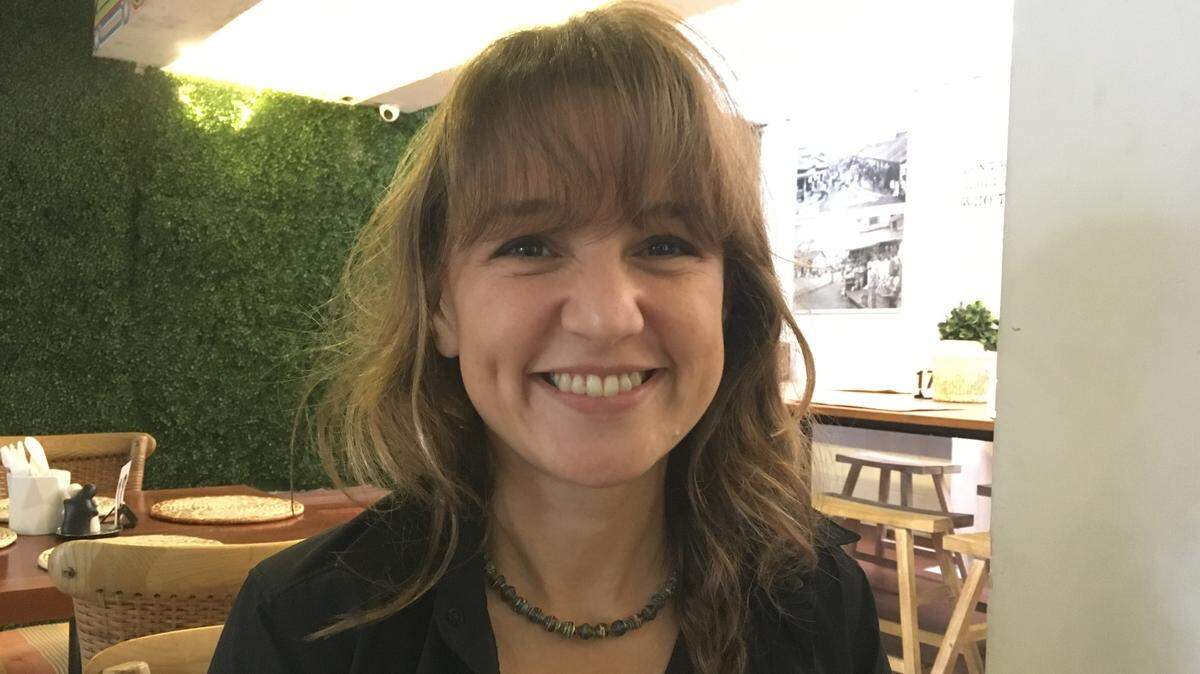
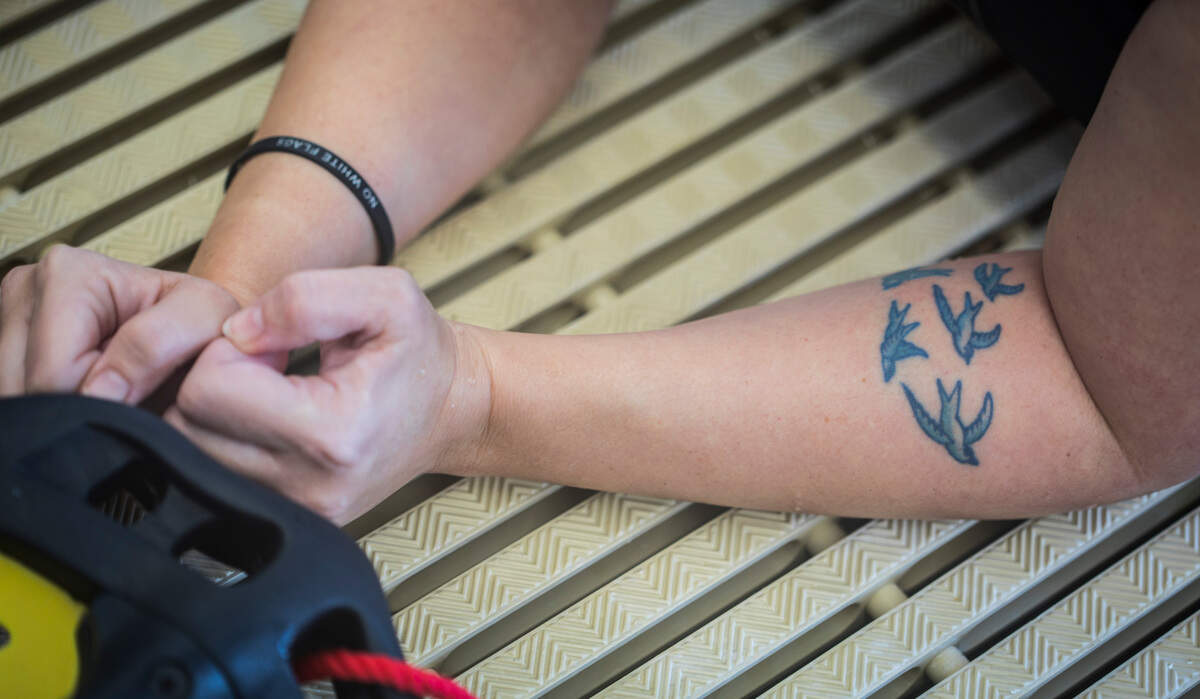
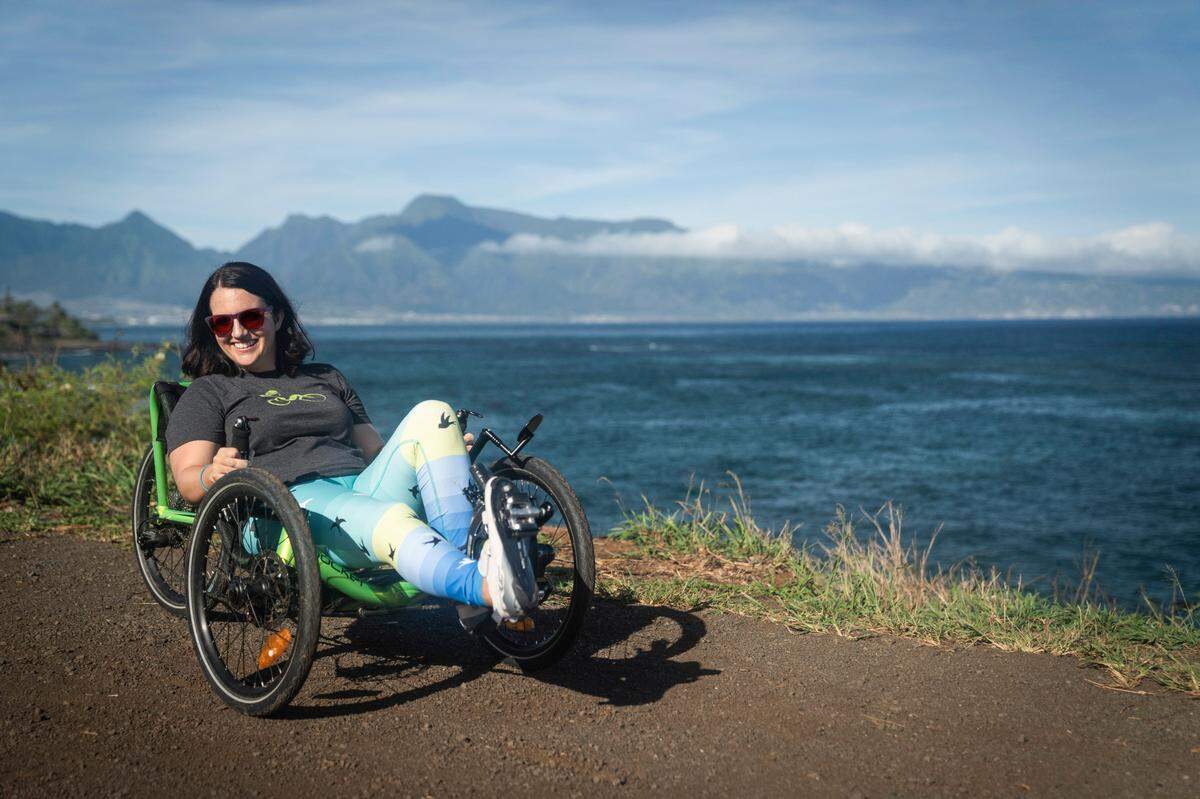
The six swallows tattooed on the inside of Andrea Peet’s forearm mark each year’s anniversary of her ALS diagnosis in 2014.
Swallows symbolize hope, Peet said, and hope is something the former triathlete refuses to relinquish, even as ALS tries to steal control of her body and a global pandemic puts her mission for awareness on pause.
“It’s like there’s no hope when you get the diagnosis, and they’re finding out that is the hardest thing to have — to have hope,” Peet said.
ALS (Amyotrophic lateral sclerosis or Lou Gehrig’s disease) is a progressive neurodegenerative disease that attacks cells in the brain and spinal cord, leading to muscle weakness and paralysis.
Typically, ALS patients are given a prognosis of living three to five years after diagnosis, and only 20% of those diagnosed make it to the five-year mark. Most people with ALS become totally paralyzed as they lose the ability to walk, talk, eat, swallow and breathe.
Peet, who lives in Raleigh with her husband, David, and their two cats, Bailey and Tango, is now in her sixth year since her diagnosis, and considers every month, every week, every day after that five-year mark a gift.
And she’s not wasting any of it.
Peet is The News & Observer’s Tar Heel of the Month for August. The Tar Heel of the Month honors people who have made significant contributions to North Carolina and the region.
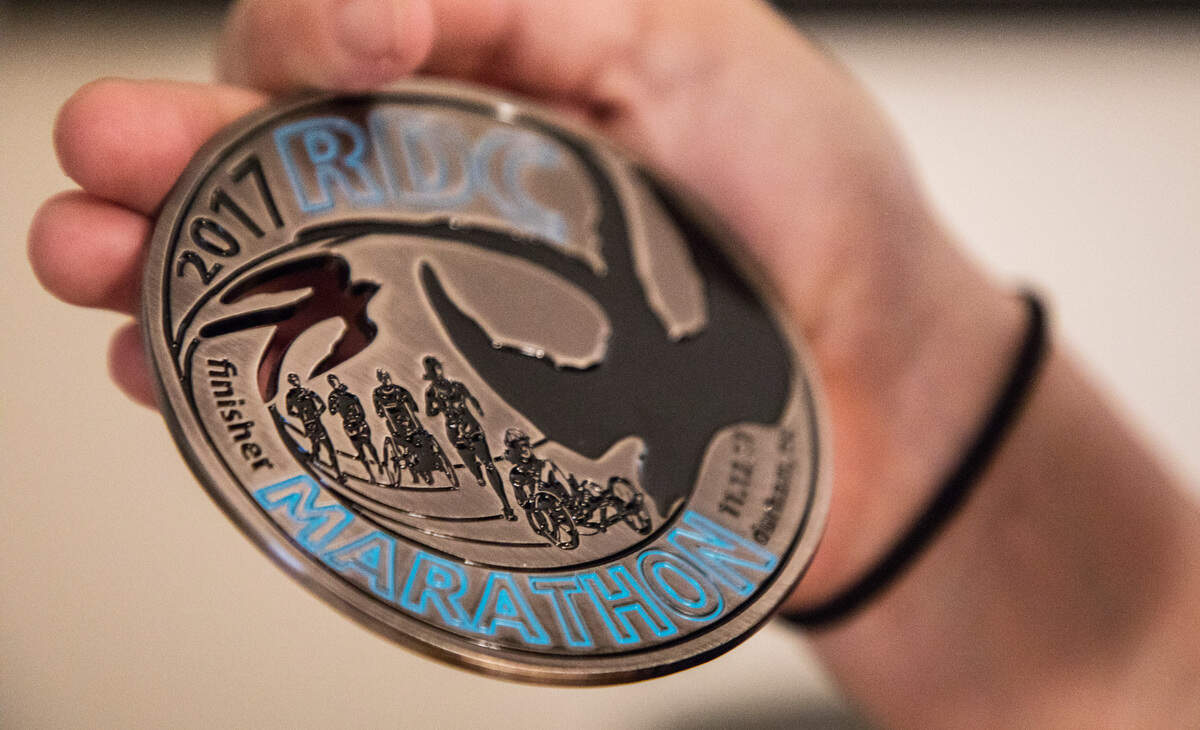
The N&O first spent time with Peet in early February to learn about her work with Google and the ALS Therapy Development Institute in helping develop speech recognition tools for ALS patients. We also talked to her about her ambitious goal, conceived just last year, of completing a marathon in all 50 states, each one on her recumbent trike.
In that pre-COVID world, accomplishing the marathon goal seemed like just a matter of math: She had 17 marathons completed and was knocking at least one marathon a month off her list, ticking off the states one-by-one.
But soon, with thousands falling sick and dying from the coronavirus pandemic, the world changed and marathons — like everything else — simply stopped.
People stayed inside their houses, adapting to stay-at-home orders, rules against mass gatherings and face mask mandates. As each month has passed, there has been no realistic prediction about when things might return to normal.
But one thing has never changed for Peet.
Hope.
The diagnosis: ‘Something’s not right’
In 2013, Peet was in the best shape of her life. She and her husband were living in Washington, D.C., where she worked as a city planner.
As an avid runner, the Davidson College grad competed in marathons and especially loved getting to know cities as she raced through them on foot. She decided that year to train for a 70.3-mile half Ironman triathlon, which would combine her loves of running, cycling and swimming.
She noticed during training that her times were getting slower, and she was having a harder time moving her legs on the bike. Her hamstrings were really tight when she ran.
She chalked it up to a race injury, and saw a physical therapist, but she knew her body and knew deep down, “something’s not right.” Around that same time, she fell down crossing a street and couldn’t get up.
Peet saw neurologist after neurologist, and they ran test after test, but no one could figure out what was wrong with her. A test for ALS had come back negative.
Meanwhile, she and her husband had their minds on the things most young couples do.
“We went ahead and bought a house and were working on starting a family,” Peet said. “We didn’t know that this was serious. We were just gonna move forward with our lives.”
But her symptoms worsened. Her muscles were weakening. And she had more trouble walking.
In 2014, five months after her first ALS test came back negative, Peet’s neurologist ran the test again. This time the diagnosis was confirmed. She was 33 years old.
“I went from being the strongest I’d ever been to walking with a cane in eight months,” Peet said.
‘I can reach people with my story’
The ALS diagnosis brought Peet back home.
She grew up in Raleigh, attending Hunter Elementary, Ligon Middle and Enloe High, and her parents still live here.
“I am an only child and my parents are older. I wanted to spend time with them,” she said. “Suddenly, with ALS or any terminal diagnosis, your priorities become clearer really fast.”
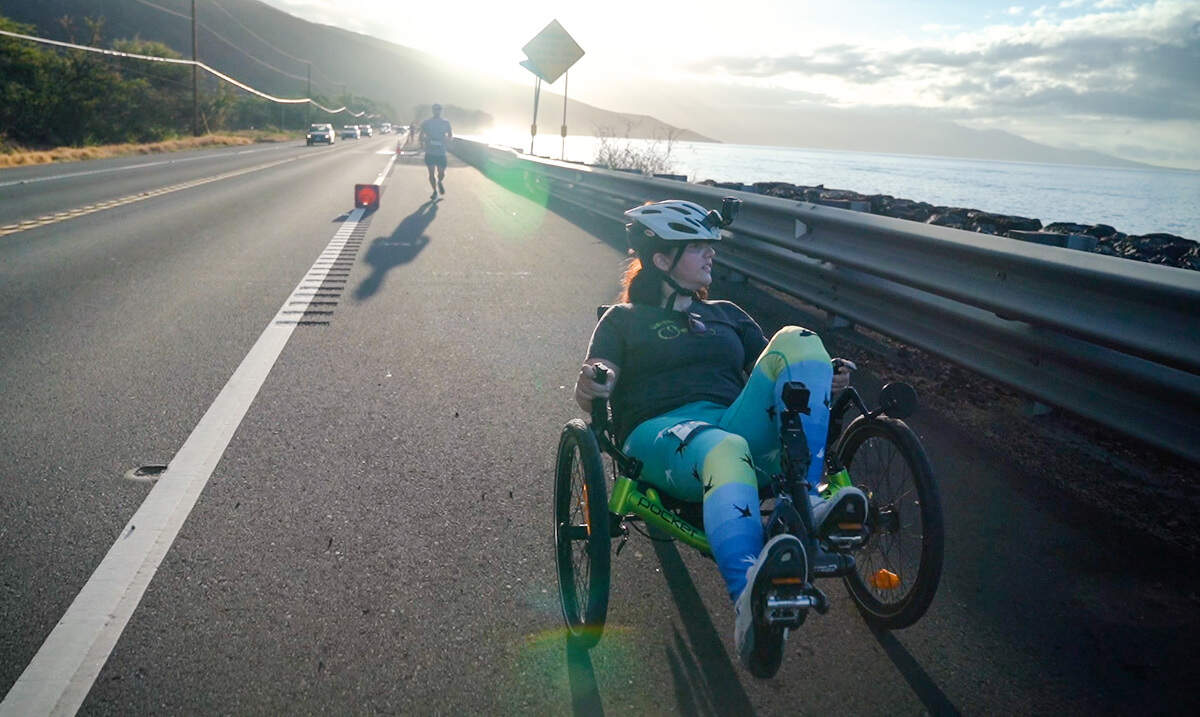
Peet got a recumbent trike and decided to attempt what she thought would be one last triathlon: the Ramblin’ Rose Triathlon in Chapel Hill.
“I came in last with my best friend, by like an hour,” she said. “I told them, ‘You can take it all down, I’ll just finish when I finish.’ I just wanted to do this. But they pretty much stayed, and there were like a hundred people there cheering me in, and everyone was crying.
“It really changed my perspective on the disease. I realized that I can reach people with my story and I can inspire people. And so that really gave me a new purpose.”
Peet kept riding her trike and kept entering marathons. She decided, “I”m tired of waiting for this disease to kill me. I’m just going to do whatever I want.”
Peet also started blogging, writing profiles of people with ALS to show how they live with the disease and what they decided to do with their time.
One of her big inspirations was Chris Rosati, the Raleigh man who used his time after his diagnosis to perform or encourage acts of kindness toward others — the most famous being a “Krispy Kreme Heist” in which Rosati snagged a Krispy Kreme truck and passed out free doughnuts to strangers. Rosati, who died in 2017, created the BIGG initiative (Big Idea for the Greater Good) and a nonprofit group called Inspire Media, both of which encouraged people to help others.
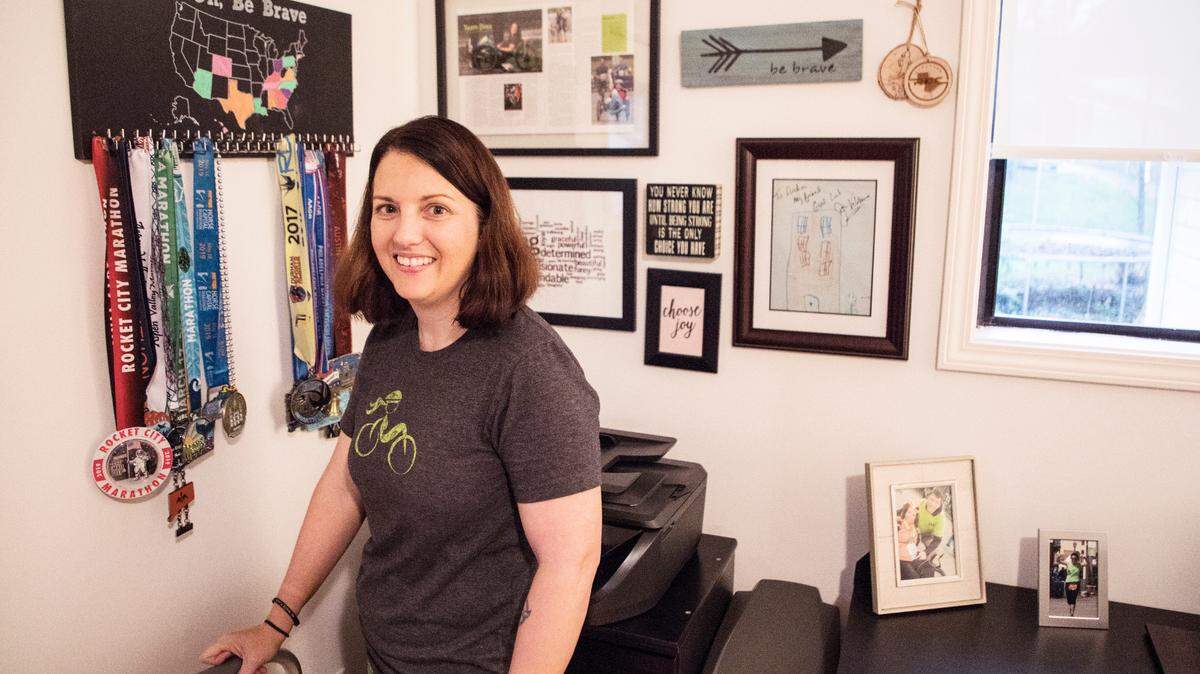
Peet said she completed one race a month for three years “and was still not dying,” so when she got to five years, she wanted to set a big goal: to be the first person with ALS to complete a marathon in all 50 states.
“I have this gift of time that people with ALS don’t have, so I want to raise money for ALS research, and by putting out the big goal, hopefully I can inspire other people to appreciate what their bodies can do,” she said.
ALS affects everyone differently, but in Peet’s case, she believes the marathons have made a big difference in how she has learned to live with the disease.
“I truly believe that it has helped me to maintain my strength, and mentally, it gives me a goal,” she said.
“It gets me outside and I’m not thinking about how I’m gonna die all the time. I’m thinking about the next race and working toward something.”
Through Google, more independence
The ultimate purpose of Peet’s 50-state marathon goal is to give hope to those diagnosed with ALS and use her “gift of time” to raise money for research by drawing more attention to the disease.
She started a foundation — the Team Drea Foundation — and has so far raised $500,000 for the ALS Therapy Development Institute and the Duke ALS Clinic. The foundation is also making a documentary, called “Go On Be Brave,” that tracks her 50-state marathon progress.
ALS TDI has become a big part of Peet’s story.
The nonprofit, started by the family of an ALS patient in 1999, funds research and streamlines the development of therapies to bring treatment to those living with ALS as quickly as possible. Today, ALS TDI is the world’s foremost ALS drug discovery lab focused solely on ALS.
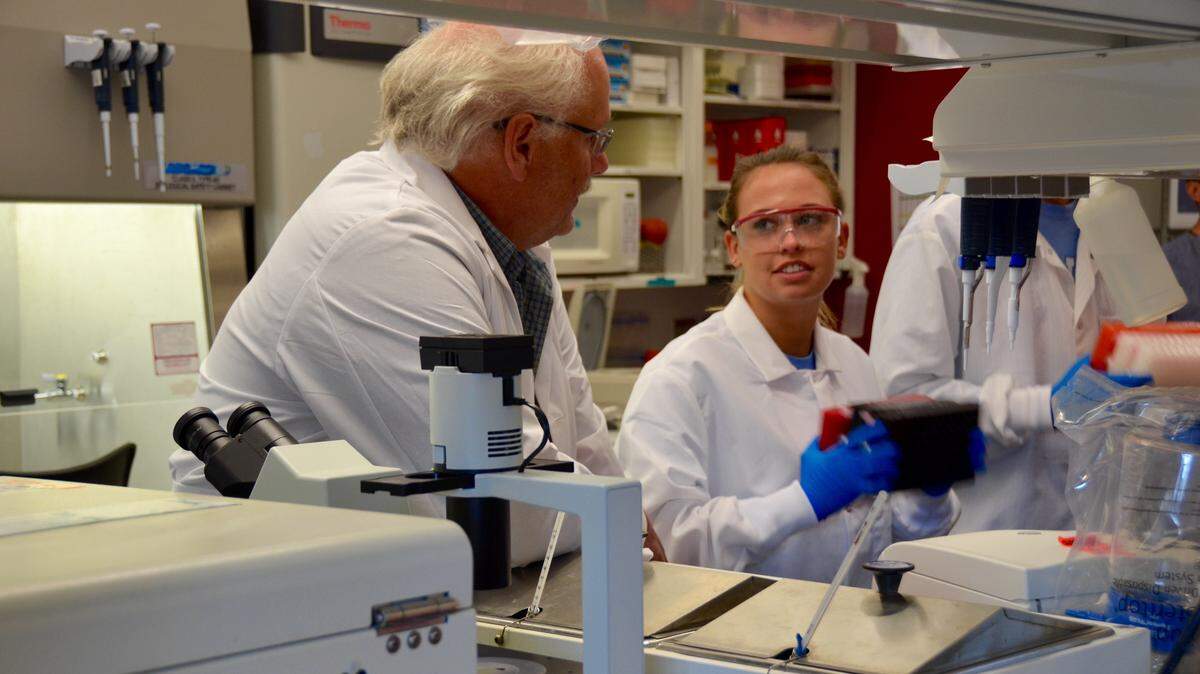
Peet’s connection to ALS TDI eventually led to a collaboration with Google on its Project Euphonia software. Peet is a member of Google’s Trusted Tester program.
“As a Trusted Tester, Andrea has contributed voice samples, worked with the team to create an individualized voice recognition model, and helps improve that model through testing,” Zoe Ortiz, a communications associate at Google, told The News & Observer.
The program uses the speech samples of people who have non-standard speech as a result of a neurologic condition to improve speech recognition technology.
Peet has been recording her voice for the Google project for five years.
“The team hopes that their work can be used to improve speech recognition technology for people who have speech impairments as a result of neurologic conditions,” Ortiz said. “Speech recognition technology has the potential to change the lives of people around the world, but if you have difficulty speaking, then those voice activated technologies won’t work well.”
Peet emphasizes the importance of the technology in the day-to-day lives of those living with ALS. She’s helping test an application of the technology right now — a voice recognition program unique to her, that works on her phone to control Smart devices around her home.
“Most voice activation recognition devices don’t understand me,” Peet said. “But I recorded 4,000 phrases so they could teach their system my voice.”
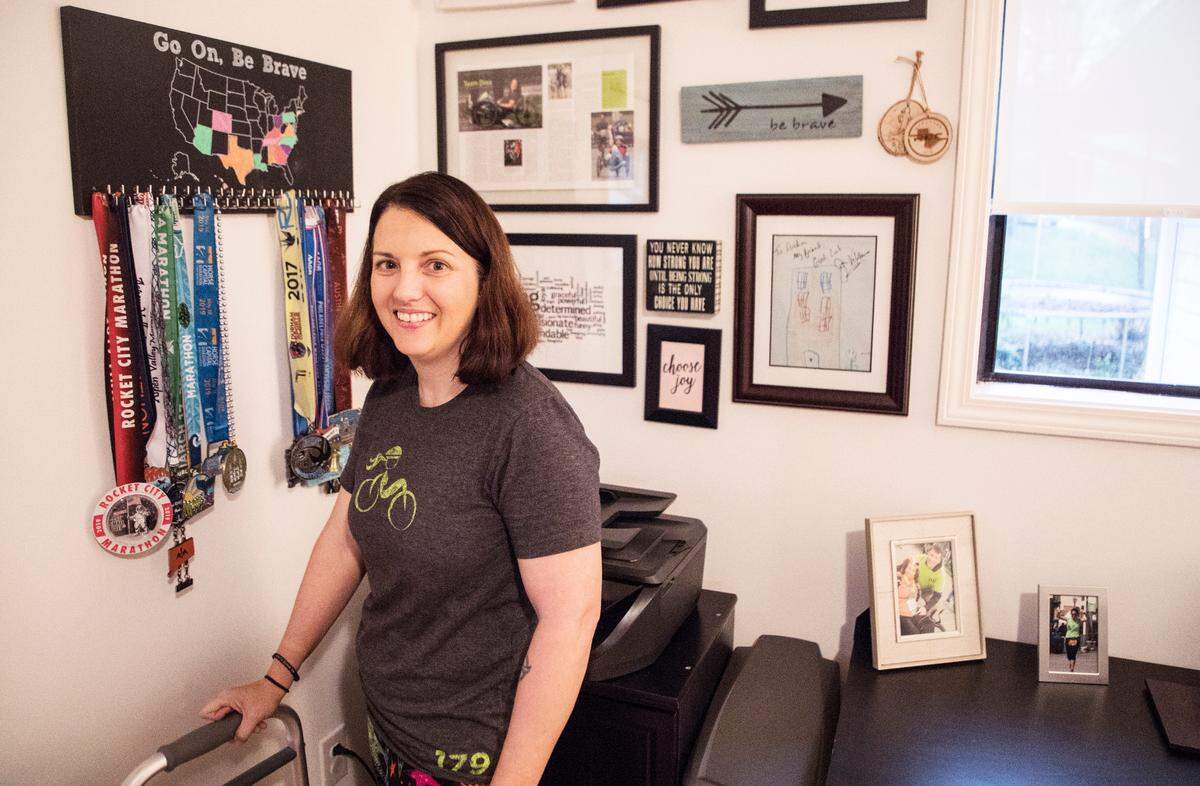
During our February interview, Peet, who navigates her home with a walker, demonstrated how she can control Google Nest with her voice. “Turn off living room lights. Turn on living room lights. Lock the front door. Set thermostat to 71 degrees.”
Peet said her husband, a lawyer, had initially worked from home, but the assist from Google made it easier for him to take another job in an office, because she didn’t need him at home all the time.
Peet is also fortunate that she can still drive, which gives her some additional independence. Before COVID, she did Pilates once a week and went swimming twice a week with her mother.
A blue cornflower
Peet’s toughness and her unwavering resolve are qualities noticed by her neurologist at the Duke ALS Clinic, Dr. Richard Bedlack.
Bedlack also has a swallow tattoo, his inspired years ago by a young patient and the “Often Awesome Army” of supporters who surrounded him. Bedlack said they taught him to not just focus on the science of ALS, but also on the power of hope. His tattoo reminds him to say something positive and hopeful to every patient, he said.
“Andrea embodies that whole spirit of positivity and hope, right from the beginning,” Bedlack said. “She wanted to have that same mentality through the disease, and she has.”
Many who know Bedlack, or even know of him, are aware of his love of fashion. His style has become one of the tools he uses to help his patients. Since he was a kid, he said, if he put on a crazy outfit, it was “almost like a suit of armor and nobody could mess with my positive vibe that day.”
Bedlack is about to fulfill a fashion-related dream, and Peet will be part of it.
He is commissioning Indianapolis tailor Jerry Lee Atwood to make him a “Nudie suit” — an embellished Western-style of suit made famous by Nudie Cohn, who dressed stars like Hank Williams Sr., Elvis Presley, Roy Rogers and Gram Parsons. Today, Atwood makes brightly colored, symbol-covered Nudie suits worn by performers like Little Nas X and Post Malone.
Bedlack’s ensemble will be a “Fashionably Fighting ALS” suit.
“Patients and their stories have influenced the way I think about ALS, and these are the symbols I want on my suit,” Bedlack said.
One of the symbols he picked is the blue cornflower.
“For me, that is sort of the symbol that embodies Andrea,” he said. “When you first meet her you might think that she’s fragile. Blue cornflowers look fragile but are amazingly strong and they maintain their amazing brightly colored blue all through the harshest winters.
“I’ve known Andrea now more than four years and this disease if anything has made her stronger. It has not affected the most important parts of her at all.”
Bedlack remembers Peet’s early worry that because of ALS, she would lose the experience of marathons.
“She’s upped her game and now has this goal ... To me, that’s so inspirational, that’s strength. That’s resilience. The blue cornflower is a symbol of resilience.”
‘I am not going to quit’
When we checked back in with Peet in July and again in August, we found she is still as resolute and as full of hope as ever.
And despite the world shutting down around her, she still has the same goal.
“I thought about doing a virtual race ... but I can’t quite bring myself to do that,” Peet said in July. “It feels like I would be saying and meaning that I won’t be around when the races come back.”
She has kept herself focused this summer by completing a 270-mile virtual bike ride for ALS TDI. It took her three months and three days to finish all 270 miles from Raleigh, but it gave her a purpose.
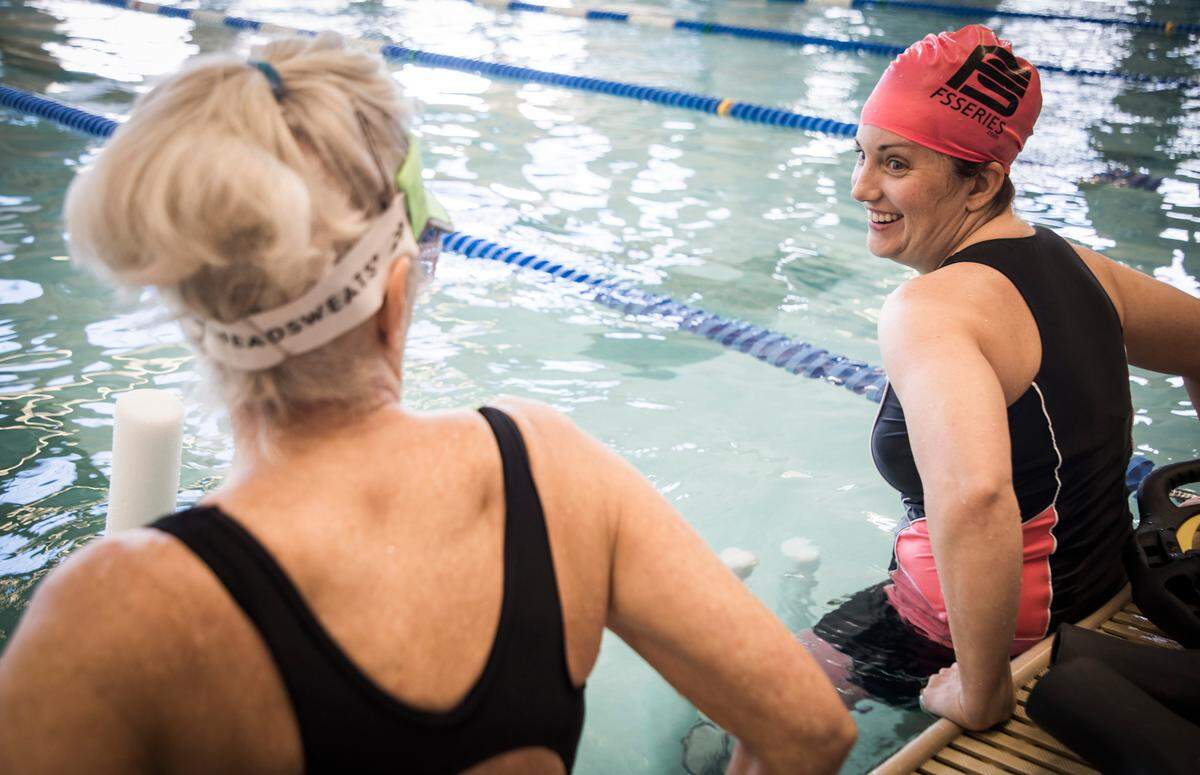
She’s also back to her pre-COVID routine of Pilates once a week (virtual right now) and to her twice-a-week pool workouts with her mother — swimming outside in the summer is her absolute favorite, she said.
Peet is also participating in a new clinical trial at Duke, with a drug that is intended to strengthen her muscles.
“It’s a little early to say, but I’m feeling really good and I’m trying to use it to my advantage in the pool and on the trike. And I have little dumbbells that I lift, and I’m just trying to keep going as best as I can.”
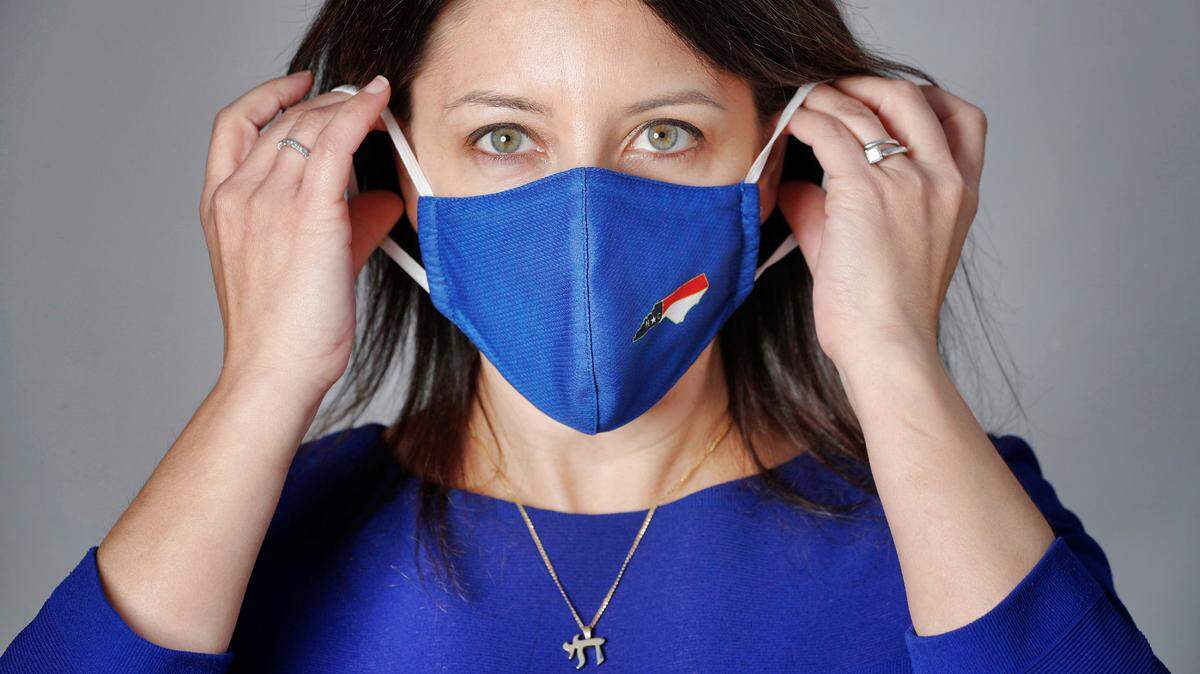
And she added that sixth swallow tattoo this summer. This one is carrying a tiny face mask in its beak, “to commemorate this crazy year,” Peet said.
Peet says she’s just “hanging out like everyone and trying to enjoy the summer,” but “hanging out” for her means three more in-person marathons completed earlier this month.
Two weeks ago, Peet and her husband drove out west to finish marathons in Idaho, Wyoming and Utah. The races had staggered start times to avoid mass gatherings.
Now she’s up to 20 states. Number 21 is slated for November.
“In the scheme of the world right now and all the suffering and financial hardships and sorrow and loss of life, it’s not that important for me to finish the marathons,” Peet said. “But it’s still important to me.
“I am putting it into perspective and I’m still just lucky and grateful to be here,” she said. “I am not going to quit.”
Follow Andrea Peet’s progress
Track Andrea Peet’s progress toward her goal of being the first person with ALS to complete a marathon in all 50 states.
Facebook: facebook.com/teamdreafoundation
Instagram: instagram.com/teamdreafoundation
Twitter: twitter.com/teamdreafdn
Tar Heel of the Month: Andrea Peet
Age: 39
Hometown: Raleigh, N.C.
Education: Davidson College
Accomplishments: Founder of the Team Drea Foundation, which has raised $500,000 for the ALS Therapy Development Institute and Duke ALS Clinic; Trusted Tester for Google’s Project Euphonia speech recognition project; almost halfway to her goal of being the first person with ALS to complete a marathon in all 50 states.
This story was originally published August 28, 2020 at 9:00 AM with the headline "Neither ALS nor a pandemic will crush her dream of completing a marathon in each state."