NC elections are now run by Republicans. How are they changing early voting for 2026?
AI-generated summary reviewed by our newsroom.
- State adds early voting sites overall yet nine counties drop Sunday voting
- GOP board cut some Sunday voting, but several cuts were unanimous with Democrats agreeing
- Early voting Feb 12–28 and March 3 election; disputes may prompt summer legal fights
READ MORE
NC Primary Election 2026
North Carolina’s primary election is March 3, 2026, with early voting starting Feb. 11, 2026. Here are stories on candidates, voting and issues to help voters as they head to the polls.
Expand All
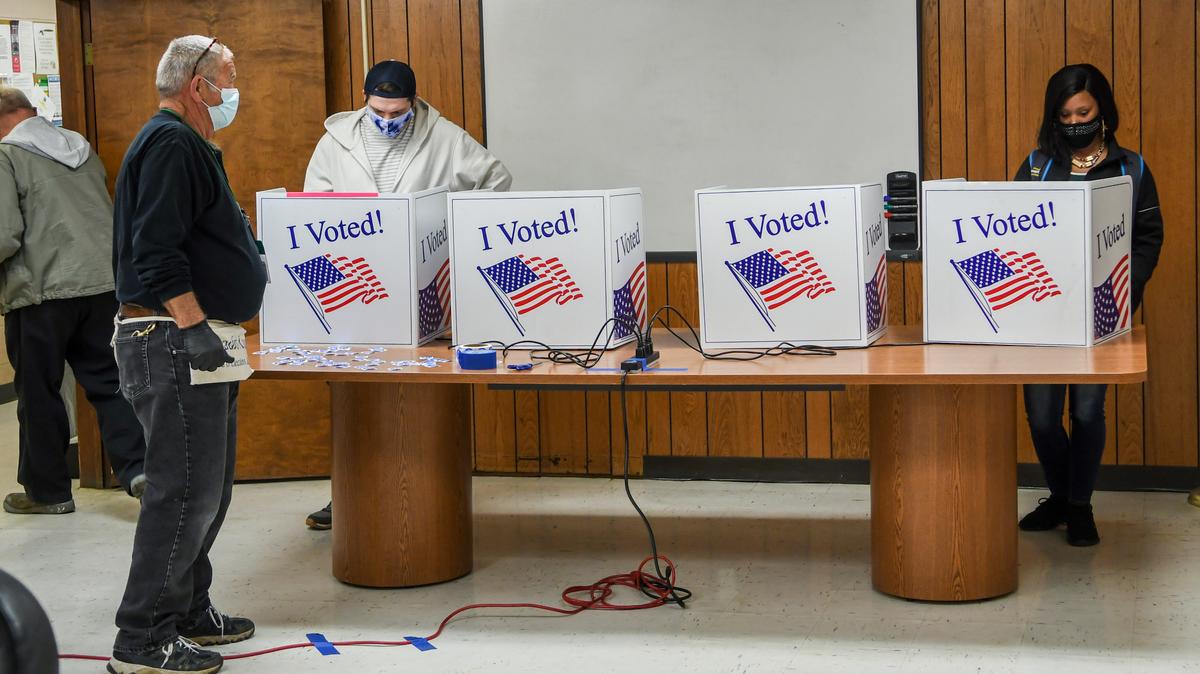
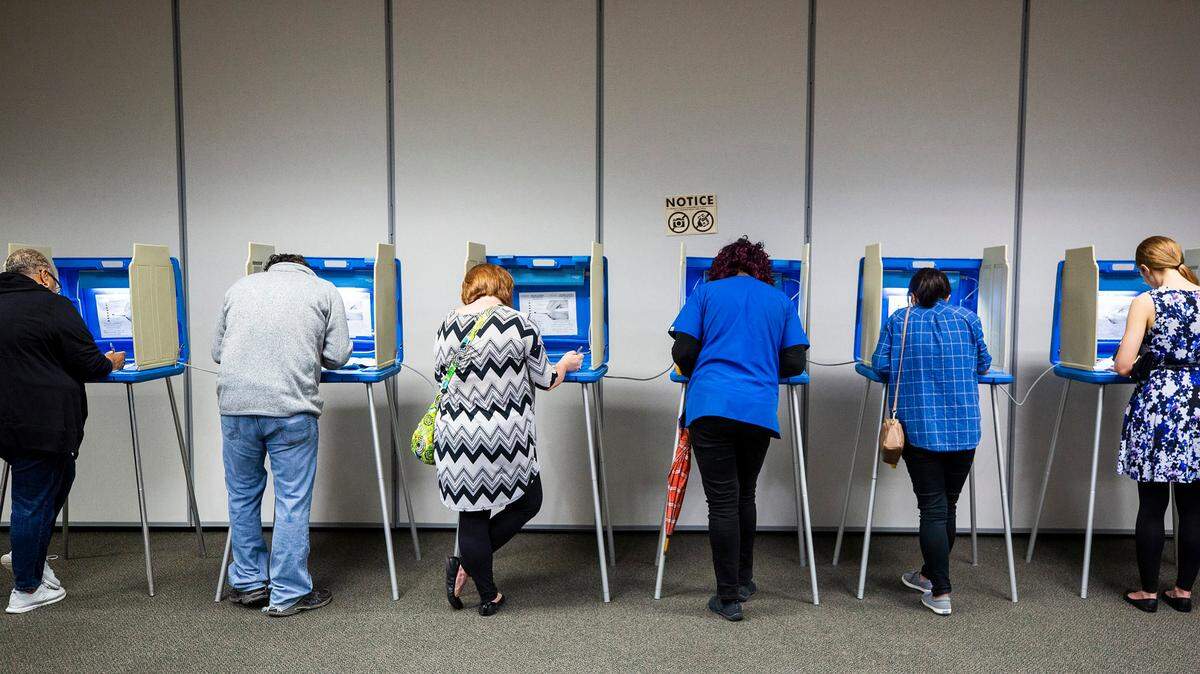
When North Carolinians go to cast their ballots in the March primary election, hundreds of thousands of voters will have fewer opportunities to vote on Sunday — even as the total number of polling sites increases across the state.
The changes come amid a massive restructuring of the state’s election apparatus, with Republican lawmakers having stripped Democratic Gov. Josh Stein of consequential appointments to election boards and transferred them instead to State Auditor Dave Boliek, a Republican.
Since that law took effect last year, Republican majorities have been seated in all of North Carolina’s 100 county boards of elections, as well as the State Board of Elections.
This year’s approval of early voting sites — a process that takes place each election and requires unanimous support at the county level — is one of the first major tests of how these newly Republican-led boards may depart from the precedent set by nearly a decade of Democratic control.
Fewer Sunday voting opportunities
To accurately compare this year’s early voting access for the primaries to previous years, The News & Observer analyzed voting sites from the 2022 midterm elections.
While 2024 was the most recent election carried out under Democratic control, it’s difficult to compare presidential election years to midterms given the substantial gap in turnout.
When compared to the 2022 primary election, nine fewer counties will allow voters to cast their ballot on a Sunday this year.
Those counties are home to roughly 1 million North Carolinians in total, according to 2024 U.S. Census estimates.
In all, only 20 of North Carolina’s 100 counties will offer at least one day of Sunday voting this year, compared to 29 in the last midterms.
Chris Cooper, a political scientist at Western Carolina University, said the cuts to Sunday voting are a “notable departure in practice” that appear “systematic.”
While disagreements over Sunday voting are often contentious and marked by partisan debate, only four of the counties that cut Sunday voting did so in a divided vote, requiring final resolution from the State Board of Elections.
The other five did so unanimously, with the Democratic minority agreeing to the plan.
When the State Board of Elections considered nonunanimous early voting plans last month , Republicans presented a variety of reasons for cutting Sunday voting.
Some said it was due to a lack of resources; others claimed that past Sunday voting days had been sparingly used by voters.
Francis De Luca, the chair of the State Board of Elections who voted against Sunday voting in each contested case, told reporters he was personally opposed to the practice.
“I don’t think we should be voting on Sunday,” he said. “I know lots of people do nothing on Sunday because that’s the Lord’s day.”
Democrats objected to the cuts, with board member Jeff Carmon saying “Regardless of your political affiliation, you don’t have to vote on Sunday, but it should be made available.”
In a system as decentralized as that of North Carolina’s state and local election boards — each of which has five members — Cooper said it’s hard to identify overarching motivations behind these decisions.
“I think it truly is a mix,” he said. “… (with) 505 different decision-makers, even when they agree, they probably don’t have the same reasons for agreeing. It’s a pretty diffuse system.”
Total sites increase
Even as election officials moved to cut some Sunday voting, the total number of early voting sites across North Carolina will actually increase this year, compared to the last midterms.
The state will host 319 early voting sites, compared to 301 in 2022.
Many of the state’s most populous counties, like Wake and Mecklenburg, approved more sites this year as North Carolina prepares for a highly watched U.S. Senate race.
Gerry Cohen, a Democratic member of the Wake County Board of Elections, said his colleagues have unanimously supported expanding early voting.
“From everybody’s standpoint on the board, it’s very popular among voters, and we’re able to handle that many sites for that many days — there has not been a problem recruiting staff,” he said.
Other counties, like Madison and Jackson in Western North Carolina, approved fewer overall sites this year.
Disputes over on-campus polling sites
Jackson County also became a major source of debate after the local board’s Republican majority voted to axe a longtime early voting site at WCU.
The issue came before the State Board of Elections, which agreed to cut the site in a 3-2 vote along party lines.
It was one of four on-campus polling sites that the state board’s Republican majority voted against including this year.
Democratic local board members had also pushed for voting sites at UNC Greensboro, NC A&T State University and Elon University — but all were ultimately rejected.
The state board’s decision was met with protest from dozens of students from NC A&T, a historically Black university, who showed up to the meeting in support of a polling site on campus.
“If we were a different color or looked different, this would be a different outcome,” a student told board members after the vote.
All the university sites at issue have been used at some point in the recent past, but WCU’s is the only site that had been used in the 2022 primary election.
And while the rejection of some university sites drew significant attention, The N&O’s analysis of early voting plans found that North Carolina will have more total on-campus polling sites this March than it did in the 2022 primary election.
When counting community colleges, there will be 10 on-campus early voting sites this year, compared to nine in 2022.
‘We ain’t seen nothing yet’
Opponents of the board’s decisions on Sunday voting and campus polling sites have hinted at the possibility of litigation, but Cooper said lawsuits are unlikely to come for the primary election.
Instead, the conflicts at issue now could merely be previews of more contentious disputes ahead when planning begins for the general election.
“I think we ain’t seen nothing yet,” Cooper said. “The fight coming this summer is going to be way bigger than the fight we just saw.”
Early voting begins on Feb. 12 and ends on Feb. 28. Election Day is March 3.
Voters can find their county’s early voting sites on the State Board of Elections’ website.
This story was originally published January 28, 2026 at 5:00 AM with the headline "NC elections are now run by Republicans. How are they changing early voting for 2026?."







.JPG)