Fact check: Roy Cooper’s hurricane recovery record under scrutiny in Senate race
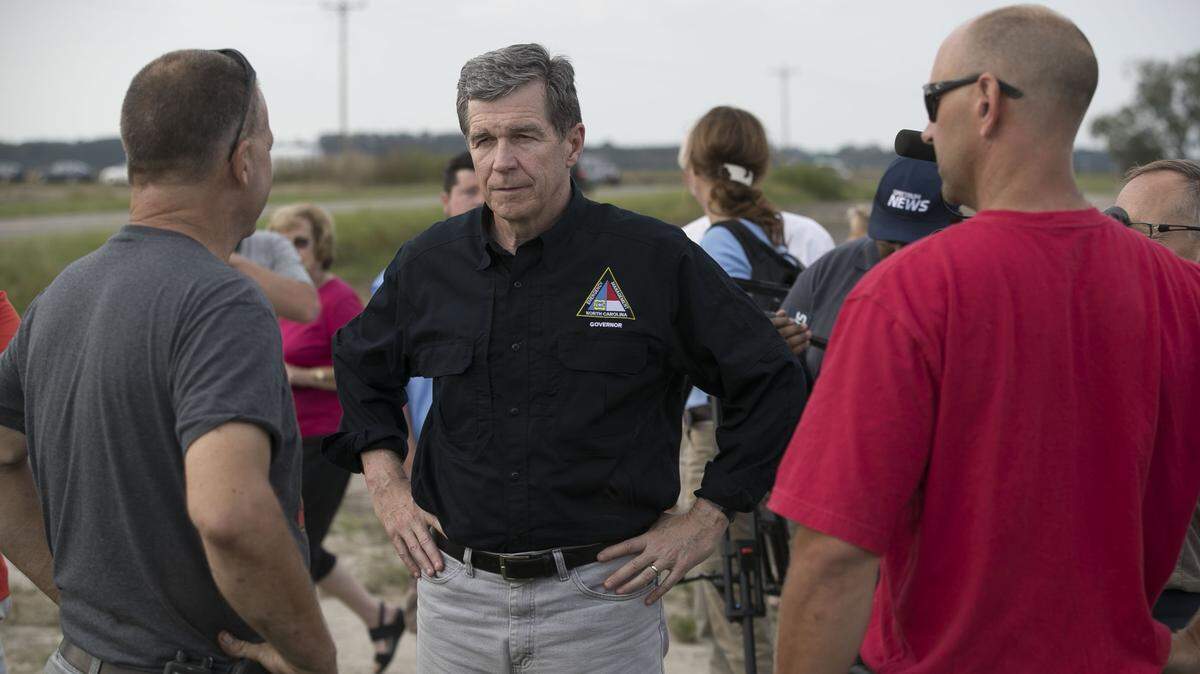
As former Gov. Roy Cooper campaigns for U.S. Senate, Republicans argue that hurricane recovery under his administration took too long for many families.
The issue has taken on new political relevance as disaster response and recovery become a point of contrast in what could be one of the most competitive Senate races in the country and most expensive in American history. Cooper’s supporters say he provided steady leadership during major storms and pushed federal agencies to deliver aid faster. Republicans argue his administration mismanaged rebuilding efforts — turning recovery into a years-long ordeal for many North Carolinians.
Republicans are right that it took a long time, sometimes years, to get people back into their homes after catastrophic storms. But Cooper’s campaign blames much of that delay on slow-moving federal funds and the need for federal disaster recovery reform. The campaign said he worked hard to obtain state resources for recovery efforts, cut red tape and even earned praise of Republicans, including from President Donald Trump, for his immediate response.
Cooper has also criticized his opponent Michael Whatley over his role as Trump’s so-called “recovery czar” for Hurricane Helene. The Charlotte Observer wrote about Whatley’s hurricane response efforts last week.
Rebuilding took years
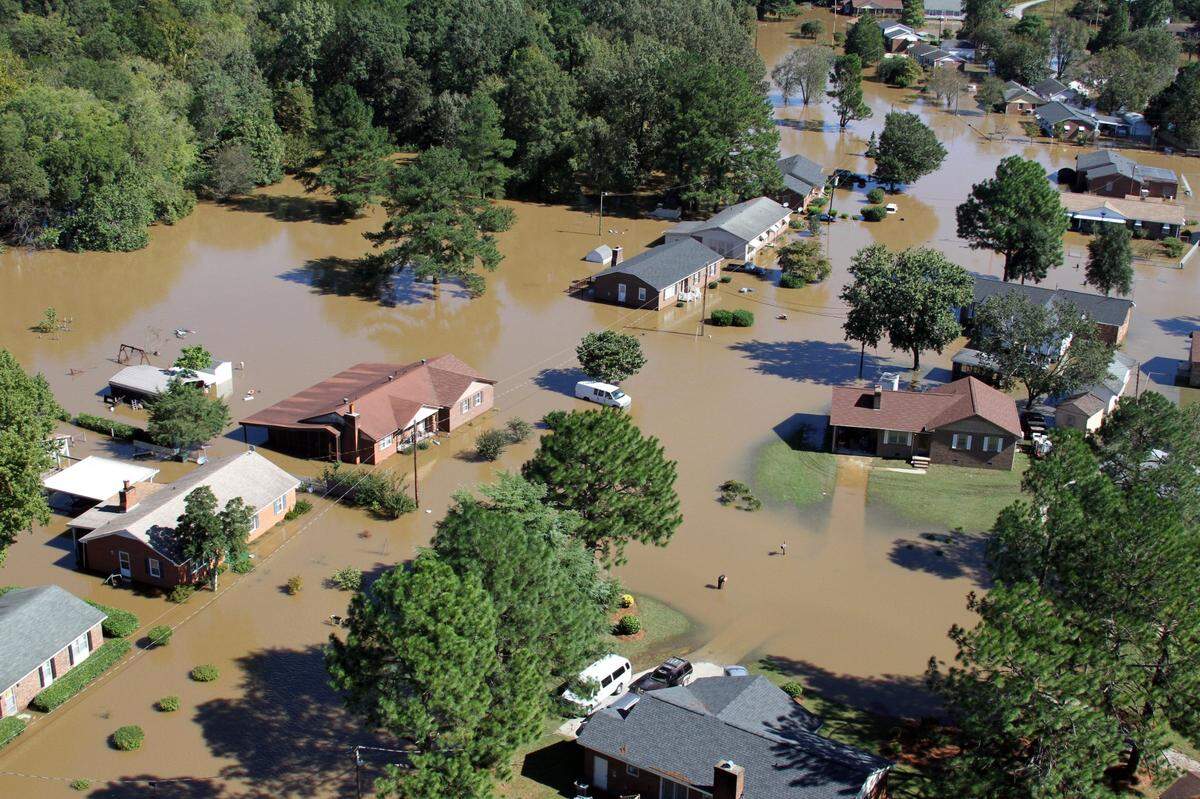
Republicans have focused criticism heavily on recovery after Hurricane Matthew in 2016 and Hurricane Florence in 2018, which caused catastrophic flooding across eastern North Carolina. Cooper was elected governor in 2016 and was in office during Hurricane Florence.
Republicans point to state and local reporting showing thousands of residents were still waiting for home repairs or rebuilding to begin years after Matthew and Florence. They argue those delays demonstrate mismanagement within the state’s recovery apparatus under Cooper.
“Roy Cooper’s disastrous mismanagement and incompetence failed North Carolinians devastated by Hurricanes Matthew, Florence, and Helene,” National Republican Senatorial Committee regional press secretary Nick Puglia said in a statement. “Under Cooper, victims were abandoned for years and over 1,000 families were still homeless when he left office. Cooper will be held accountable in 2026.”
The figure refers to reporting showing that, as of early 2025, more than 1,100 eastern North Carolina households remained in temporary housing while awaiting home reconstruction after Hurricanes Matthew and Florence.
Much of the work facing backlash flowed through the North Carolina Office of Recovery and Resiliency, the state agency tasked with long-term disaster recovery and housing reconstruction programs. Republican lawmakers have repeatedly criticized the office for slow eligibility determinations, construction delays and administrative problems.
Cooper has defended his efforts, saying that delays in North Carolina’s long-term hurricane recovery overlapped with delayed federal disaster aid.
After Hurricane Florence, the U.S. Department of Housing and Urban Development did not publish the required Federal Register notice spelling out how states could spend the money for nearly 500 days. Until those rules were issued, North Carolina could not fully access over half a billion dollars in federal funds needed to begin much rebuilding.
Cooper’s campaign said he urged the federal government to do more, pointing to a 2017 letter penned to Trump after Hurricane Matthew expressing his “shock and disappointment” that the federal government provided less than 1% of the requested funds for recovery. He again wrote a 2019 letter to Trump urging him to end the government shutdown to prevent recovery delays. Cooper also advocated for a change in federal law to speed up the funding distribution.
Federal housing audit, oversight
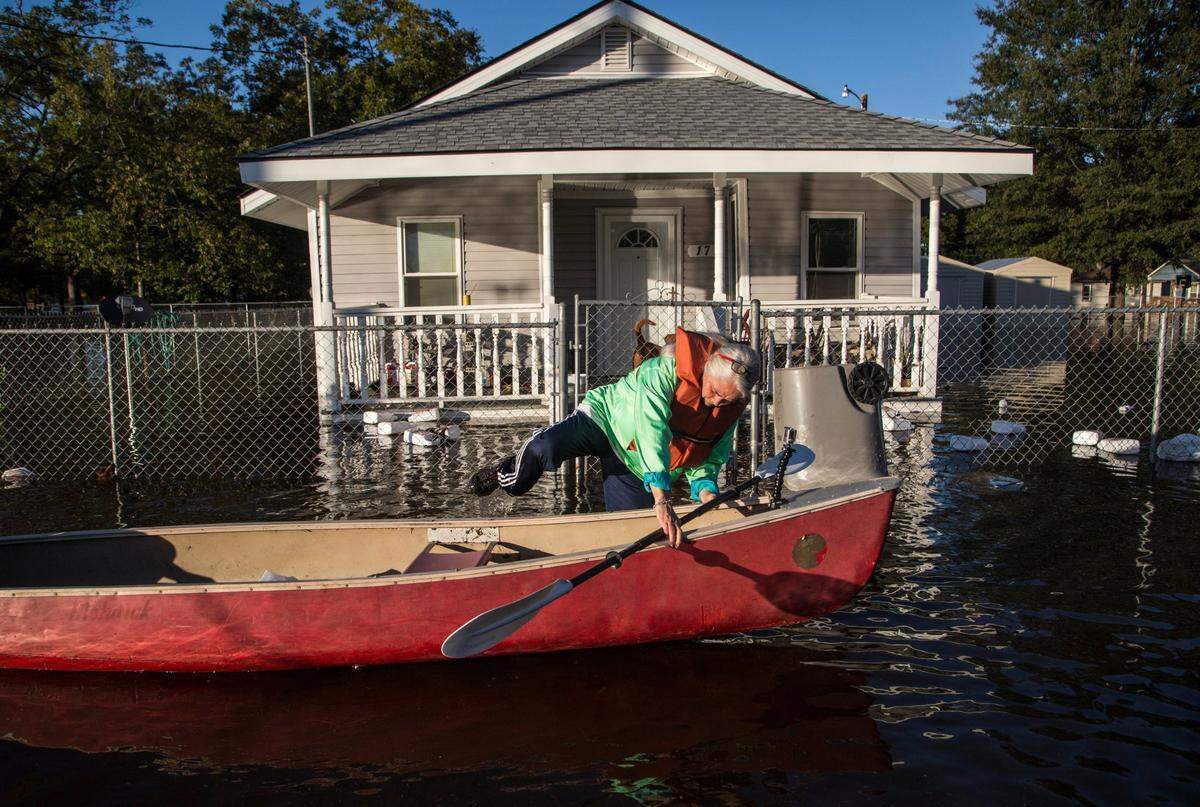
Cooper’s campaign said his administration oversaw the rebuilding and repair of over 13,000 homes in addition to other infrastructure like bridges, roads, water systems and public buildings.
“Roy Cooper led North Carolina through several major catastrophic storms, activating emergency resources, keeping families safe and securing significant state and federal funding for recovery,” said Jordan Monaghan, rapid response director for Cooper’s campaign.
But a November report by North Carolina State Auditor Dave Boliek, a Republican, documented significant problems within NCORR.
The audit reported the agency struggled with planning and oversight, slowing down the recovery process and requiring the state to step in with nearly $300 million in emergency funding. The audit said the long-term recovery office didn’t know the full cost of the rebuilding effort until after people already applied for help. It also pointed to “poor budgeting practices,” inconsistent use of financial tracking systems and limited vendor oversight.
The report also highlighted how slow the program was at getting people back into homes. Homeowners had to move through a series of federally mandated steps before any reconstruction work could start, and many of those steps dragged out for months. The audit found that some families remained in temporary housing for more than 1,400 days while waiting for rebuilding assistance.
Cooper’s campaign said the audit looked only at projects completed with federal housing money. The campaign did not answer specific questions about if Cooper takes responsibility for the problems identified in the audit and said he acted in the best interest of North Carolinians.
The campaign said Cooper delivered help at the state level. After Hurricane Helene, he expanded unemployment benefits for displaced workers, increased flexibility for health care services and directed state resources to hard-hit western North Carolina communities. He also signed large state recovery packages passed by the legislature following storms including $942.4 million in funding after Florence and $3.9 billion after Helene.
“For survivors of any storm, recovery can never happen fast enough,” Monaghan said. “In the Senate, Roy will work with leaders in both parties to fast-track federal funding to ensure Western North Carolina gets every federal dollar it’s owed.”
Whatley’s campaign has also criticized Cooper’s handling of hurricane recovery leadership, arguing that Cooper waited too long to remove his NCORR director Laura Hogshead and did so only when her continued role became a political liability, spokesperson Jonathan Felts said in a statement to the Observer.
Felts also said Stein’s move early in his term to create a new office rather than use NCORR to respond to Helene reflects broader dissatisfaction with Cooper’s hurricane record, even among Democrats. Cooper’s campaign said the creation of a new office, GROW NC, made sense because the damage was unique to the western part of the state.
“After 8 years of failed hurricane recovery efforts Roy Cooper is desperate to shift the blame to an unelected Gaston County man as President Donald Trump continues to deliver more federal recovery resources than North Carolina has ever received for any previous natural disaster,” Felts said.
By contrast, Cooper’s campaign said, the federal government has not sufficiently funded Helene recovery efforts since Whatley was put “in charge” of overseeing recovery.
”President Trump tapped Michael Whatley to ‘lead the team’ on Helene recovery, but when Whatley was unable to deliver sorely needed federal aid for struggling families, he suddenly claimed to be an ‘unelected Gaston County man,’” spokesperson Kate Smart said in a statement. “Whatley is failing, taking heat from fellow Republicans, and should be replaced.”
This story was originally published January 30, 2026 at 5:00 AM with the headline "Fact check: Roy Cooper’s hurricane recovery record under scrutiny in Senate race."