Immigrants who were brought as children to NC still look to Congress for change
READ MORE
Living in legal limbo
It’s been 10 years since President Barack Obama signed the DACA (the Deferred Action for Childhood Arrivals program) executive order on June 15, 2012. Most of the young applicants are now adults, paying bills and taxes, many with children of their own. For some, the end of their legal protection is getting closer. And with decades of legislation aimed at this group on state and federal books, they now look to Congress for guidance on what comes next.
Expand All
Immigrants who were brought as children to NC still look to Congress for change

‘Trying to buy time.’ They’ve grown up here, but their visas are about to run out
What NC candidates say Congress should do about DACA and documented dreamers
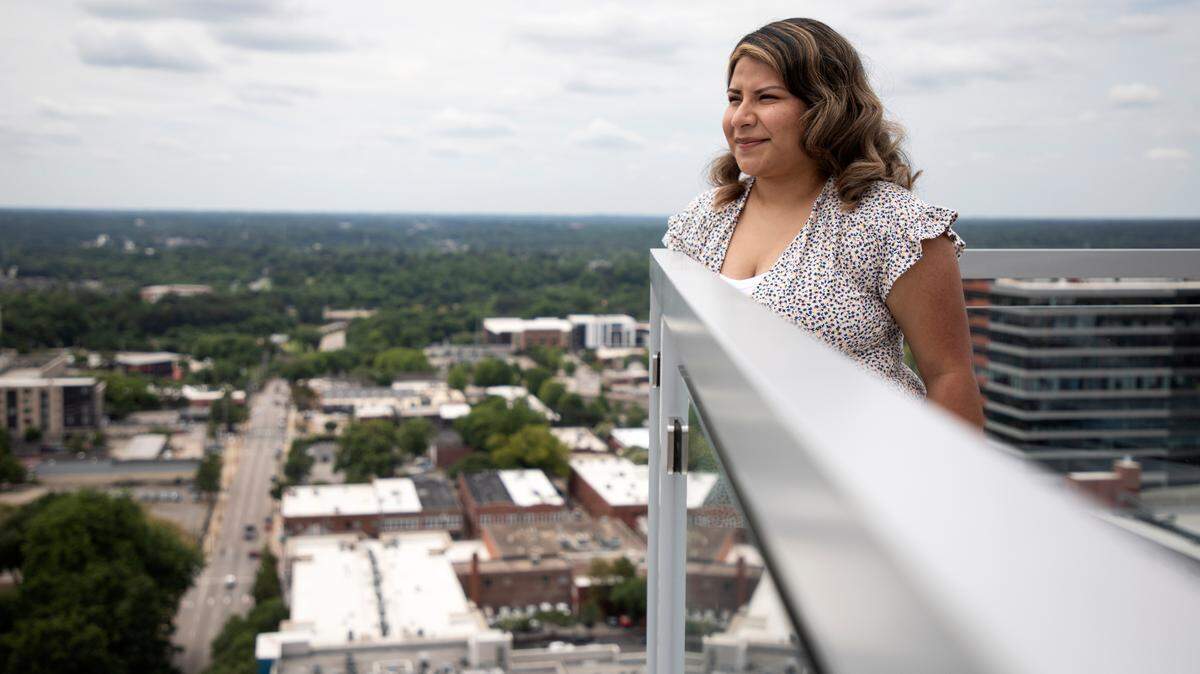
‘I’m more than just a number’: Raleigh ‘Dreamer’ Jocelyn Casanova on a decade of DACA
A timeline of state and federal laws, challenges to block and help DACA holders
With $2,500, a North Carolina resident could pay almost an entire year’s tuition at Wake Technical Community College in Raleigh.
Or pay almost two months’ rent in one of the Triangle’s more affordable ZIP codes.
Or take a six-night vacation in Honolulu, Hawaii, according to one Tripadvisor report.
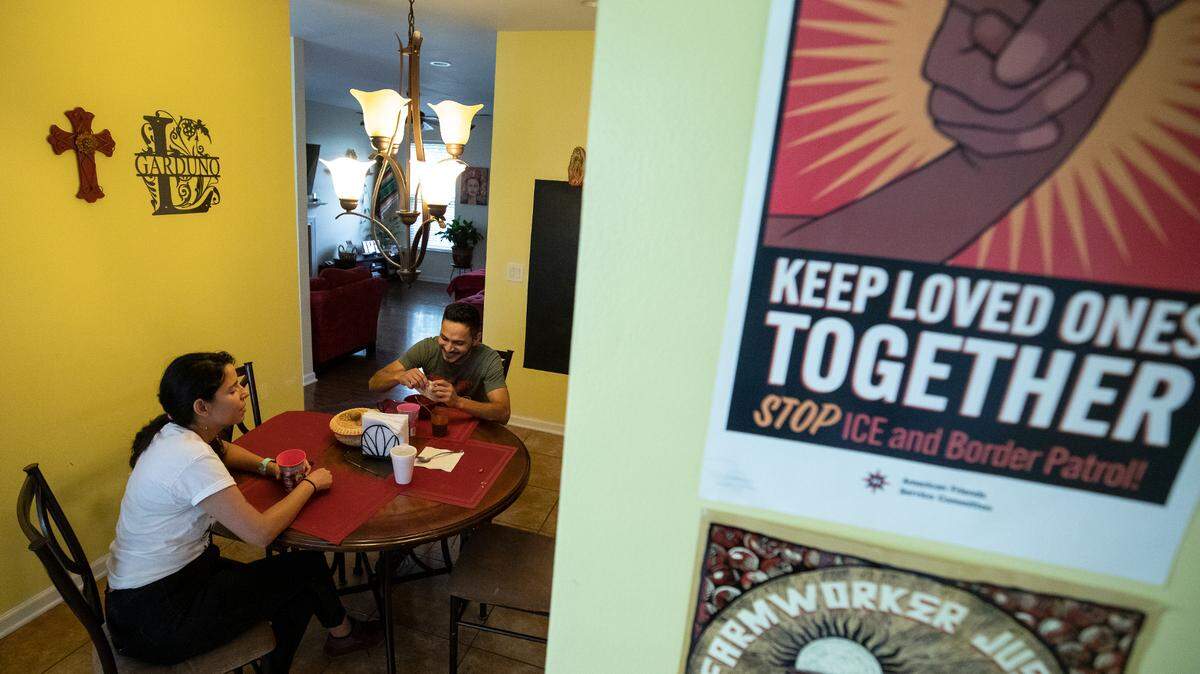
But Laura Garduño García didn’t spend $2,500 on any of those things. Instead, that’s what the immigrant mother of two from Greensboro paid the federal government over the past decade to protect herself from deportation.
This federal protection is the Deferred Action for Childhood Arrivals program, or DACA for short.
DACA allows immigrants like Garduño García — whose parents brought them into the United States illegally as children — to study, work and drive in the country without risking deportation. Those eligible pay a $495 fee every two years to maintain their status.
Among other requirements, applicants for DACA must have entered the country before their 16th birthday and must not have been convicted of a felony, a significant misdemeanor or three or more other misdemeanors.
It’s been 10 years since President Barack Obama signed DACA as an executive order on June 15, 2012. Most of the young applicants in 2012 are now adults, paying bills and taxes, many with children of their own.
But they are still living in a legal limbo.
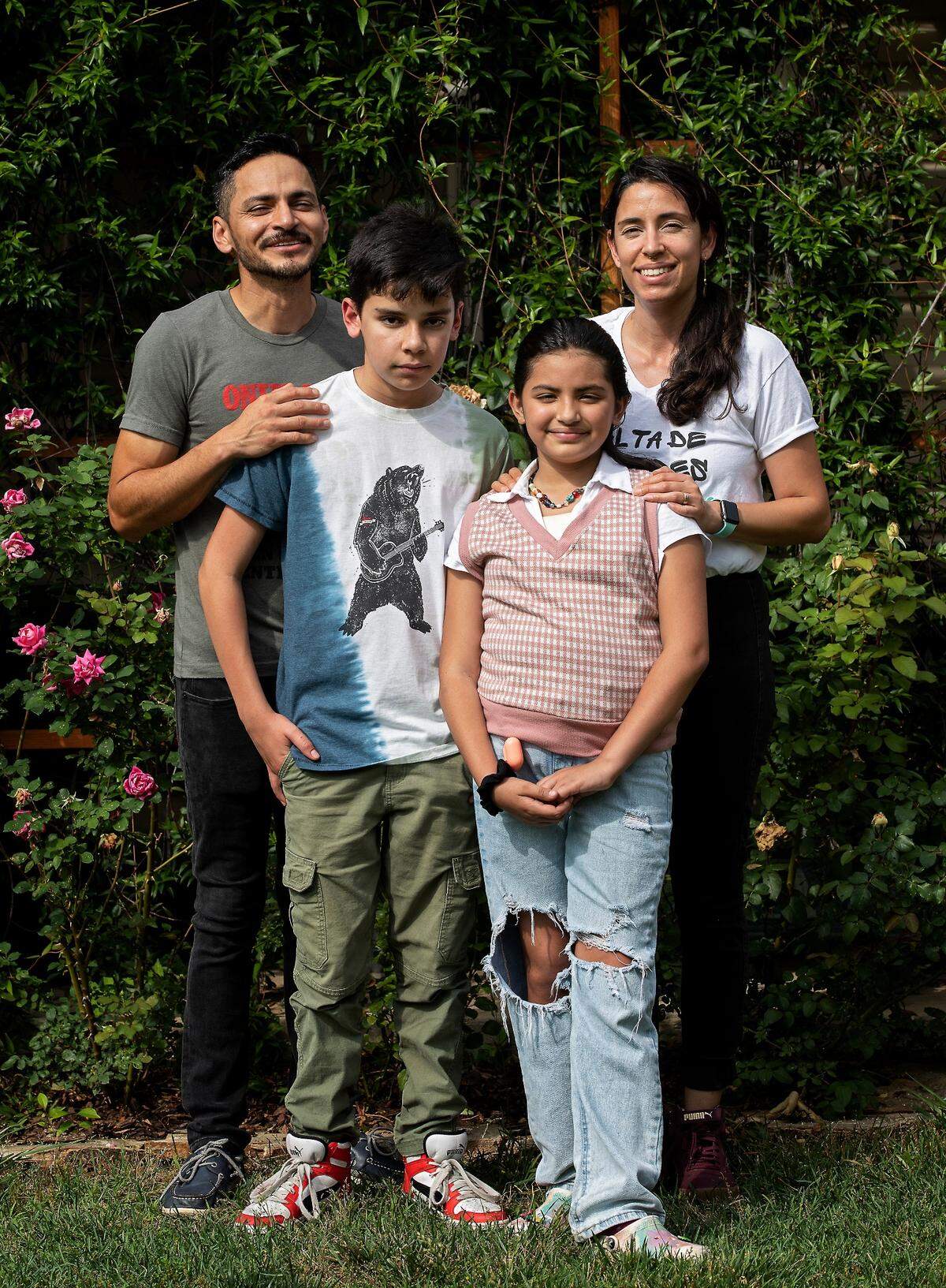
Garduño García’s second child, Fernanda, was 10 weeks old when Obama signed DACA. Her firstborn, Vicente, was in preschool. But five years later, her family’s status was uncertain again when President Donald Trump announced he would rescind the program.
The fate of the program now lies in the hands of the Fifth Circuit Court of Appeals in Texas, known as one of the most conservative districts in the country.
Some see this as a threat to the more than 800,000 young people protected under DACA who have only known the United States as their home — 23,000 of whom live in North Carolina. For others, it could be the push lawmakers in Congress need to enact bipartisan legislation to permanently protect these immigrants.
“This is my home … My children’s home”
Garduño García was just a year old when she crossed the California border into the U.S. from Mexico with her parents. They lived in California until she was 12 and moved to Reidsville, North Carolina.
She attended Reidsville Middle School and graduated from Reidsville High School with an International Baccalaureate certificate, earning credits toward her degree in business administration at UNC Greensboro, where she was a member of SALSA, the Spanish American Latino Student Association on campus.
The reality of Garduño García’s immigration status kicked in after her college graduation in 2007.
“Not having a Social Security number, [even with] a degree, my employment opportunities were limited,” said Garduño García, who is now 37 years old and married to her long-time partner, Vicente.
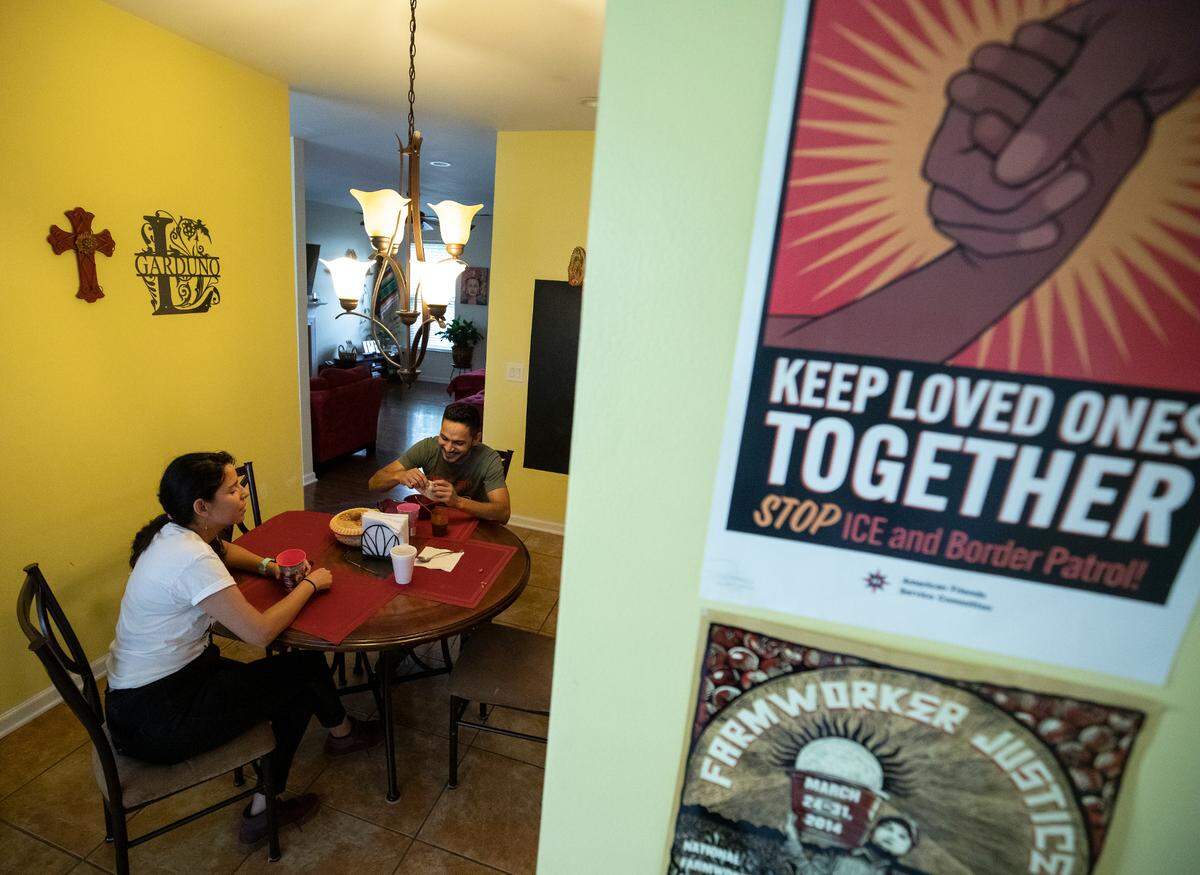
After more than two decades in the United States, she applied for DACA in August 2012. It helped her find a better-paying job as a community organizer that included health insurance, which immigrants without permanent legal status often can’t obtain on their own. She also has a North Carolina driver’s license that allows her to legally drive and not worry about being detained in a traffic check.
To a person with legal status, this may all seem mundane. But for many like Garduño García, it’s almost a luxury.
“It’s still $495 each time to renew and I have applied since 2014,” she said. “That’s $2,500 [over 10 years] just in fees.”
That total doesn’t include shipping fees she has paid when mailing her documents to the U.S. Citizenship and Immigration Services (USCIS) — which just started taking online applications this year — and about $1,000 in attorney fees over the years.
“So it’s definitely been over $3,000,” said Garduño García, who works for Siembra NC, a Latino-focused, Greensboro-based nonprofit.
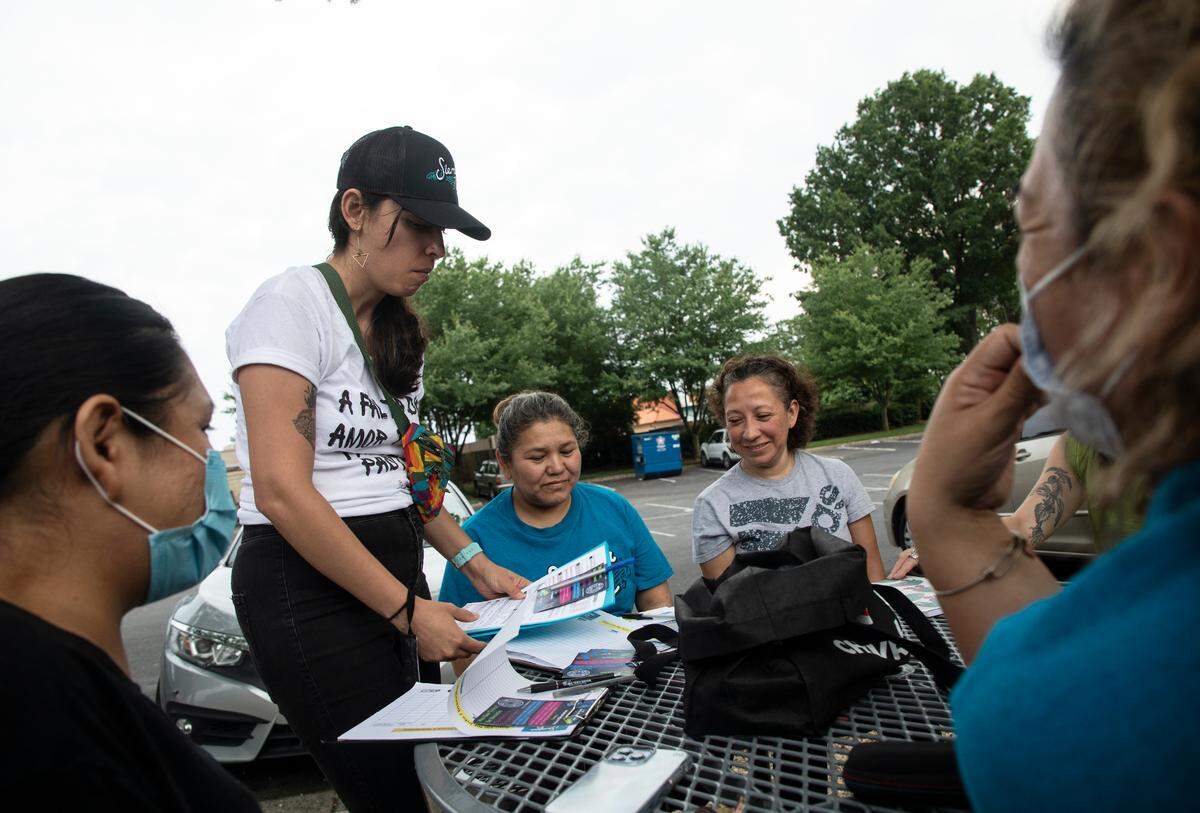
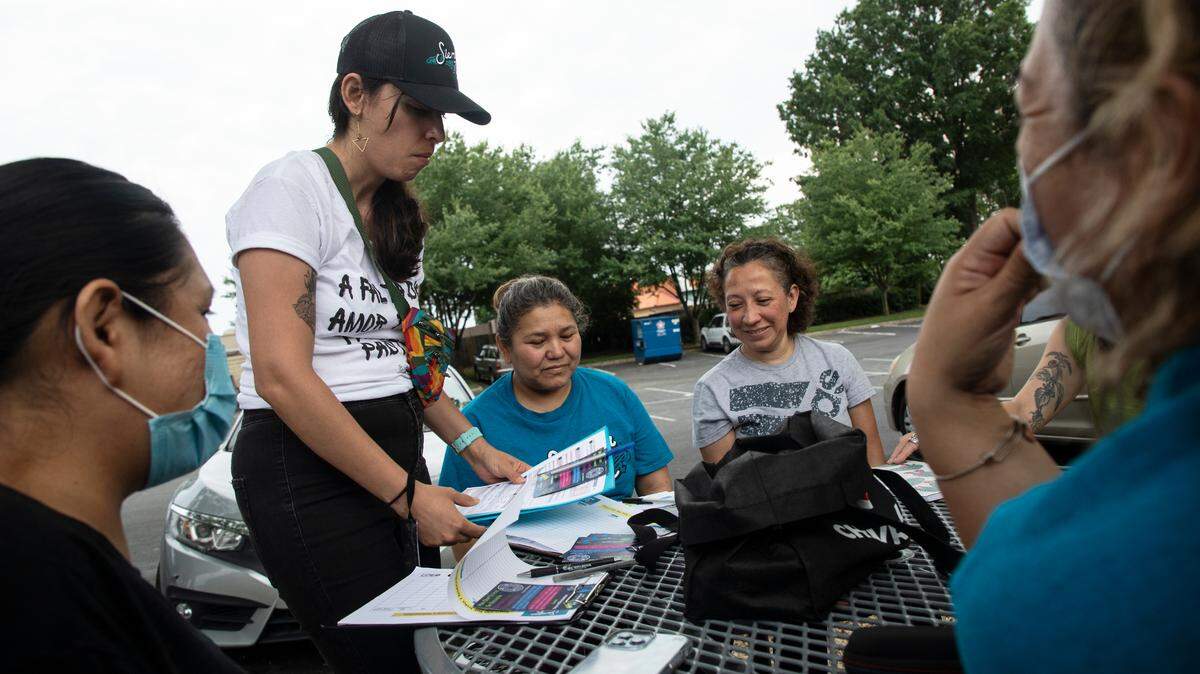
She renewed her status a fifth time in March and says the latest legal challenge to DACA empowers her work, channeling her fear into activism.
“That only encourages me because I do believe, myself, that this is my home and this is my children’s home,” she said. “I have said this before: If they want to kick me out, they will have to come find me and get me. I will not go on my own.”
‘Connected to the politics of it all’
DACA was never meant to last this long, says Rick Su, a professor at the UNC School of Law.
“One thing that’s interesting about DACA is actually its survival,” he said. “It was always sort of originally promulgated in anticipation of some sort of congressional action.”

The most recent attempt to eliminate DACA came from a federal court in Texas last July, when Judge Andrew S. Hanen ruled the policy, as established in 2012, was unlawful. The ruling blocked first-time applicants and only allows existing beneficiaries to renew their status as they have every two years, until the Fifth Circuit Court makes a decision.
“At least from what I see right now, the oral arguments for that Fifth Circuit decision will be on July 4,” said Su. “I anticipate, given all the work that’s already been going into this, that there would probably be an opinion relatively soon after that, maybe in September.”
Instability over DACA and other forms of temporary immigration relief has kept more people from applying, advocates say.
While North Carolina has approximately 23,000 immigrants who have DACA relief, at least 6,000 more would be eligible but cannot apply because of the July ruling.
One of them is Emilio Vicente of Siler City. If his name sounds familiar, that’s because Vicente made headlines in 2014 as a Latino, undocumented and gay candidate for UNC-Chapel Hill’s student body president. It would have been a first for the university, but Vicente fell short in his bid.
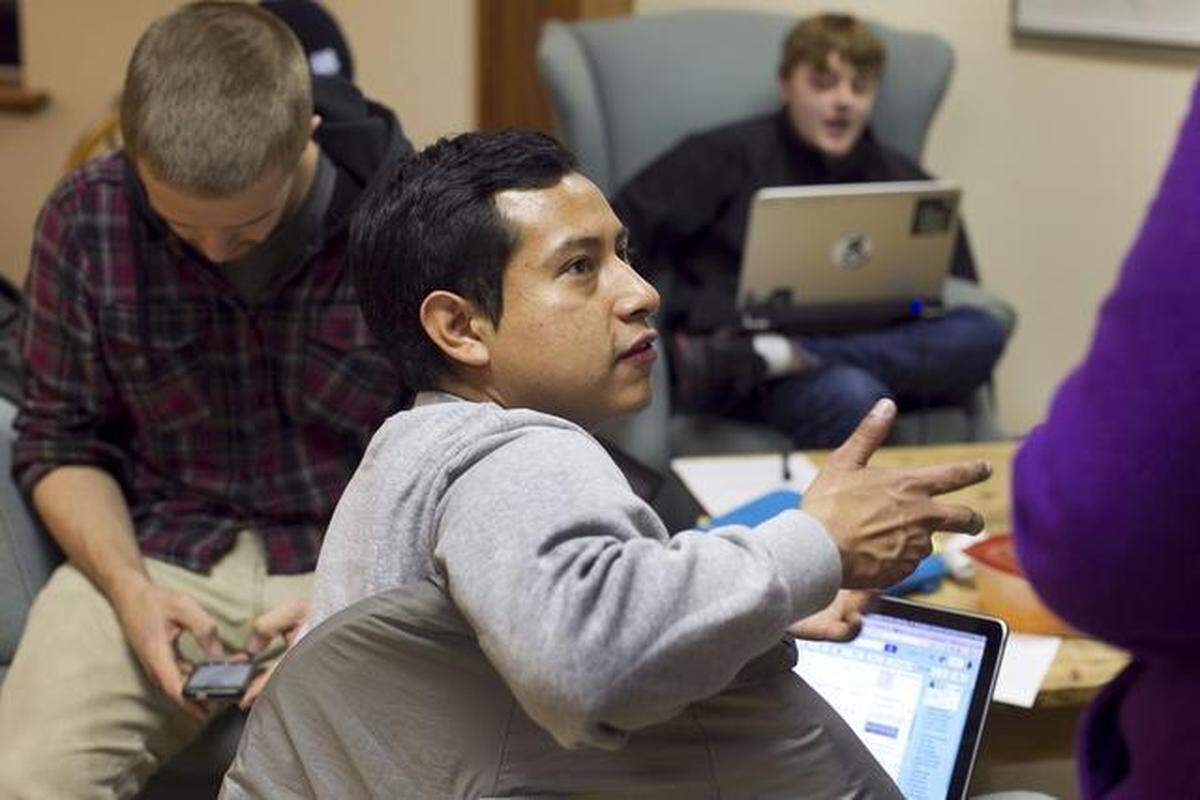
Because he crossed the border with his family when he was 6 years old in 1997, he was eligible for DACA.
But he didn’t apply.
Not only did he feel guilty about seeking protection from deportation when his family would remain at risk, Vicente says he was skeptical of the policy.
“It’s a Band-Aid in that it can be taken [away] at any point through many means, and I was afraid of being caught in that,” he said.
Vicente graduated from UNC in 2015 and has since continued his work as a community organizer for immigrants’ rights and other social issues. He is currently based in New York and works for Familia: Trans Queer Liberation Movement, a Latino and LGBTQ-focused organization. But getting there wasn’t easy.
“Because I didn’t apply [for DACA], it definitely made trying to survive much harder, trying to find a job a lot harder,” he said. “There were jobs that I sought that paid really well, but I was turned down from them because they wouldn’t take me on without a work permit.”
On June 18, 2020, the Supreme Court ordered the Trump administration to start accepting new DACA applications. USCIS didn’t take any until later that year when a New York federal court ordered the Department of Homeland Security to do so.
That’s when Vicente decided to give it a shot.
“When the program reopened at the end of 2020, I decided to apply because it had been really hard for me to get a well-paying job,” he said. “I knew that having DACA would make it a lot easier to find jobs that I qualified for and that would pay me a living wage.”
By the time July 2021 rolled around, Vicente was halfway through completing his application. He’d gathered his documents, filled out all the paperwork, had his fingerprints scanned and undergone a background check. That’s when Hanen ruled that DACA was unlawful and, once again, blocked first-time applicants.
“What I realized from that process was that I wasn’t alone. That there were many other people — like, I think thousands of other people — who got stuck in the process after they applied, they submitted things. And because this judge made that order to stop taking new applications, a lot of people’s lives right now are in limbo.”
Good days and bad
In Durham by way of Los Angeles, Sol Jiménez Palacios described the future of DACA in a way that seems just as fragile as the program’s status.
“I feel hopeful on good days. I feel hopeful that, you know, things will change,” the 26-year-old said. “But it constantly is a disappointment. And on bad days, I definitely am very hopeless.”

Jiménez Palacios, who is transgender and uses they/them pronouns, has had DACA since they were a junior in high school in 2012. They graduated from UC Berkeley and, because California lets residents who graduate from public schools attend public colleges and universities, they qualified for in-state tuition and state scholarships.
“Otherwise I would not have gone to pursue higher education,” they said. “I was [a hair and makeup artist] before, so I just figured that I would continue to do that as a way to get by because it was under the table.”
Jocelyn Casanova of Raleigh knows what that feels like.
The Wakefield High School honors graduate put her dream of becoming an attorney on hold when she realized, without eligibility for in-state tuition and financial aid, she would not be able to afford college.
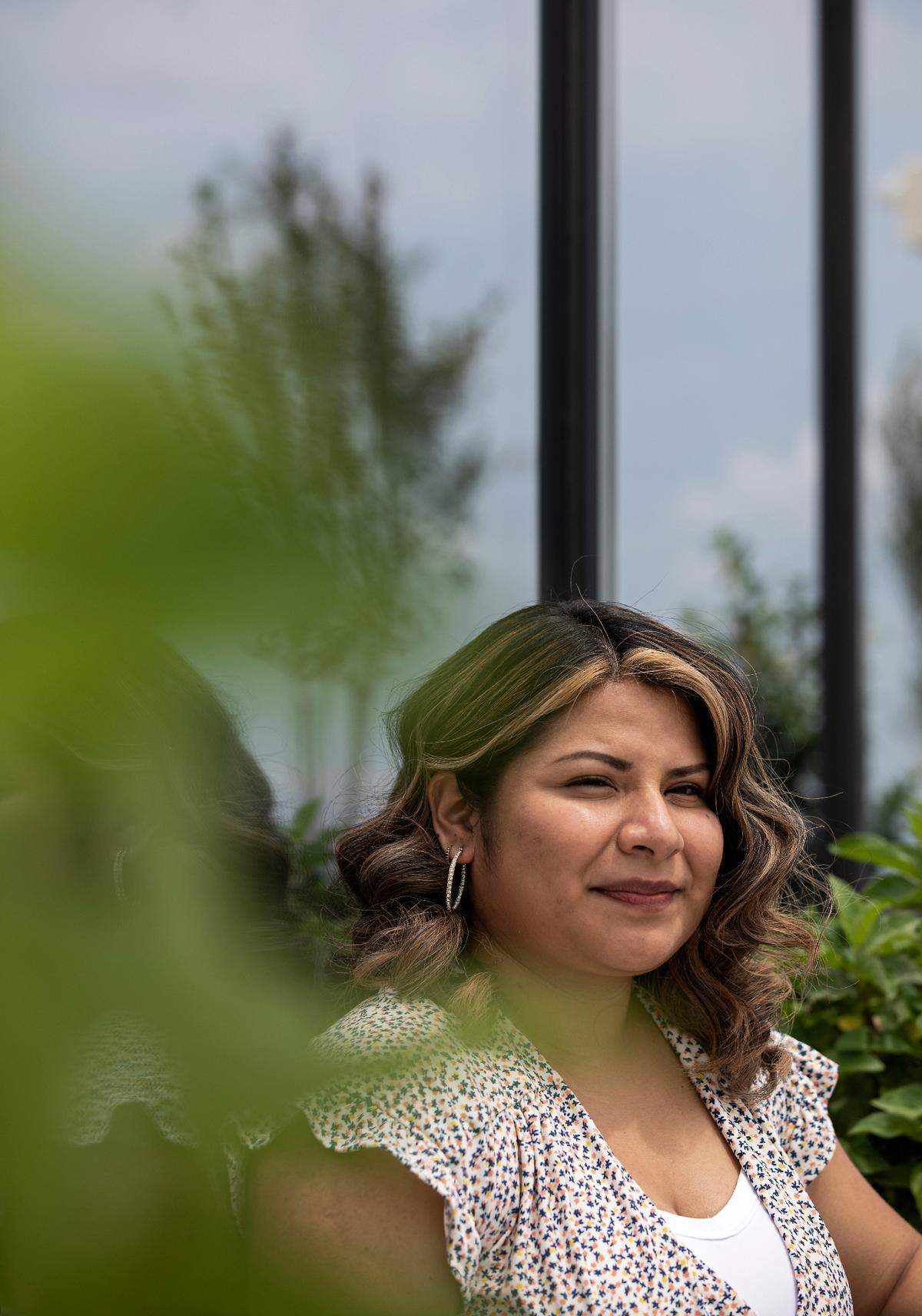
It was during a college interview that Casanova learned she didn’t have a Social Security number.
Casanova got home and her mother explained that she wasn’t born in the United States, but in Veracruz, Mexico.
“They brought me over here at a young age because we were very poor and, the area we’re from, there’s, like, a lot of crime, violence and, like, human trafficking,” she said. “My parents didn’t want to risk me going through that and wanted me to have a better opportunity.”
In 2014, instead of attending Meredith College on a partial scholarship she received, Casanova used her new DACA status to juggle a part-time course load at Wake Tech and three jobs to pay for the out-of-state tuition rate.
“When you’re considered an out-of-state resident you have to pay, I think, about $5,000 or more per semester and that’s a lot of money,” she said. “ I was working a retail job. I was babysitting, house-sitting, dog-walking — doing blue collar jobs — installing cables in dental offices, and anything that I could to make enough money to pay for school.”
There was a lot of burnout and frustration. Casanova had to take breaks from school to catch up with tuition bills.
DACA recipients remain frozen in many people’s minds as high school and college students, the so-called “Dreamers.” But many are now raising families of their own or trying to get jobs that will enable them to be successful in their adopted country.
Raleigh-based Pendo launched a scholarship program in 2019 to increase diversity in software engineering. Upon completing a coding bootcamp at Momentum Learning in Durham, recipients got a shot at working the company full time.
“That was my big break,” she said. “That changed everything for me, because that was like my first big-girl, tech job.”
Casanova is now a senior technical engineer at Pendo, which has an office in downtown Raleigh. She is also back at Wake Tech finishing her associate’s degree in business.
But with the uncertainty of DACA, Casanova is keeping an open mind about her future.
“I really love the fact that coding gives me the flexibility to work literally anywhere,” she said. “So if — God forbid — something happens to DACA officially, I still have something that I can take with me [if I’m deported to Mexico]. I just need Wi-Fi and I can code anywhere.”
From Casanova’s point of view, DACA is “a temporary protection that needs a permanent solution.”
“It’s been 10 years of chronic anxiety, not knowing if I’ll be able to stay here or not,” she said. “I do like to think that North Carolina is my home. And, you know, once in a while, I have to pinch myself and I say, ‘Wow, I’m really here. I’m really working for this big tech company.’ And I love the fact that I can show people that it is possible.”
This story was updated June 15, 2022, to correct the town where Laura Garduño García lived in and attended school, Reidsville, North Carolina.
This story was originally published June 15, 2022 at 6:00 AM with the headline "Immigrants who were brought as children to NC still look to Congress for change."