‘Trying to buy time.’ They’ve grown up here, but their visas are about to run out
READ MORE
Living in legal limbo
It’s been 10 years since President Barack Obama signed the DACA (the Deferred Action for Childhood Arrivals program) executive order on June 15, 2012. Most of the young applicants are now adults, paying bills and taxes, many with children of their own. For some, the end of their legal protection is getting closer. And with decades of legislation aimed at this group on state and federal books, they now look to Congress for guidance on what comes next.
Expand All
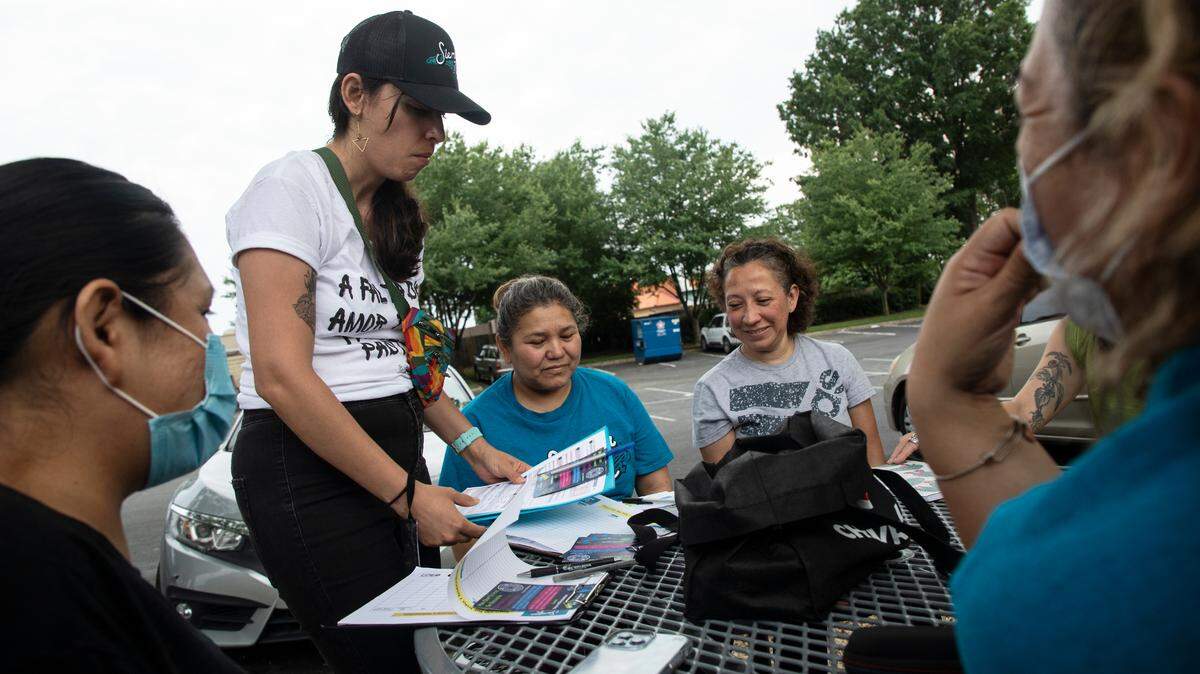
Immigrants who were brought as children to NC still look to Congress for change

‘Trying to buy time.’ They’ve grown up here, but their visas are about to run out
What NC candidates say Congress should do about DACA and documented dreamers
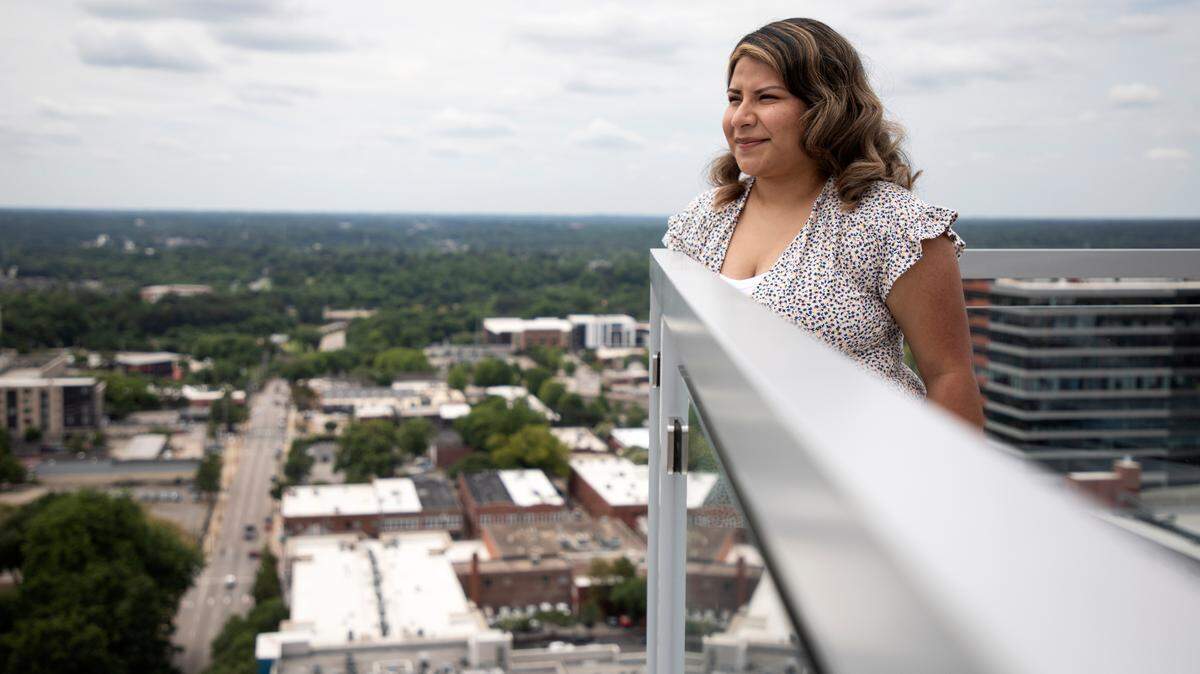
‘I’m more than just a number’: Raleigh ‘Dreamer’ Jocelyn Casanova on a decade of DACA
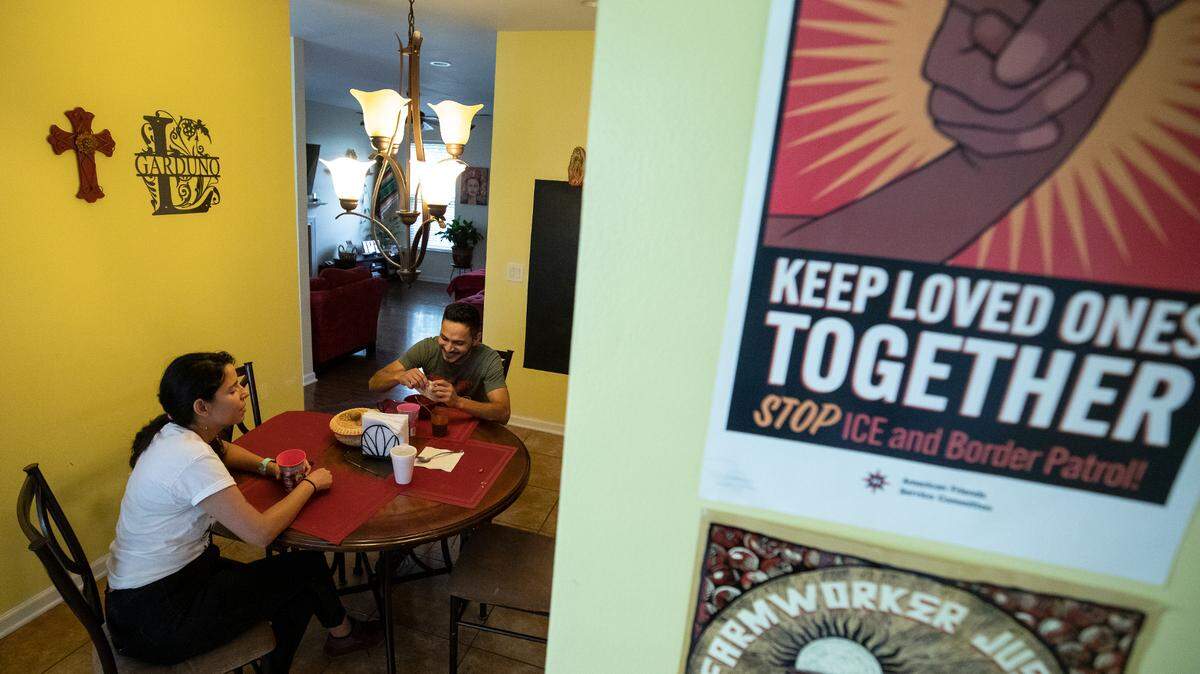
A timeline of state and federal laws, challenges to block and help DACA holders
Less than three years from now, most of Fedora Castelino’s friends at the University of South Carolina will be preparing to graduate, interviewing for jobs and getting ready to embark on the next chapter of their lives.
Castelino, on the other hand, could very well be facing an imminent and unavoidable decision to move more than 8,000 miles away to India, a country that she has hardly known since moving away when she was an infant.
For the bulk of her life, the United States has been home. The 11 years that Castelino has lived here, first in New York, then in Florida, and then in North Carolina, before going to school in South Carolina, have been formative. The U.S. is where she went through middle and high school, made friends, looked after her younger sister while her parents were at work, and discovered her interests in neuroscience and engineering, as well as her desire to give back by serving in the Army.
The prospect of having to close the door on all that, at least for the foreseeable future, and starting life afresh in a place that is completely unfamiliar, is hard to grapple with.
“Leaving my entire family behind, especially my little sister who’s grown up with me, I think will not only be a culture shock to me back in India, because I only lived there for four months, but my sister will be very much affected,” said Castelino, who turned 18 in November. “She’s a citizen, and immigration-wise it doesn’t affect her, but mentally, psychologically, that’s a huge thing.”
Castelino is one of more than 200,000 so-called “documented dreamers” — the children of parents who came to the U.S. on temporary work visas and, in many cases, realized years later as their kids started applying to colleges that their legal status allowing them to stay in the country as dependents had a firm expiration date: their 21st birthday.
Dependents of temporary work visa holders
In Castelino’s case, her legal status comes from the H-4 visa she’s entitled to as a dependent of her father’s, who has an H1-B visa — a temporary work visa granted to people who come here from other countries to work in “specialty occupations.”
Her mother’s H-4 visa can be extended indefinitely as long as her father’s H1-B visa continues to be extended as well, while her parents wait on a seemingly unending backlog for green cards (permanent residency). But Castelino’s visa will expire when she turns 21, since at that point, she would no longer be considered a dependent.

That leaves people like Castelino with few options, none of which are appealing: pursuing a student visa, which requires you to show “nonimmigrant intent,” and which would defeat the purpose of wanting to stay and build a life here; self-deportation; or remaining in the United States without legal status.
“For us, our biggest frustration is America shows as if it has all of these opportunities for immigrants, and it does, but it comes at a very, very big cost of not being able to participate in them — being sent back, being deported, and your children aren’t going to have the life that they really wanted,” Castelino said.
Castelino recalls starting to come across all of this information in bits and pieces as she navigated the college application process. It began with the “gut punch” of realizing that despite having moved to North Carolina before she started high school, and having lived in Apex since, she wouldn’t qualify for in-state tuition.
North Carolina’s top universities caught her family’s attention early on. When her parents realized that giving their daughter a quality education would generally be easier in North Carolina, Castelino, her mother and her sister made the move. Her father, who was still working in DeLand, Florida, did the nine-hour drive up to Apex every weekend to see them, over the next three years.
“That was when I first realized that this issue with our visas, and my immigration status, is such a big problem,” Castelino said. “I’ve lived here, in not only North Carolina but in America for over a decade, and just not being able to get the same opportunities that other people have was a little frustrating.”
Will Congress pass a bill?
Castelino remembers scrolling through Instagram one day, about a week before she started her first semester at USC, when she came across a post about H-4 visas from a group called Improve the Dream.
Established in 2017, the organization is led by documented dreamers — most of them college students or recent graduates who will “age out” of their legal status at 21 — who have spent the past few years raising awareness about the unique immigration problem they face.
Over the past year, they have had a few causes for hope.
In March 2021, the U.S. House of Representatives passed a bill introduced by Democratic Rep. Lucille Roybal-Allard of California. Among other things, the American Dream and Promise Act of 2021 would provide a path to permanent residency for the children of parents with many — not all — temporary work visas, including H-1B holders.
Another bill that focuses more specifically on helping documented dreamers was introduced by Democratic Rep. Deborah Ross, who represents Wake County in Congress, last July.
That bill, the America’s CHILDREN Act, would provide a pathway to permanent residency, but only to temporary work visa dependents who have maintained their legal status in the country for at least 10 years, and who have graduated from a college or university.
It would also protect kids from aging out of the system if they apply for a green card with their parents, and provide kids with pending green card applications who are at least 16 with work authorization. (Another bill, introduced by Democratic Rep. Zoe Lofgren of California, would eliminate “per-country” caps on employment-based green cards altogether, and raise the limit of family-based green cards that can be allocated to applicants from a single country from 7% to 15% — a change that would almost certainly ease backlogs.)
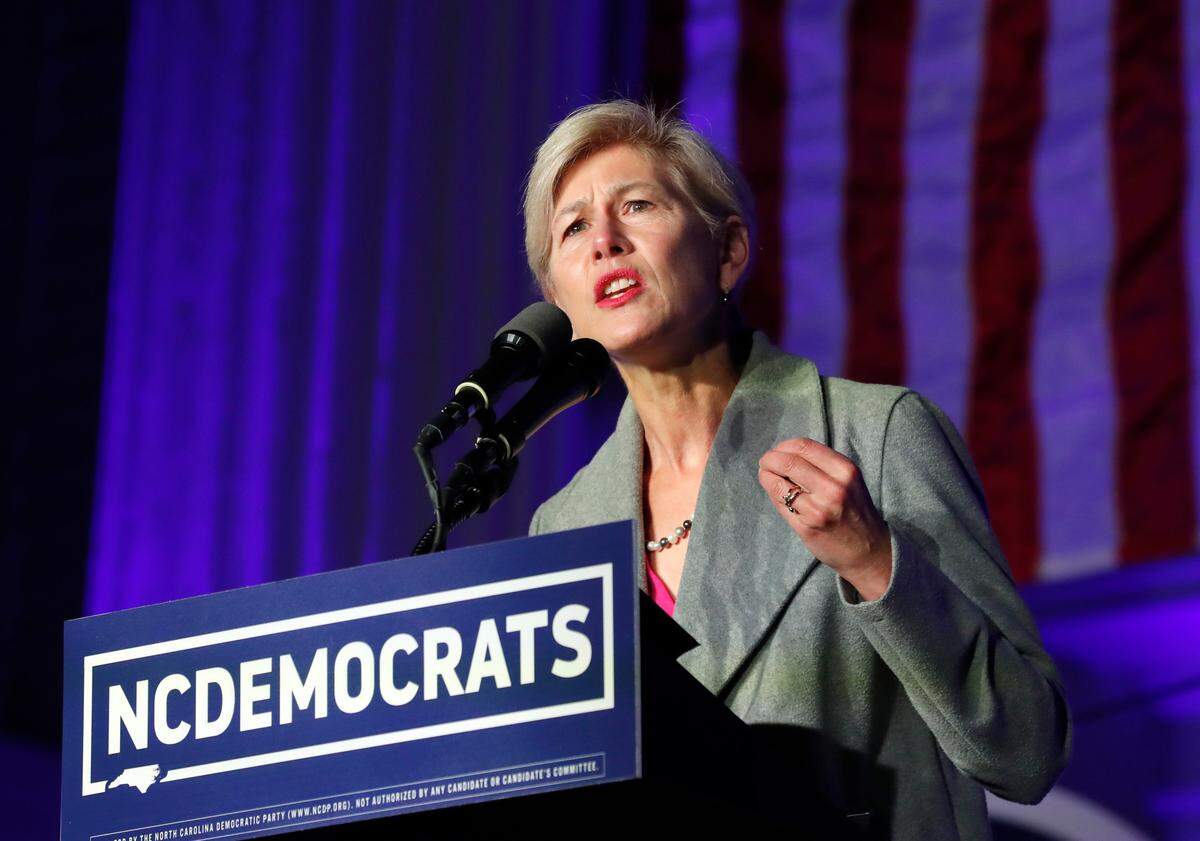
Ross, who is currently running for a second term, said she first learned about the unique situation facing documented dreamers during her first campaign in 2020, when she would go to campaign events in Cary and Morrisville, which are home to many tech workers and are increasingly diverse areas with growing Asian American populations. There, she heard from parents and families whose kids were caught in the middle of the aging-out process.
“They’re all dreamers. We have educated them all, they all have amazing talents, they all want to stay in this country, most of them want to become American citizens,” Ross said. “And why, after we’ve invested all this money, time, energy in them, and produced these exceptional people, would we kick them out of the country? Especially when employers are talking about how they can’t find enough workers.”
Steve Rao, a four-term member of the Morrisville Town Council, said he began hearing concerns about the green card backlog and problems with H1-B visas soon after taking office in 2011, but that in recent years, as the children of many H1-B visa holders living in the area have grown up and gotten closer to aging out, the share of questions about their kids has increased.
“These are kids whose parents played by the rules, and they were bringing vital skills to the country,” Rao said. “And because of the country cap and the red tape logjam of immigration in the U.S., we’re now having these kids who have grown up as American, received an American education — they’re being forced to go back to countries they can barely even remember.”
He added: “Their parents were never meant to have spent so long in H1-B limbo. So, that’s the problem. They’re victims of a broken system.”
If Congress is able to address the uncertainty facing documented dreamers, Rao said, it should turn its attention to meaningful immigration reform that would include an acceleration of the green card process, which under some estimates, can take up to several decades for people from certain countries, like India and China.
Specifically, Rao said it was important that North Carolina continues to attract innovative people from around the world.
“We want the next Google, we want the next SAS, we want the next Slack founded in America, hopefully in North Carolina,” Rao said.
Employers support taking action as well, even before Congress does, if necessary. Last week, a number of tech giants, including Amazon, Google, IBM and Twitter, called on the U.S. Department of Homeland Security to allow documented dreamers at risk of aging out the ability to stay and work in the U.S. The threat of having to self-deport leads to uncertainty and “prevents our companies from attracting and retaining critical talent,” the companies wrote in a letter, according to CNN.
Although the bill hasn’t seen any real movement yet, Ross is optimistic that it can advance given the number of high-profile and notable Republicans in both the House and Senate who have signed on as cosponsors, including Reps. Dan Crenshaw of Texas, Peter Meijer of Michigan and Young Kim of California; and Sens. Rand Paul of Kentucky, Joni Ernst of Iowa and Roy Blunt of Missouri.
“It’s not a secret, you need to get 10 Republican votes to get anything through (in the Senate), unless it’s some kind of reconciliation measure, and the fact that we have so many Republicans, and a diverse array — it’s not just the more progressive or moderate of the Republicans — is enormous,” Ross said.
Always ‘trying to buy time in this country’
Last month, Castelino joined several other Improve the Dream members in Washington for a press conference in support of the bill with Ross and two other prominent Democratic sponsors, California Sen. Alex Padilla and Rep. Ami Bera.
Castelino said she’s also optimistic about the bill’s chances of being passed, particularly because of how much bipartisan support it has.
“There’s nothing that they’ve missed out on; there’s no reason that people are like, ‘Huh, I don’t think we’re going to support this.’ Because, it’s just common sense,” Castelino said. “In fact, what I think a lot of people didn’t realize is that ‘Oh, I didn’t even realize this was even a situation,’ because you just automatically assume, you’ve been here for so long, you’ve graduated, you’re a citizen.”
Despite the list of cosponsors from both sides of the aisle, it’s hard to tell at this stage if the bill will face any opposition, particularly because it hasn’t yet been considered by a committee or on the House floor.
Shristi Sharma, whose family settled down in Iowa after moving to the U.S. from India when she was 5, was getting ready to head to Chapel Hill for her first semester of college when she found out while scrolling through posts on Instagram about what awaited her as a H-4 dependent, and what Improve the Dream was doing about it.
The video she stopped on explained how the children of temporary work visa holders — people like her — would age out of the system and have to self-deport when they turned 21.
“I’m quite literally packing boxes to go to college, and very happy to start this next chapter, and then to come across that, was a really big setback, because I thought I had made it, and then to realize that I was just getting started, was very, very terrifying,” Sharma said. “With this situation, it’s always like I’m trying to buy time in this country, and it feels terrible, because I’ve grown up here and it’s my home.”
Sharma’s parents, and younger sister, who is just starting high school, remain in Iowa while she pursues the Robertson Scholarship Leadership Program, a full-ride scholarship administered jointly by UNC Chapel Hill and Duke. Recently, Sharma’s mother received the bad news that her H1-B visa extension had been rejected.
Her mother applied for a chance to appeal the decision, but Sharma said she has started the paperwork for an F-1 student visa — the kind that would require her to show she has no intention of staying in the U.S. once she’s done with college.
“It’s my only option,” Sharma said. “My other option is to go back. So, that’s quite literally my only option, to switch to an F-1 visa. And obviously it doesn’t fit my requirements, but it’s the only way I could stay here.”
Since connecting with Improve the Dream last November, Sharma has become the group’s North Carolina liaison. That’s a job that has entailed planning for the organization’s National Advocacy Week, raising awareness about the group among other documented dreamers who might not have heard of it, and meeting with the lawmakers, and their staffs, who have yet to cosponsor the bill.
“We’re just trying to be as helpful as possible, while trying to remain practical about what its actual limitations are (and) how we can get it passed,” Sharma said. “And how we can make sure that, as it goes through, it still impacts the largest majority of the documented population.”
For more North Carolina government and politics news, listen to the Under the Dome politics podcast from The News & Observer and the NC Insider. You can find it at https://campsite.bio/underthedome or wherever you get your podcasts.
This story was originally published June 15, 2022 at 6:00 AM with the headline "‘Trying to buy time.’ They’ve grown up here, but their visas are about to run out."