Betting on the Super Bowl in NC is a pain. Soon you could do it from your couch
The biggest sporting event in the United States is two weeks away, but if you want to place a legal wager on the Super Bowl in North Carolina you’ll have to visit one of the two Cherokee casinos in the far western part of the state.
Supporters of mobile sports betting, however, are confident that won’t be the case when the Super Bowl is played next year. Legislation to legalize widespread sports betting — through online providers and a handful of sports betting lounges at professional sports facilities — narrowly passed the state Senate last year and appears poised to pass the House in 2022.
“I do think it’s going to move,” said Rep. Jason Saine, a Lincolnton Republican, who is managing the bill through the House. “I’ve got a pretty good vote count where I think we’ll have the votes.”
If Senate Bill 688 becomes law — and Democratic Gov. Roy Cooper has expressed support for sports betting in the past — North Carolina would join about 20 states that have allowed online sports gambling in the four years since the U.S. Supreme Court overturned a nationwide ban that included few exceptions, most notably Nevada. North Carolina is one of nine states that currently allows sports gambling in casinos or sportsbooks, but does not permit online betting.
Nearby states Virginia, West Virginia and Tennessee allow online or mobile sports betting. New York went live online in January, and operators there took more than $600 million in wagers in the first 10 days.
North Carolina’s three major professional sports teams — the NFL’s Panthers, the NBA’s Hornets and the NHL’s Hurricanes — back the legislation. Don Waddell, the Hurricanes’ general manager, has made four or five trips to the legislature to meet with lawmakers and advocate for sports betting. The state’s colleges have not weighed in on the issue, according to those involved. The biggest online sports wagering operators have hired lobbyists at the General Assembly.
“We have the lottery, so we already have gambling. No need talking about that too much. We already have it. I was looking at it purely from a revenue standpoint,” said Sen. Paul Lowe, a Winston-Salem Democrat and the sponsor of the bill in the Senate. “People are doing this kind of gambling already. This way, it’s regulated, it’s taxed and the state gets something.”
The legislation, and sports betting in general, also has fierce opponents in and around the legislature. The bill passed the Republican-controlled Senate 26-19 with a minority of GOP senators backing it, an unusual happening. Within the Republican House caucus, there are likely at least 10 no votes, Saine estimated.
Rep. Jay Adams, a Catawba County Republican, voted against the bill in the House commerce committee in November. He said his father was a good gambler, having honed his skills during 16 months in a German prison camp.
“He had friends that gambled and a lot of his friends weren’t as good as him. In fact, a lot of them weren’t. And I saw a lot of families destroyed by gambling,” Adams said.
Liberal Democrats, too, are opposed to the measure — a rare issue in these highly polarized times that attracts yes votes and no votes from Republicans and Democrats alike.
“It only benefits the business and puts added pressure on athletes. They become like racehorses, except they’re aware of the betting odds. There’s too much opportunity to corrupt sports,” said Rep. Marcia Morey, a Durham Democrat, member of the 1976 U.S. Olympic swimming team and the NCAA’s first female infractions investigator.
“Money is the god of everything. Let’s keep that out of sports.”
What would sports wagering legislation do?
The professional leagues, North Carolina professional teams and the Eastern Band of Cherokee Indians came together in late 2019 in Cherokee to hash out their differences in sports wagering legislation, said Ches McDowell, a lobbyist for the Hornets who worked on the agreement. He called it “a monumental and historical deal.”
“It looks exactly like this bill,” he said.
The group celebrated with a steak dinner and Dom Perignon, but the 2020 legislative session was dominated by the coronavirus — pushing back any other priorities. In 2021, the bill progressed.
Now supporters are eager to get it over the finish line when lawmakers return for a short session later this year.
The legislation allows wagering on professional, collegiate, electronic and amateur sports, but does not allow for betting on horse racing, youth sports or the occurrence of penalties, injuries or the outcome of replay reviews. It allows for at least 10, but no more than 12, online sports wagering operators to accept sports wagers in the state. The lottery commission would be in charge of issuing the licenses at a cost of $500,000 per license. The state’s federally recognized tribe — the Eastern Band of Cherokee Indians — would also be granted a license, but it would not count against the total number.
These operators are companies such as FanDuel, DraftKings, Caesars, BetMGM and Penn National Gaming. The licenses would be good for five years and then renewable for $100,000.
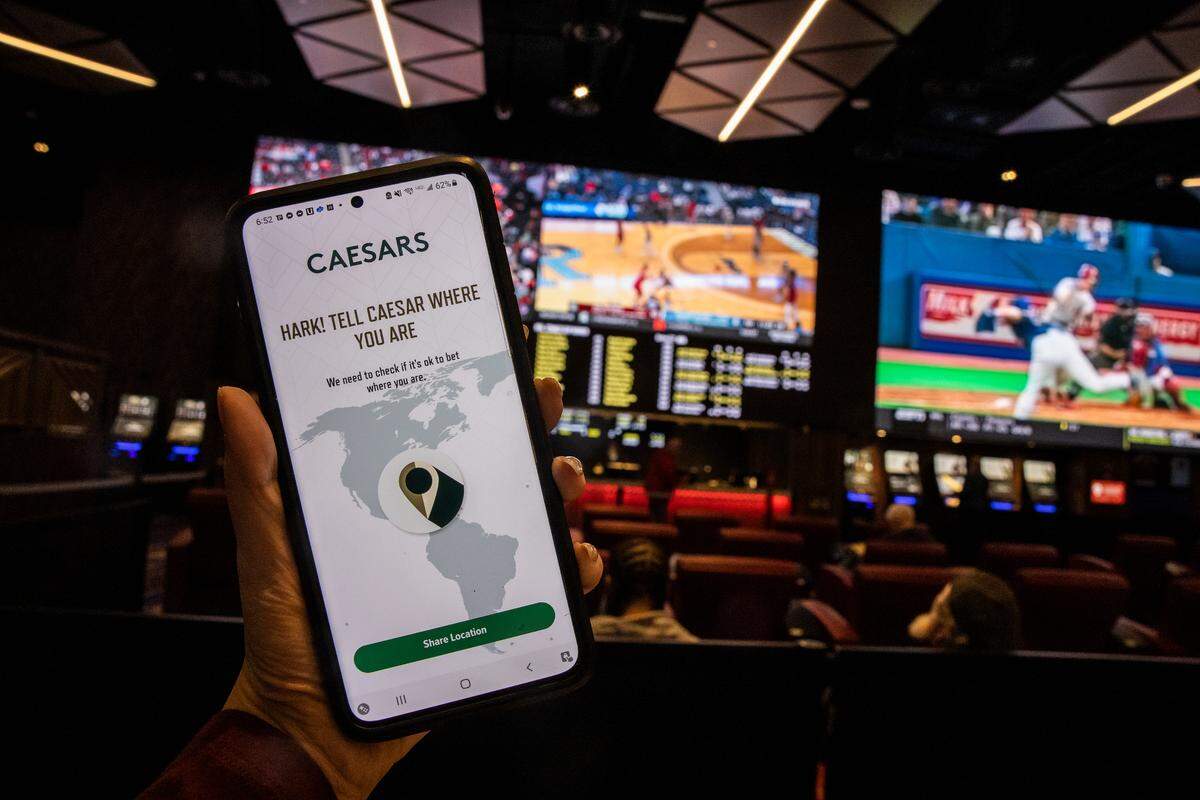
The legislation calls on the operators to prevent people who are not registered from placing wagers as well as to prevent people who are not located in North Carolina from placing bets. The operators are able to tell your location from your mobile device, which is why though sports wagering is legal in Virginia, you can’t place a bet if you’re in North Carolina.
In addition to mobile access, the bill allows the owners of very narrowly defined professional sports facilities to create on-site or nearby (within one-half mile) sportsbooks. The locations, however, would still require bettors to place their bets through an account — not simply by showing up with cash and making a bet.
The facilities that would qualify under the criteria in the bill are PNC Arena in Raleigh, the Spectrum Center in Charlotte, Bank of America Stadium in Charlotte, Charlotte Motor Speedway in Concord and Quail Hollow Club in Charlotte. N.C. State’s men’s basketball team also plays at PNC Arena.
“If we have, let’s call it, a restaurant theme place where people can place bets, we think it’s an attraction to the arena and the events we have at the arena. It draws more people to the area,” Waddell said. The Carolina Hurricanes play their home games at PNC Arena.
The pro sports franchises would likely receive money from an operator through sponsorship or partnership, including perhaps running the sports betting facility. “Every major player in the gambling world has reached out to us,” Waddell said.
Like Waddell, Greg Walter — Charlotte Motor Speedway’s executive vice president and general manager — has made trips to the legislature to speak with lawmakers.
“I think there are encouraging signs in the legislature, but people always have questions. Our job as facilities and those that want this passed is to answer questions and show we’ll be good stewards of this opportunity,” Walter said.
Walter said the speedway envisions a sportsbook as “another amenity for folks to enjoy while they’re a guest at one of our events. We look at it as a fan engagement tool.” Walter said the facility would be open year-round and not just during live events at the racing complex. Sports betting operators have reached out to the speedway as well.
Hornets owner Michael Jordan — who grew up in North Carolina and starred at UNC before becoming an NBA icon — is an investor in and special adviser to DraftKings and Sportsradar, which is a sports betting data company.
“We are a strong supporter of legalizing sports betting in North Carolina,” said Mike Cristaldi, vice president of communications for the Hornets. He said the organization was not going to comment further on pending legislation.
Changes to the NC gambling bill?
Under the proposed legislation, each sports wagering operator must pay an 8% tax on adjusted gross revenue — that is, gross wagering revenue minus winnings paid out, bonuses and promotional credits and federal excise tax payments. The taxes are collected monthly.
In Virginia, for example, bettors wagered $402 million in November 2021, and the operators collected $48.3 million in gross gaming revenue. They paid out nearly $15 million in bonuses and promotions and wrote off another $3.4 million in deductions for an adjusted gross revenue of $29.9 million, according to figures compiled by Play Virginia.
Virginia taxes that adjusted gross revenue at 15%, with 97.5% of the collections going to the state’s general fund and 2.5% going to support programs for gambling problems. So in November 2021, the state collected more than $4.2 million in taxes, its highest month ever. It has collected more than $18.6 million in taxes since January 2021.
Tax rates and tax calculations differ between states. New Jersey, the first state to legalize sports betting after the Supreme Court decision, has collected $202 million in taxes since June 2018, including a high of $14.6 million in November 2021. It charges 15% on internet gross gaming revenue.
New York levies a 51% tax on gross gambling revenue. New Hampshire taxes at the same rate.
During a November N.C. House commerce committee hearing, lawmakers questioned the 8% tax rate and wondered if it could be raised.
Also, some states charge more for licenses, including Illinois which charges a $20 million initial fee for online operators and $1 million every four years for renewals. Pennsylvania has a $10 million initial license fee and $250,000 renewal fee every four years, according to data compiled by the National Conference of State Legislatures.
Virginia charges $250,000 for a three-year license, a $50,000 application fee and a $200,000 renewal.
“As you take a look at more recent developments — New York, of course, being the most prominent — the North Carolina bill would be much more favorable toward operators,” said Bill Ordine, a writer for Gambling.com Group who covers legal, legislative and business issues around sports wagering.
“When it’s favorable toward operators, there is a trickle-down effect toward customers. This could be a better deal for people who use the sports wagering apps and sports wagering websites.”
Funding the NC Major Events, Games and Attractions Fund
North Carolina’s legislation also calls for 50% of the tax collected to go to the North Carolina Major Events, Games and Attractions Fund. The fund can offer grants to “entertainment, musical, political, sporting, or theatrical” events that satisfy other criteria, including being held at a sports facility that holds at least 17,000 people and that picks a site through a competitive process that includes cities in other states.
While discussing the fund, Saine told the committee in November that the state lost a 2021 NASCAR all-star event to Texas, which has an events trust funds program to help lure big sporting events. Charlotte Motor Speedway hosted the NASCAR all-star race from 1987 to 2019. Saine said it generated more than $100 million in economic impact.
The speedway’s Walter said the fund is not a blank check, but a “proof of performance.” Entities would have to prove that they moved the needle economically in order to qualify for a rebate.
“The creation of a fund helps us to be competitive to bring events to the state of North Carolina. There’s a lot of risks, a lot of costs and no guarantee of success on my end,” Walter said. “It goes a long way toward helping us be competitive.”
Some lawmakers would prefer that all of the money go to the state’s general fund and then they could allocate it as they wish or that it be earmarked for something else, such as education. In a July interview with WRAL, Gov. Cooper suggested the revenue could be used “to invest in education and health care and some of the things that we need to do.”
A desire for education funding is how the initial bill came about after conversations with Republican Sen. Jim Perry, said Lowe, the bill’s sponsor.
States differ widely in how they allocate the tax revenue with some states putting it into the general fund and others earmarking it for specific projects. Tennessee, for example, sends 80% to an education fund, 15% to the general fund and 5% to mental health and substance abuse services, according to NCSL.
If the House were to make changes to the bill — raising the tax rate, raising the license fees, modifying where the tax revenue goes — the legislation would have to go back to the Senate for a vote, something Saine said the Senate would prefer to avoid.
“They would rather concur or us just concur with their version of the bill and agree to work on changes and tweaks later,” Saine said.
How the NC Education Lottery has fared
The North Carolina Education Lottery sold $3.8 billion in tickets in fiscal year 2021, up 26% from the previous year. It contributed $936 million for education programs in North Carolina. The recently passed state budget includes $802 million in lottery proceeds this year and $830 million in the next fiscal year. Still, the bruising 2005 fight over the lottery has left scars for some longtime lawmakers.
Rep. Pricey Harrison, a Greensboro Democrat, said the lottery has unfolded exactly as she and other opponents foresaw: beginning very narrowly, but having to expand game offerings, prize money and advertising to keep up. And, she said, the money — which was meant to supplement education funding — has instead acted as replacement revenue.
“I don’t think our state needs to get in this business,” Harrison said. “I’m not sure how you control what happens with online sports betting and how we can keep oversight of that.”
If North Carolina matches Virginia’s tax revenue — perhaps a stretch given its tax rate is half of what its neighbor to the north is levying — it could mean about $10 million to the general fund (plus $10 million to the major sports event fund). That’s nice, but not budget-altering in a state that just passed a $52.9 billion budget over two years.
But, supporters argue, it’s more than the state gets now for an activity that is already happening.
Those bets are mostly happening at off-shore sportsbooks, where Americans can open an account with a credit card, or through illicit gaming. The off-shore entities could be using the money to fund other criminal activity among cartels or terrorist organizations, supporters of legalization argue.
Residents who live close to the Tennessee or Virginia borders can pop over the state line and place bets now as the apps track your current physical location.
“If you think sports betting is not going on in North Carolina, you’re living under a rock. It goes on lots of places, lots of different apps,” Waddell, the Hurricanes’ general manager, said. “The state is getting zero dollars from sports betting. It’s a tax revenue source that nobody is going to be mad about.”
Sportsbooks vs. the lottery
The Rev. Mark Creech, executive director of the Christian Action League of North Carolina, and John Rustin, president of the North Carolina Family Policy Council, testified against the bill in committee. Rustin said the bill would lead to an increase in domestic violence, child abuse, divorce, substance abuse, theft, embezzlement, job loss, personal bankruptcy and even suicide. “This will be the result if this bill before you becomes enacted into law,” Rustin said.
Even before legalization, 15% to 20% of people nationally bet on sports, said Rachel Volberg, a research professor at the University of Massachusetts Amherst who has specialized in gambling. Some of that is office pools and casual bets with friends.
People who bet on sports tend to be male and are often college-educated, she said. They also tend to have higher incomes than people who regularly participate in other gambling activities, like the lottery.
The lottery tends to be more appealing to people of lower socioeconomic status, Volberg said, partly because the payouts are so high.
While one winning lottery ticket, however unlikely, could change a person’s fortunes in life, winning a sports bet almost never will. The payouts are typically far less, even when betting on an extreme underdog.
Additionally, to make one large bet on a sports game, the bettor has to have a certain amount of money to win a big payout. With the lottery, a few dollars can buy tickets.
Volberg said sports bettors do tend to have higher rates of problem gambling — gambling to a level that it causes harm, whether financially or in relationships — than people who gamble in other ways, she said.
“Anybody who really wants to do (sports betting) probably has found a way to do it, even though it’s illegal,” she said. “I don’t know that adding online gambling to the mix will change that picture substantially.”
The reality of gambling addiction and treatment
The North Carolina bill sends $1 million annually from the tax collected to the Department of Health and Human Services for gambling addiction education and treatment programs.
John Kindt, professor of business and legal policy at the University of Illinois, who has specialized in the socioeconomic impacts of gambling, said he has been particularly concerned about the impacts of mobile sports betting.
“Everybody can do it, and you can’t get away from it,” he said, adding that the number of advertisements for sports betting websites will desensitize children to this type of gambling.
All sportsbook websites that would operate in North Carolina would require participants to be of legal age. In their application for a license, operators would have to include proposed measures for age and identity verification.
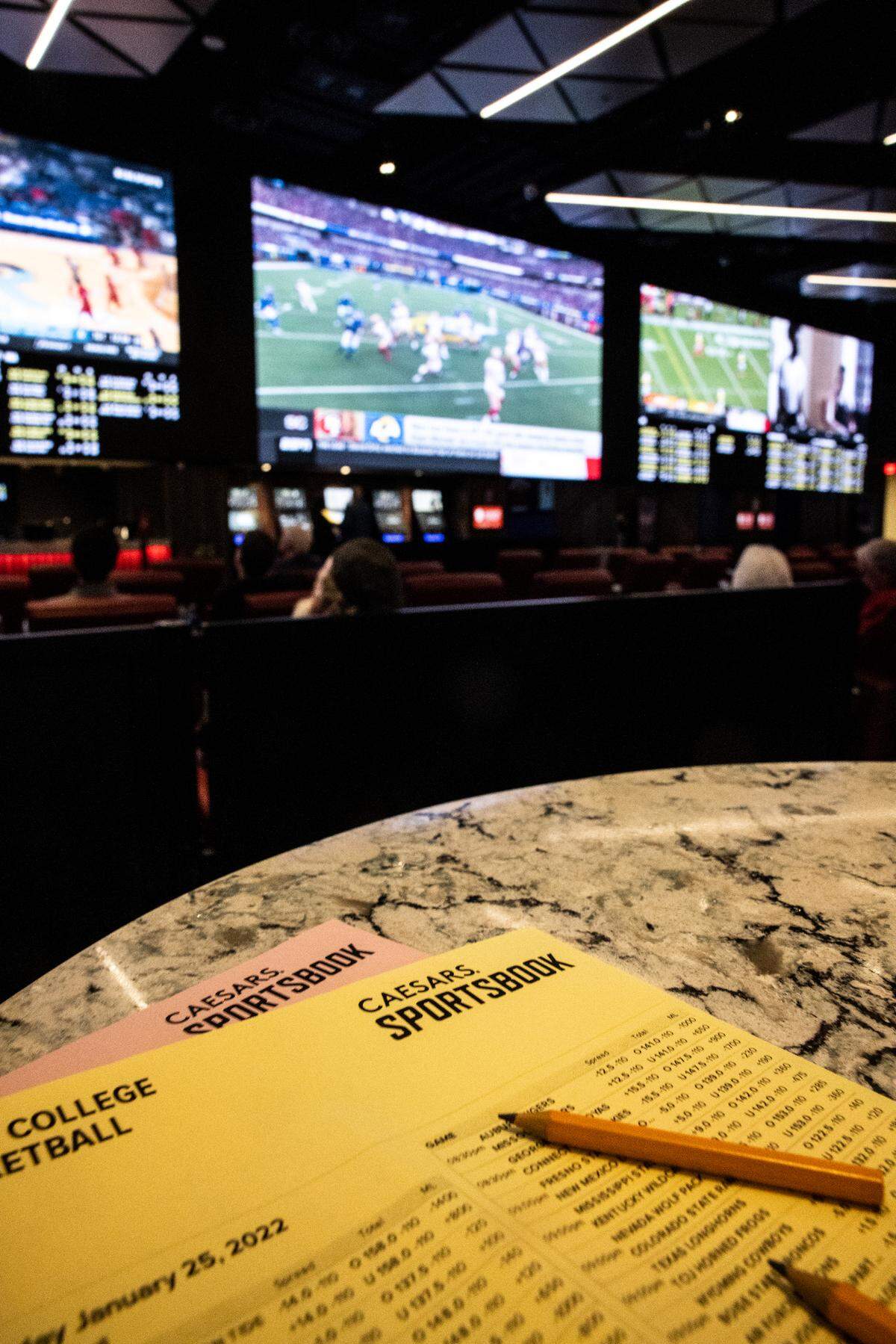
Still, Kindt said he worries that children will find a way around those protections. Even if they wait until they are of legal age, the prospect of gambling on sporting events will become even more normalized with mobile gambling.
“That’s their business model: Get people hooked,” he said.
Dr. Timothy Fong, a professor of psychiatry at UCLA and the co-director of the UCLA Gambling Studies Program, said legalized mobile betting will open up vulnerable people to sports betting in new ways, including to recovering gambling addicts.
“The number one concern is always when states do this: ‘What is the state doing to protect those who are most vulnerable to this expanded form of entertainment,’” he said. “Every state has a different answer.”
Some have opened up helplines, others have expanded treatment and prevention programs, and others have done very little. North Carolina’s bill requires operators to provide a documented history of working to prevent compulsive gambling.
“One of the undercurrents of sports wagering — and this does fall in the lap of the legislature — is what safeguards they put in to both protect consumers and make provisions to mitigate the harm of dysfunctional gambling. There are very sound, tried and true ways of mitigating those dangers,” Ordine, the gambling writer, said. “It can be done. It is being done. This should fall to state legislatures who are looking out for the common good.”
If you need help
National Problem Gambling Helpline: 800-522-4700, available 24 hours a day, seven days a week
For more North Carolina government and politics news, listen to the Under the Dome politics podcast from The News & Observer and the NC Insider. You can find it at link.chtbl.com/underthedomenc or wherever you get your podcasts.
This story was originally published January 30, 2022 at 6:00 AM with the headline "Betting on the Super Bowl in NC is a pain. Soon you could do it from your couch."