
Fossil found in cliff 50 years ago in Scotland is 166-million-year-old creature. See it
In the early 1970s, two teachers from the United Kingdom led field trips out to the Isle of Skye in Scotland to look at prehistoric rock formations.
On one of these trips, Robert Savage, a professor from the University of Bristol, noticed what looked like fossils sticking out from the base of the cliff. He wrote notes about the bones in his notebook.
“Bones of ?dinosaur on big block, v large prob land reptile,” Savage wrote and made no other mention of the bones in his work, according to a study published March 6 in the peer-reviewed journal Earth and Environmental Science Transactions of The Royal Society of Edinburgh.
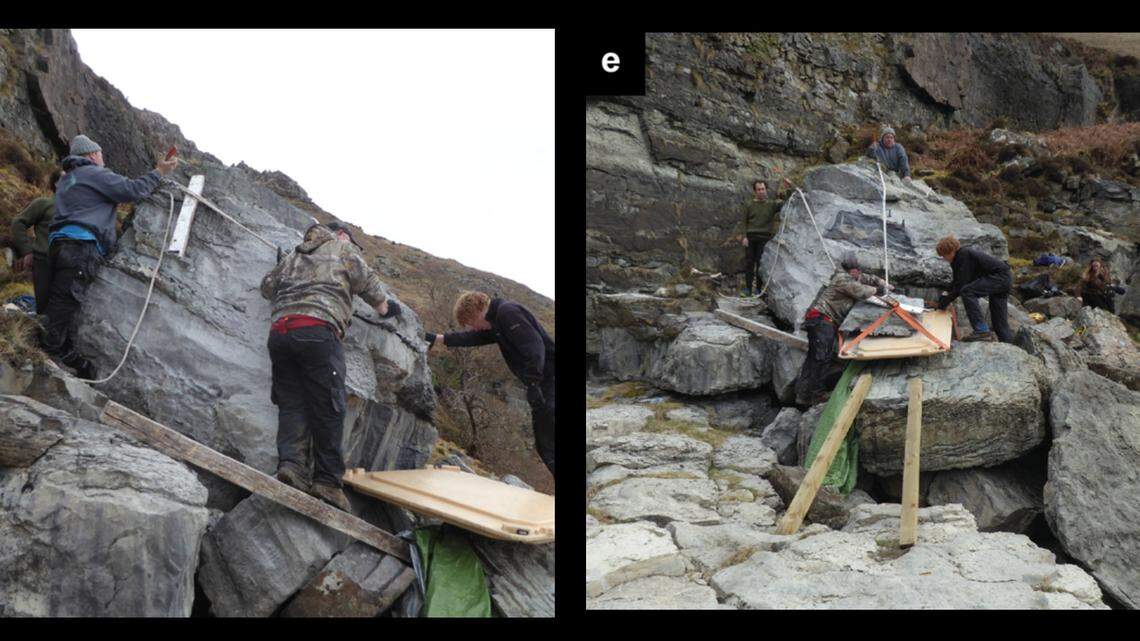
Now, 50 years after the fossils were first discovered, researchers with the National Museums Scotland conducted a “challenging extraction” to pull the bones from the cliff — and revealed a 166-million-year-old species.
“The fossil was first discovered in 1973, making it Scotland’s earliest recorded dinosaur find,” according to a March 6 news release from the National Museums Scotland. “It was not fully identified at the time and remained uncollected until a team led by Dr Elsa Panciroli returned in 2018 to the location near Elgol, in the south of the island, to undertake its extremely challenging extraction from the rock.”
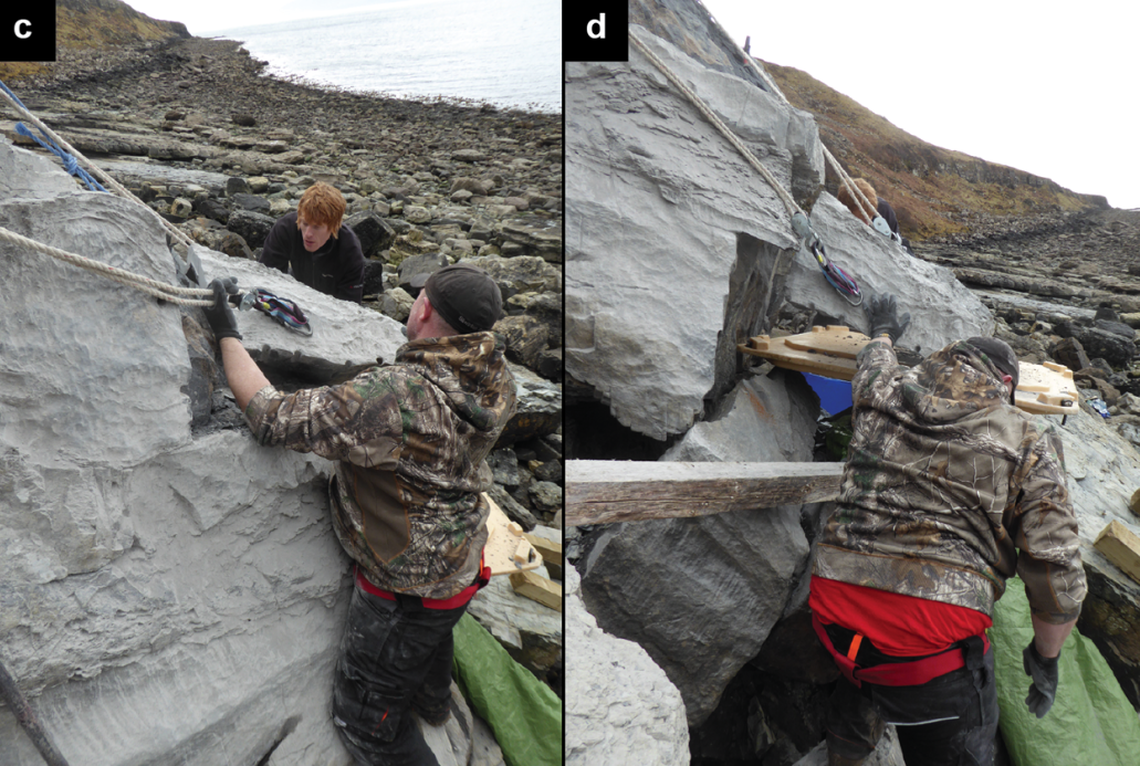
By the time researchers came to extract the fossils in 2018, they were part of a boulder in a tidal zone, making it very hard to see and approach, Panciroli said in a video shared by National Museums Scotland. Only a small portion of the full fossil assemblage was visible from the surface, but as they split the boulder, they found more bones jumbled together.
Panciroli said “we’d previously felt (it) was too difficult to collect the fossil, but I thought it was really important to study it. I was able to persuade the team to give it a try,” according to the release.
All of the bones in the assemblage were broken, according to the study, making it impossible to tell exactly how many bones were present.
Researchers believe, however, that they have found parts of the pelvis and leg of a single animal, enough to identify the species.
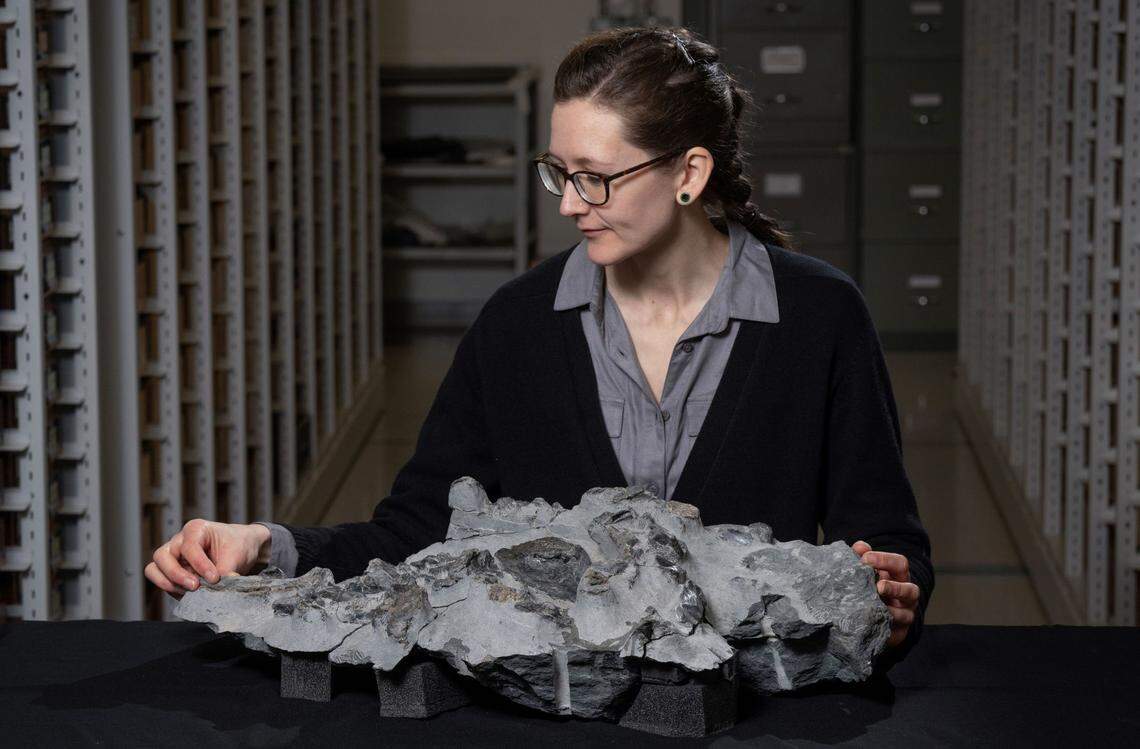
“We’ve known there were dinosaurs there for a while, most obviously from the famous footprints at An Corran, Brother’s Point and Duntulm and from individual bones, but it’s exciting to see a more complete, if still partial, skeleton,” study author Stig Walsh said in the release.
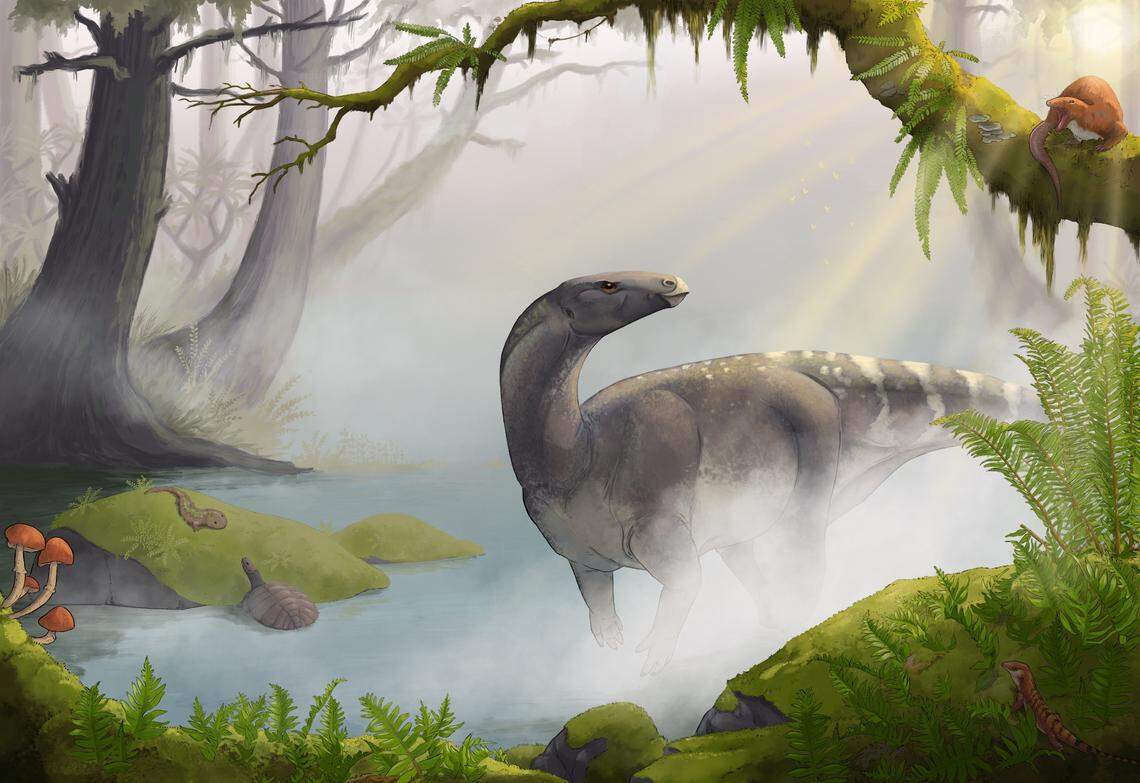
The bones belong to a species of ornithopod dinosaur, similar to well-known groups like iguanodons, parasaurolophus and edmontosaurus, according to the release.
“The Elgol dinosaur dates to around 166 million years ago, in the middle Jurassic, making it one of the earliest known ornithopod body fossils, as that group of dinosaurs became far more prominent in the later Cretaceous period,” researchers said. “Analysis of the bone structure indicates that the animal, which would have been roughly the size of a pony, was at least 8 years old.”
Susie Maidment, study author and researcher at the Natural History Museum and the University of Birmingham, said while the extraction was difficult, identifying the species may have actually been harder.
“Some aspects of the bones indicate that the specimen may be an ornithopod, a group of plant-eating dinosaurs that are best known from the Cretaceous,” Maidment said in the release. “This specimen, however, would already have been a fossil by the time that the better-known ornithopods like iguanodon and hypsilophodon were walking the Earth.”
Two other major prehistoric discoveries have been made on the Isle of Skye: young and adult Krusatodons showing how dinosaurs grew over time, and Dearc sgiathanach, the world’s largest Jurassic pterosaur fossil, according to National Museums Scotland.
The Isle of Skye is on the western coast of Scotland.
The research team includes Panciroli, Walsh, Maidment, Gregory F. Funston, Richard J. Butler, Roger B. J. Benson, Brett L. Crawford, Matt Fair and Nicholas C. Fraser.
This story was originally published March 7, 2025 at 4:45 PM with the headline "Fossil found in cliff 50 years ago in Scotland is 166-million-year-old creature. See it."
