
Prehistoric creature — with ‘armor’-like skin — accidentally discovered. See new species
In the world of scientific discovery, it’s not always about how much time you spend in the rainforest or how deep in the ocean you search.
Sometimes, the most significant discoveries are made through luck.
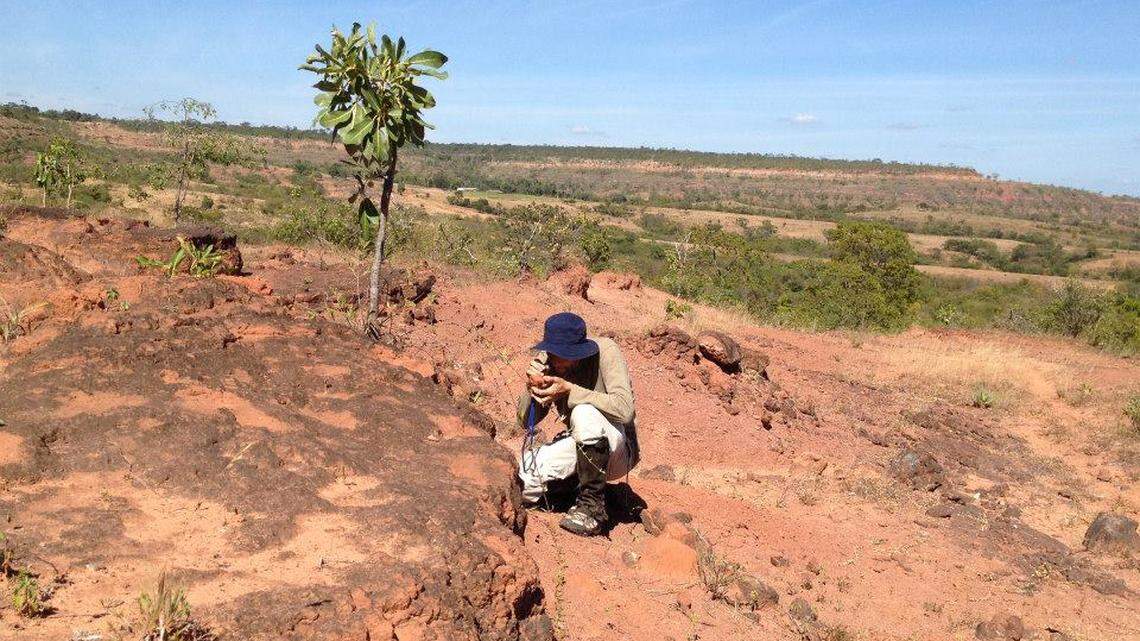
For a group of paleontologists in Brazil, luck and intuition during a 2013 research expedition led to the discovery of a new species — from 120 million years ago.
More than a decade ago, a research team traveled to Campo Azul on the hunt for sauropod fossils, long-necked dinosaurs, paleontologist Daniel Martins dos Santos told McClatchy News in a Feb. 20 email.
Chunks of sandstone were chipped away as they searched for prehistoric clues, and some of the smaller pieces were set aside to be discarded, Martins dos Santos said.
But something about them caught the eye of Rodrigo Miloni Santucci, founder of the Vertebrate Pelontology Lab at the University of Brasília. He took a second look, and lo and behold, small white fossils poked out from the bright red stone.
It was a “fortuitous discovery,” Martins dos Santos said.
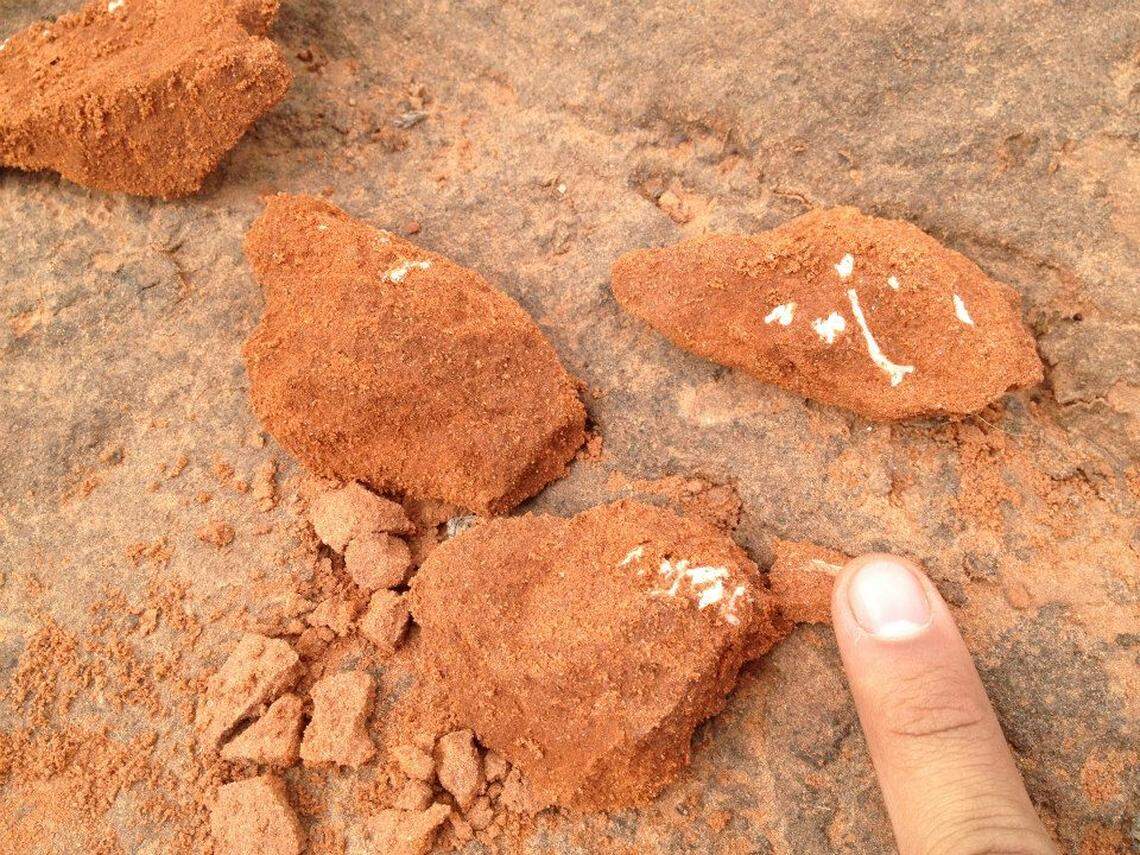
These bones did not belong to a sauropod, but instead to a small reptile called a crocodyliform, according to a Feb. 18 study published in the peer-reviewed Journal of Vertebrate Paleontology describing the discovery.
More specifically, the fossils belong to a species of notosuchian that had never been seen before, according to the study. It’s likely the oldest and most complete example of the animal group ever discovered in South America, researchers said.
“After being properly prepared, it became evident that (the new species was) part of a rare group of herbivorous/omnivorous crocodyliforms from the Early Cretaceous of Gondwana (around 120 million years ago),” Martins dos Santos said.
The species was named Thilastikosuchus scutorectangularis, referring to its mammal-like teeth, crocodile-like body and rectangular-shaped thick skin, according to the study.

The animals are identified by their “small body size” and “triangular-shaped skull,” as well as “well-developed” teeth, according to the study.
Their omnivorous or herbivorous lifestyle, the study said, is also present in their teeth, called heterodonty. They have a variety of different kinds of teeth, something that isn’t present in predators.
The reptiles also have “rectangular-shaped” osteoderms on their backs, bony deposits found in the skin of some reptiles and dinosaurs, creating a kind of tough armor on the top of their bodies, per the study.
“It turned out to be a glorious specimen and eventually became part of (Joyce Carvalho’s) brilliant Ph.D. thesis,” Martins dos Santos said in a Feb. 18 thread on X, formerly known as Twitter. “It is only the fifth species of this most obscure clade of Early Cretaceous notosuchians.”
Researchers said this particular specimen is likely not a full-grown adult, but the skull size is like similar species, meaning it is probably still a small reptile.
The animal lived on Gondwana, or Gondwanaland, which was a supercontinent made up of modern-day South America, Africa, Arabia, Madagascar, India, Australia and Antarctica, according to Britannica.
The supercontinent began to break up around 180 million years ago and had a diverse climate across the huge land mass.
The new species was found near Campo Azul in southeastern Brazil.
The research team includes Martins dos Santos, Santucci, Carvalho and Ricardo Lourenço Pinto.
This story was originally published February 20, 2025 at 6:02 PM with the headline "Prehistoric creature — with ‘armor’-like skin — accidentally discovered. See new species."
