4,500-year-old graves of warriors unearthed in Germany. See the ‘intriguing finds’
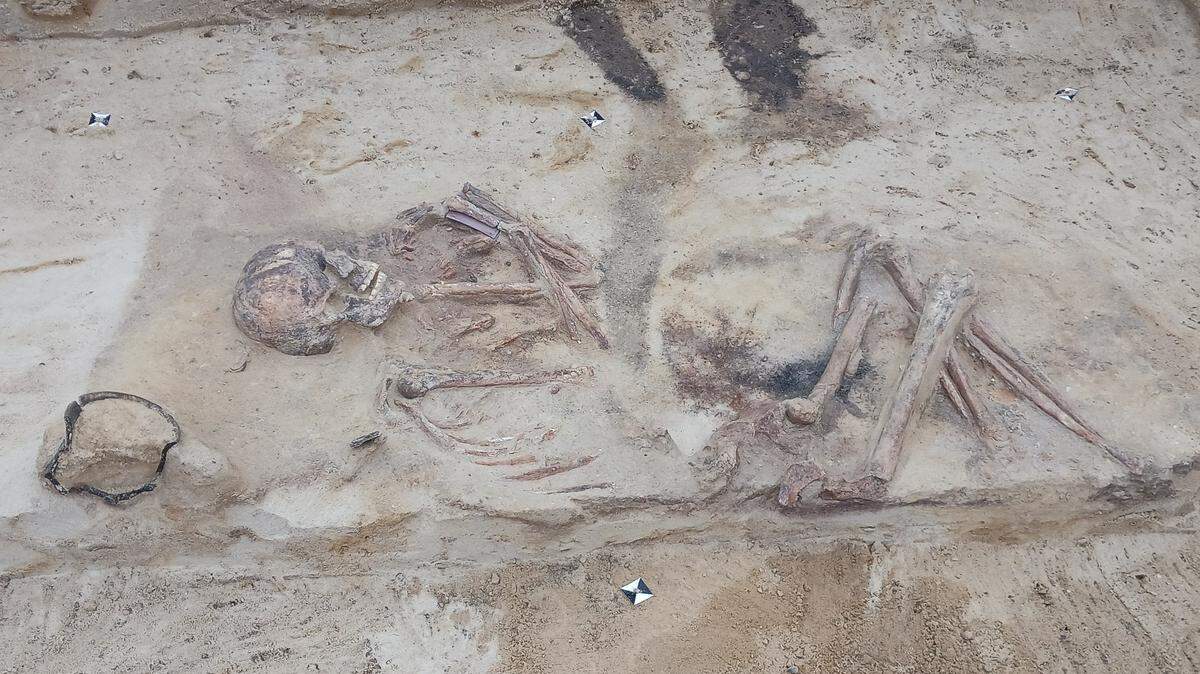
Roughly 4,500 years ago in modern-day Germany, a community buried their dead. They laid the bodies on their sides, added a few significant items and built a mound on top. The graves were simple, distinctive and eventually forgotten.
Until now.
Archaeologists began excavating a stretch of land near Förderstedt ahead of the construction of a new powerline, the State Office for Heritage Management and Archaeology in Saxony-Anhalt said in a Jan. 30 news release. The project quickly revealed “interesting, sometimes unexpected new insights.”
The team unearthed a graveyard with “at least ten graves” dating back around 4,500 years, officials said. The graves belonged to the Bell Beaker Culture, an ancient people group identified by their pottery, and burial style in which deceased “women lay on the right side with their head to the south, men on the left side with their head to the north.”
Archaeologists excavated three of these graves “which were originally covered by a burial mound” and still “well preserved.”
One burial, “probably that of a man,” was “identified as a warrior or hunter,” archaeologists said. The grave contained a pottery jar and “a stone wrist guard,” which was “worn on the forearm” when shooting a bow and arrow “to protect from string buzz.”
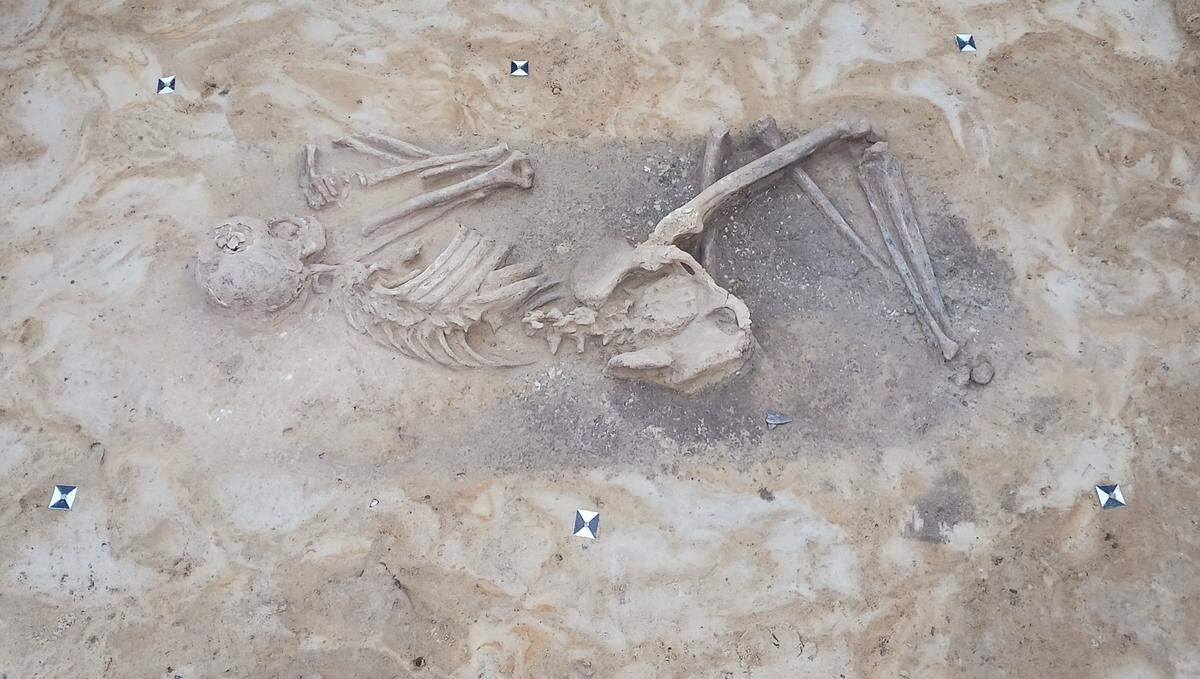
Another burial also belonged to an ancient male warrior, officials said and a photo shows. “Two arrowheads were found next to his (the deceased’s) back in a discoloration of the soil which could indicate a past quiver of organic material,” officials said.
“Evidence for organic objects, such as the possible quiver discovered here, are very rare,” Susanne Friedrich, the department’s head of preservation, said in the release. “That’s what makes this find so special.”
The third grave was simpler and included only one jar, “which probably contained food items,” archaeologists said.
Officials described the artifacts from Förderstedt as “’intriguing finds.” Excavations are ongoing.
Förderstedt is a village in Saxony-Anhalt state of central Germany and a roughly 110-mile drive southwest from Berlin.
This story was originally published February 3, 2025 at 11:12 AM with the headline "4,500-year-old graves of warriors unearthed in Germany. See the ‘intriguing finds’."