Ancient amber beads found in Syria kept in museum for decades. They were ‘invaluable’
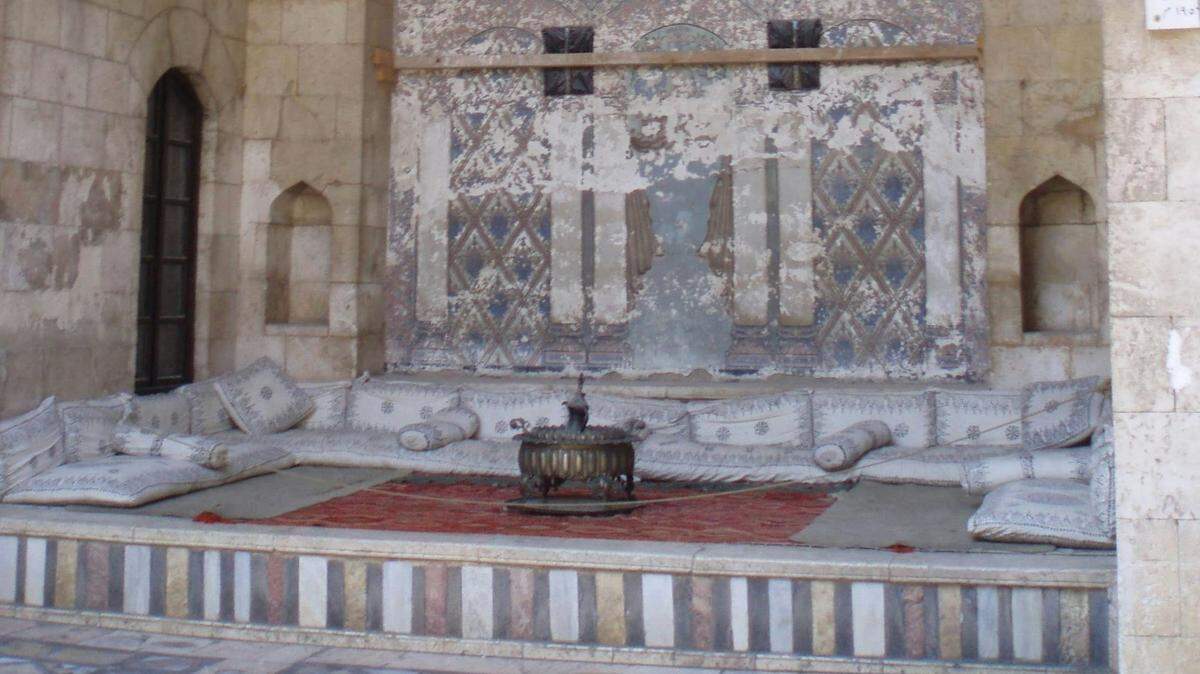
Nearly a century ago, Danish archaeologists traveled to the site of the ancient city of Hama, a region that was occupied for close to 8,000 years.
Hama, now in modern-day Syria, was first occupied around 6,500 B.C. and was strategically positioned along communication routes that contributed to its longevity into the years of the Ottoman Empire.
The archaeology team worked for seven years, starting in 1931, and brought home countless artifacts to the National Museum of Denmark, where they were cataloged and stored.
Now, as conflict continues in Syria and many archaeologists are unable to work in the country, the collection has become “invaluable” and is revealing new discoveries decades later, according to a study published Jan. 28 in the peer-reviewed journal Antiquity.
During the initial excavations, researchers found Iron Age cremation graves with grave goods, one of which had 51 beads inside, according to a Jan. 28 news release from Antiquity.
Some of the beads were fragmented, and 17 of them were reddish in color and looked more like stones, researchers said.
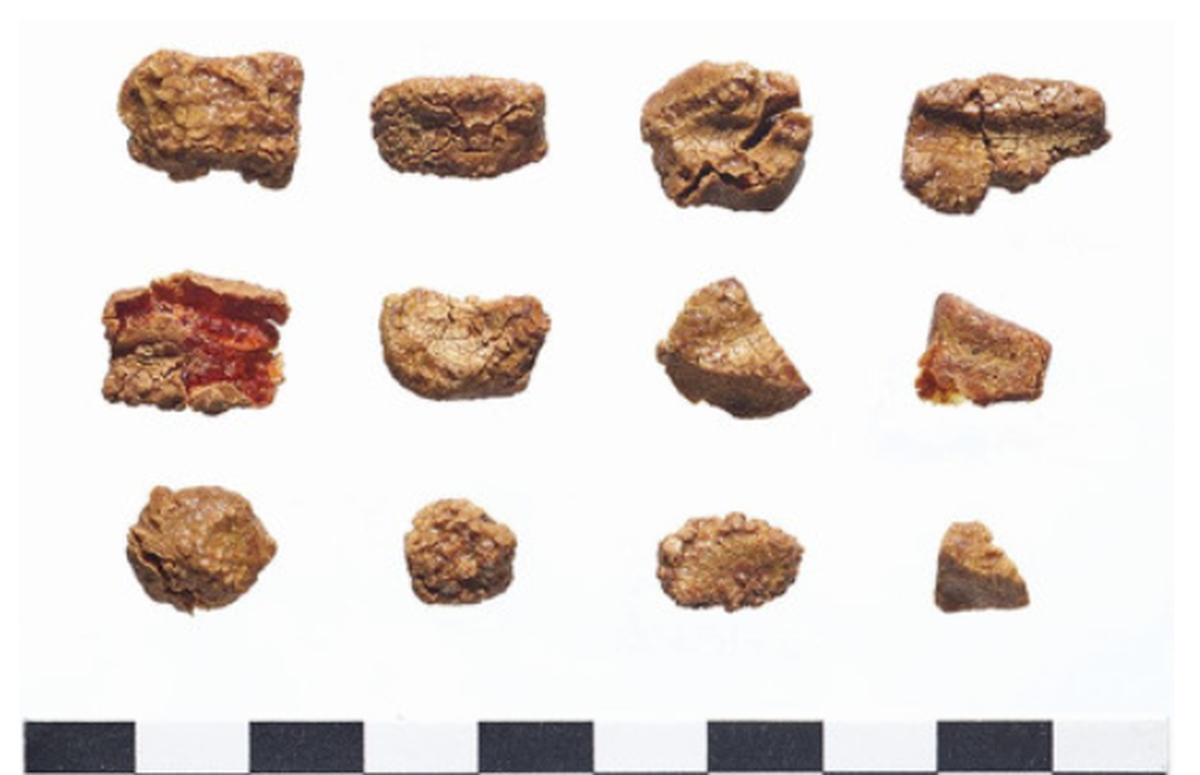
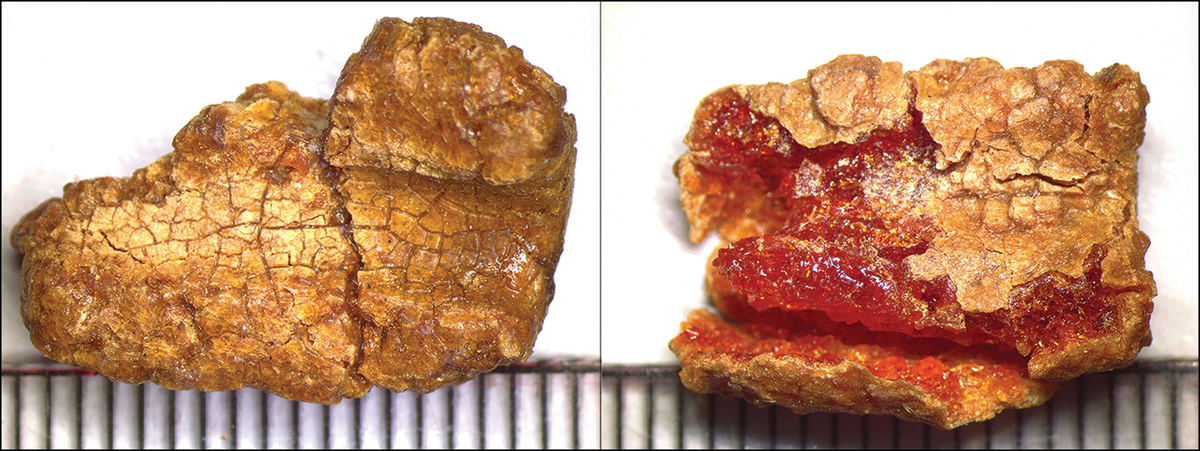
“The beads were very fragile with a crusty surface and a core that appeared compact with a reddish-golden translucence,” researchers said. “The larger nodule had a dull and cloudy surface and a translucent core.”
The beads were identified as amber, something that was not common in Syria during the Iron Age and originated from the Baltic coast, reaching areas of the Mediterranean along a route known as the “Amber Road,” according to the release.
“Baltic amber beads were traded in enormous quantities in the past and have been found across Central Europe, in Italy, Greece and the Iberian Peninsula, and further on in Anatolia, the Levant and Mesopotamia,” study author Mette Marie Hald, from the National Museum of Denmark, said in the release. “However, no examples of Baltic amber had been identified in Hama.”
Were these beads products of an expansive trade route, or something entirely new? Using two scientific techniques — called Fourier-transform infrared spectroscopy and gas chromatography-mass spectrometry — the researchers were able to measure how much infrared light the beads absorbed, which revealed their chemical makeup, according to the study.
The chemical signature could then be compared to known amber from the Baltic region, and it was a near-perfect match, researchers said. This means that the “Amber Road” extended all the way to Hama, a more than 1,800-mile journey.
“Hama had already been developing extensive trading networks within and beyond the region for more than 5,000 years,” Hald said in the release. “Amber, as a good that covered one of the longest distances to reach the city, would have been a highly valued material.”
Ancient historical writings, called cuneiform texts, report that amber was coveted for “supposed therapeutic benefits, decorative qualities, and connection to the Mesopotamian deities, giving it ritual significance,” according to the release.
The beads were also originally discovered in an area of the Hama site called the ”Royal Quarter” and were likely found scattered across a plaza that survived an attack from the Assyrians in 720 B.C., researchers said.
Despite the beads holding significant value to the study of ancient Hama, they remained untouched for the better part of a century, offering a new opportunity for research today when fieldwork is challenging, researchers said.
“The current political climate still prevents fieldwork in Syria, making the Hama collection an invaluable resource for archaeological research,” Hald said in the release. “We believe that the present study underlines the importance of revisiting museum collections for continued study.”
Hama is located in present-day western Syria, about a 136-mile drive from the nation’s capital of Damascus along the eastern border of Lebanon.
The research team includes Hald, Martin N. Mortensen, Jacob Frydendahl, Stephen Lumsden, Pernille Bangsgaard, Georges Mouamar, Marco Bonechi and Silvia Alaura.
This story was originally published January 30, 2025 at 5:56 PM with the headline "Ancient amber beads found in Syria kept in museum for decades. They were ‘invaluable’."