Will NC schools ever get Leandro funding? Court case leaves rural systems waiting
READ MORE
The classroom waiting game
North Carolina’s rural school systems have sought funds from the Leandro lawsuit since 1994. On Nov. 10, Superior Court Judge David Lee ordered state officials to transfer $1.7 billion to fund the first two years of the plan. But three weeks later, a three-judge N.C. Court of Appeals panel ruled that Lee exceeded his authority. Will NC schools ever get Leandro funding? This is The N&O’s special report.
Expand All

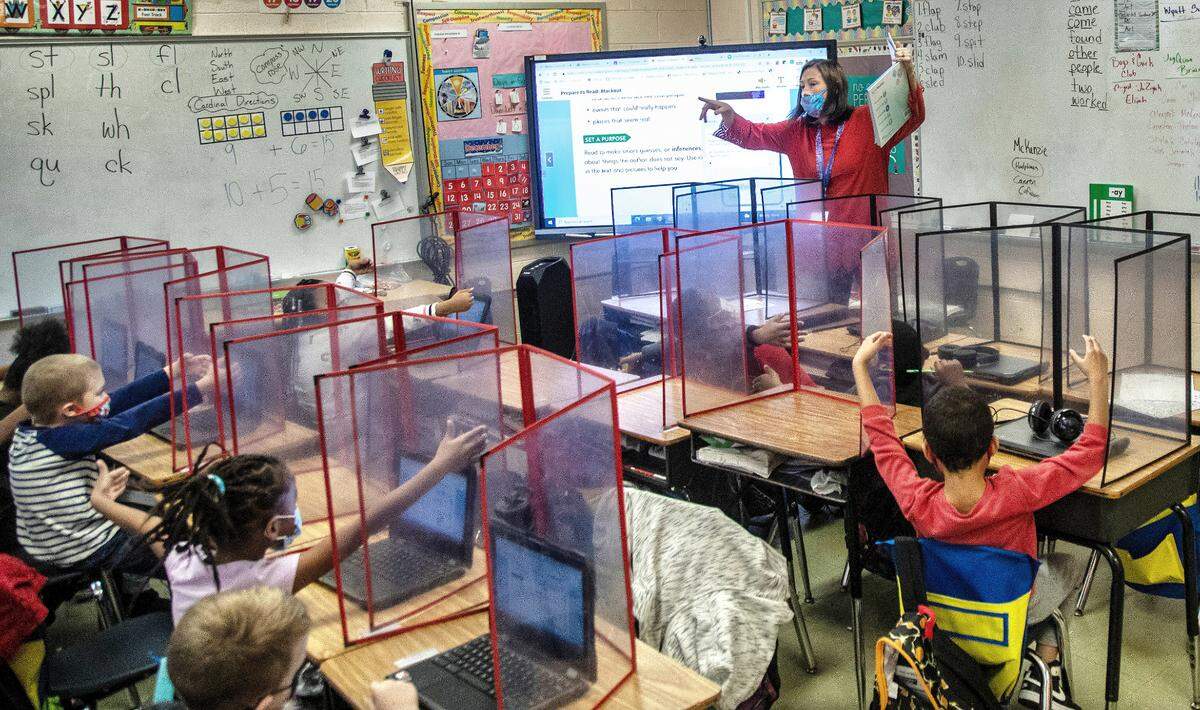
No one in teacher Sherry Beale’s class of first-grade students at Mariam Boyd Elementary School in Warrenton has ever visited New York City.
Beale introduced her 28 students to life in a noisy city earlier this month when they read the children’s book “Blackout,” set in New York City during the 2003 blackout. Car horns honking at night are usually not the norm for Beale’s students, who live 55 miles north of Raleigh in rural Warren County.
“There’s not a lot of traffic usually during the night,” Beale said. “So there’s not a lot of cars, not a lot of tall buildings. So we are in the country. This looks totally different from where we live.”
But the gap between Warrenton and Raleigh can be just as big as the gap between Warrenton and New York, especially when it comes to things like school resources.
That’s why leaders in some of North Carolina’s rural school systems are cheering a judge’s recent order to transfer $1.7 billion from the state treasury to fund public schools. The funding is in limbo for now, though, as the state Supreme Court has been asked to review an appellate panel’s order blocking the transfer of the money.
“At the end of the day, what that funding provides is hope and opportunity for students across North Carolina,” Warren County Superintendent Keith Sutton said in an interview. “Regardless of where you live, regardless of your ZIP code, we’re providing that opportunity and hope for students and families across North Carolina.”
‘A sound basic education’
The way North Carolina funds public schools has been under a microscope since the Leandro court case was initially filed in 1994 by low-wealth school districts. The districts have been trying to get more state funding.
Over the years, the North Carolina Supreme Court has ruled that the state Constitution guarantees every child “an opportunity to receive a sound basic education” and that the state was failing to meet that obligation. Superior Court Judge David Lee, a registered Democrat, was assigned the case by the Supreme Court in 2016.
Lee backed a plan developed by an education consultant that’s supposed to lead to every public school student having a highly qualified teacher and a highly qualified principal. The plan includes pay raises, expansion of the pre-kindergarten program and more funding for low-wealth schools.
On Nov. 10, Lee ordered state officials to transfer $1.7 billion to fund the first two years of the plan. But three weeks later, the Republican majority on a three-judge N.C. Court of Appeals panel ruled that Lee exceeded his authority.
“It’s not a question of will schools ever get the full funding to implement the Leandro plan — it is that they must,” Mary Ann Wolf, president and executive director of the Public School Forum of NC, said in a statement.
“North Carolina can’t wait any longer for our state’s leaders to invest in our public schools to the levels that ensure each and every one of our children have the opportunity to experience a sound basic education.”
Funding ‘failed education bureaucracy’
The appeals court panel’s decision has been applauded by Republican legislative leaders who’ve criticized the Leandro plan as being a byproduct of Democratic Gov. Roy Cooper.
“Judge Lee, education special interests, and the Cooper Administration hatched this unconstitutional scheme to funnel $1.7 billion in extra money to a failed education bureaucracy; this Court has rightly called them on it,” state Senate leader Phil Berger said in a release.
“The legislature will continue to follow the Constitution and advance policies that enhance opportunities for student achievement, empower parents, and fund students, not failing bureaucratic systems.”
Berger and House Speaker Tim Moore have filed to become parties in the lawsuit in order to appeal Lee’s order.
But the plaintiffs could get a more sympathetic hearing in the state Supreme Court, where there’s currently a 4-3 Democratic majority.
“Judge Lee’s order meant that money could have come within the next year,” said Elizabeth Haddix of the Lawyers’ Committee for Civil Rights Under Law, which is representing the NAACP Charlotte-Mecklenburg Branch in the lawsuit. “There’s going to be further delay, and the people of North Carolina need to make their voices heard on this.
“We’ve got a plan approved by the state, and the General Assembly is thumbing its nose at that.”
Smaller tax bases
While the case continues to be fought in court, school districts say they’re struggling to get by.
Sutton, the superintendent, has seen firsthand the disparity in resources between Warren County and Wake County. Sutton has served on the Wake County school board since 2009 but will resign his seat at the end of the month.
Warren County has 1,678 students and an operating budget of $27 million. Wake County has 158,670 students and an operating budget of $1.9 billion.
Warren and other rural counties have much smaller tax bases than Wake to fund schools, which Sutton says shows up in areas such as keeping schools staffed and maintained.
In 2019, the Warren County school board closed South Warren Elementary School due to concerns that the aging heating system could fail.
“That would never have happened in Wake County, for example, to make a decision to close a school due to repairs to an HVAC system costing about $1 million,” Sutton said.
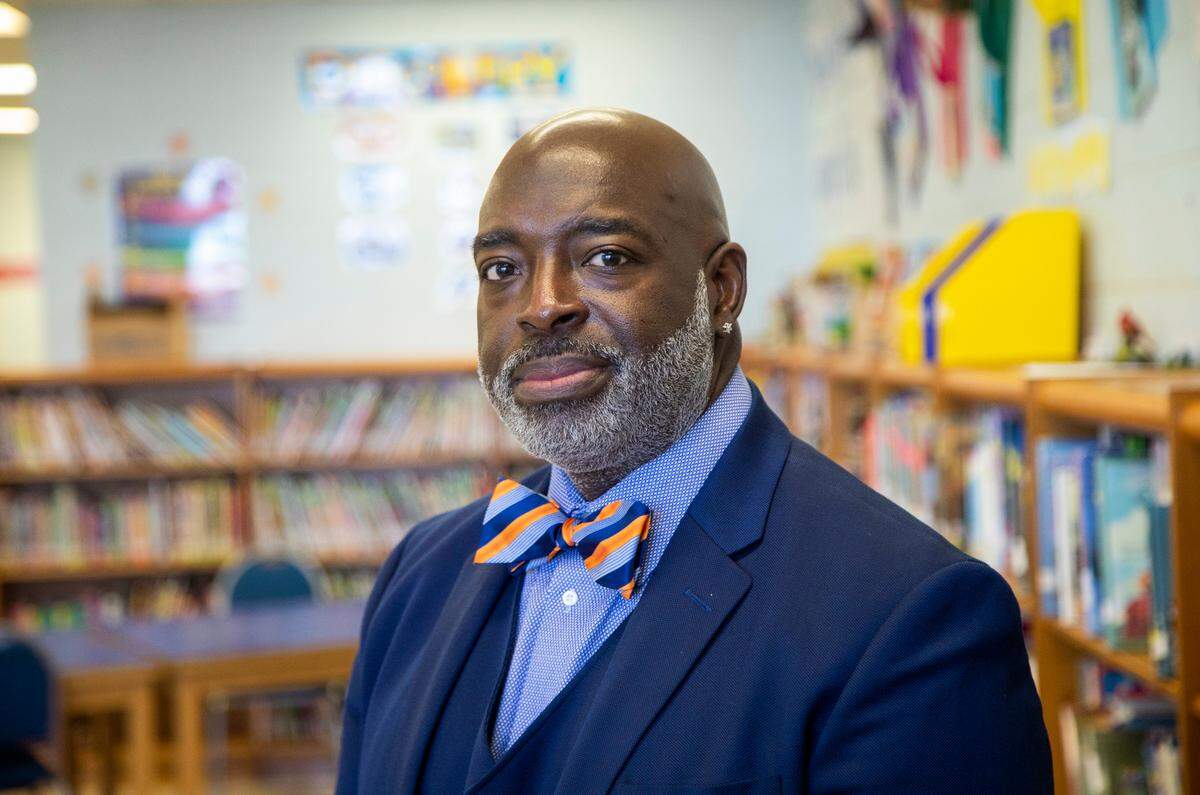
Mariam Boyd Elementary, located in downtown Warrenton, opened in 1957. It has been expanded over the years, with children walking through outdoor courtyards to classrooms that all have their own exterior doors.
An equivalently aged school in Wake County would likely have been torn down and rebuilt with security changes to eliminate students walking outdoors and intruders having access to so many exterior doors.
Sutton said Warren and other small school districts have purchased surplus school furniture from Wake County.
“That was almost like Christmas for us,” Sutton said.
The new state budget provides more state lottery funding for smaller counties to pay for school construction. But Sutton says fully funding the Leandro plan would be a major help.
Leveling the playing field for schools
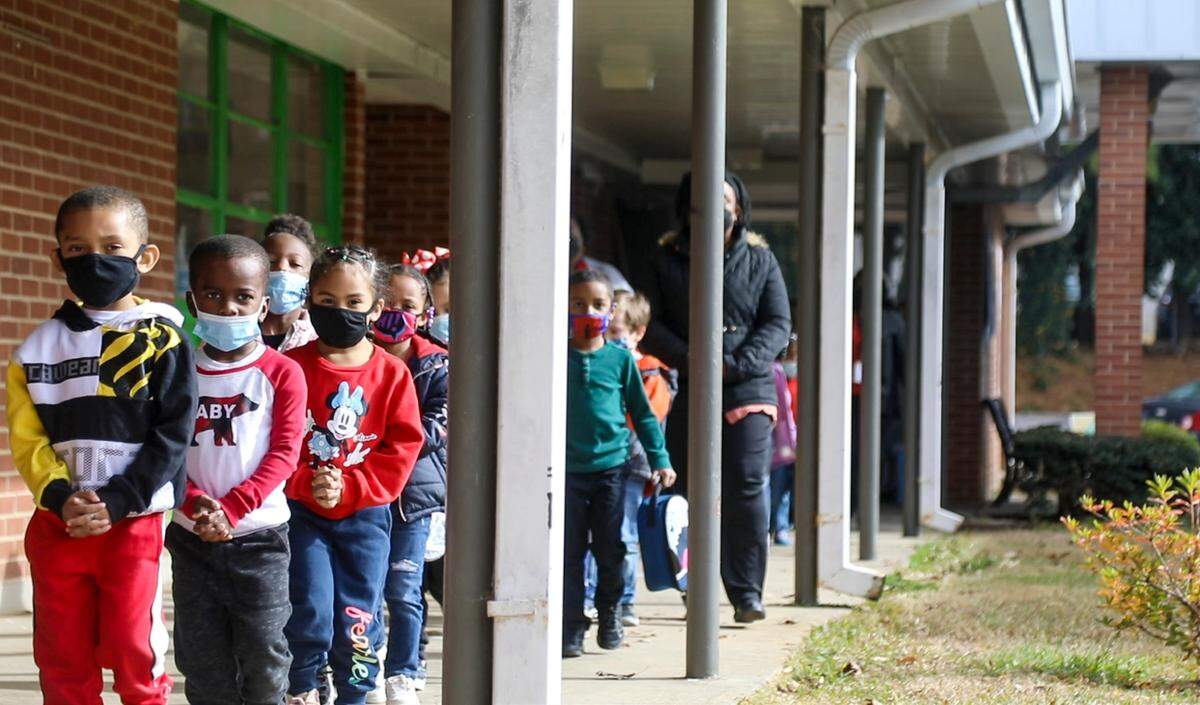
One of the biggest challenges for Warren County and other rural districts, according to Sutton, is competing with bigger districts to recruit and retain teachers.
The state pays the base salaries for school employees. School districts can supplement the pay, leading to wide differentials in what’s offered.
“It’s almost like a musical chair in the region and whomever is paying the highest bonus or moves their supplement by a half percent or so, people will follow the dollar,” Sutton said.
In recognition of the challenges, the state budget includes a new $100 million fund to help school districts in 95 counties raise teacher pay. The program excludes five urban counties: Wake, Durham, Mecklenburg, Guilford and Buncombe.
The new state funding could nearly double the average $2,900 salary supplement paid to Warren County teachers. The new state budget, as a whole, funds about half of the first two years of the Leandro plan.
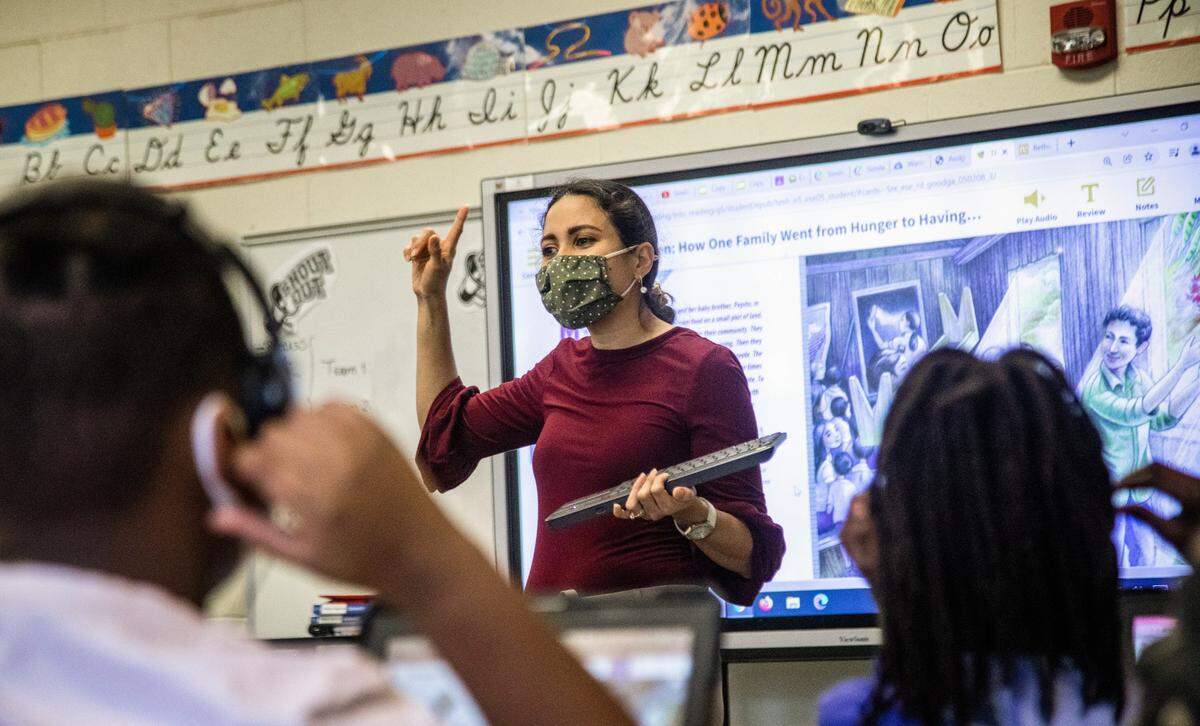
“These additional funds will provide rural counties with a new and much-needed tool to help attract and retain high-quality educators in underserved areas,” Rep. Jeffrey Elmore, a Wilkes County Republican and public school teacher, said in a release.
Sutton said the new state teacher salary supplement is a start, but much more needs to be done to help level the playing field for rural school districts. He compared Leandro’s importance with the legacy of the 1954 Brown vs. Board of Education school desegregation decision by the U.S. Supreme Court.
“Leandro will sort of be an ongoing piece that we’ll look at back in history and liken it back to Brown v. Board of Education,” Sutton said. “That was 67 years ago, and we’re still talking about segregation and integration of schools. “
This story was originally published December 22, 2021 at 6:00 AM with the headline "Will NC schools ever get Leandro funding? Court case leaves rural systems waiting."