Unintended consequences of Southside Durham’s redevelopment linger decade later
READ MORE
The Monster of Gentrification
The new high rises, office buildings and condos are a double-edged sword. As the tax base grew, so did property owners’ assessments and tax bills. Some renters were even displaced altogether as once-affordable rentals were sold or redeveloped. Community leaders say the city should be asking some hard questions of developers as the most vulnerable are displaced from affordable housing. How can past development mistakes be avoided? This is the N&O’s special report.
Expand All
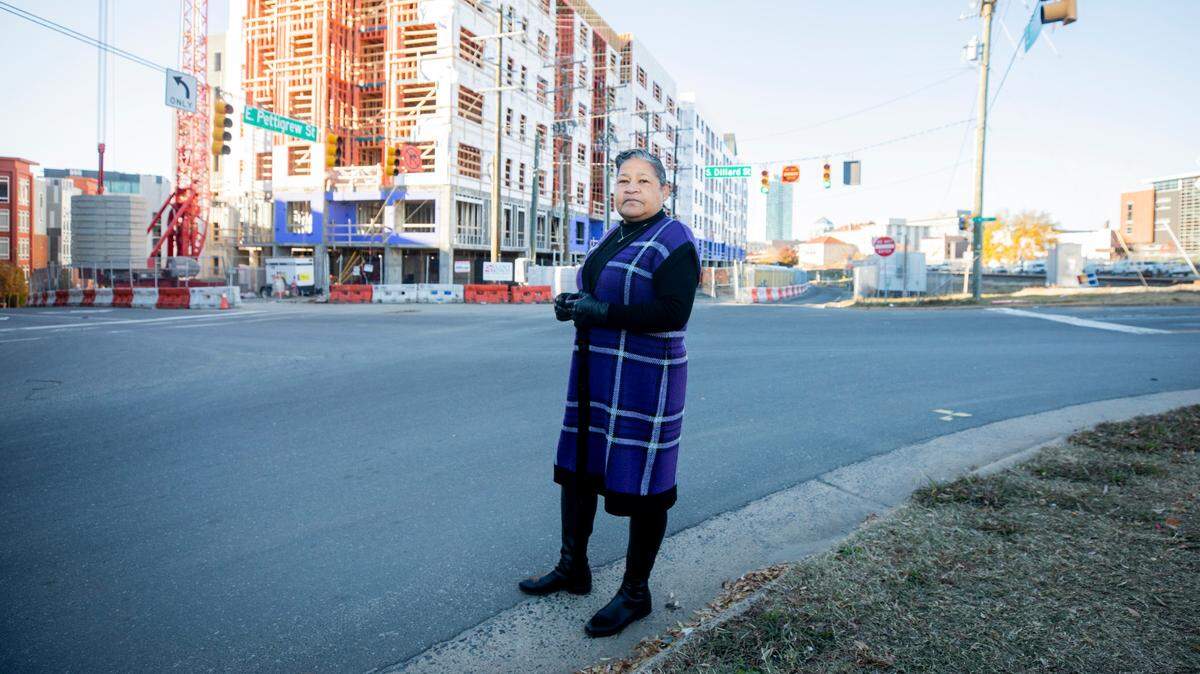
In a second-floor classroom of Duke University’s Friedl Building, Anita Scott Neville introduced herself to the dozen or so students of a first-year seminar on Durham archaeology.
“It is such a privilege to be here today,” she told them. “And I hope by the end of the class, you will understand why I’ve shared what a privilege it is.”
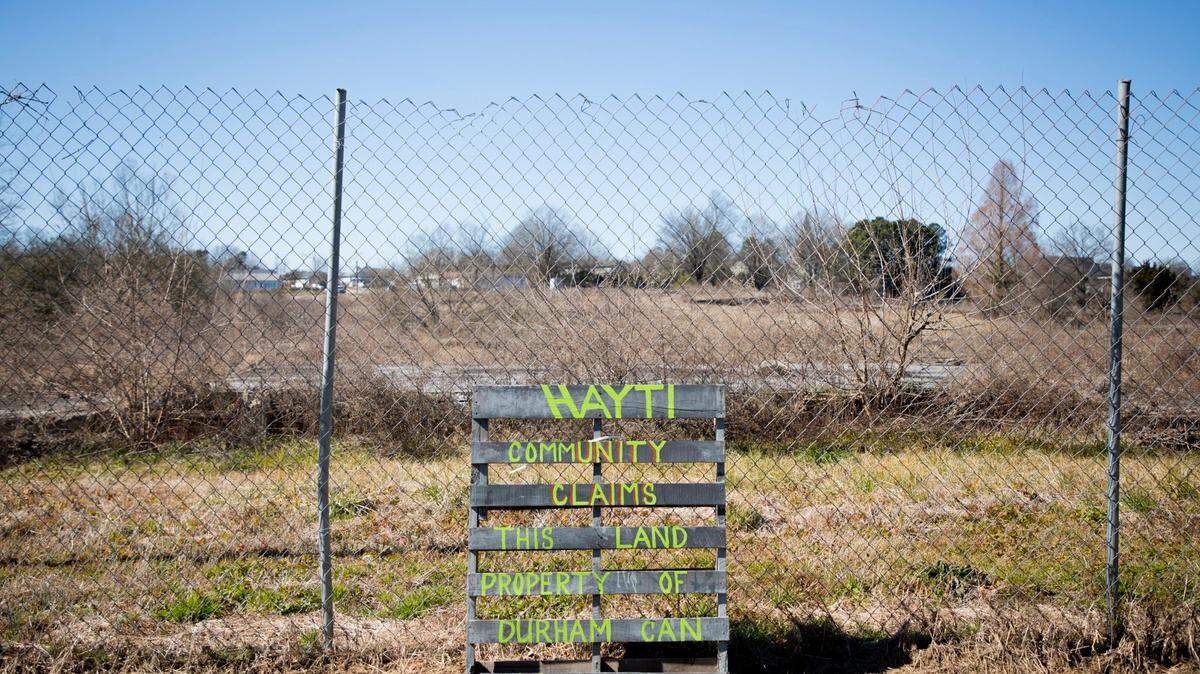
Scott Neville was there to talk about Hayti, Durham’s historic Black neighborhood in the city’s south side. It’s where she was born and raised during racial segregation: a once thriving community now blighted by the city’s disinvestment and unfulfilled promise of urban renewal after the Durham Freeway was built in the 1960s.
“A thriving community — not the hood!” she exclaimed as a classroom projector flashed monochrome photographs of Hayti’s heyday on a screen.
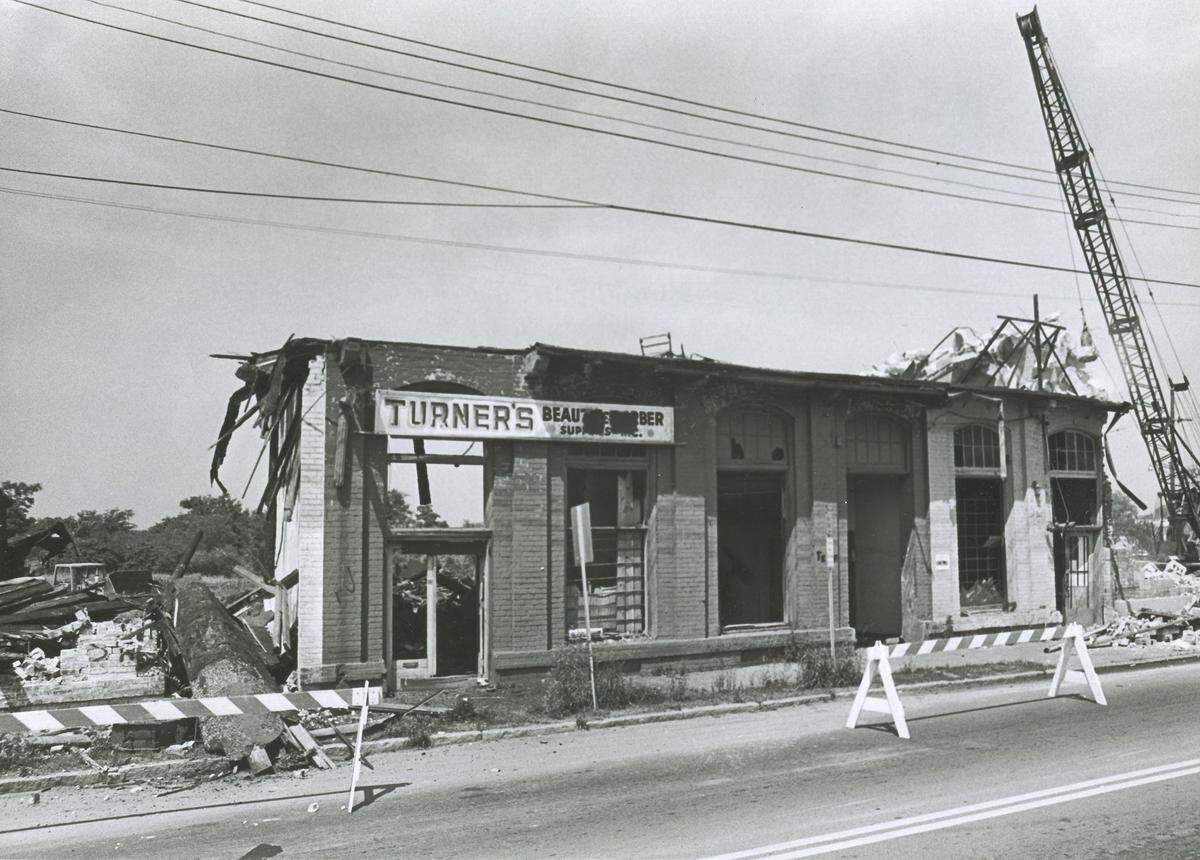
Scott Neville pointed to her father’s storefront, Turner’s Beauty and Barber Supply, and the dozens of other businesses along Pettigrew Street that were demolished for the freeway. It’s why she calls urban renewal “urban removal,” alluding to the thousands of Black residents and entrepreneurs forced to leave the area.
“In 1956, I was 2 years old when it was approved,” she said. “With urban removal, a lot of renters, a lot of generational renters, were challenged.”
It’s a mistake, she says, the city is making all over again.
Housing ‘wasn’t the priority’
Government records show Southside, where Hayti is located, was one of Durham’s redlined areas in the mid-1900s: places deemed too risky, where banks and mortgage companies would not extend credit.
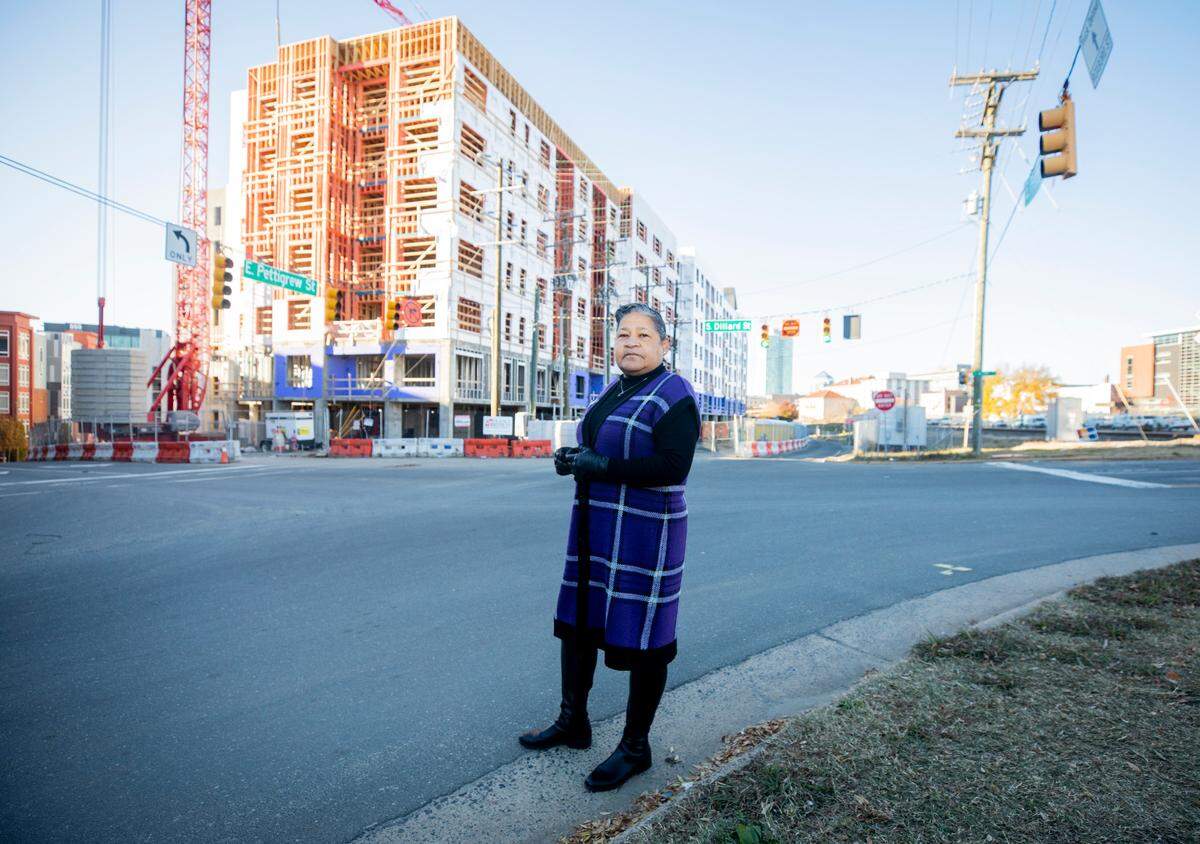
But downtown Durham’s revival in recent decades has made neighborhoods like Southside, once considered “deteriorated,” more appealing to developers seeking cheap land to build on and homes to buy. In turn, they’ve become desirable places for transplants to live, thanks to their proximity to the now bustling heart of the city.
A page on the city’s website notes that, compared to other areas, Southside’s location and accessibility played a key role in its redevelopment.
Former Mayor Bill Bell helped kick-start the Southside Revitalization Project and others in and near downtown. The centerpiece was The Lofts at Southside, a 132-unit development of apartments and townhomes by developer McCormack Baron Salazar Inc. Eighty of the units were marketed to households earning 60% or below the Area Median Income. At the time, Durham’s AMI was just below $60,000.
“The focus was to try to bring something from nothing,” Bell said in an interview with The News & Observer. “We were mindful of the need for housing, but it wasn’t the priority when we were looking at the initial revitalization of downtown Durham.”
The consequences of that weren’t immediate but have become glaring over the last decade.
The median price per square foot for homes sold in the Southside area jumped from $18 in January 2014 to $133 by September 2014, the N&O previously reported. By February 2018, it had reached $164. That’s an 803% increase.
“The Southside development, as it gets near Monument of Faith (Church), Hayti and the Fayetteville Crossing, has been insensitive to who would get perks for housing,” said the Rev. Tim Conder, a member of the strategy team of Durham CAN (Congregations, Associations and Neighborhoods) and founder of Emmaus Way Church.
‘People really were not prepared’
Revitalization isn’t inherently bad, said Clarence Laney, another Durham CAN team member and the pastor of Monument of Faith Church in Hayti.
“But oftentimes that revitalization is gentrification, and it’s happening at the expense of those who live in the neighborhood,” Laney explained.
Southside was a mostly Black neighborhood when Laney moved to Durham in 1996. He says he saw it change as many of the new affordable units went to UNC and Duke graduate students who met the 60% or below AMI threshold.
Census tract data for the area including The Lofts at Southside address show that 90% of the population there are “minorities” — people of Black, Asian or Native American race and/or Latino descent. The News & Observer asked for the demographic breakdown of residents in the Southside housing developments, but the city was still processing the request Friday.
“What was supposed to be an affordable housing community really became an all-white community in many regards,” Laney said. “I think that people really were not prepared for what [Southside] was going to become.”
The founder and pastor of Nehemiah Christian Center on Mangum Street, the Rev. Herbert Reynolds Davis says none of his church’s members live in or near downtown anymore. They mostly commute from other parts of the city and the county, he said.
Making intentional efforts to protect longtime residents from missing out on downtown revitalization must be a priority, Davis said.
“There are great things happening in Durham,” he said. “It used to be that things happened in Durham that excluded other people. Now things happen in Durham that are at the loss and the damage of other people.”
‘Stop the bleeding’
The video that Scott Neville played during her visit to Duke wasn’t created by a Durham resident. He isn’t even a North Carolinian. But it’s one of her favorites, she says, because “it provides a great historical perspective.”
“I hope that whether it’s with your class, or you’ll just take the initiative on your own, to just go and look at some of these streets that I’ve referenced today, and think about this video,” she told the students.
In addition to her father’s store and others in Hayti, the video showed what is now the Stanford L. Warren branch of the Durham Public Library.
Restoring that building and some of the homes surrounding it — many of which are boarded up — is one example of what working “intentionally” to revitalize Hayti, “to stop the bleeding,” would look like.
The library has historically served the area’s Black community since 1940. It is closed due to water damage until late 2022, a library spokesperson confirmed. Some exterior repairs will also be made. In the meantime, the library is holding activities virtually and doing outreach work in public spaces, officials told The N&O.
Scott Neville says “it’s criminal” to close the library for so long, speaking for those who frequent the branch, predominantly people of color and lower income.
By contrast, the downtown Main Library just over a mile away reopened last summer after a multimillion-dollar, four-year renovation that added a rooftop garden, maker spaces, new play areas and an Incubator space that serves small businesses, The N&O previously reported.
This story was originally published December 15, 2021 at 6:00 AM with the headline "Unintended consequences of Southside Durham’s redevelopment linger decade later."