Can Raleigh and Durham avoid past development mistakes as they grow?
READ MORE
The Monster of Gentrification
The new high rises, office buildings and condos are a double-edged sword. As the tax base grew, so did property owners’ assessments and tax bills. Some renters were even displaced altogether as once-affordable rentals were sold or redeveloped. Community leaders say the city should be asking some hard questions of developers as the most vulnerable are displaced from affordable housing. How can past development mistakes be avoided? This is the N&O’s special report.
Expand All
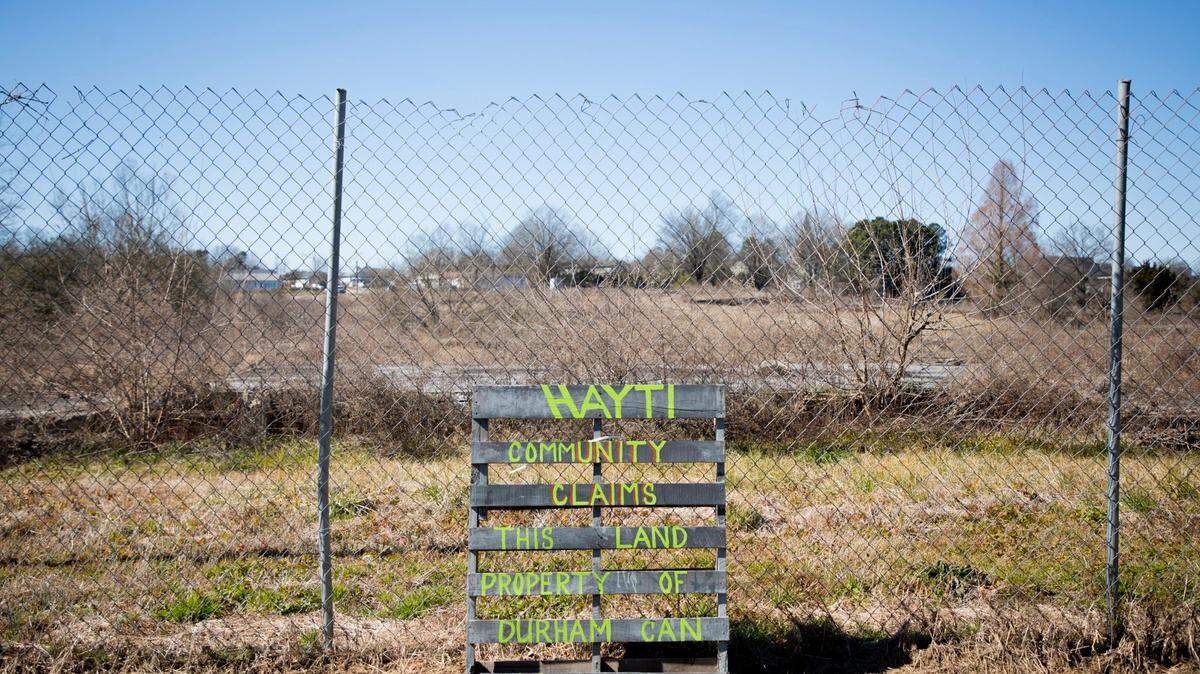
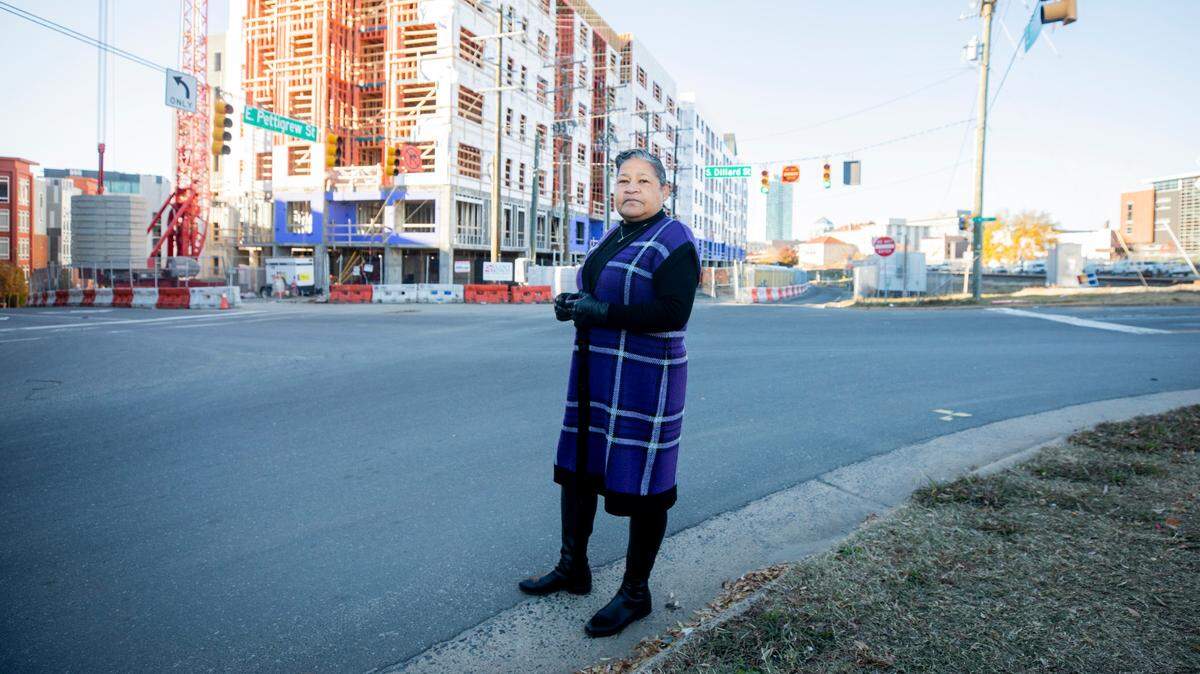
Soon after Regina Mays was laid off from GlaxoSmithKline in 2012, she and her family lost their three-bedroom apartment near downtown Durham.
To stretch her savings and money from odd jobs, the single mother of five moved her family into a smaller apartment nearby with the help of Oak Grove Baptist Church.
But when Mays couldn’t find another full-time job with the hours and salary she needed, she and her children had to move again — this time to the Families Moving Forward shelter on Queen Street, where they stayed for six months.
It was only then, Mays said, that she became eligible for assistance.
Eventually, Mays received a spot in Franklin Village, an affordable housing neighborhood where rents start at $940 per month in the Golden Belt area beside downtown Durham. She joined the community-organizing coalition Durham CAN (Congregations, Associations and Neighborhoods) and became co-chair of its Affordable Housing Action Team, intimately aware of the housing challenges for longtime residents living near downtown.
“It wasn’t until we became homeless that affordable housing was even an option for us,” she said.
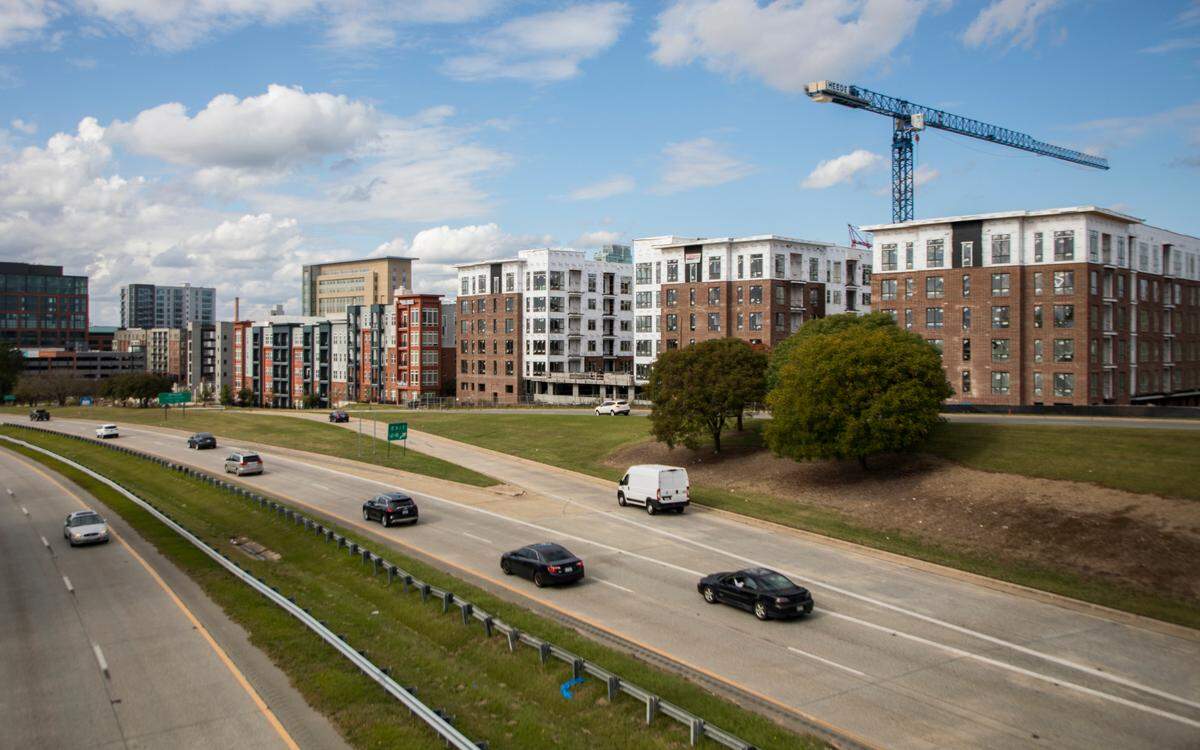
Downtown Durham and Raleigh have seen significant public and private investment. But the new high rises, office buildings and condos are a double-edged sword. As the tax base grew, so did property owners’ assessments and tax bills, often with their land value outpacing the value of their longtime family home. Rents rose, too. And some renters were displaced altogether as once-affordable rentals were sold or redeveloped.
And now, despite bonds, new affordable housing developments and changes in zoning to encourage more and different types of housing, prices for homes and apartments continue to soar. Many residents and their advocates wonder how long they can hang on.
“The great fear that I have is one day I’ll wake up five years from now and Durham and Raleigh will be unrecognizable to us, and then we’ll begin to weep,” said the Rev. Lisa Yebuah, lead pastor of Southeast Raleigh Table. “That the actual thing that had the energy and the essence of our communities is no longer, and that we realized that we had a hand in it, we had a hand in making that happen.”
When downtown Durham was dead
When Bill Bell became Durham’s mayor in 2001, downtown was mostly government offices and abandoned warehouses. He recalls speaking with students about their impressions of downtown.
“One group of students came through and said, ‘The fun we get when we go downtown is throwing rocks through some of the windows,’” he said. “They were being facetious. But it was just that dead. There was nothing happening down there.”
The new 10,000-seat Durham Bulls Athletic Park had just opened in 1995 — a controversial call for the city, which built the project after voters rejected a bond — followed by the Diamond View office building. In the early 2000s, Capitol Broadcasting Co. began its extensive renovation of the historic American Tobacco Campus with millions of dollars pledged for parking decks from the city and county.
“I sound like a broken record,” Bell said. “Government should do what it does best. And for what it doesn’t do best, it needs to go out and seek partners that can do those things that fill those gaps. That, to me, is how public-private partnerships work in trying to get things done.”
The idea was to turn downtown into a 24/7 destination that drew people for work and entertainment, he said.
And it worked — faster than most expected.
“[The developers] were able to get companies like Duke and others to come in and take first-class office space,” Bell said. “That was the initial focus; it wasn’t about living [downtown] necessarily. It was about trying to get the first piece that we could get off the ground.”
A ‘lack of intentionality’
But Durham’s lack of focus on housing meant opportunities went to the highest bidder, squeezing longtime residents, business owners and even churches, said the Rev. Herbert Reynolds Davis of the Nehemiah Christian Center in downtown Durham.
“Because of the lack of intentionality, now we’ve gotten to the point that, you know, it’s just the trend, just the market, you know, and capitalism is driving everything,” he said. “[Durham] has always said that they were this place for everybody. But there was never any — there was limited intentional effort to preserve space or opportunities.”
Durham has made efforts to preserve and create affordable housing, like the city-led revitalization of Southside, the area south of downtown across the Durham Freeway.
And in 2019, Durham voters approved a $95 million housing bond. With another $65 million in local and federal money, the city anticipates providing about 1,600 new affordable housing units, preserving 800 affordable rental units and funding programs like emergency rental assistance, property tax assistance and repair/rehabilitation funding.
But governments move slowly, Bell said.
“I think the city has a good [affordable housing] plan,” he said, “if they are able to implement and execute.”
But some worry that housing plans in Durham and Raleigh still aren’t focused on people with the lowest incomes but instead on “workforce” housing.
“Most of the affordable housing places are for new people coming in to Durham,” said the Rev. Tanya Johnson, who is also involved with Durham CAN. “The teachers, the firefighters, the frontline [workers].”
It’s not that those people don’t need housing they can afford, but there are people living in “poverty, waste, rat-, roach-infested places” that need the help first, she said.
‘Nobody talked about gentrification’
In 2007, Raleigh had just reopened Fayetteville Street, a then-pedestrian mall, to cars, highlighting that iconic view from the state Capitol to Raleigh Memorial Auditorium. It would still be a few years before the Raleigh Convention Center and Red Hat Amphitheater would open.
And it was Mayor Mary-Ann Baldwin’s first term on the Raleigh City Council.
“Back then, nobody talked about gentrification,” she said. “That wasn’t something that was even a term that was uttered.”
Downtown was transformed from a sleepy state-government district nearly shunned after dark to a fashionable place to eat, drink and see live music — and soon to live.
“I don’t feel we had the strategies in place [and] the true understanding of what the housing needs were and how we should go about accomplishing them,” Baldwin said.
The city’s focus on affordable housing happened in 2015, when the City Council increased the property tax rate by a penny specifically for affordable housing. That year, the city’s housing director unveiled the city’s new $20 million affordable housing plan.
“That’s when that awareness really started changing,” Baldwin said. “So the perspective from now back then is very different.”
But Raleigh native and historian Carmen Cauthen believes the awareness was there, at least among those who saw their neighborhoods labeled as blight and ripe for urban renewal — as many had seen in Durham..
“A lot of these things feed into systemic racism,” Cauthen said. “They are part of a complex system, and we don’t change them. We don’t look at every system and see what drove it to get started. And while we might try and fix the problem, we don’t go back to the root of it.”
The planning process around downtown Raleigh’s growth should have included the community and is something the city still needs to address, she said.
“It could still be done differently,” Cauthen said. “You know, sometimes we stack positions with people who are well-intentioned. We need to learn how to not just reach out to people who need something on their resume but people who actually have a feel for the community at heart, the entire community, not just their piece of the community.”
Redevelopment vs. revitalization
Yebuah has lived in Raleigh and Durham but moved to College Park, just south of downtown Raleigh, in 2015.
“What’s happening in Durham, and also what’s happening in Raleigh, it’s not like it’s in a vacuum,” she said. “And it’s not only specific to our area. I think everywhere where we’re seeing ‘growth and revitalization,’ it doesn’t necessarily mean growth and revitalization for everyone.”
In fact, Mel Norton, who has studied gentrification in Durham, differentiates between redevelopment and revitalization. The latter, she says, is a process in which residents who already live in an area benefit from its growth and development.
Neighborhoods around downtown areas shouldn’t be seen through a lens of their deficiencies but rather as places to be celebrated, she said.
“I think the way we sometimes talk about southeast Raleigh is as though it’s a place to be fixed,” she said. “And it’s not a place to be fixed; it just simply needs for its gifts to be leveraged. But when you are disconnected from resources, it’s hard to leverage those gifts, or those gifts sometimes get muted by systems that don’t allow people to flourish.”
People don’t consider that when a city becomes a “great place to live, work and play,” the “play” can threaten the “live” for longtime residents, she said.
The Triangle is one of the smartest areas in the South, Yebuah said, but it’s time for a reckoning and to stop assuming gentrification is inevitable.
“Oh, my God, flip some tables, people, let’s get righteously angry,” she said. “Let’s say, ‘No, actually, I can’t live, work and play well in this place if I know that somebody else is suffering.’
“We have to have a holy imagination,” she continued. “We have to have an expanded imagination. Sometimes it’s just a matter of actually believing we have the capacity to think differently about housing.”
A community vision
There’s no single solution to prevent gentrification.
But areas that have fared better than others are ones that have a community vision, led from the bottom versus the top, said Roberto Quercia, a city and regional planning professor at UNC-Chapel Hill.
“In many communities, especially communities of color or low-income communities, we have a lot of skepticism about the process,” he said. “They feel once that monster of gentrification is let in, it’s difficult to stop.”
Both Durham and Raleigh have changed their zoning rules to allow more “missing middle” housing like duplexes, townhomes and backyard cottages. Advocates say it’s one way to get more homes on the market. Critics worry the zoning changes don’t guarantee homes will be affordable to those who need them.
It’s a delicate balance that defies a one-size-fits-all solution, says another UNC-Chapel Hill professor. Cities need to decide which neighborhoods can be rezoned without threatening those most vulnerable to displacement.
“So within a gentrifying neighborhood, to prevent that neighborhood character from changing, you would refuse to upzone,” explained C. Tyler Mulligan, a public law and government professor. “But in order to alleviate the overall housing market, one would allow for density in other neighborhoods.”
Everyday decisions
Gentrification can be hurried or hindered by the smaller public investments happening on a city level every day.
“One of our biggest issues is racial wealth inequality,” said Adam Rust, a senior policy adviser of the National Community Reinvestment Coalition who lives in Durham. “So much of that is built by local decisions, right?
“So I like to think about investment in terms of community assets. Where a town is saying, ‘We are going to have parks. Where are we going to have schools located? Streetlights?’” he said. “All of those things influence the value of property.”
Neighborhoods that have experienced longtime disinvestment may ask why it took new, wealthier — and often whiter — residents moving to the area to usher in those benefits.
“Any change you make would make that area more attractive to development than it was before the change,” said UNC professor Quercia. “And so any change you put in, they fear that it will kind of open that door. And that avalanche of new development will flip an area into a gentrified community.”
Communities that have been historically mistreated or disinvested in have an understandable mistrust of government leaders who promise to do better, he said.
One such community is Durham’s historic Hayti neighborhood, an African-American business and residential district prominent during the segregation era. Under the promise of urban renewal, the construction of the Durham Freeway in the 1960s and ‘70s displaced hundreds of businesses and thousands of African Americans that lived in Hayti.
Anita Scott Neville, the daughter of one of Hayti’s former business owners, says distrust remains among the elders who still live in what’s left of Hayti.
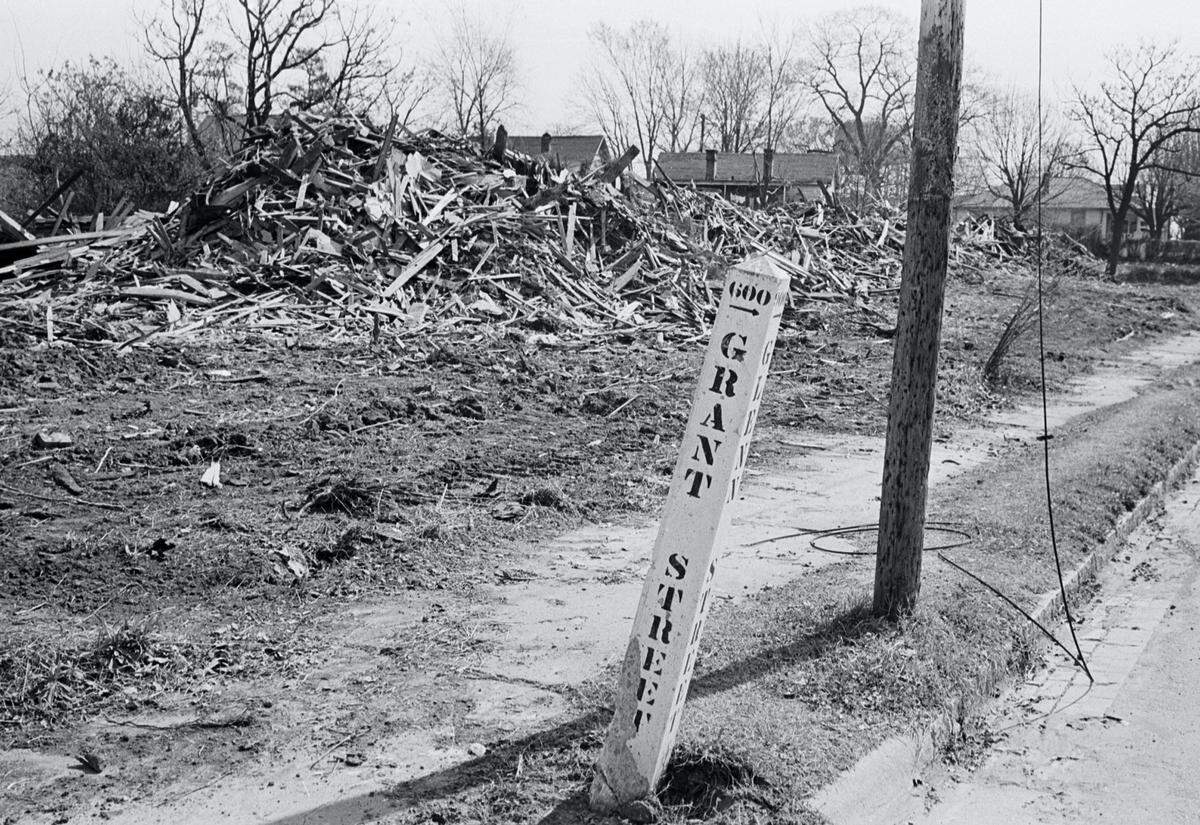
“The promise to the Black community was: ‘Yeah, we’re going to tear this down, but we’re going to replace it and provide so much better,’” Scott Neville said. “Not only did that not happen then, but what is happening now is moving, not even that promise, but that probability further away.”
Another example is how cities use their housing programs.
First-time homeowner assistance programs aren’t new for many cities, including Durham and Raleigh, but Portland, Oregon, has given priority to residents who have been displaced or are at risk of displacement due to gentrification in a first-of-its-kind “right to return” program, said Quercia.
Even now, some worry about a new wave of gentrification, pointing to expansions of Apple and Google in the Triangle, the development of Dorothea Dix Park and bus-rapid transit in Raleigh and plans for Fayette Place, a sprawling abandoned public housing development in the Hayti district in Durham.
“There is some responsibility for those companies to invest in our communities,” said Sherry Taylor, a member of Durham CAN’s affordable housing team. “It’s not just ‘what is the city doing?’ The city can’t do it by itself. What are these companies doing? What are these developers who are building these big commercial developments that do not include any affordable housing, what are they doing?”
Mays, the former GlaxoSmithKline worker, thinks that to prevent gentrification, Durham and other cities must push the state for changes in landlord-tenant rules that allow caps on rent. And while under state law cities can’t force new development to include affordable housing like it can, say, sidewalks, Yebuah, the pastor in southeast Raleigh, said it’s up to elected officials to still push and ask difficult questions.
“I wish that we would give ourselves a dadgum fighting chance to have an imagination for expansion that actually is flourishing for all,” Yebuah said. “Instead of saying, ‘Well, our hands are tied, when it comes to what developers do.’ Well, your hands aren’t tied to asking developers hard questions.
“Your hands aren’t tied in pushing developers to think about being just,” she said. “Your hands are not tied as elected officials to decide that what we’ve always done is not what we’re going to continue to do.”
This story was originally published December 15, 2021 at 6:00 AM with the headline "Can Raleigh and Durham avoid past development mistakes as they grow?."