Data centers in NC: Secret locations, hyperscale giants and Raleigh’s next ‘edge’ site
READ MORE
Data Centers in North Carolina
Data centers are the dedicated areas few ever see that enable the technology we see, touch and listen to. They can be huge and loud, but they employ relatively few people. In this special report, The News & Observer looks into the rapid growth of data centers, their value to the state economy, and the massive amount of electricity needed to power them.
Expand All
VA, now home to hundreds of data centers, is tapping the brakes. Is that good for NC?
Duke Energy says it needs to ramp up new energy to serve data centers. Is it right?
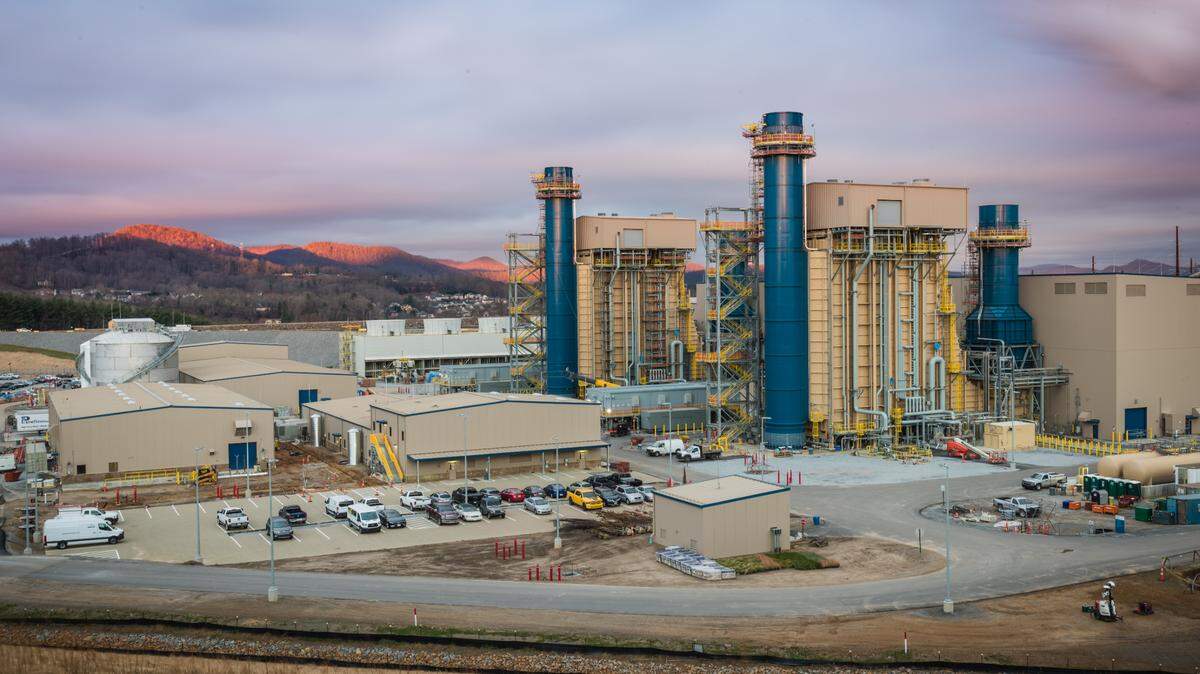
Data centers are coming to NC. Can Duke power them while keeping your lights on?
Data centers in NC: Secret locations, hyperscale giants and Raleigh’s next ‘edge’ site
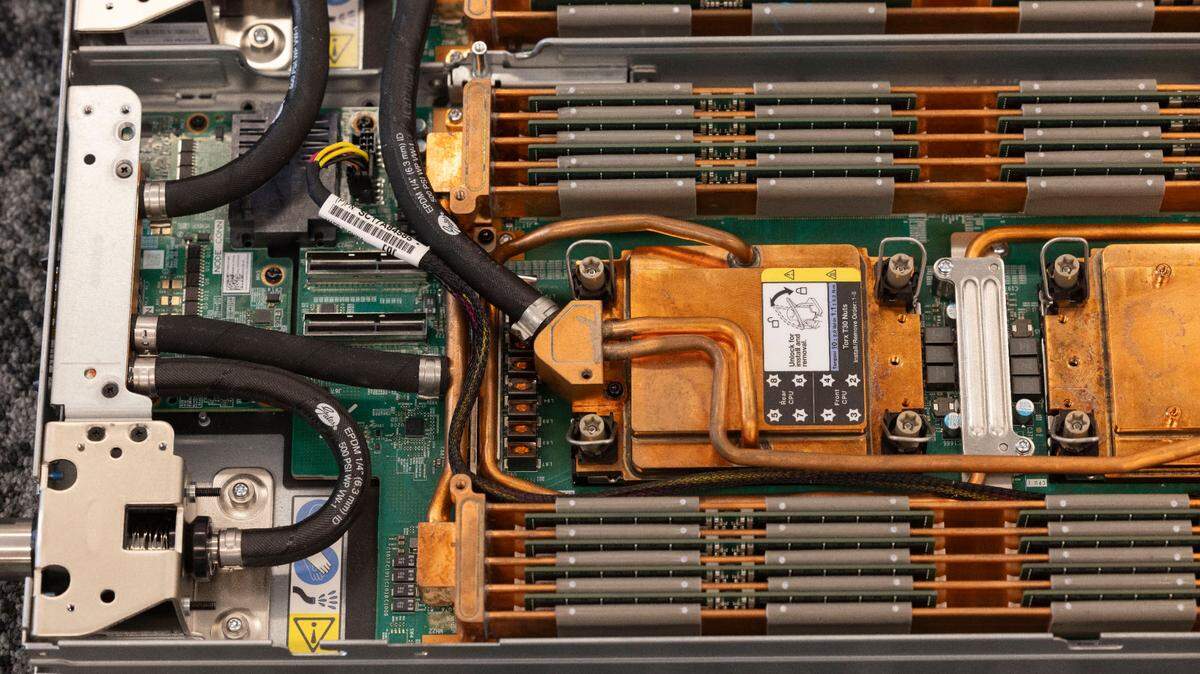
Inside Lenovo’s RTP labs, cooling data centers is more than half the battle
Smart phones and computers are excellent windows to the world, says Dave Sterlace, the strategic account director for Hitachi Energy’s global hyperscale data center business, but they’re terrible storage and networking devices.
This is the basis for data centers, dedicated areas few ever see that enable the technology we do see and touch and listen to. A laptop doesn’t perform cutting-edge artificial intelligence or routine videoconferencing on its own. School districts and hospitals lack the capacity to store their electronic records on site. Or, at least, they want a backup location for security. And the entirety of Google Maps can’t sit within a single cell phone.
Data centers make these things possible.
“It’s all basically tied to the digitalization of everything,” Sterlace said. “Of life.”
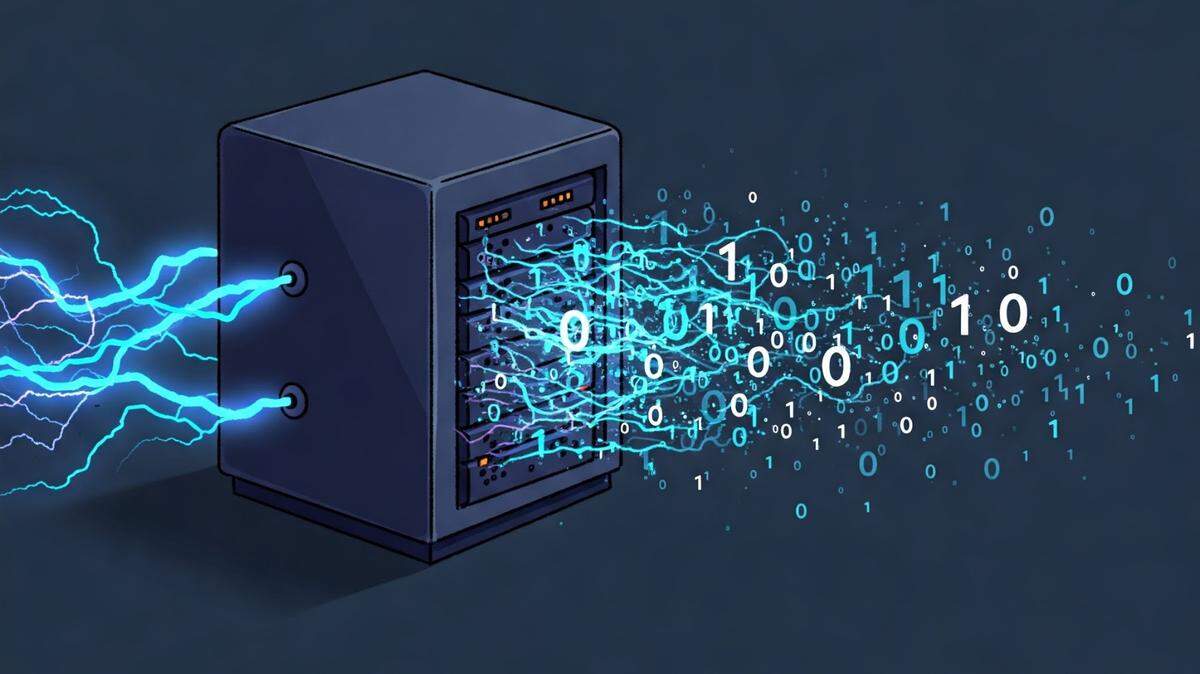
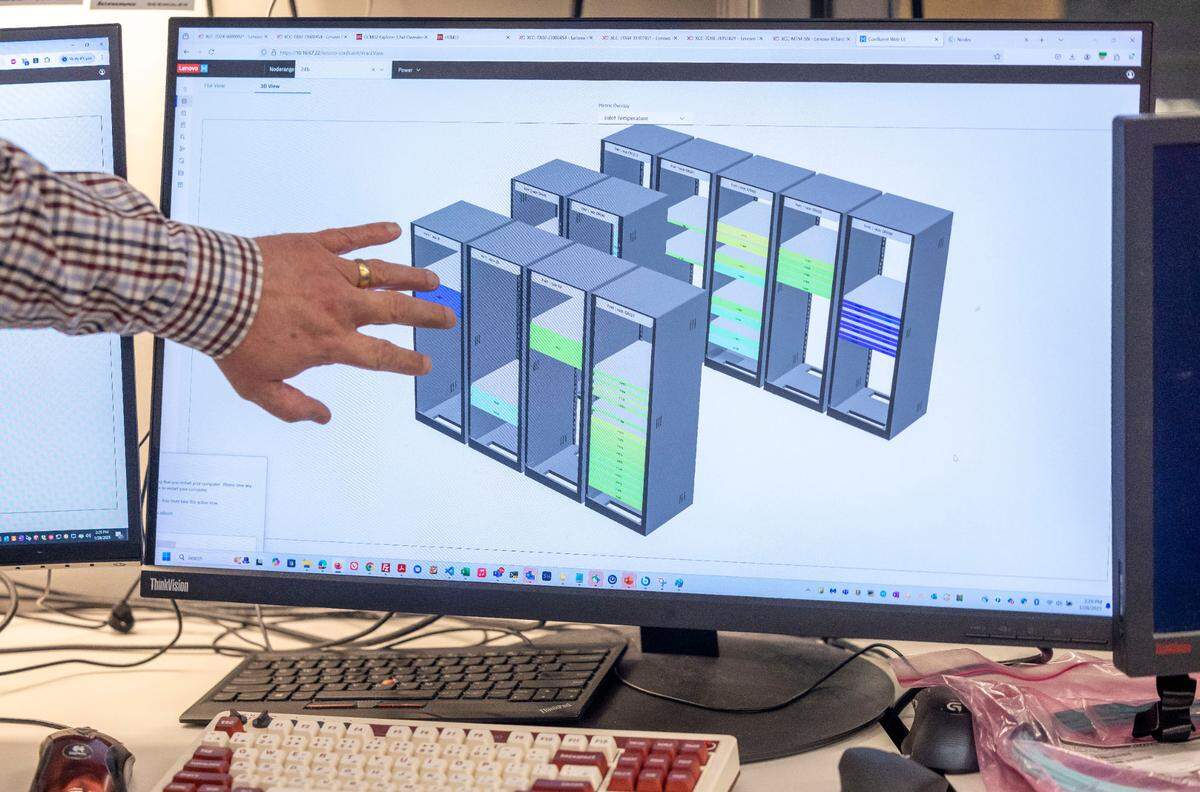
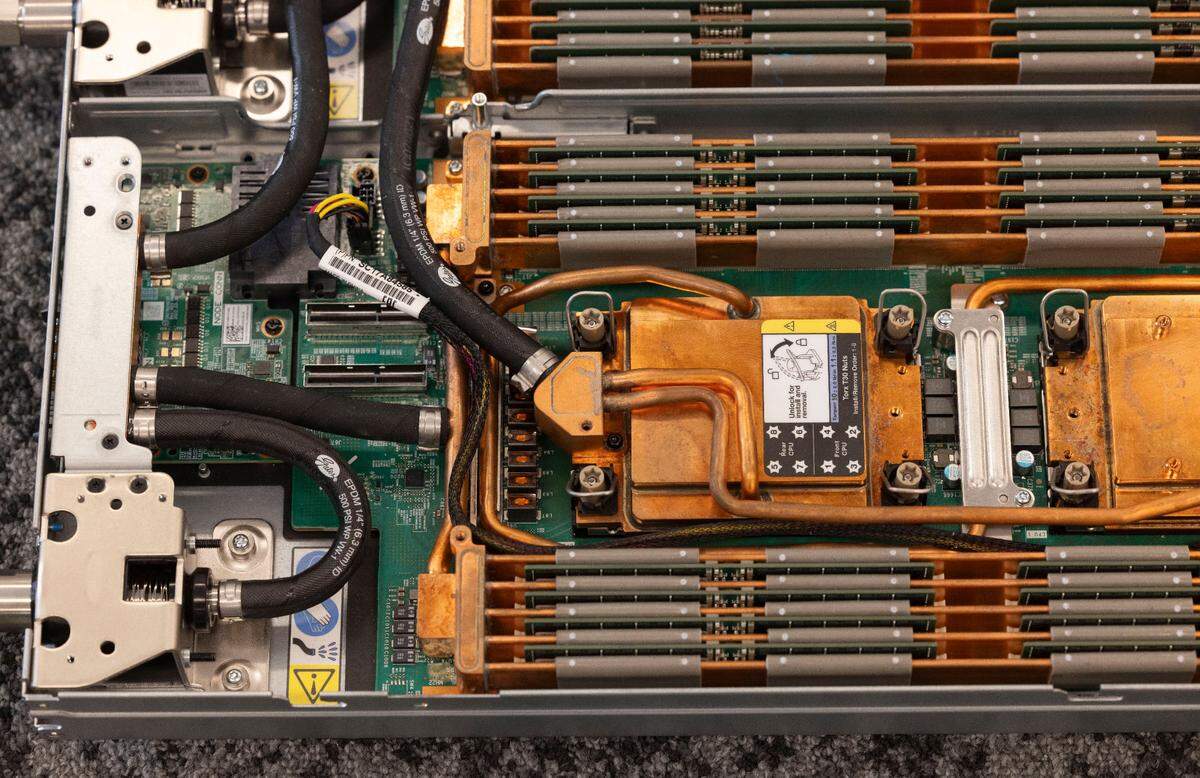
Inside these facilities, servers sit within standard 19-inch racks that are positioned into rows. Power creates heat, and a defining quality of data centers is their ability to manage the high temperatures to prevent vital infrastructure from malfunctioning.
None of this is new; the first data center was built in 1945. But a surge in AI paired with the steadier increase of digitization across modern life has sparked heightened interest in new data centers worldwide, North Carolina included.
The state doesn’t maintain an official list of data centers, or of the data center support companies like Hitachi Energy, which has its North American headquarters at North Carolina State University’s Centennial Campus. But data centers exist, humongous and modest, in rural counties and in cities.
Some of their locations are secret; the North Carolina Department of Information Technology acknowledged it has two data centers — one in the eastern part of the state and another in the west — to run state and local government IT, but the department refused to give any more geographic specificity due to security concerns.
“We try to be nondescript about where we are, including the labeling of the buildings,” said Torre Jessup, NCDIT’s chief deputy.
Giants in the data center corridor
Other data centers are hard to miss. They are the so-called “hyperscale” facilities, mammoth sites owned by the largest tech companies on the planet, four of which have cloud data centers in the western side of the state.
Apple opened its Catawba County data center in 2010 and committed to expanding the site after signing a 2021 incentive agreement with the state. Last week, the company promised to grow its data center operations in North Carolina through a broader $500 billion U.S. investment.
“We hope that Apple spends $499 billion of that announcement here in Catawba County,” joked Scott Millar, president of the Catawba County Economic Development Corp.
Microsoft has committed to opening four data centers in Catawba County, near the existing Apple site, with construction underway. Meta has three data centers in the Rutherford County town of Forest City. Google spent $1.2 billion to build a data center in Lenoir that it boasts services “the entire world,” and the company is considering an expansion.
Together, these windowless buildings form the backbone of North Carolina’s emerging “data center corridor” that encompasses former furniture and textile towns west of Charlotte.
“The amount of scale there, it’s really mind blowing,” said David Brain, chief systems architect at the broadband service nonprofit MCNC, which has its own data center at its Research Triangle Park headquarters.
Around eight years ago, Brain toured the Meta (then called Facebook) data center in Forest City. He described it as a semi-illuminated space with lights turning on as one walked through it. The few technical staff working within the enormous layout rode scooters to get to different sectors.
The hyperscalers are in an artificial intelligence arms race, vying to train models and push out AI-driven services. To achieve this, they have snatched up Nvidia’s graphic processing units, which demand exponentially more computing power from data centers.
“AI training takes a lot of compute,” said Tom Wilson, principal technical executive at the Washington, D.C., nonprofit Electric Power Research Institute. “Models have been increasing in size by about 40 times every year for the last 15 years — 40 times bigger each year in terms of the number of connections they’re making.”
Last fall, Microsoft purchased a 1,350-acre megasite in Person County, about an hour’s drive north of Durham. While the company declined to share why it bought the land, state and local officials have a strong guess.
Computing on the edge
On the opposite end from the hyperscalers are the edge data centers, where size isn’t emphasized but speed is.
Type a question into ChatGPT, and data will travel to a cloud data center in Texas and then return to your device. It feels close to instantaneous, but there are moments of latency before the answer spools out on the screen.
The “edge” reduces latency by getting a smaller data center closer to the end point of computing. Few mind that a ChatGPT answer takes a few seconds. But for other tasks, waiting for data to traverse hundreds of miles can be a major annoyance or worse.
Tom Snyder, executive director of the Raleigh nonprofit RIoT, named self-driving cars, robotic surgeries and virtual reality as tasks where edge computing is imperative.
“I expect we’ll see more and more over time,” he said.
One of the next edge data centers in the Triangle will be from the Boston-based real estate investment firm American Tower, which expects to open a facility along Chapel Hill Road in West Raleigh, near Cary, this spring. The building promises to offer 4 million watts of power, at capacity, and cover 4,000 square feet.
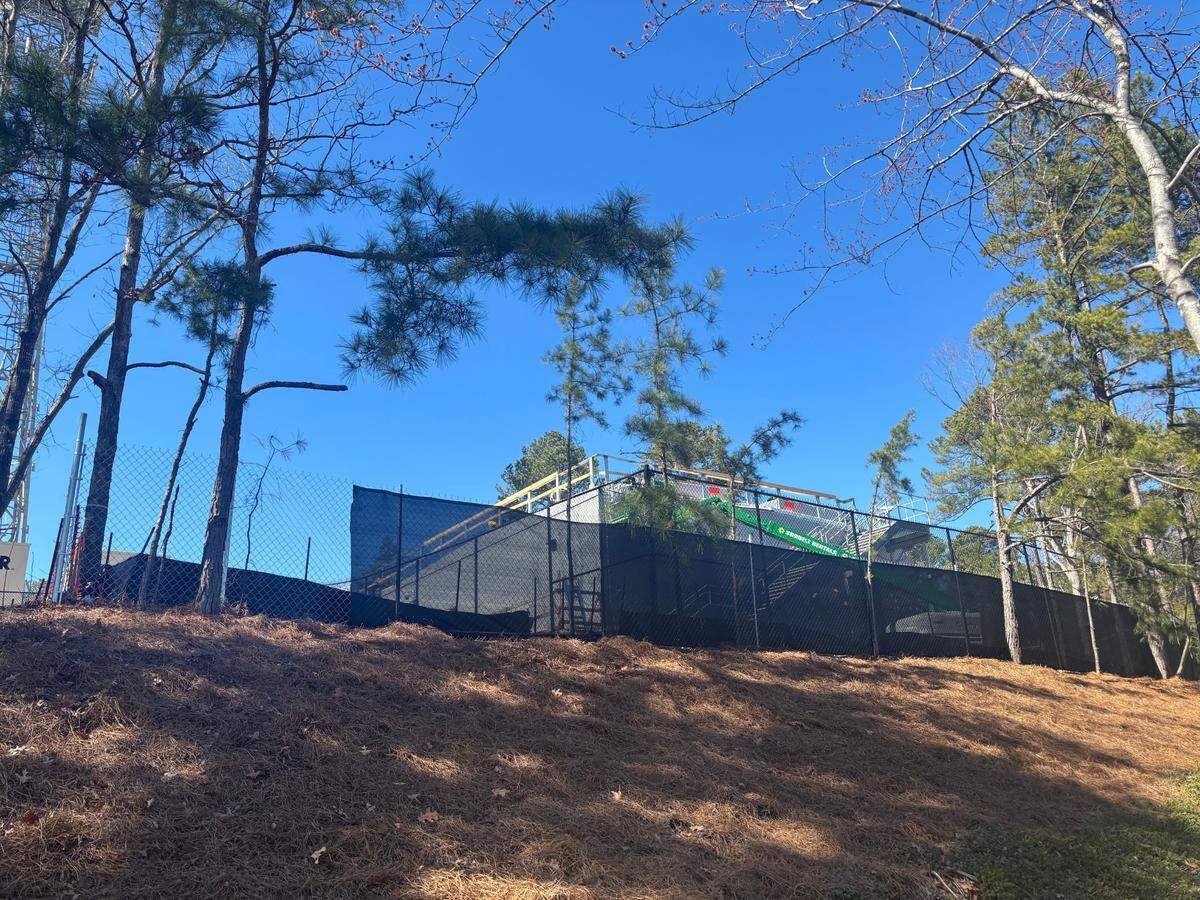
“Where the tech talent sits are where the data centers tend to get built,” said Jim Poole, American Tower’s vice president of edge product development. “Yes, (the Triangle’s) not of the scale that a Silicon Valley or Washington, D.C., is, but for cities on the East Coast, it is a fast-growing market. And so that’s interesting.”
American Tower entered the edge computing sector in 2021 when it purchased the data center operator CoreSite.
CoreSite specialized in colocation, or “colo,” data centers where clients rent out rack space to house their servers. They are similar to companies renting office space and then furnishing it themselves. The owner provides the space and plumbing.
Colocation data centers don’t have to be edge; the world’s largest colo covers 7.2 million square feet in Nevada. But Triangle companies looking for real-time computing responses won’t have to look that far.
The News & Observer’s Inside Look takes readers behind the scenes to illuminate the people and places in our community.
This story was originally published March 6, 2025 at 5:00 AM with the headline "Data centers in NC: Secret locations, hyperscale giants and Raleigh’s next ‘edge’ site."