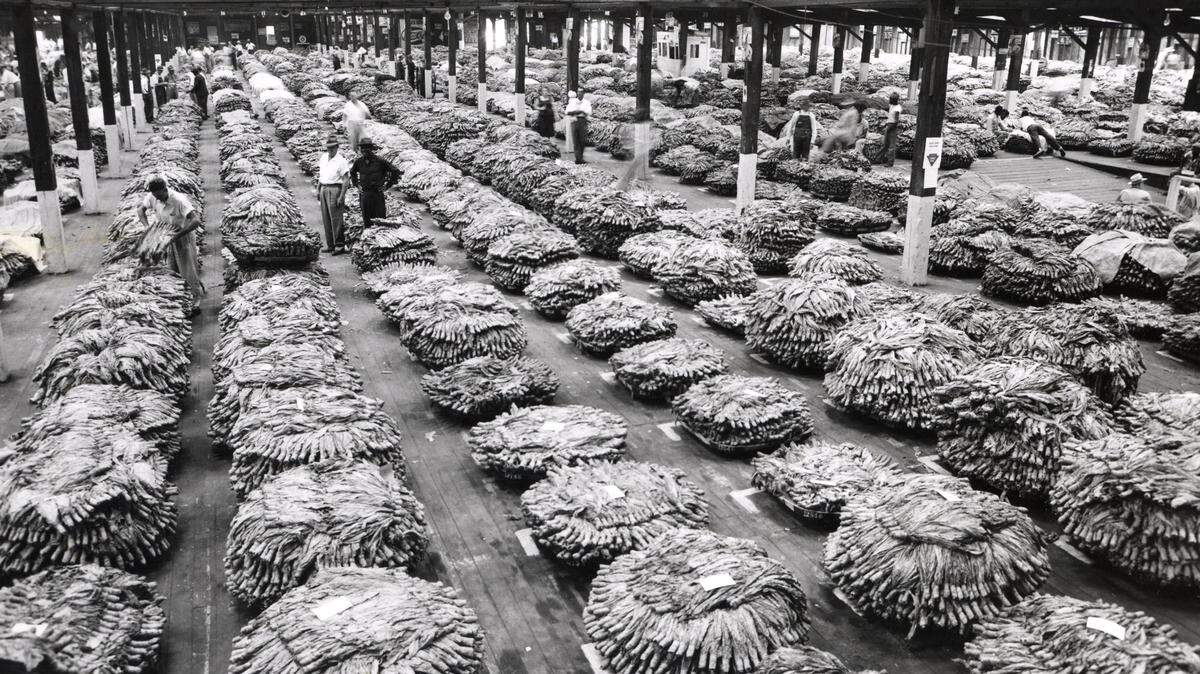
North Carolina’s crop: More than 400 years of the Tar Heel State’s tobacco history
READ MORE
Big Tobacco’s Big Decline
After more than four centuries of ubiquity and profits, North Carolina’s tobacco production bottomed out in 2020 to a level not seen in nearly 100 years. Now, the state is down to about 1,300 tobacco farms, and many growers say this could be the year that pushes them out of the business, too. How are current — and former — tobacco farmers reacting?
Expand All
1585
At the request of Sir Walter Raleigh, English explorer Ralph Lane makes the first attempt to establish an English colony at Roanoke Island in what is now Dare County, N.C. The colony fails, but when Lane and the others are rescued and brought back to England in 1586, they have taken up using snuff and pipe-smoking tobacco, learned from Native Americans who had used the native plant in religious ceremonies and for medical purposes since at least 6000 BC. Europeans were introduced to tobacco by Christopher Columbus in 1492 after natives in the Bahamas gave him some of the dried leaves.)
1663
King Charles of England grants the region called Carolina to eight of his supporters called Lords Proprietors. Tobacco becomes a major export crop from the region to England. Farmers in what will become the colony of North Carolina grow some tobacco, but large plantations are rare and slave labor is not yet as widely used in other areas further south.
1700s
This became known as “The Age of Snuff.” Cigarettes are mostly unknown outside of Spain, but North Carolina tobacco is used for snuff and smoked in pipes. Because planters believe that it has to be grown on “virgin soil,” it’s raised mostly in the Eastern part of the colony.
Early 1800s
Josephus Daniels, then editor of the Wilson Advance, tells farmers in his editorials they should all be planting a few acres of tobacco on their farms as a hedge against unreliable cotton prices. David Whichard, editor of the Greenville Daily Reflector, writes that local farmers who fail to plant tobacco are personally to blame for the region’s sluggish economy.
1839
An enslaved man named Stephen working on the Caswell County farm of Abisha and Elisha Slade falls asleep while watching over a wood fire in a tobacco curing barn. He restarted the fire using coal, which burns hotter than wood, and the surge of heat turned the tobacco leaves bright yellow. The Slades perfected the process in ensuing years and its use spread, resulting in the flue-cured “bright leaf” whose finished quality compensated for relatively poor soils in Piedmont and Eastern North Carolina.
1858
Robert Morris and his son open the first tobacco production facility, making “The Best Flavored Spanish Smoking Tobacco,” at his Durham plant. He sells the business to John Ruffin Green, who adopts a bull as a trademark and changes the brand name to “Genuine Durham Smoking Tobacco,” which under the later ownership of the William T. Blackwell Co. becomes “Bull Durham.” Soldiers camped in the area during the Civil War send requests for the tobacco from all over the country after the conflict ends and they return home.
1865
Washington Duke returns to his family farm a few miles outside Durham after the Civil War and, finding a stash of tobacco that hasn’t been confiscated, hitches two blind mules to a busted wagon and travels the countryside to sell the leaf to get money to feed his family. Finding a market, he returns home to start growing tobacco and drying it for smoking. In 1866, the Dukes produce 15,000 pounds of “Pro Bono Publico.” Duke soon starts buying tobacco from other farmers.
1874
Washington Duke moves his manufacturing plant to Durham to take advantage of its proximity to the new railroad and a tobacco sales warehouse.
1875
R.J. Reynolds Tobacco Company is founded in the town of Winston. Richard Joshua Reynolds, the son of a tobacco farmer, manufacturer and merchant, makes 150,000 pounds of “Southern flat plug” chewing tobacco his first year, and more than 1 million pounds by the early 1890s.
1881
The Dukes begin manufacturing cigarettes, hiring workers who perform the task by hand, the fastest turning out four cigarettes per minute. Until now, the Dukes sold tobacco to consumers who rolled their own.
1884
The Dukes invest in a cigarette-rolling machine that’s glitchy but, when it works, can do the work of 48 hand-rollers. One of Washington Duke’s sons, James Buchanan Duke goes to New York to establish a branch of the business there. W. Duke, Sons and Company, along with four competitors, are now making 90% of all the cigarettes in the U.S.
1890
W. Duke, Sons and Company merges with its four main competitors, creating American Tobacco Company, the largest tobacco manufacturer in the world, with James B. Duke at the helm.
1899
RJR becomes affiliated with American Tobacco Company, though Reynolds resents Duke’s control.
1911
The U.S. Supreme Court rules that the structure of American Tobacco violates antitrust laws, and the company breaks into four new companies. They are American Tobacco, Liggett and Myers, P. Lorillard and R.J. Reynolds. Now free from American Tobacco, Reynolds introduces the Camel cigarette, a blend of flue-cured and Burley tobacco with very little Turkish leaf, making it the first “truly American cigarette.”
1913
RJR introduces the 20-cigarette pack. Two years later it comes out with the 10-pack carton. Later Reynolds will be the first to package cigarettes in a sealed cellophane package to preserve freshness. In five more years, RJR will own more than 120 buildings for the production of tobacco and the manufacture of cigarettes in downtown Winston, which had merged with the nearby town of Salem.
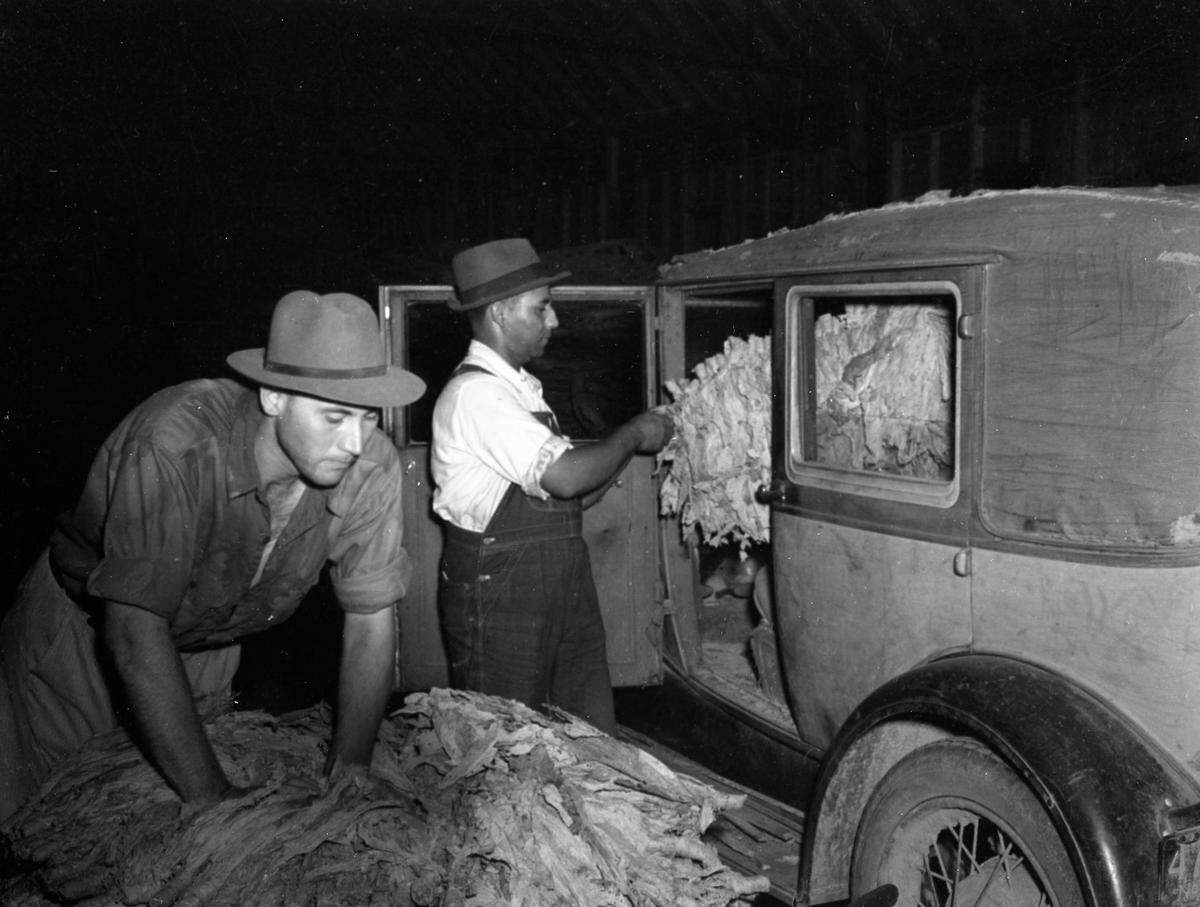
1963
Cigarette use in the United States peaks, with more than 40% of the adult population smoking. Per capita usage amounts to 4,345 cigarettes per U.S. adult, enough for every person over age 18 to have half a pack a day. The growth in use is attributed to the mass production of cigarettes; the mildness, packaging, addictiveness and convenience of the product; glamorization of smoking in movies and on TV, and persuasive advertising campaigns.
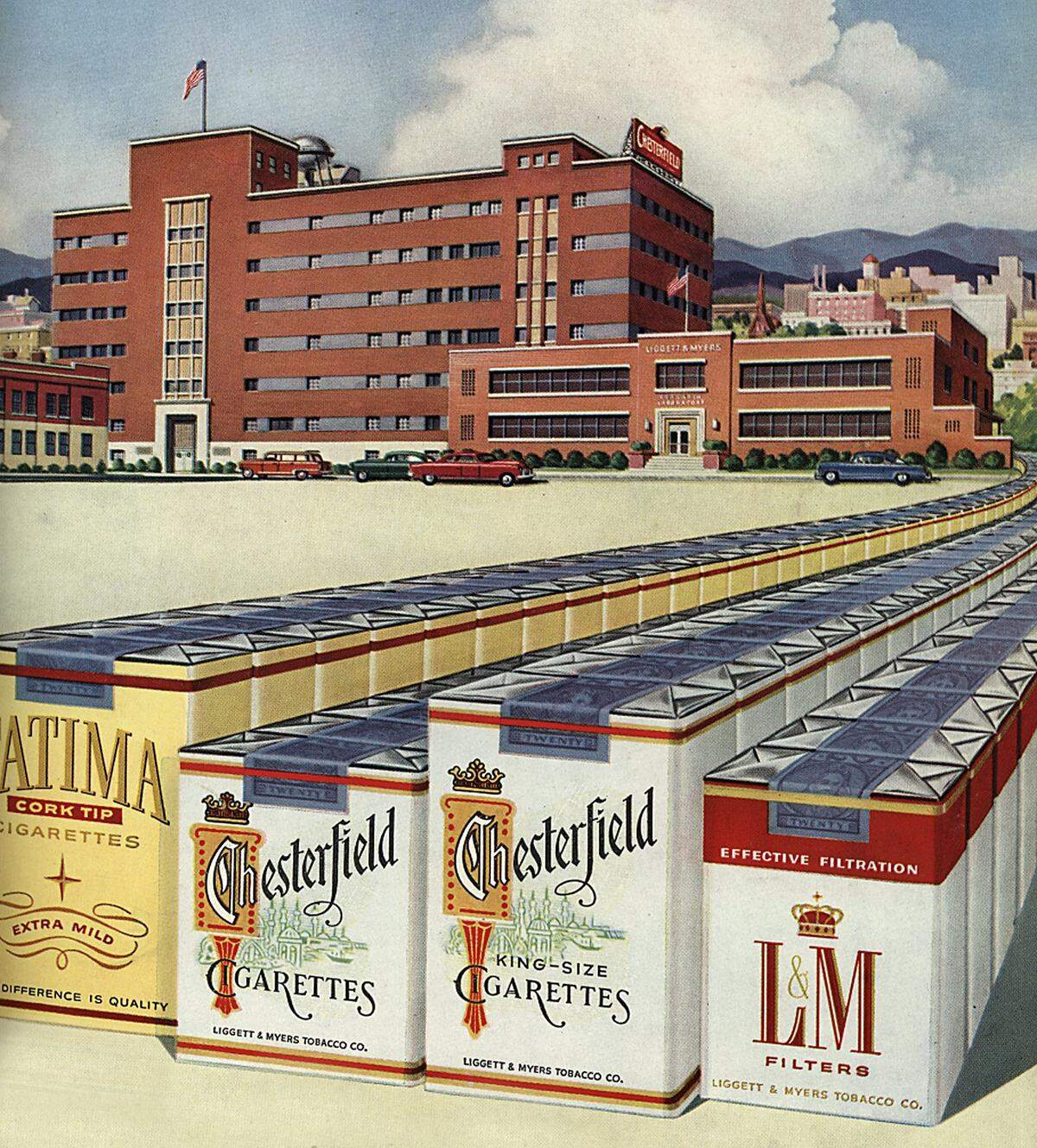
1964
U.S. surgeon General Dr. Luther L. Terry says tobacco causes lung and laryngeal cancer and is the leading cause of bronchitis. The next year, Congress passes the Federal Cigarette Labeling and Advertising Act, and in 1969, the Public Health Cigarette Smoking Act. These require health warnings on cigarette packages, ban cigarette ads on television and radio, and call for annual reports on the health effects of smoking.
1970
President Richard Nixon signs the bill banning cigarette ads from federally regulated airwaves and it is set to take effect the following year. Ads continue to run in print, on billboards and in public transit, and cigarette companies begin investing their advertising budgets in sporting events such as tennis and car and horse racing.
1983
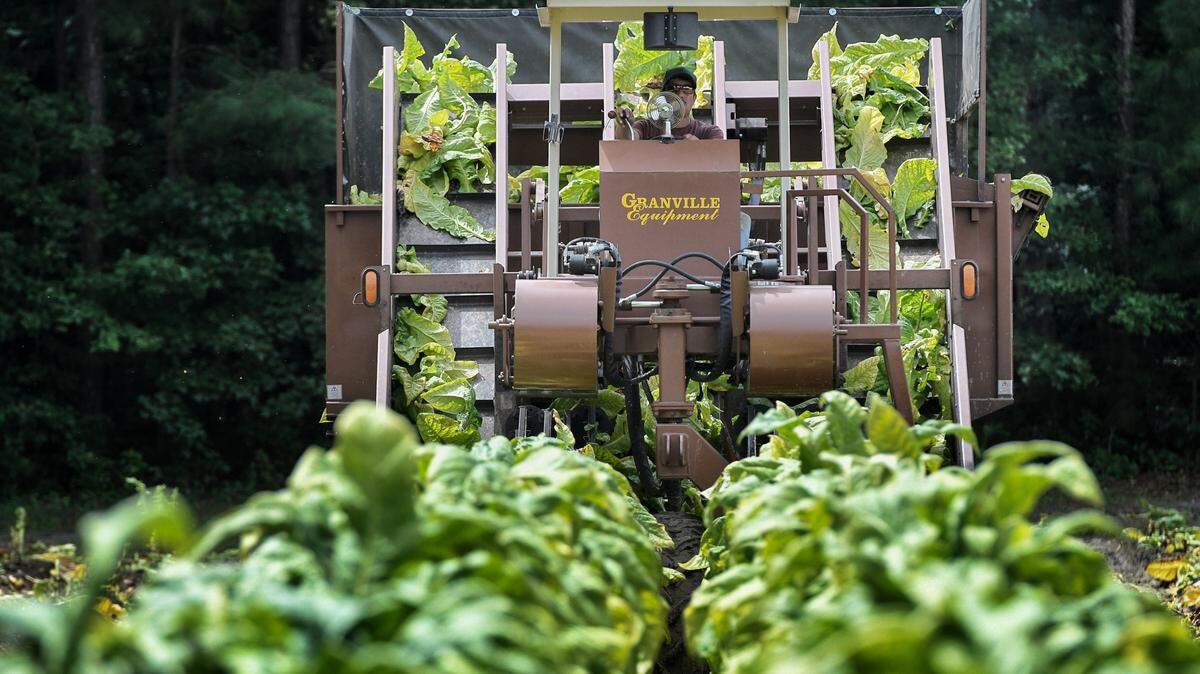
As the increased use of technology changes all types of farming, a group of volunteers creates the Tobacco Farm Life Museum in Kenly, organizing farm tours in one of the state’s first agritourism ventures. The museum and grounds will include a 1920s farmhouse with separate kitchen, a century-old tobacco barn, a one-room schoolhouse and a blacksmith’s shop.
1987
American Tobacco Company stops producing cigarettes in Durham, concentrating its manufacturing in Reidsville. Some of American Tobacco’s buildings will be sold and redeveloped as the American Tobacco Campus.
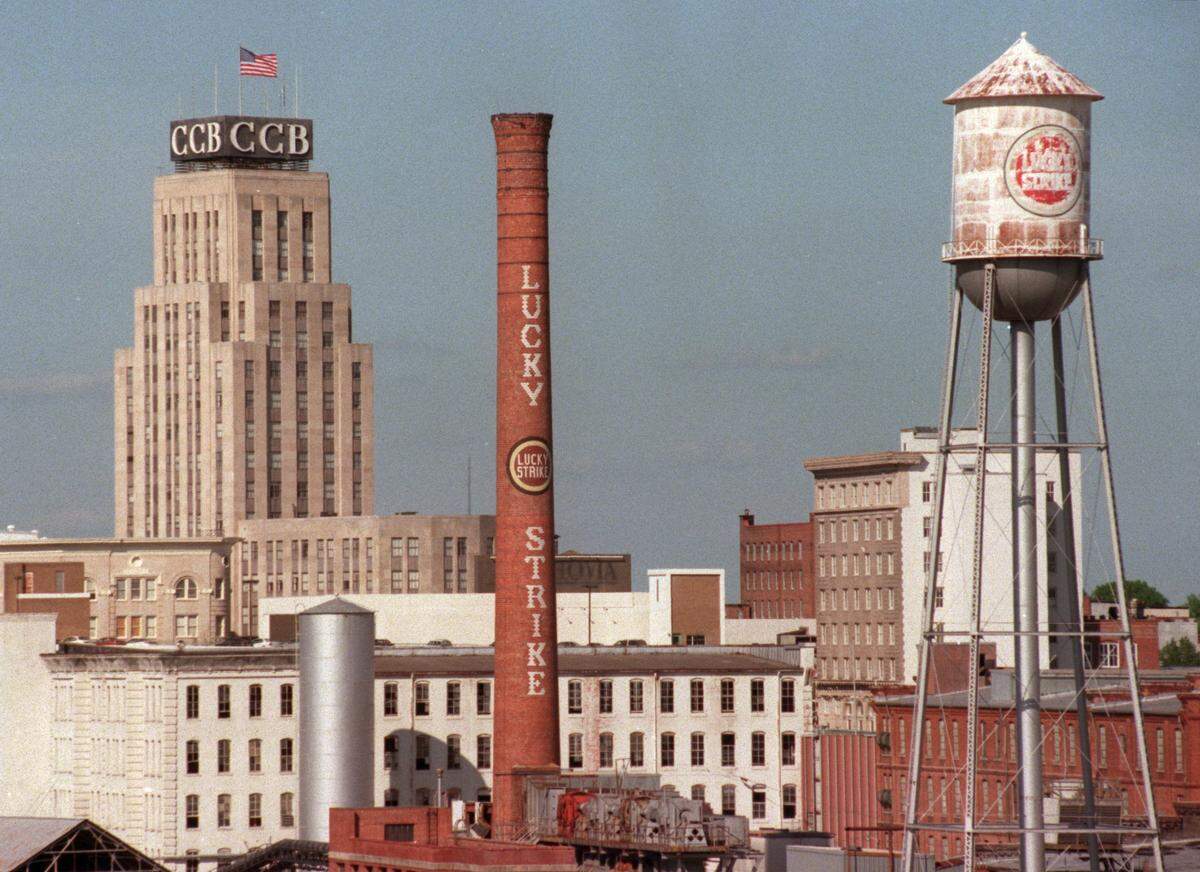
RJR, now part of RJR Nabisco, announces it will move its headquarters to Atlanta, though it will continue to make cigarettes in Winston-Salem. RJR gives its nearly 500,000-square-foot World Headquarters Building in Winston-Salem to Wake Forest University.
1997
Regular smoking among high schoolers peaks at more than 36% of students.
1998
After attorneys-general from 46 states, the District of Columbia and five U.S. territories sue the four largest U.S. tobacco companies over public healthcare costs related to tobacco, they reach the Master Settlement Agreement. The agreement is designed to reduce tobacco use, especially among the young, and requires tobacco companies party to the suit to make annual payments to the states for as long as they sell cigarettes in the U.S. The companies agree to pay a minimum of $206 billion in the first 25 years.
2003
A Chinese pharmacist invents the battery-operated electronic cigarette, which heats and vaporizes a liquid that can contain nicotine, emitting a mist that the user inhales. While the devices don’t burn tobacco, the nicotine they contain comes from tobacco leaves. They’re considered less harmful than conventional cigarettes in some ways, but not safe.
2004
President George W. Bush signs the Fair and Equitable Tobacco Reform Act, known as the tobacco buyout, ending the federal price-support system for tobacco that dates to the Great Depression. Under the buyout, eligible growers and quota holders will receive annual payments from 2005 to 2014, helping them transition to a free market system.
2010
It becomes illegal to smoke in enclosed areas of restaurants and bars in North Carolina under a law passed to reduce the health risks of secondhand smoke. Reynolds announces it will stop making cigarettes in Winston-Salem, consolidating its manufacturing in nearby Tobaccoville. The following year, the company donates about 3,000 pieces of art that once decorated RJR’s buildings to the Arts Council of Winston-Salem. Estimated worth at the time: $700,000.
2014
E-cigarettes become the most-used tobacco product among youth.
2018
President Donald Trump enters a trade dispute with China, the largest purchaser of U.S. and North Carolina tobacco. Chinese imports of tobacco drop from $162 million in 2017 to $4 million, the NC Farm Bureau says. Production is about 252 million pounds in the state.
2019
Cigarette use in the U.S. has dropped by 50% from 1998, when the Master Settlement Agreement caused prices to rise. About 14% of adults, or 34.1 million people over age 18, are regular smokers. (In North Carolina, about 17.4% of adults smoke.) Regular cigarette use by high-school students in the U.S. has dropped to 6%. Anti-smoking forces credit higher cigarette prices, restricted cigarette advertising and marketing, and anti-smoking campaigns.
However, 27.5% of high school students, and 10.5% of middle school students, report using e-cigarettes, prompting the U.S. Surgeon General to call it an epidemic.
As the trade war with China continues, NC tobacco acreage drops to 122,000 acres on about 2,000 farms, the lowest since the 1930s, producing about 235 million pounds.
2020
During the COVID-19 pandemic, calls to a national smoking-cessation hotline dropped by 27% from the previous year. The Federal Trade Commission also reported that cigarette sales increased in 2020 — the first annual increase in 20 years — though smoking increases the risk of serious illness from COVID-19. Smokeless tobacco sales also increased that year. Researchers suggest the increases were the result of stress, anxiety, depression and isolation resulting from the pandemic.
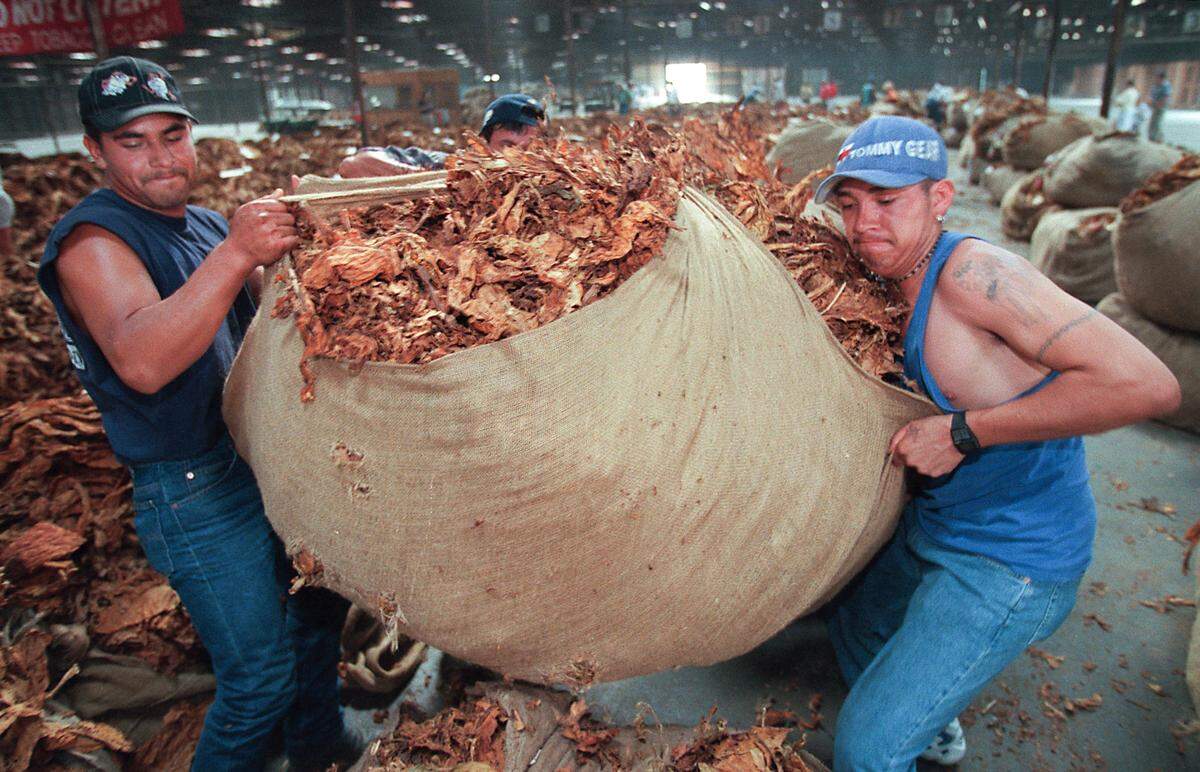
The U.S. and China reach a new trade agreement, and China resumes buying some U.S. tobacco, but is now also purchasing from Brazil and other countries where production costs — and prices — are lower. Production in North Carolina bottoms out at under 179 million pounds.
2021
Tobacco production rebounds some as China increases its purchases. North Carolina output is back to 2018 levels at 252 million pounds.
2022
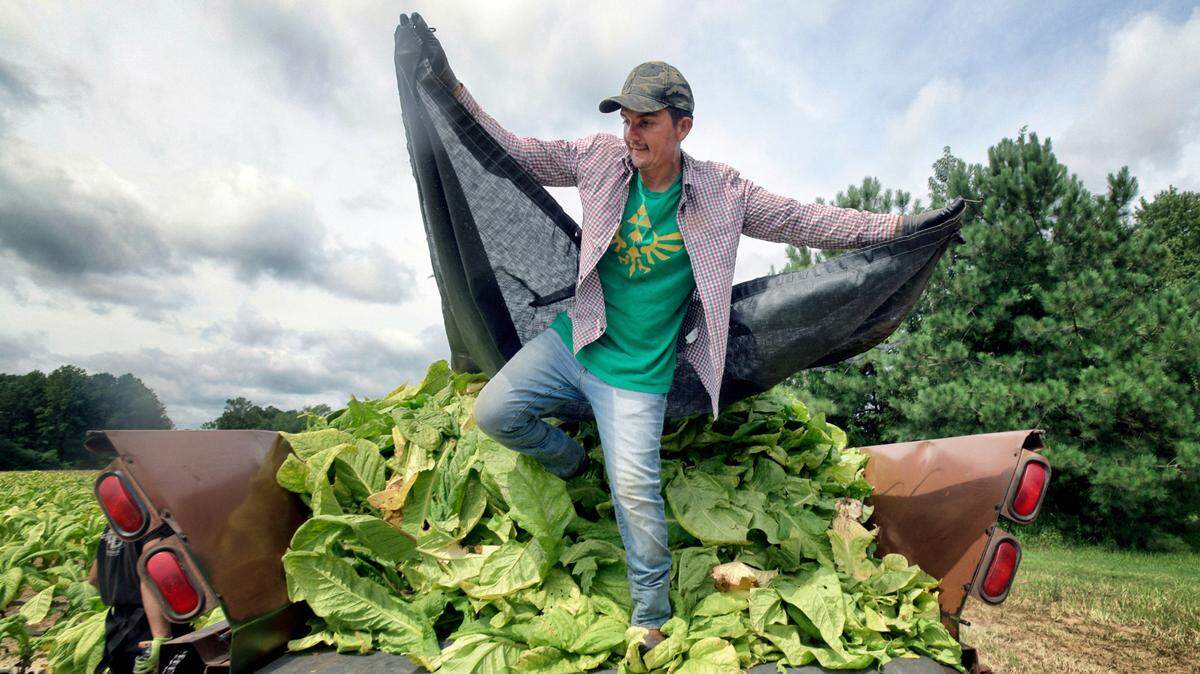
North Carolina is down to about 1,300 tobacco farms. Going into spring, tobacco companies say they may offer a dime more per pound at harvest time, but production costs are soaring in part because of pandemic-induced supply-chain problems, leaving many tobacco farmers wondering if this will be their last year growing the “golden leaf.”
Read next: Tobacco money helped build these NC cities and organizations and is still at work today
News & Observer readers: Click here to continue.
Durham Herald-Sun readers: Click here to continue.
Charlotte Observer readers: Click here to continue.
This story was originally published February 27, 2022 at 6:00 AM with the headline "North Carolina’s crop: More than 400 years of the Tar Heel State’s tobacco history."


.JPG)