
‘Death knell of democracy’: A dangerous Supreme Court case, with NC at the center
Checks and balances matter.
In North Carolina, we know this, because our lives would look very different without them. Constitutional guardrails like judicial review and the governor’s veto power have spared us the worst of the General Assembly’s attempts to disenfranchise voters and tilt elections unfairly in their favor.
But what if those guardrails were no longer there to protect us? In the coming months, the U.S. Supreme Court will hear a case put forth by North Carolina Republican lawmakers that weighs that very question.
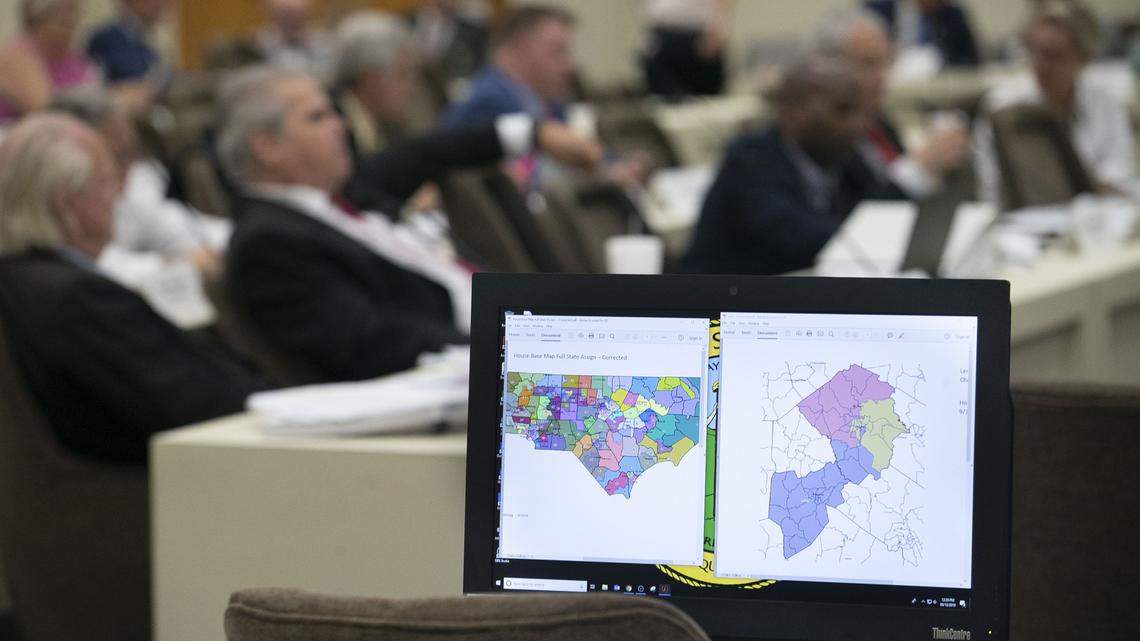
The case, known as Moore v. Harper, is based on a fringe legal concept known as the independent state legislature theory. It’s a direct appeal of the North Carolina Supreme Court’s decision to strike down unconstitutionally gerrymandered maps drawn by the Republican legislature earlier this year.
The GOP, infuriated by the decision, has taken its case to the nation’s highest court — which could now deliver a chaos-inducing, precedent-shattering blow to democracy as we know it.
What’s their argument?
The crux of the independent state legislature theory is the idea that the Elections Clause of the U.S. Constitution grants state legislatures exclusive authority over the administration of federal elections.
According to its proponents, state legislators should have unchecked power over congressional redistricting and election law — even when it violates their own state constitutions. State courts would no longer be able to declare a legislature’s actions unconstitutional, nor would a governor be able to veto them, at least in the context of federal elections.
“We talk about the Elections Clause, and it gets complicated. But it’s really about, is there continuity in government? Are there checks and balances? Do state constitutions mean something?” Allison Riggs, co-executive director of the Southern Coalition for Social Justice and lead counsel in the case, told me.
The theory contradicts more than 200 years of existing Supreme Court precedent. A 5-4 majority of conservative justices ruled just three years ago in Rucho v. Common Cause, another North Carolina case argued by Riggs, that state courts can decide questions of partisan gerrymandering in accordance with state constitutions, even if federal courts can’t.
.JPG "RAL_010522-REDISTRICTING-TRIAL-TEL-TEL04 (1).JPG")
While precedent may not carry as much weight these days, what should matter is that the idea of an “independent state legislature” is patently antithetical to the principle of separation of powers. We do, after all, have three branches of government for a reason. State legislatures themselves were created by state constitutions, and, as a result, they’re bound to constitutional constraints on their power.
“The constitution really needs to be centered in how we talk about this case,” Riggs said. “Because the North Carolina General Assembly doesn’t exist but for the North Carolina constitution, and they want to treat it like a piece of paper that they can just toss out. But it matters.”
‘Death knell of democracy’
North Carolina, much like the rest of the country, has been a hotbed in recent years for the erosion of democratic norms — but what Republicans are now asking of the Supreme Court would amount to much more than that. The consequences would be felt nationwide.
“If five Supreme Court justices endorsed some version of that doctrine, then I really think that’s a sort of death knell of democracy,” Asher Hildebrand, a Duke University professor and former chief of staff to longtime Rep. David Price, said. “And I don’t think that’s too strong a word.”
The North Carolina Republican Party and the Republican National Committee, in an amicus brief, dismissed such concerns as a “cynical, pejorative smear” from “self-anointed constitutional law experts” and “armchair Court watchers.”
But the court’s ruling could essentially greenlight voter suppression in federal elections, edging us closer to a system of minority rule. State legislators alone could determine who can vote and whose vote will count through laws that curb access to the polls. Red and blue states alike could gerrymander maps without consequence, limiting voters’ ability to choose who represents them in Congress.
And state courts would be unable to stop it, as they have in North Carolina in the past. State judges could no longer compel legislators to draw fair maps, nor would they be able to weigh in on other issues, like mail-in voting deadlines or the state’s voter ID law.
“You could certainly at that point see legislators being allowed to restrict voting in any way they see fit without courts getting to weigh in on whether those infringe on people’s constitutional rights,” Noah Bookbinder, president of Citizens for Responsibility and Ethics in Washington, said. “I think this is incredibly dangerous to the continued viability of democracy.”
.jpg "AP22012016494196 (1).jpg")
Some experts fear that such an expansion of legislative power could potentially allow lawmakers to appoint their own presidential electors, or simply throw out election results they don’t like. J. Michael Luttig, a retired Republican judge and former legal adviser to Vice President Mike Pence, wrote in a CNN op-ed that the theory is the “Republican blueprint to steal the 2024 election.”
“I hope we’re not going to be in a catastrophic situation where in the 2024 election, there’s going to be a very serious effort to overturn the results of an election and one with a significant chance of success,” Bookbinder said. “But there’s every reason to think that that’s a real possibility. I find that deeply frightening.”
A familiar North Carolina pattern
The independent state legislature theory has become popular with conservatives across the country, but there’s a twisted irony in the fact that this case originated in North Carolina. Moore v. Harper does not exist in a vacuum — it is a product of a legislature that has earned a reputation for subverting democracy.
Over the past decade, GOP lawmakers have imposed severe voting restrictions, including photo ID requirements and cuts to early voting, specifically targeted at Black voters. When that law was overturned in 2016, the court wrote that no legislature “has ever done so much, so fast, to restrict access to the franchise.”
North Carolina Republicans also seized power from the governor in what was widely dubbed a “legislative coup.” State and federal courts have struck down our election maps again and again due to unconstitutional racial and partisan gerrymandering — a practice that Republicans did not invent but have certainly perfected.
More than anything, however, Moore v. Harper is a troubling escalation of the legislature’s war on the courts, which it has long sought to both undermine and influence.
Lawmakers have eliminated North Carolina’s system of judicial public financing, allowing millions of outside dollars to pour into state judicial races. They’ve reinstated partisan judicial elections, aggressively politicizing a branch of government that was always meant to be apolitical. They’ve even tried to change the makeup of the courts and give themselves more control over judicial appointments.
Judges who attempt to exercise their constitutional check on the legislature’s power are smeared as “unhinged” and “lawless”. The state Supreme Court’s Democratic majority has been cast as a chief political enemy, as Republicans often demand the recusal of justices whose impartiality they question and even float the idea of impeachment.
“I think the modern period, and I define that really since 2010, has really been characterized by just this entrenched conflict over political rights, over democratic participation,” Hildebrand said. “That has played out in the courts, that has played out in the conflict between the General Assembly and the governor. And that is now playing out in the U.S. Supreme Court as well.”
What matters most
Once you get past the legal jargon, this case isn’t complicated at all. What’s in jeopardy are the things you learn in grade school: that there are three, coequal branches of government, each one meant to serve as a check on the others. One organizer told me, wryly, that “everything about this case goes against what we learned in Schoolhouse Rock.”
“What’s at stake is really our American notion of what it means to have a responsive and participatory democracy,” Kathay Feng, national redistricting director for Common Cause, said. “The question is, how important is that to us? Because this one theory would threaten to dismantle those fundamental principles.”
Common Cause North Carolina and the Southern Coalition for Social Justice have launched a statewide tour — holding town halls in all 100 counties — to build a movement against the case. Riggs, who will argue the case before the Supreme Court this fall, doesn’t want people to feel defeated. She believes the case is winnable.
“What I need folks to do, if they believe in checks and balances and a government that has the ability to be responsive to people, is to keep turning out and voting and just talking about it,” Riggs told me. “The country needs this radical theory to go away.”
This story was originally published September 16, 2022 at 6:00 AM with the headline "‘Death knell of democracy’: A dangerous Supreme Court case, with NC at the center."
