How are CBD and THC different? What’s legal in NC? Answers to common questions
READ MORE
NC’s state of mind on medical marijuana
A poll earlier this month of North Carolina voters found 68% support legalizing medical marijuana while 19% don’t. Yet, bipartisan momentum for 2021’s medical marijuana bill fizzled in the state legislature. Will lawmakers revisit the topic in 2022? While the state awaits a decision, did you know medical marijuana soon will be available in one small pocket of North Carolina? And legal or otherwise, do you know the benefits and risks of THC, THC delta-8 and CBD?
Expand All
NC’s medical marijuana bill didn’t advance in 2021. Here’s what to expect this year.
How are CBD and THC different? What’s legal in NC? Answers to common questions

Medical marijuana is about to be openly sold in NC, but only in one place
Should medical marijuana be legal in NC? Tell us what you think in this poll.
Why does everyone associate ’420’ with marijuana on April 20? Here’s what we learned.
With the status of marijuana legalization varying widely from state to state, and with new cannabis-derived products proliferating, it can be confusing to figure out what is legal and what isn’t, and what is safe to consume.
In North Carolina, marijuana possession, even if only for personal use, remains illegal. Marijuana is a schedule VI substance under state law, and the penalty ranges — depending on the amount of weed — from a maximum fine of $200 and no jail time, to up to $1,000 in fines and three to eight months of jail time, according to the National Organization for the Reform of Marijuana Laws.
If it is passed and signed into law, Senate Bill 711 could make it legal for doctors to prescribe medical marijuana to treat certain illnesses like cancer, post-traumatic stress disorder, Crohn’s disease, epilepsy, and some others. But that legislation is still in limbo; it’s unclear how much support the bill will ultimately garner if it is considered again this year, and what parameters lawmakers would settle on if they do legalize weed for medicinal use.
In the meantime, it isn’t outright illegal to buy and use certain cannabis-derived products. Walk into any CBD shop or dispensary — more and more are popping up throughout the state — and you can find an array of items ranging from edibles and pre-rolls to CBD oils and creams.
If you’re unfamiliar with these products, you might be wondering why stores sell some but not others, and what the difference is between products containing CBD versus THC, the psychoactive ingredient found in marijuana. Here’s a rundown of what you need to know.
What’s the difference between CBD and THC?
Two of the primary naturally occurring compounds found in the plant cannabis sativa are CBD, or cannabidiol, and THC, or tetrahydrocannabinol. Both are examples of cannabinoids, a group of chemical substances found in cannabis. According to Leafly, a popular website for buying and learning about cannabis, the way CBD engages with receptors in the brain means it isn’t intoxicating, or won’t make you feel high.
THC, on the other hand, is the main psychoactive component found in cannabis plants, and is the reason why smoking or using marijuana produces the feelings of euphoria and relaxation that are associated with “getting high.”
Here, it’s helpful to clarify that while people sometimes use the terms cannabis and marijuana interchangeably, they’re not the same thing. The National Center for Complementary and Integrative Health, part of the National Institutes of Health, explains that marijuana is derived from cannabis sativa. Hemp, a related plant, is also derived from cannabis sativa.
The main difference between marijuana and hemp is the concentration of CBD and THC in each. Marijuana has a higher concentration of THC, which makes it intoxicating, while hemp has more CBD and less THC — very little in fact, less than 1%.
What is delta-8 THC?
In the last few years, a new variation of THC has become extremely popular, and can now be found in many states, including North Carolina.
Delta-8 THC is another psychoactive substance derived from cannabis, and is distinguished from delta-9 THC, the main form of THC found in cannabis that is responsible for producing feelings of intoxication. The main difference between the two is a slight difference in their chemical structure, which means that delta-8 binds to receptors in the brain differently than delta-9, and is therefore believed to be less potent, according to Leafly.
People who use delta-8 have anecdotally reported that delta-8 produces a lighter, or less intense high. The U.S. Cannabis Council, a coalition of organizations advocating for legalization, reports that delta-8 has been estimated to be between 66% and 75% as potent as delta-9, but estimates vary. And organizations like Leafly have said that more research is needed to determine how delta-8 interacts with the body.
What is legal and available in NC?
The legal status of products containing CBD and delta-8 THC is murky and unclear.
In 2018, federal lawmakers legalized hemp production under the oversight of state or federal licensing programs, and removed hemp from the Drug Enforcement Administration’s list of controlled substances, defining it as any cannabis plants, as well as derivatives, extracts, and cannabinoids, that have a delta-9 THC concentration of less than 0.3%.
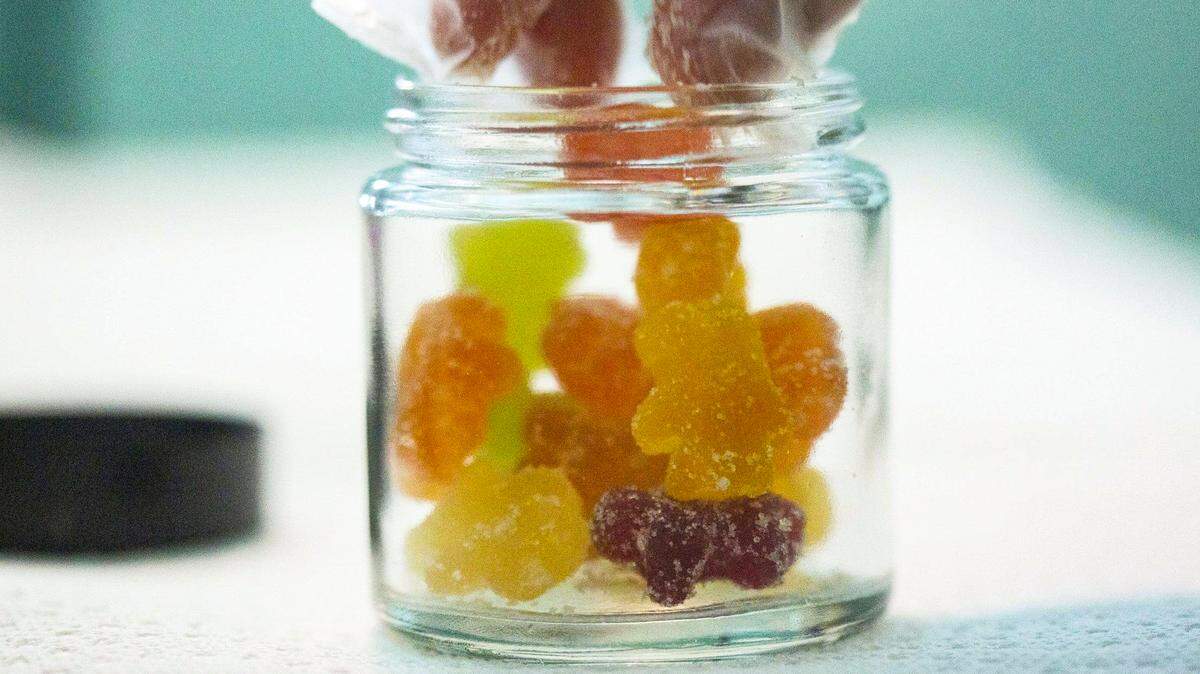
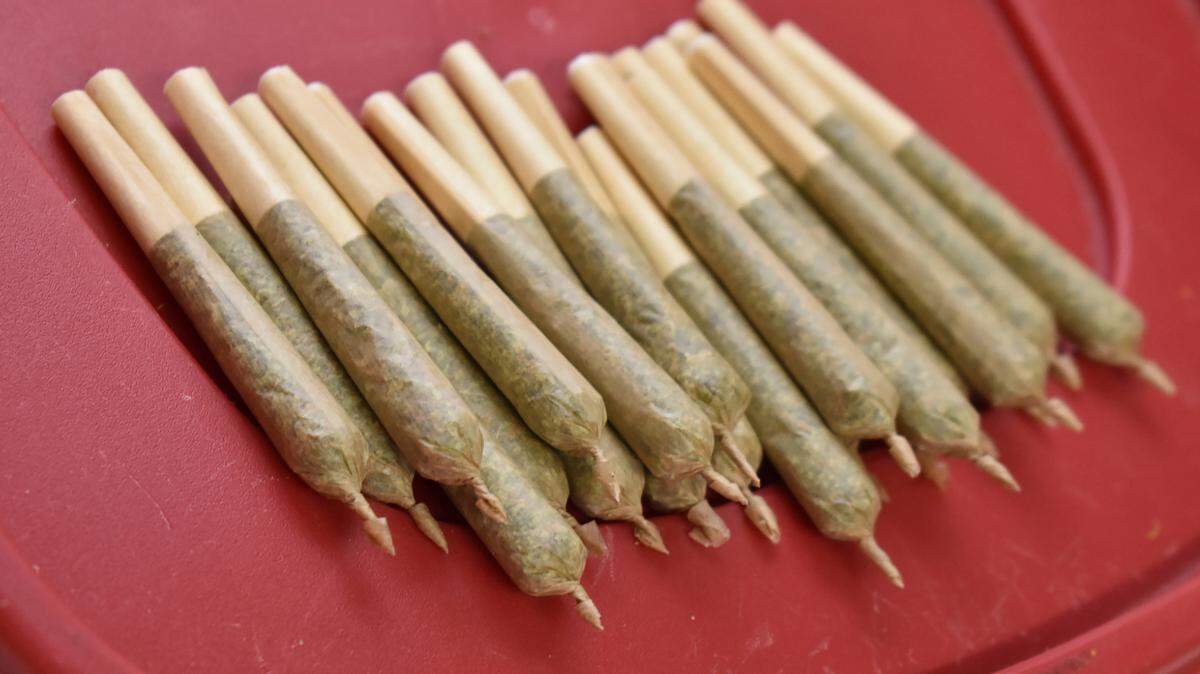
Both CBD, which is typically derived from hemp, and delta-8, which can be derived from hemp, are available at dispensaries and smoke shops in North Carolina. Products range from CBD oils and creams to delta-8 gummies and other edibles, and pre-rolled joints.
CBD products have become increasingly common across the country — except in states that outlaw them specifically — since hemp was removed as a controlled substance in 2018. Delta-8 products have also become increasingly common. Some dispensary owners who sell CBD and delta-8 products point to the legalization of products derived from hemp to say that what they are selling isn’t illegal under federal law.
But at both the federal level and in North Carolina, it’s hard to know with certainty if the products being sold are legal, in part because of other complicating factors, including whether some delta-8 products could be considered “synthetic” THC, which is illegal, or whether some delta-8 products have more THC than is advertised and legally permissible.
The lack of enforcement is also a factor here, according to Phil Dixon, an attorney and assistant professor at the UNC School of Government. In September, Dixon wrote in a UNC SOG blog post that enforcement seemed to be “largely nonexistent” in North Carolina, given the number of stores selling CBD and delta-8 products, and that it was “conceivable that the status quo on CBD and things like delta-8 continues for some time.”
What are the health benefits and risks?
According to the National Center for Complementary and Integrative Health, drugs that contain cannabinoids (of which CBD is one type) may be able to help treat certain conditions including epilepsy, nausea related to chemotherapy, and loss of appetite or weight loss that is associated with HIV/AIDS.
The NCCIH also says there is some evidence showing that cannabis and the cannabinoids it contains can help with symptoms of chronic pain and multiple sclerosis.
Amid the proliferation of delta-8 products, the Food and Drug Administration has said that consumers should remember that the products haven’t been evaluated by the FDA, and warned about products being advertised as having therapeutic or medical benefits that haven’t been verified by the agency.
The FDA also warns that some products may have other chemicals or contaminants that are used when manufacturers synthesize delta-8 from hemp-derived CBD, since the amount of delta-8 that is naturally occurring in hemp is low.
For more North Carolina government and politics news, listen to the Under the Dome politics podcast from The News & Observer and the NC Insider. You can find it at https://campsite.bio/underthedome or wherever you get your podcasts.
This story was originally published April 20, 2022 at 6:00 AM with the headline "How are CBD and THC different? What’s legal in NC? Answers to common questions."