Here’s what we will — and won’t — know on Election Night in North Carolina’s midterms
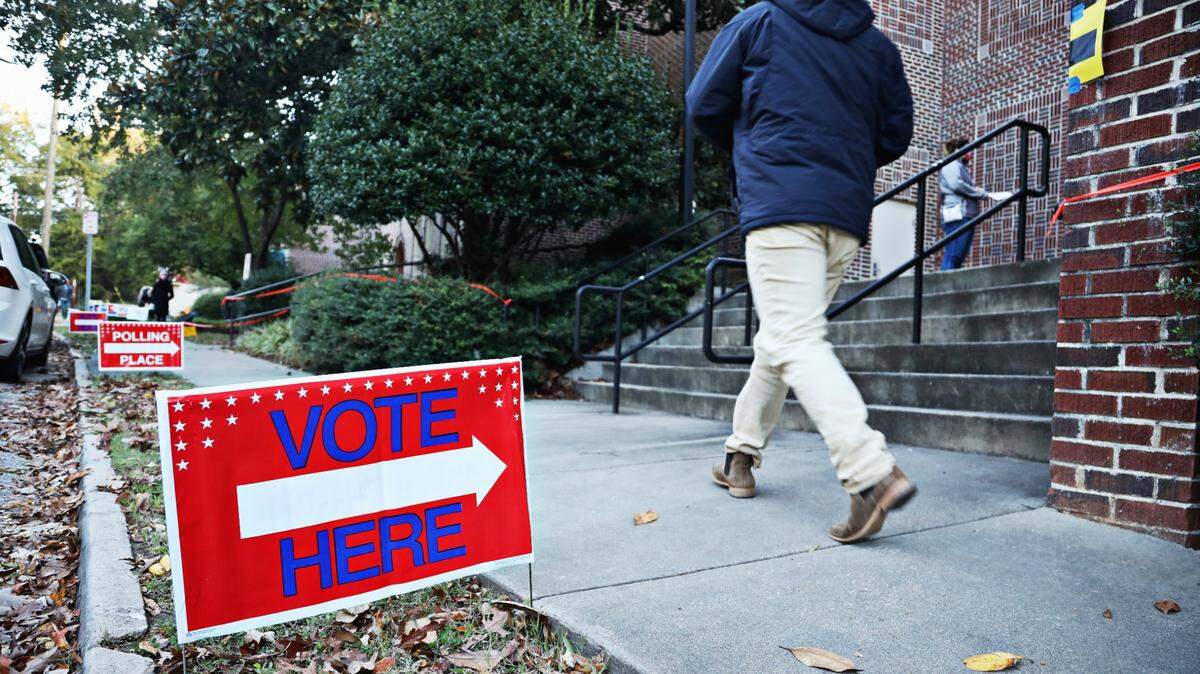
North Carolina won’t declare the official winners on Election Night this year.
That’s not new. Nor is it part of some grand conspiracy. It’s simply the way things work.
There are hundreds of contests on the ballot this year, from multi-million-dollar congressional campaigns to highly local races for judges and school boards. There will of course be a general sense, in many races, of who likely won. But other races could be too competitive to call. Officials may need to finish counting mail-in ballots to resolve any close races.
Even if no races seem too close to call, there will still be a gap between election night and the day the winners are officially declared. That allows any complaints to come to light and be investigated, and for audits to be conducted. As long as everything appears to be in order, the winners will be officially certified during a process called “canvass” 10 days after the election.
But even though similar routines have been happening here and around the country for years, in 2020 the lack of an official winner on election night led to an explosion of conspiracy theories. Most were pushed by Republicans, including the president at the time, Donald Trump, who lost the election but tried to remain in office anyway.
And while Trump is now out of office and is not on the ballot this year, a new round of conspiracy theories is almost guaranteed.
So why do people continue to believe hoaxes about votes being changed by Italian satellites, or Chinese thermostats, or a dead South American dictator? There are probably many reasons. But part of it could be the fact that elections can be complicated and confusing, even for people who aren’t normally inclined to fall for misinformation.
Keep reading for answers to questions about those complicated procedures, including from News & Observer readers, and for the facts about election-related claims or rumors you may have heard.
And for people who want even more information, the N.C. State Board of Elections website, www.ncsbe.gov, has a page specifically dedicated to answering questions and addressing misconceptions about how voting works.
Why aren’t the results official on election night?
There are several reasons, the most important of which is that not all votes are counted by then.
Mail-in ballots can only be counted if they’re put in the mail on or before Election Day. However, to give the mail time to deliver those ballots, the state will continue accepting ballots until a few days after the election. This year, with the election on Nov. 8, the mail cutoff is Nov. 14.
Republican Party leaders sued to get the deadline mail-in deadline shortened. But they lost in court, The N&O reported. A judge sided with state elections officials, who said the GOP proposal would disenfranchise thousands of legitimate voters.
Beyond needing a few extra days to collect all the mail-in votes, the state also needs time to investigate “provisional ballots.” Those are cast when someone shows up to vote but their eligibility is called into question. Instead of being stopped from voting entirely, those people are allowed to cast a provisional ballot, which won’t be counted unless further investigation shows they weren’t breaking the rules.
Finally, declaring a winner also takes time so that officials can audit the results and make sure there were no errors in the count, serious allegations of fraud or any other reasons to hold off.
Why do the results keep changing all night?
Once polls close, each county will release the results of the ballots cast during early voting. Historically in North Carolina, the people who vote early tend to lean more Democratic, and the people who vote on Election Day itself tend to lean more Republican. So as counties start adding their Election Day results throughout the night, things could appear to move more in favor of Republican candidates.
However, some of the state’s biggest and most liberal counties also tend to be among the last to send in their votes — which could then give the appearance of things swinging back to the left.
Of course, by the time reporters and the general public are watching these numbers move back and forth, all the votes are in and the polling places are closed. It’s not that votes are changing, just that more are getting counted, and some counties move faster than others.
Why do urban counties take longer to report results?
Urban counties have a lot more people. That means more precincts to collect ballots from, more ballots to count and more opportunities for hiccups. Some are run-of-the-mill, like a car carrying ballots to the county election office getting in a wreck, or stuck in a traffic jam.
Others are stranger, like in 2018 when unusually high levels of humidity caused paper ballots to swell up, which then caused machines to take longer to process them. Many counties didn’t see much of a difference, but in Wake County, which had hundreds of thousands of ballots to count, it led to a noticeable delay.
I heard many mail-in ballots don’t get counted
It’s true that voting by mail isn’t risk-free. The Post Office might deliver your ballot too late, or the state might reject it due to an error, like not having witnesses sign the ballot.
However, the number of mail-in ballots that get lost or rejected tends to be exaggerated by people who are either mistaken or have partisan motives for creating distrust in the election.
In 2020, when North Carolinians cast around 1 million ballots by mail, the state rejected 2.4% of those mail ballots, WFAE reported after the election. However, state officials said at the time, nearly all the people whose ballots were rejected were able to get another mail-in ballot, or to go vote in person.
I heard people are stuffing ballot drop boxes
Those don’t exist in North Carolina. So no, that isn’t happening.
I heard Dominion voting machines have problems
The widely debunked conspiracy theories about Dominion from 2020 have since led the company to sue Fox News for $1.6 billion in a defamation lawsuit.
However, even if any of the claims about Dominion were true, it would be irrelevant to North Carolina. They don’t exist here. All 100 counties use voting machines made by either ES&S or Hart InterCivic, not Dominion.
I heard voting machines can be hacked
Anything electronic can be manipulated. North Carolina tries to make things harder on hackers by not connecting its voting machines to the internet.
“All voting systems are certified by the State Board of Elections after undergoing mandatory testing by nationally accredited laboratories,” the elections board says on its website. “... Under state law, voting equipment may not be connected to the internet or use wireless access, limiting the possibility of outside interference.”
I heard North Carolina doesn’t use paper ballots
Every county in the state is legally required to create paper records of how people voted.
Most counties around the state use paper ballots, even though North Carolina isn’t one of the states that requires it. A few counties use touchscreen voting machines that produce what’s essentially a paper receipt. Either way, if there are concerns with the machines, the physical records on paper would still show the real results — thereby ensuring “a backup means of counting the vote,” state law says.
I heard there should be an election audit
There is.
North Carolina has conducted post-election audits for years, long before it became a political talking point in 2020. In fact, everywhere in the country audits its election results except for a few rural states.
Alabama, Maine, Mississippi, New Hampshire and South Dakota are the only states that have no post-election audits, according to the National Conference of State Legislators.
The other 45 states conduct a few different types of audits. North Carolina does what most other states do, in which election officials take a random sample of paper records and compare those to what the computerized count found, to make sure there are no discrepancies. This happens for all elections, not just close ones, and the public is allowed to watch.
I heard dead people are ‘voting’
Conspiracy theories about dead voters rarely claim a true zombie scenario, but instead imply that fraudsters are impersonating dead people to vote in their name.
In reality, the state has ways to guard against this — including by cross-referencing the voter lists with death records from North Carolina and many other states. Not every state shares its death records, so it’s possible North Carolina wouldn’t know if someone from here died in one of those states. The state therefore also automatically un-registers any voter who hasn’t voted in a while.
Some people do still try it, however. That happened twice in 2016.
Out of 4.8 million ballots that North Carolinians cast in 2016, two were from people caught voting in their name and also in the name of a recently deceased family member. Both admitted it to investigators when caught and said they didn’t realize they were breaking the law. Both fraudulent ballots supported Republican candidates, a state audit found. In both cases, the local district attorneys, also Republicans, chose not to charge them with committing a crime.
I heard people are getting bused to the polls
That does happen, and it’s OK. It’s illegal to pay people to vote, but there’s nothing wrong with giving someone a ride. Many churches and other nonprofit groups pay for buses, or coordinate volunteer drivers, to help people go vote.
Some cities also make their buses free to ride on Election Day, and rideshare companies have offered discounts on rides to polling places in the past. Lyft announced a 50% discount on Election Day this year, and Uber will likely announce something similar, the lifestyle website Thrillist reported recently.
This story was originally published November 4, 2022 at 6:00 AM with the headline "Here’s what we will — and won’t — know on Election Night in North Carolina’s midterms."