
First time voting here? Or need a refresher? Here’s how NC elections are different
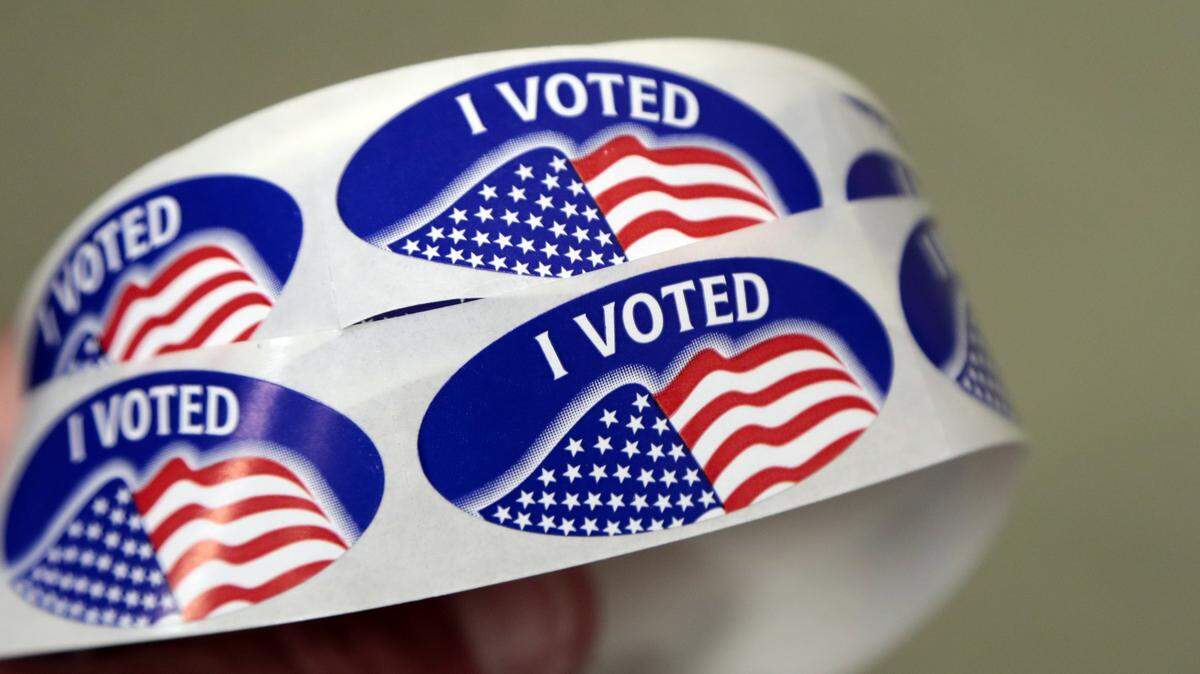
With Election Day upon us, voters may have questions about how our state administers elections.
Especially because elections workers no longer toil in obscurity, ignored by voters. Retired Alamance County Elections Director Kathy Holland said that when she started her career in 1990, elections officials “were essentially off the public radar until the hanging chads year,” referring to the 2000 election recounts between George W. Bush and Al Gore.
With threats increasing against elections workers, Holland said “current elections require very transparent and high level security procedures.”
Polls are open Tuesday from 6:30 a.m. to 7:30 p.m. North Carolinians are voting in races for U.S. Senate, N.C. Supreme Court and General Assembly, and in many local races depending on where they live. You can see all your choices by entering your name at vt.ncsbe.gov/RegLkup and finding your voter information, then clicking on the link under “your sample ballot.”
The elections system is different here than in other states, which can lead to confusion. Here’s what you should know about North Carolina’s process, and what the state’s top elections official says about the 2022 election.
Who’s in charge of North Carolina’s elections system?
Elections administration varies by state. While some states make the secretary of state the top election official, that’s not the case in North Carolina.
Instead, it’s the executive director of the N.C. State Board of Elections, currently Karen Brinson Bell.
The director is appointed by the board, which in turn is appointed by the governor and has a majority from the governor’s party, currently Democrats.
What about at the local level?
There is local elections control as well in the state. County elections boards appointed by the state board run elections locally.
The National Conference of State Legislatures reports that the diversity of processes across the country at the state and local levels is both positive and negative “depending on who is looking, and when.”
Decentralization allows innovation for individual jurisdictions, NCSL reports, but can also lead to mismanagement. “The dispersed responsibility for running elections also makes it extremely difficult, if not impossible, to rig U.S. elections at the national level,” NCSL reported.
Do I need voter ID?
No. But stay tuned for future developments, as a voter ID law is tied up in court.
Can political parties send poll watchers?
Yes, but the officials know who they are ahead of time. Bell said that a list of observers, also called poll watchers, are submitted by political parties in advance of voting. County elections boards approve the lists of observers before they are allowed at polling places.
Are the polls safe?
Threats against election workers increased after former President Donald Trump refused to accept that he lost the 2020 presidential election and his supporters attacked the U.S. Capitol on Jan. 6, 2021 in an attempt to overturn the election.
Bell said that poll workers have received training in deescalation and non-confrontation measures. She said that a guide was created with law enforcement officers from the North Carolina Sheriffs Association and Association of Chiefs of Police.
Holland, the retired election director, said going through that kind of training has made it harder to retain election workers.
Bell said that the chief judge at polling sites can call the police if there is a disruption.
When are votes counted and released?
Mail and early-voting results are released soon after polls close on Election Day, Nov. 8. Those are then followed by precinct results.
Bell said that the precinct results “may take some time, as precinct officials must allow any voter in line at 7:30 p.m. on election night to cast their ballot. The officials then secure the voting materials following the chain of custody procedures before driving the materials and results to the county boards of election,” she said.
Bell went on to explain that when those results arrive at local election board offices from the precincts, the county boards compare results on USB sticks from each tabulator to a printed results tape. They then load the results into tabulation software, which aggregates them with results from other precincts.
“No part of this process is connected to the internet,” Bell said.
Where can I find out more?
The News & Observer’s 2022 NC Voter Guide at newsobserver.com/voter-guide includes links to all our election coverage, including stories and candidate questionnaires for the U.S. Senate, state legislature and local races in North Carolina.
For more North Carolina government and politics news, subscribe to the Under the Dome politics newsletter from The News & Observer and the NC Insider and follow our weekly Under the Dome podcast at campsite.bio/underthedome or wherever you get your podcasts.
This story was originally published October 21, 2022 at 12:41 PM with the headline "First time voting here? Or need a refresher? Here’s how NC elections are different."
.jpg)