‘Trust, but verify’: How NC Republicans will try to bridge the one-vote gap in the House
Galvanized by larger majorities in the General Assembly, North Carolina Republicans are expected to try to pass more bills over the opposition of Gov. Roy Cooper this year.
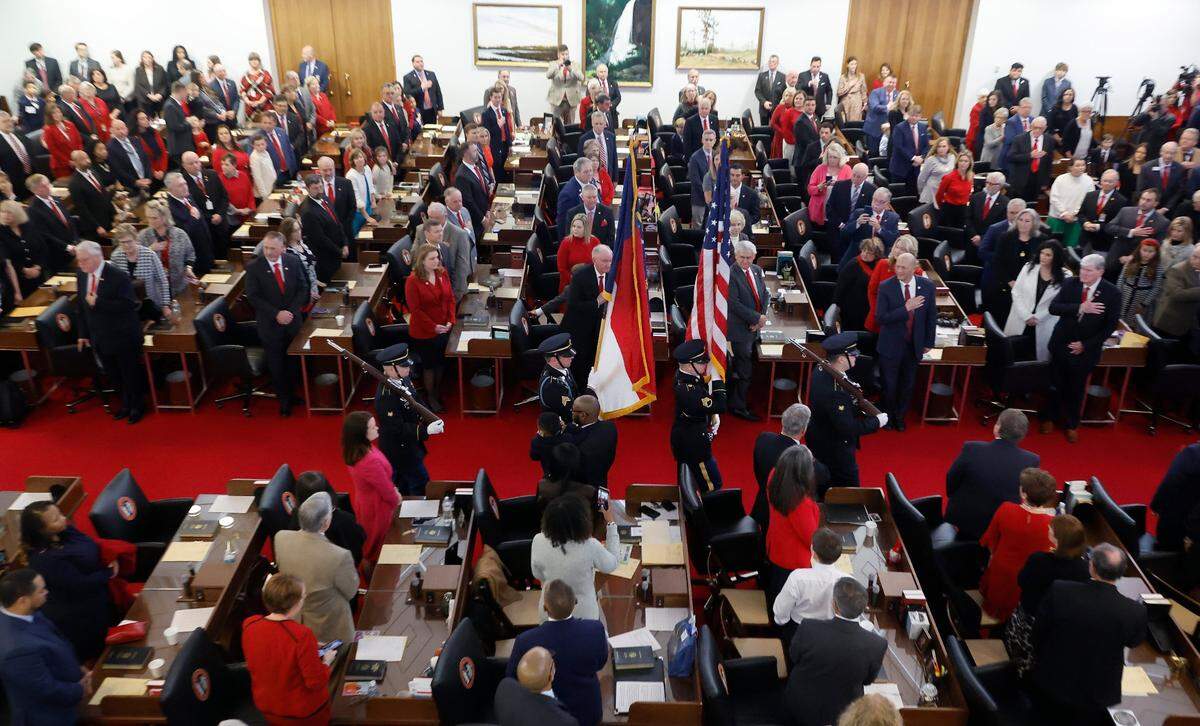
Republicans gained a veto-proof supermajority in the state Senate in last November’s election, ensuring that if all GOP senators vote together, they can pass any legislation they want, even if the Democratic governor vetoes it. In the state House, however, despite a major effort to flip enough Democratic seats, Republicans fell short of their target (72 out of 120 seats, or a three-fifths majority) by one seat.
The slimmest of margins denying the GOP total control over the legislative process means that, either through their votes or absences from the House floor, Democrats who might be inclined to vote with Republicans on certain issues will be crucial in determining if Cooper’s potential vetoes are upheld or bypassed altogether.
“I think really, that’s what the Republicans will do, is try to get as many things passed as they can — probably going back to some of the things that were vetoed by the governor in the last term,” state Rep. Shelly Willingham, a Rocky Mount Democrat, said in an interview.
Depending on the issue, there may be a handful of House Democrats willing to join Republicans in voting for a potential veto override, Willingham said.
That’s happened in previous sessions. The difference is that this year, the margin is just one vote. That will likely mean more vetoes, and more chances for Republicans to try pulling a Democrat or two away from their caucus.
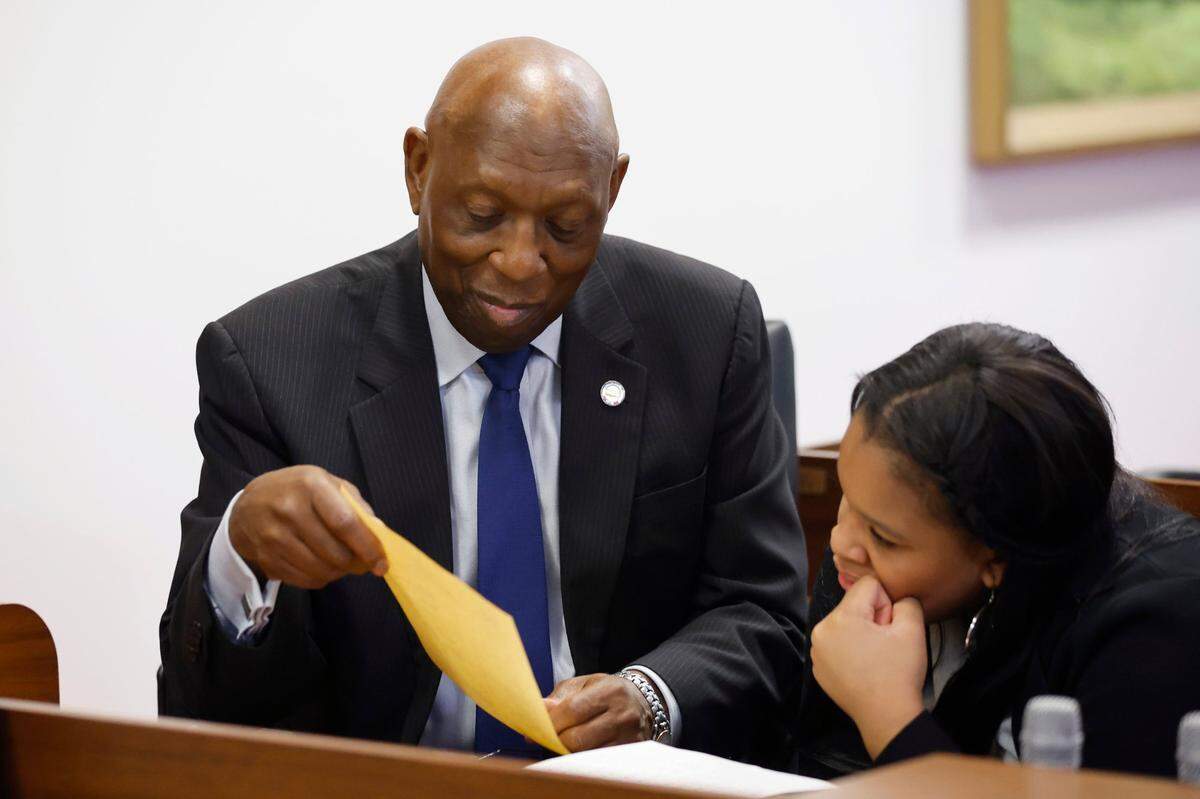
One of those Democrats who isn’t ruling out voting with Republicans to override vetoes on certain issues is Willingham himself. During the 2021-2022 session, among Democrats, Willingham voted the second-highest number of times with Republicans.
Willingham has something in common with most members of the Republican majority: His district covers many rural communities. He represents Edgecombe, Bertie and Martin counties.
“If it’s an issue that will affect my district, and if it’s a positive thing, I’m going to support it, whether it comes from our caucus, or comes from the Republican side,” Willingham said. “So, my first consideration is what’s best for my district.”
Will GOP find Democratic support on abortion?
For Democrats, one of the most important issues on which to sustain vetoes from Cooper will be abortion. Republicans are trying to reach an intra-party consensus on new abortion legislation through working groups in both the House and Senate GOP caucuses. Any proposal that emerges is expected to roll back the law in place now, which bans the procedure after 20 weeks with an exception for medical emergencies.
Willingham said some of his Democratic colleagues in the House might face “pressure” on potential abortion legislation due to personal beliefs or opposition to abortion among their constituents, but he said he’s opposed to any legislation that restricts access beyond the current 20-week law on the books.
“Anything that’s done, that comes up in the General Assembly this term, that will make it stricter to get an abortion, or make it more difficult, I won’t support it,” Willingham said. “I won’t support any change to the abortion law that we have, unless it extended it, or you know, gives them more freedom.”
Former Democratic Rep. Brian Turner, who didn’t run for reelection last year, predicts that Republicans will try to “peel some people off,” particularly on social and “culture war” issues, but predicted that House Democrats would ultimately stick together.
Turner said he believed it would be a mistake for Republicans to try passing a severely restrictive abortion bill, which he said would be vetoed and likely upheld, since, he said, most people “support a woman’s right to make her own health care decisions.”
Recent polling has shown that public opinion is divided when it comes to changes to abortion law. An Elon University poll conducted in October 2022, just before the election, found that 53% of those surveyed would either be somewhat or extremely dissatisfied if abortion was banned in North Carolina, with 28% of respondents saying they would be either somewhat or extremely satisfied, and 19% saying they would be neither satisfied or dissatisfied.
A WRAL poll released earlier that month asked people about the current law, and specific proposals. That poll found that 50% of people strongly or somewhat supported the 20-week law in place now, with 35% strongly or somewhat opposing it, and 14% saying they weren’t sure.
On a potential 6-week ban, 35% of respondents said they would strongly or somewhat support such a bill, while 49% said they would strongly or somewhat oppose it. Another 16% said they weren’t sure.
A so-called “heartbeat bill,” which usually bans abortion around 6 weeks, is supported by some more conservative members of the House Republican caucus, and House Speaker Tim Moore expressed support for it last year, The News & Observer reported.
“This is something that probably plays well in the local Republican county party meetings, and it probably plays well on Truth Social, but I don’t think it plays well for the larger population in North Carolina,” Turner said of bills that would further restrict abortion access in the state.
How Republicans might get Democrats on board
Speaking to reporters last week, Moore said there were “a number of Democrats” who had indicated to Republicans that they would be willing to vote with them on potential override opportunities. On abortion specifically, Moore said he had spoken to some Democrats who told him they would support a potential proposal put forward by the GOP.
Asked by reporters which lawmakers he was talking about, Moore said: “I’m not going to tell you that, but I’m going to tell you this, it would be members who would surprise you. Because, I mean, the assumption always is it’s going to be these few or that few. I mean, some from all over the spectrum, from all areas of the state.”
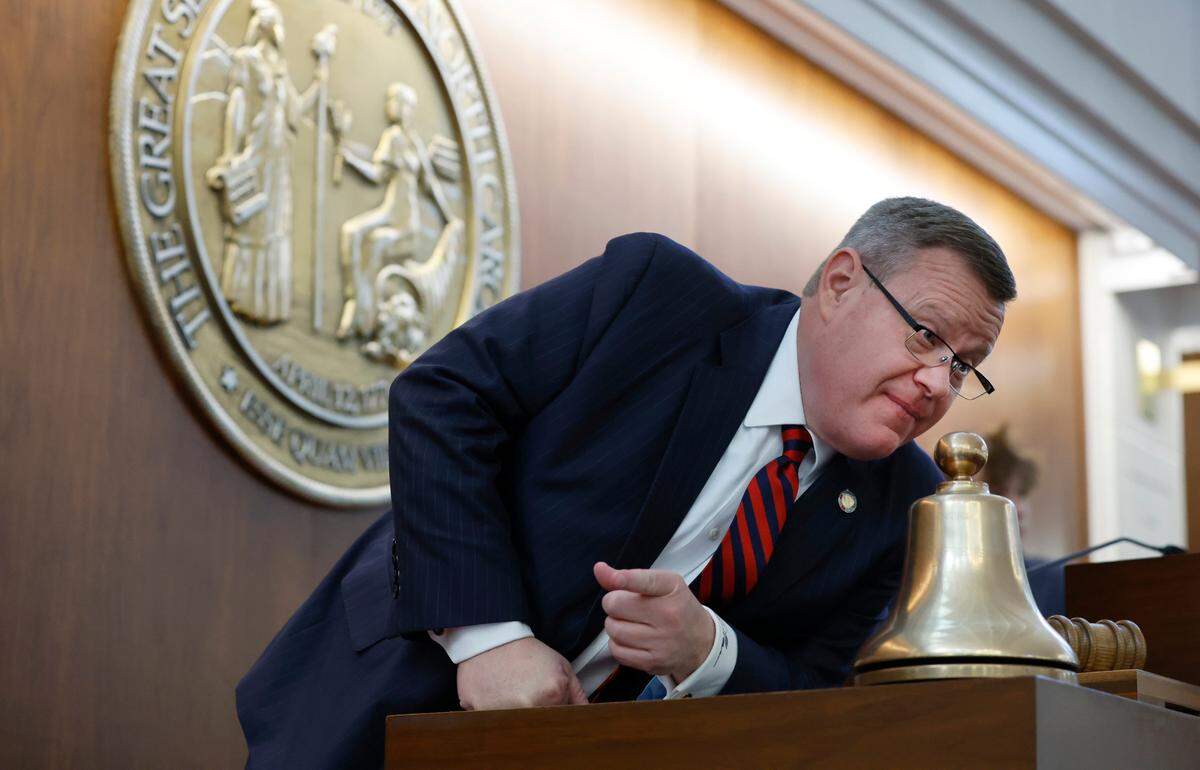
Michael Bitzer, a political science professor at Catawba College, said GOP prospects for earning Democratic support will likely depend on the issues.
“The parties in this state have become very clearly sorted, particularly when it comes to policy issues,” Bitzer said. “Maybe there are a few politicians that can straddle between the two, but it’s becoming harder and harder in today’s environment.
“If it’s an issue that is not highly salient, not in the public’s awareness, and maybe is not fraught with deep, partisan divisions, there may be opportunities for more bipartisan supermajorities to be created.”
The margin Republicans need to make up is just one vote, but that’s assuming all 71 members of their own caucus are on the same page. Ultimately, Bitzer said, GOP leaders should keep in mind Ronald Reagan’s old mantra, “Trust, but verify.”
“I certainly would not doubt the legislative lobbying prowess that the speaker brings to a member; maybe it’s a new member of the legislature who hasn’t been there that long and doesn’t have the institutional connections or memory. Who that might be, I couldn’t tell you,” Bitzer said. “I would trust him with his lobbying prowess, but I would want to see the actual votes and hear from the member in order to verify that that is indeed a power that he’s going to be able to exercise.”
One factor may be the budget, which will be a priority for lawmakers this year. Funding for projects certain Democratic members have been seeking for their districts could be one of the inducements Republicans use to make up the gap to override certain vetoes, Bitzer said.
Another consideration is the governor’s interest, as the leader of his party, to keep Democrats together and uphold his veto.
“You have to make the effort to keep your members, your party faithful, happy and in line,” Bitzer said. “And I think ... there could be potential real outreach needed by the governor, to fellow Democrats in the legislature, that will not just be the threat, as we saw in 2022, because he is a lame duck governor at this point, but maybe it’s more potentially carrots and positive aspects, to work and keep the members together.”
In a surprise move in March 2022, Cooper endorsed a primary challenger, Val Applewhite, to incumbent Democratic state Sen. Kirk deViere of Cumberland County. DeViere had voted with Republicans on certain bills involving school reopenings and the state budget that Cooper had opposed. Applewhite defeated deViere in the primary and went on to win the seat in the general election.
Which Democrats might vote with GOP on certain issues?
In addition to budget provisions, another possible incentive for Democrats to vote with Republicans might be committee assignments, which are typically filled almost exclusively by members of the majority party.
Last week, Moore announced that three Democrats had been appointed committee chairs for the upcoming session: Rep. Michael Wray of Northampton County, who will serve as a senior chair of the House Finance Committee; Rep. Tricia Cotham of Mecklenburg County, who will serve as a co-chair of the House Education K-12 Committee; and Willingham, who will serve as a co-chair of the House Alcoholic Beverage Control Committee.
Wray, like Willingham, has voted with Republicans often. During the previous session, he voted with the GOP more than any other Democrat.
Other Democrats high up on that list include Rep. Garland Pierce of Hoke County and Rep. Marvin Lucas of Cumberland County.
Asked about her approach to legislation and whether she would be open to supporting any bills that Republicans may try to pass over the opposition of Cooper, Cotham said her approach to every piece of legislation is to ask herself whether the bill is good for her district, and good for the state.
“Every legislator should work towards producing good legislation that helps people in their district and the state,” Cotham said in an email. “It is an honor to have a seat at the table via my committee appointments to help craft legislation that will make N.C. a better place to work, play, and raise a family.”
Wray, Pierce, and Lucas didn’t respond to requests for comment.
Some of those Democrats — Wray, Willingham, Pierce, Lucas, and also Rep. Cecil Brockman of Guilford County — were also involved in the budget negotiation process in 2021, and voted for the first version of the GOP budget that year. Soon after the election last year, Moore said part of what he called a Republican “governing supermajority” could include some of the Democrats who worked with the GOP on the budget, The N&O reported.
How lawmakers are courted for their votes
As someone who identified himself as a fairly moderate Democrat, Turner said he sometimes found himself being asked by Republicans what it would take for him to vote with them on certain bills, which at times included a budget proposal or veto override. That outreach wasn’t regular, he said, since he typically made it clear where he stood on issues.
In those situations, however, Turner said, it’s important to remember “there are no guarantees” when it comes to deals or promises “made in the moment, “ and that at the end of the day, “you can’t take a vote back.”
“We all have horror stories of being told that thing that we want will get in the budget, and then when the conference report comes out, everyone just goes, ‘you know, I did my best, but the Senate just wouldn’t go for it,’” Turner said. “So, it’s like, promises can be made, and promises can be broken, and there’s no repercussions for promises being broken. So, I think there’s a real trust gap there about any promises that are being made.”
Turner recalled the vote to override a Cooper budget veto that Republicans held in September 2019, when most Democrats weren’t present on the House floor, as an incident that “went a long way to a lot of people losing trust with the leadership.”
Another rift between Republicans and Democrats in the House may already be brewing this year. Temporary rules put forth by Republicans last week no longer require the House to give notice of veto override votes. If those rules are adopted permanently next month, Democrats would ill afford to have even one of their members missing from the House floor, since a potential vote could be called at any time.
Moore defended the rule change as giving the House more “flexibility,” but said he would continue to announce the day before if there will be votes the next day.
Turner said another factor lawmakers need to take into account when it comes to potentially politically costly votes like veto overrides is social media. Difficult votes are more likely now to follow a lawmaker for a long time.
“It used to be that we were reliant on, sort of, traditional media outlets to report on things, and now, with social media and some of the other strategies, a vote that’s taken on your first week in office is easily revisited in September of an election year,” Turner said. “So, the idea that people will forget, I think, is somewhat of an outdated concept, because there are lots of folks out there that are ready to remind them.”
For more North Carolina government and politics news, subscribe to the Under the Dome politics newsletter from The News & Observer and the NC Insider and follow our weekly Under the Dome podcast at campsite.bio/underthedome or wherever you get your podcasts.
This story was originally published January 20, 2023 at 6:00 AM with the headline "‘Trust, but verify’: How NC Republicans will try to bridge the one-vote gap in the House."