A viral moment helped make Mark Robinson, NC factory worker, into a polarizing GOP star
READ MORE
Are they the future of NC?
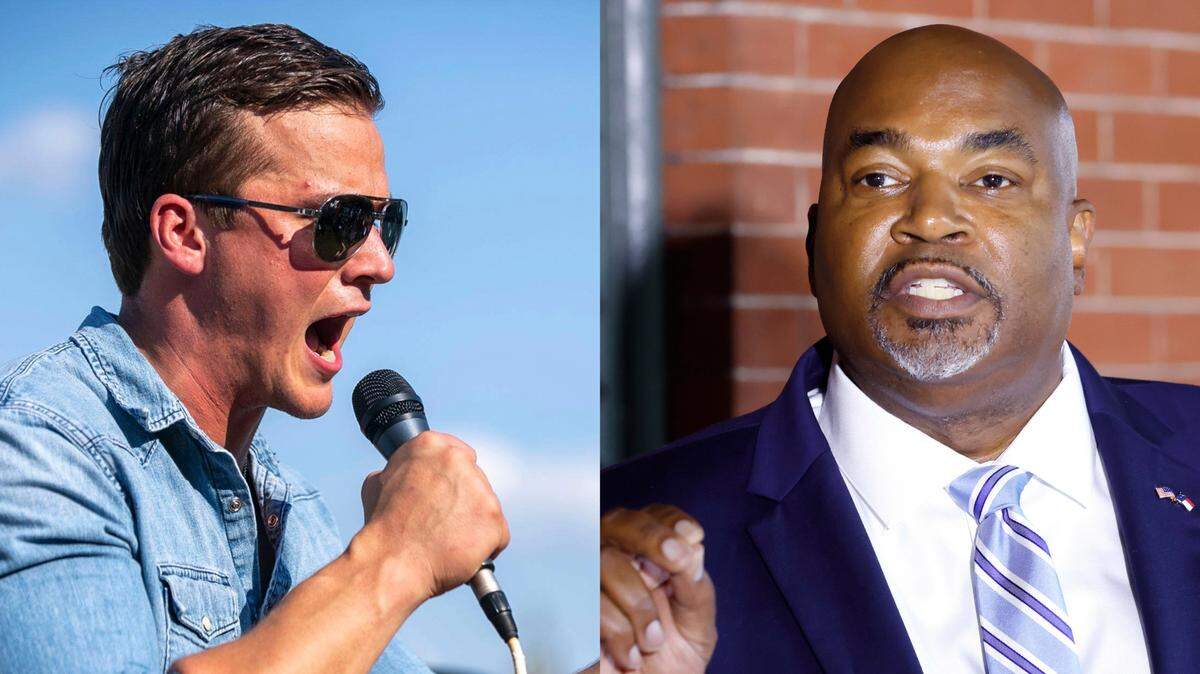
Since the 2020 election, two of North Carolina’s newest Republican politicians have become known for their unrestrained rhetoric.
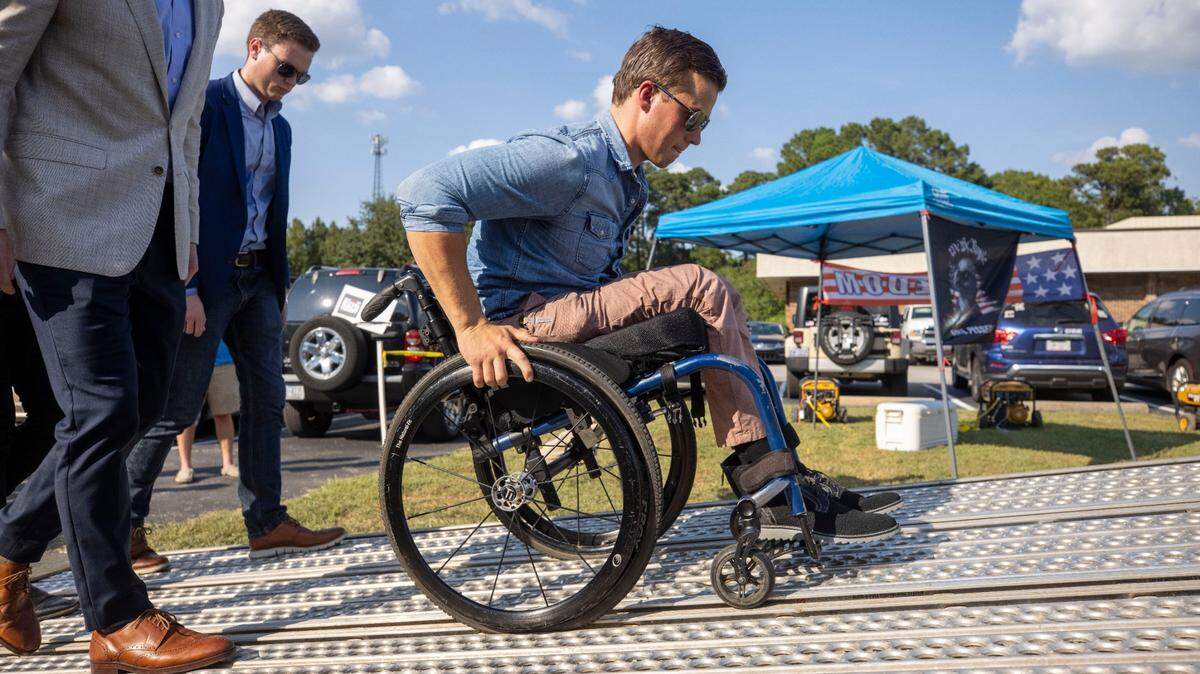
But despite their similarities, U.S. Rep. Madison Cawthorn and Lt. Gov. Mark Robinson appear to be on different courses. Cawthorn increasingly is on the outs with more mainstream leaders in his party; Robinson is winning those leaders’ approval — or at least their silence.
Expand All
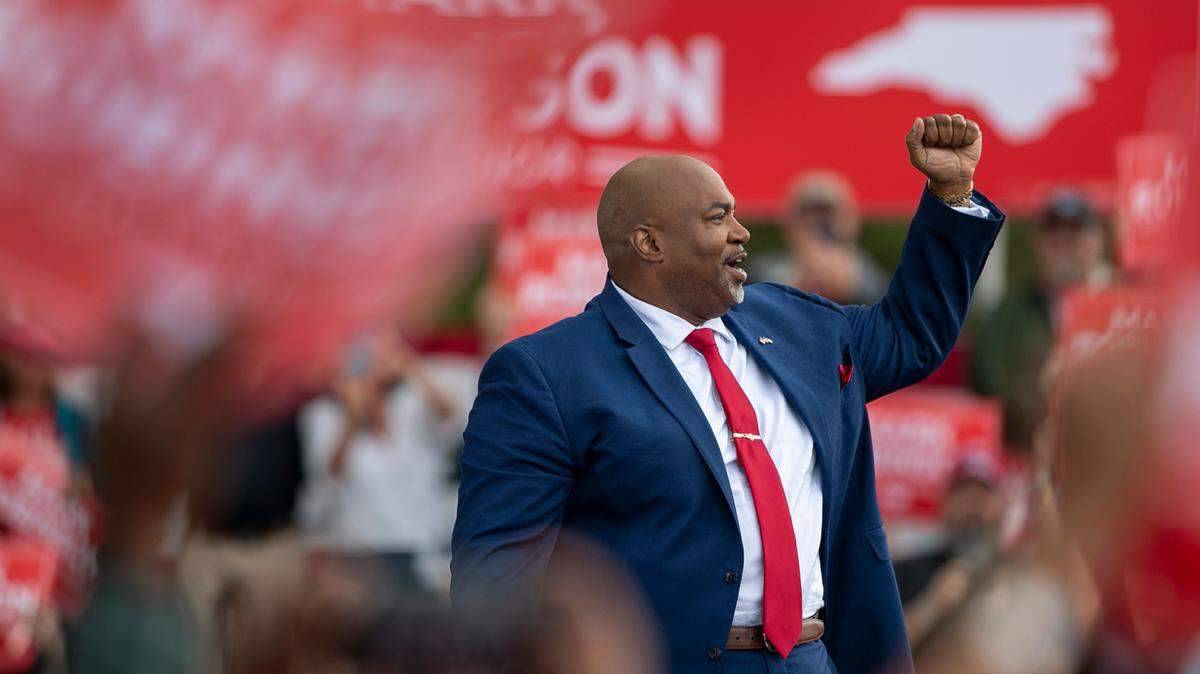
Whenever Lt. Gov. Mark Robinson takes a stage he highlights the trajectory of life that took him from poverty and an abusive father to becoming the top Republican in North Carolina’s executive branch.
He struggled his entire life.
But everything changed in 2018 when a Greensboro City Council meeting irritated him enough to grab a microphone and shout at the council about gun rights.
That moment, caught on camera, went viral and lifted him out of obscurity.
Within two years, he became the state’s first Black lieutenant governor, the second African American elected to North Carolina’s Council of State and the first African American Republican to win a major seat since the 1800s.
He also became known for disparaging remarks about LGBTQ people, including the use of words like “filth,” “garbage” and “demonic.”
On Saturday, Robinson officially announced his candidacy for governor of North Carolina, running in the 2024 GOP primary. State Treasurer Dale Folwell already has announced his candidacy, and former U.S. Rep. Mark Walker is expected to announce his run next month.
The winner could face Attorney General Josh Stein, the only Democratic candidate who has announced their candidacy so far.
Growing up in Greensboro
While he was a struggling factory worker in Greensboro not too long ago, he could be mistaken for a preacher. He opens every speech thanking Jesus.
He’s religious, charismatic and has a booming voice that can capture an audience’s attention in seconds.
He often meets his constituents at their churches, where he’s made some of his most inflammatory comments. But he also tells them how his faith built his Cinderella story.
Robinson grew up poor, he says. So poor, in fact, he jokes that they were “po.” He adds that his family couldn’t afford the “or.”
“When I look at it now as an adult, by world’s standards we weren’t poor,” Robinson said on stage during a speech for Church Alive in February 2021. “We always had something to eat. We always had clothes. We always had a roof over our heads.
“By world’s standards we were very blessed to be living in the land that we lived in and to be around charitable neighbors and to have a charitable government that would step into the gap.”
But the house where Robinson lived didn’t have heat, air conditioning and at times a shower, he said.
He told the audience it was filled with rats, roaches and parents who fought.
“I have vivid memories of the violent struggles between the two of them,” he says in the video with a slight quiver of his chin. His eyes closed for a minute, as if the memories were flooding back.
Robinson’s faith
His father was 71 when Robinson was born and he died before Robinson entered high school.
Robinson was the second youngest of 10 children, who at one point were put into the foster-care system. He and his two brothers went together to a caring family, according to his website, but some of his siblings weren’t that lucky.
Eventually, they reunited with their mother, a devout Christian.
He told the crowd at Church Alive that his mother’s faith helped show him what normal looked like.
“Coming up, the one saving grace that I had was that I had a mother who understood that she didn’t have what she needed to get us where she wanted us to go to, but she knew where to send us to find it and the very first place she sent us outside of her eyesight wasn’t a schoolhouse — it was a church,” Robinson said. “That church was the first time in my life that I saw normal.”
Robinson said he saw, at the church, normal relationships and men who didn’t drink.
But he didn’t find God there.
That came when his best friend, Wayne Campbell, stepped in and invited him to a church service at a university’s student union.
Robinson says often he doesn’t remember what the sermon was about or who the minister was but he does know he gave his life to Jesus that night.
Finding himself
Robinson told McClatchy in a statement in 2022 he had been a conservative, even before he was a Republican.
“When I look back on my childhood to the many times my mother, my siblings, and I would sit on the back porch talking about the issues in our lives and community, we never associated them with political leanings,” Robinson said. “It was about right and wrong, not red or blue.”
Robinson said he became more politically aware in the early 1990s and began researching the two parties.
“I remember thinking back to those back porch conversations about how the government should be limited and individuals should be responsible for their own destiny,” Robinson said. “That is why I felt called to the Republican Party: those core principles my mother instilled in me which continue to guide me today.”
Toward the end of high school, Robinson had joined the Army Reserves. From there he attended N.C. A&T State University, got married and got a job at a factory where he planned to work through the ranks.
But layoff after layoff kept striking his career, he said at Church Alive.
He tried the restaurant industry, he and his wife opened a daycare and he went back to factory work.
He said a boss helped him realize he needed to improve himself and stop thinking of himself as a victim. He also wanted to improve spiritually, and he prayed to God for guidance.
Robinson also turned to social media to comment on the world, often against Democrats and restrictions on gun rights. He criticized transgender people, Muslim “invaders” and, in one post, the movie “Black Panther,” about a superhero he said was “created by an agnostic Jew and put to film by (a) satanic Marxist,” and “was only created to pull the shekels” from Black people’s pockets.
His viral moment about gun control
Robinson said he heard the Greensboro City Council was having a meeting to tell him he “couldn’t buy the AR-15 I had been saving up for.”
The meeting took place right after a school shooting in Parkland, Florida, killed 17 and left 17 others injured.
“Something rose up in me and said, I have to go down there to that meeting,” Robinson said. “I’m not going to speak but I gotta go.”
There, he said: “I listened to person after person say stupid thing after stupid thing,” Robinson said. “Before long I thought I was in a stupid contest.”
Robinson said he couldn’t take it anymore and signed up to speak but then he worried about what he would say.
He said a voice told him to be himself.
“It seems to me that every time we have one of these shootings, nobody wants to put the blame where it goes, which is at the shooter’s feet,” Robinson said then to the council. “You want to put it at my feet. You want to turn around and restrict my right, my constitutional right … you want to restrict my right to buy a firearm and protect myself from some of the very people you’re talking about, in here, tonight.”
That moment launched him to viral fame. He was featured in a National Rifle Association commercial and spoke at the organization’s convention, and he launched his bid to become lieutenant governor.
For more North Carolina government and politics news, listen to the Under the Dome politics podcast from The News & Observer and the NC Insider. You can find it at https://campsite.bio/underthedome or wherever you get your podcasts.
This story was originally published March 20, 2022 at 6:00 AM with the headline "A viral moment helped make Mark Robinson, NC factory worker, into a polarizing GOP star ."