‘No incentive to compromise’: Why gerrymandering may be causing extremism in US politics
READ MORE
Are they the future of NC?
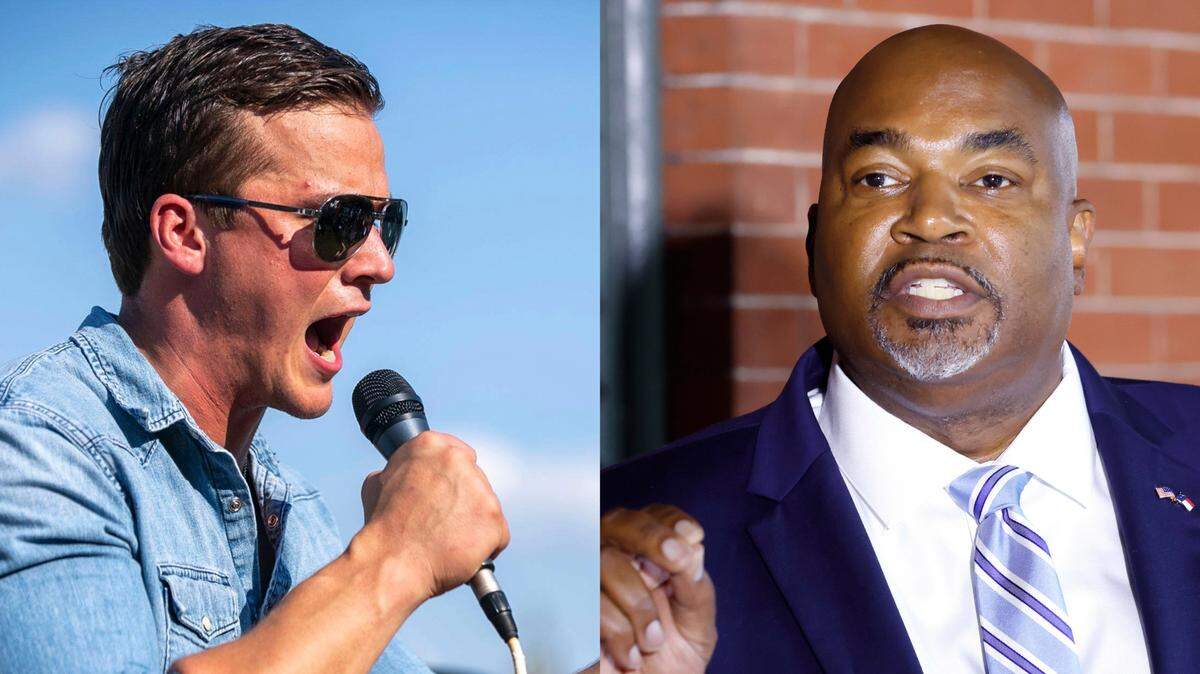
Since the 2020 election, two of North Carolina’s newest Republican politicians have become known for their unrestrained rhetoric.
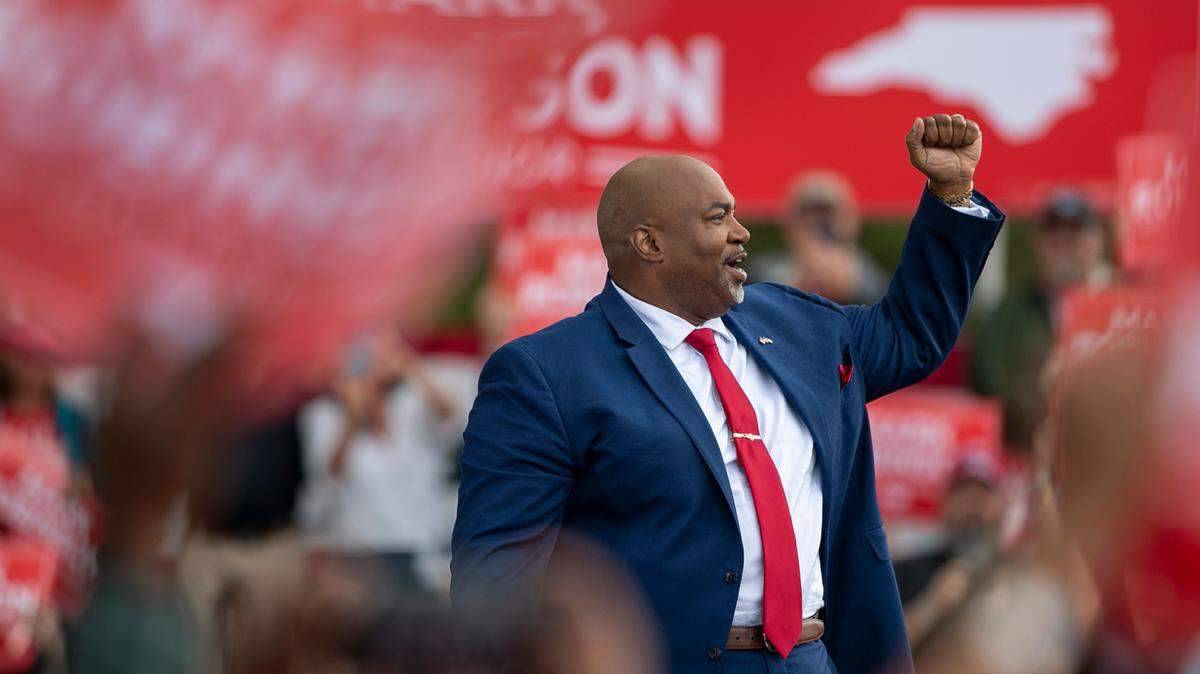
But despite their similarities, U.S. Rep. Madison Cawthorn and Lt. Gov. Mark Robinson appear to be on different courses. Cawthorn increasingly is on the outs with more mainstream leaders in his party; Robinson is winning those leaders’ approval — or at least their silence.
Expand All
As political extremism and polarization ramp up in the United States, plenty of academics, journalists and others have tried to pinpoint its exact causes.
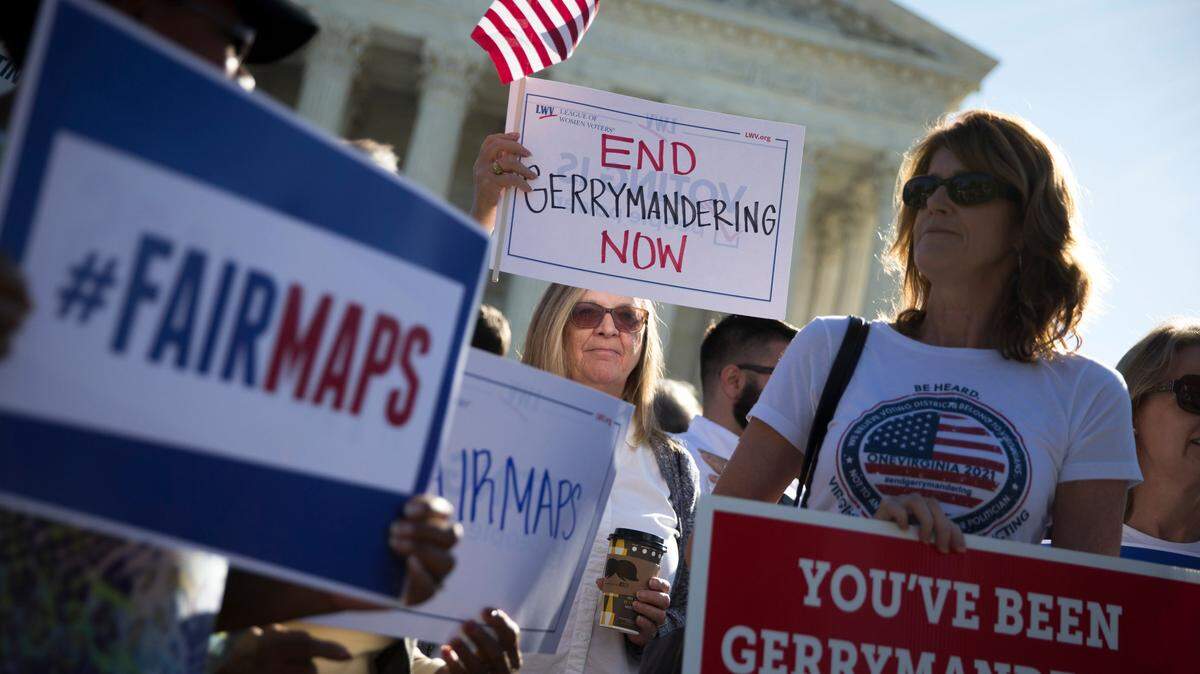
Some blame a growth in political spending, particularly on negative ads. Others point to the rise of social media and niche online news sources that allow people to see only news that conforms to their own point of view, regardless of facts or nuance. Others point to a third culprit: Gerrymandering.
“What I will say about polarization is there are a couple ways to think about it,” said Yurij Rudensky, a law professor at New York University and senior counsel at its election law think tank, the Brennan Center. “One is the gap between the two parties. And it is hard to attribute that to gerrymandering.
“But I think there’s another type of polarization,” he continued. “Which is the gap between what voters and the public want, and what politicians actually do. And that, I think, can be attributed to gerrymandering.”
In other words, gerrymandering can’t necessarily explain why issues like abortion rights and gun rights have become such strong litmus tests in the Democratic and Republican parties. But it might explain why politicians from either party would refuse to vote for compromise deals on important issues that would be widely popular with the general public — if doing so would require them to also make any concessions to the other side.
That’s because across much of the nation there are few truly competitive districts left for seats in the U.S. House, which many blame at least in part on gerrymandering. Rudensky is one, as is David Daley, a journalist who specializes in voting rights and redistricting.
Daley’s book, “Ratf**ked: Why Your Vote Doesn’t Count,” focuses extensively on gerrymandering after the 2010 Census, and now that we’re in a new decade, he said, all indications are that it will only become more pervasive — particularly since Republicans recently shot down proposals from Democrats in Congress to pass nationwide voting rights bills that would’ve included restrictions on gerrymandering.
Plus, he said, “we’re better at gerrymandering than we’ve ever been.”
“The levels of polarization and extremism in our politics have become toxic,” Daley said. “And they’ve become toxic in ways that may be difficult to quantify, but we all feel it.”
Competition breeds compromise
The reason many observers blame rising extremism on gerrymandering is, at its most basic level, the assumption that politicians typically want to keep getting reelected.
If so, then a politician’s stances could depend largely on where he or she faces the most competition. A competitive general election might require reaching across the aisle in hopes of winning votes from the other party. But a noncompetitive election requires no such effort — and in fact could punish any efforts toward bipartisanship, since the party primary might pose the only real threat to reelection.
Turnout rates are low in all elections but especially in primaries, giving outsize influence to the small number who do show up.
“The winner is chosen in the primary and the primary draws, for lack of a better way of saying it, the most extreme and emotional voters,” said Bob Phillips, who leads the redistricting reform group Common Cause NC.
He said he’s heard state legislators on both sides of the aisle complain that their party’s leaders instruct them not to even mingle with the other side when they’re in Raleigh, let alone vote with them.
“We’ve seen it in Raleigh and seen it in Washington,” he said. “Folks that come have no incentive to compromise because they’ll only be punished for it.”
Phillips said House Bill 2, the controversial 2016 law that became known nationally as the “bathroom bill” and ended up costing North Carolina millions of dollars, is an example of politicians supporting polarizing bills. It’s OK for them to pass laws that please their base even if it goes against popular opinion, he said, because gerrymandering insulates them from any fallout.
The state legislative districts in use at the time were later ruled unconstitutional gerrymanders, and Phillips said that looking at those maps, 92% of those who voted for HB2 in the N.C. House either didn’t have an opponent in their previous election or won it by double digits.
In contrast, when the push for a compromise to partially repeal HB2 came in 2017, much of the initial support on the right came from suburban Republicans whose more competitive districts ended up flipping to Democrats in 2018.
Is polarization popular?
Some voters want their politics polarized. They support one party and see little value in any ideas the other party has to offer, so they oppose negotiations with the other party. But on both the left and the right, those voters are in the minority — even though they might have the loudest voices and, in many cases, decide who wins the primary.
In 2014, most of the way through Democratic President Barack Obama’s two terms in office, the Pew Research Center conducted an extensive poll of voters, asking about polarization and partisan identities, for the third time in three decades.
It found Americans were significantly less likely to call themselves centrists or moderates than in previous polls from 2004 and 1994. Instead, it found, voters increasingly view themselves as either mostly liberal or mostly conservative. Polarization is growing, if voters themselves are to be believed.
Phillips said he blames gerrymandering in part for this, since it tends to make politicians beholden more to their party’s furthest wings, but he also blames also other factors, including media coverage focused on the most extreme views from either side.
“It may also embolden you to speak in a more shrill, harsh, attacking mode,” he said. “We’ve certainly seen that decline in civility.”
How much to blame gerrymandering?
While some good-government activists can be quick to blame polarization on gerrymandering, there is disagreement among political scientists as to how much blame it should get versus other factors like social media and misinformation campaigns.
Different experts, using different tests or methods, can reach different conclusions even when looking at the same issues.
A 2009 study in the American Journal of Political Science said no, gerrymandering is not to blame for increased polarization. A 2010 study in The Journal of Law and Economics said yes, it is. A 2011 paper in the The University of Chicago Law Review argues that much of the scholarship on gerrymandering will become less and less relevant as America’s politically diverse Latino population continues booming. And a 2015 paper in the Columbia Law Review argues that worries about polarization are exaggerated, regardless of gerrymandering’s effects.
To Daley, however, the academic debates over whether gerrymandering is a root cause of polarization in politics, or if it simply makes it easier for more extreme candidates to get elected, isn’t important. The end result is the same.
“It acts as an accelerant on the extremism and polarization in our politics,” he said. “And to me it doesn’t really matter which is the match and which is the gasoline.”
For more North Carolina government and politics news, listen to the Under the Dome politics podcast from The News & Observer and the NC Insider. You can find it at https://campsite.bio/underthedome or wherever you get your podcasts.
This story was originally published March 20, 2022 at 6:00 AM with the headline "‘No incentive to compromise’: Why gerrymandering may be causing extremism in US politics."