
‘Rare’ prehistoric new species uncovered in Portugal. See first-of-its-kind find
Millions of years ago, a large herbivore walked through an ancient valley and snacked on vegetation.
The land would later become the Iberian Peninsula, and the valley the creature stood would be buried deep in the rocks of Portugal.
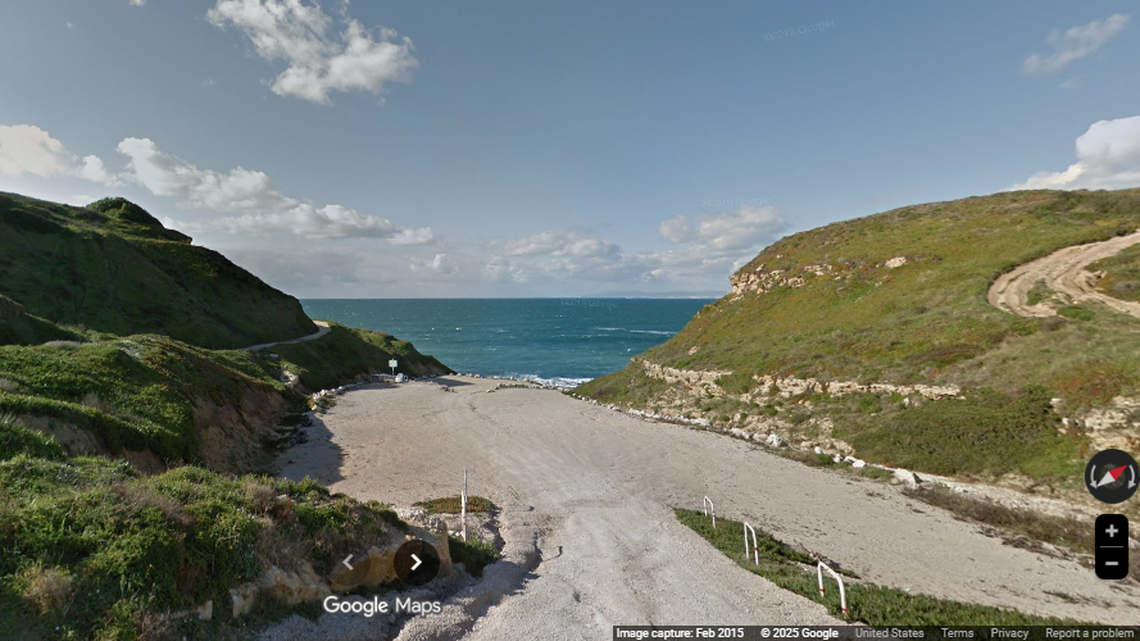
About 125 million years later, paleontologist Pedro Marrecas would visit the rocky cliffs near Praia da Área do Mastro in 2016 and discover a row of teeth protruding from the stone’s surface.
The prehistoric animal had become a fossil, and after “meticulous preparation and restoration work,” half of the creature’s skull would be pulled from the rock — and identified as a species new to science.
The animal was a hadrosaur, a type of iguanodon that lived at the beginning of the Cretaceous period, according to a study published Sept. 15 in the peer-reviewed Journal of Systematic Palaeontology.
“The new iguanodon lived in what is now called the Papo Seco Formation, sharing its habitat with titanosaurs (long-necked and tailed sauropod dinosaurs) and a cousin of the famous predator Spinosaurus, called Iberospinus. Other iguanodons have been discovered here in the past, but none possessed the characteristics necessary to be considered a new species,” according to a news release shared by study author Bruno Camilo.
The new species marks the first Cretaceous iguanodon discovered in Portugal.
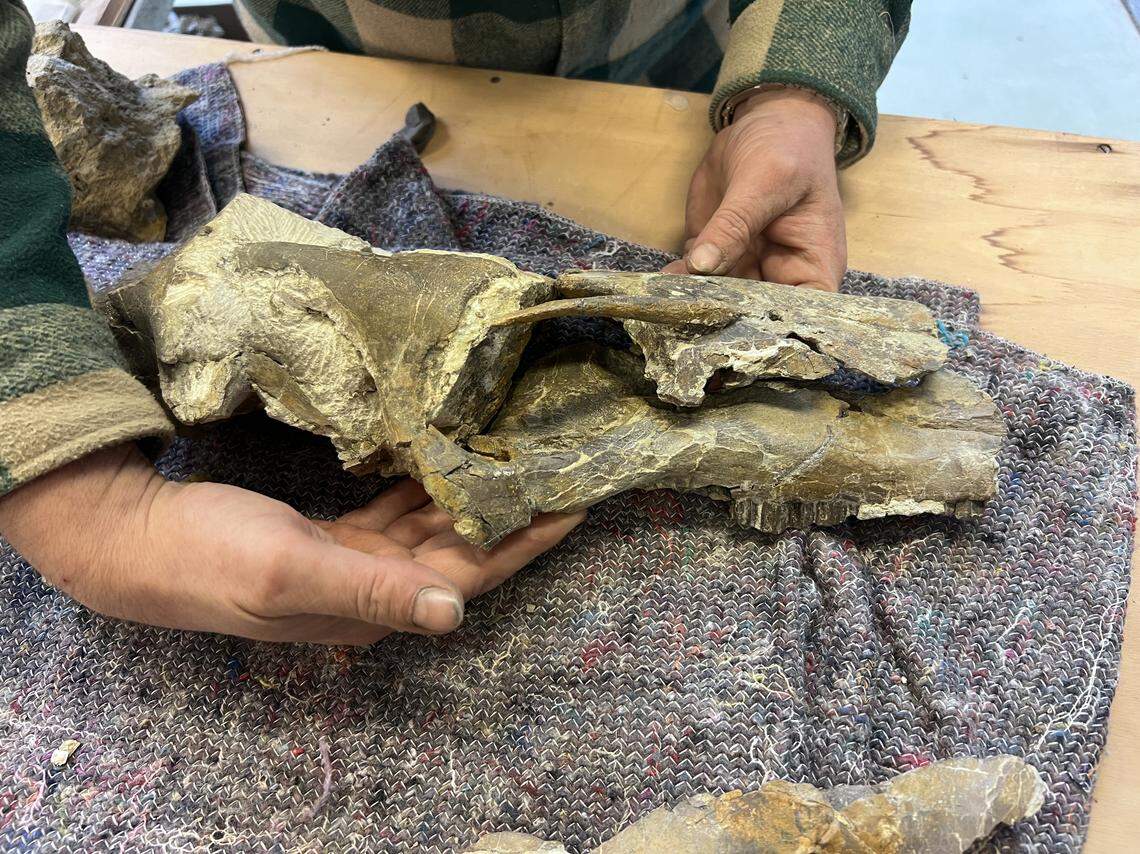
The fossil is a “partial skull” that once reconstructed is about 14.5 inches long, according to the study.
The animal it came from is described as “medium-sized” and belongs to not only a new species but also a new genus, or species group.
To the untrained eye, researchers said the skull resembles the bones of a goat or horse, leading to the team naming the genus after animal sacrifices.
The new species was named Cariocecus bocagei.
“The generic name refers to Cariocecus, the deity associated with war among Iberian and Lusitanian peoples who lived in what is now central Portugal. Cariocecus was syncretized in Ares (Greek) and Mars (Roman) after the Roman Empire conquered the region,” according to the study. “The generic name also alludes to the superficial resemblance to the skull of goats and horses, animals typically sacrificed in religious rituals to Cariocecus.”
The species name, bocagei, honors 19th-century Portuguese naturalist Jose Vicente Barbosa du Bocage who “pioneered zoological research in Portugal.”
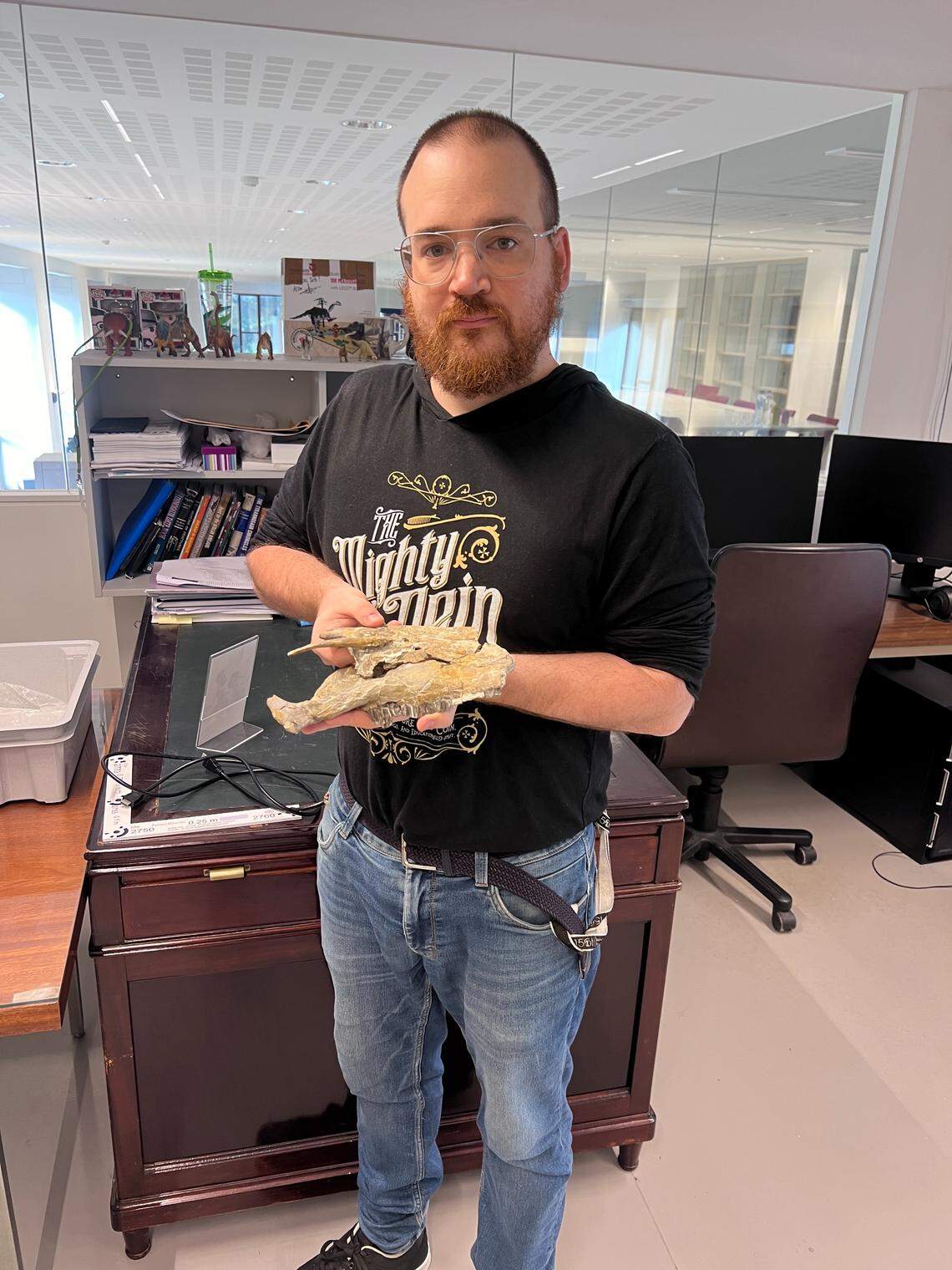
Researchers can tell that this was an herbivorous, or plant-eating, species because of the shape of its teeth.
The teeth have a clear “leaf-like” shape, study author Filippo Bertozzo said in the release, and an additional unique feature.
The jugal bone, or what could be called the cheekbone, and the maxilla, or jawbone, are fused, Bertozzo said. This means the adaptation was “likely designed to strengthen its chewing ability.”
Reconstruction of the skull has shown the new species also had a short olfactory lobe and a large brain. It also allowed researchers to reconstruct the inner ear tissue anatomy of an iguanodont for the first time, according to the release.
“We are increasingly deepening our knowledge of dinosaurs’ sensory capabilities, and the exceptional preservation of the Cariocecus endocranium has allowed us to better understand the details of these animals’ ears and hearing,” study author Ricardo Araújo said in the release. “Cariocecus is a Pandora’s box of very interesting and important questions about dinosaur biology, now being revealed.”
.png "paleoartistic-reconstruction-cariocecus-by-Victor.Feijo.de.Carvalho_SHN (1).png")
“Cariocecus is therefore an exceptional discovery for Portugal, as it represents the most complete dinosaur skull ever found in the country,” Camilo said in the release. “Because it is a juvenile or subadult specimen, it allows us to understand the timing and modalities of the co-ossification of the cranial bones during growth, which is very rare to understand in a dinosaur.”
Not only can researchers learn about this specific species, but also how this iguanodon fit into the larger spread of the dinosaur group across ancient continents.
“In addition to its contribution to our understanding of its biology, this specimen provides important information about the origin and diversification of these animals during the Cretaceous period, highlighting that within the group, it is one of the oldest known hadrosauroids, suggesting a Euro-African origin for the group rather than an Asian one, as previously assumed,” Camilo said.
The research team includes Bertozzo, Camilo, Araújo, Fabio Manucci, José Carlos Kullberg, Donald G. Cerio, Victor Feijó de Carvalho, Pedro Marrecas, Silvério D. Figueiredo and Pascal Godefroit.
Praia da Área do Mastro is on the southwestern coast of Portugal.
This story was originally published September 17, 2025 at 5:57 PM with the headline "‘Rare’ prehistoric new species uncovered in Portugal. See first-of-its-kind find."
