
‘Fierce-toothed’ creature — 241 million years old — is new prehistoric species

In the coastal city of Sidmouth in southern England, the water of the English channels batters the shore and erodes the soft rock.
Layers of stone become exposed as the top is washed away, and creatures held in the rock for millions of years are suddenly thrust into the 21st century.
Paleontologists working at the Helsby Sandstone Formation pulled a block of stone from the coastline in 2015 with small, fossilized bones captured inside.
Now, the bones have been revealed as a new prehistoric species — and the oldest known lizard relative.
“A recently discovered thin sandstone bed located near the top of the Otter Sandstone on the coast west of Sidmouth, east Devon, has produced an abundance of vertebrate fossils. Among these often remarkably well-preserved remains is the nearly complete skull and skeleton of a rhynchocephalian, described here, which was excavated as a block … from a temporarily exposed foreshore exposure beneath Peak Hill,” researchers said in a Sept. 10 study published in the peer-reviewed journal Nature.
The quality is so great, researchers believe the fossil may have been preserved when a “severe rainstorm” caused a river to overflow, taking any inhabitants of the shoreline with it and trapping them in sediment, according to the study.
The fossil belongs to a group of animals called Lepidosauria, or ancient snakes and lizards, researchers said.
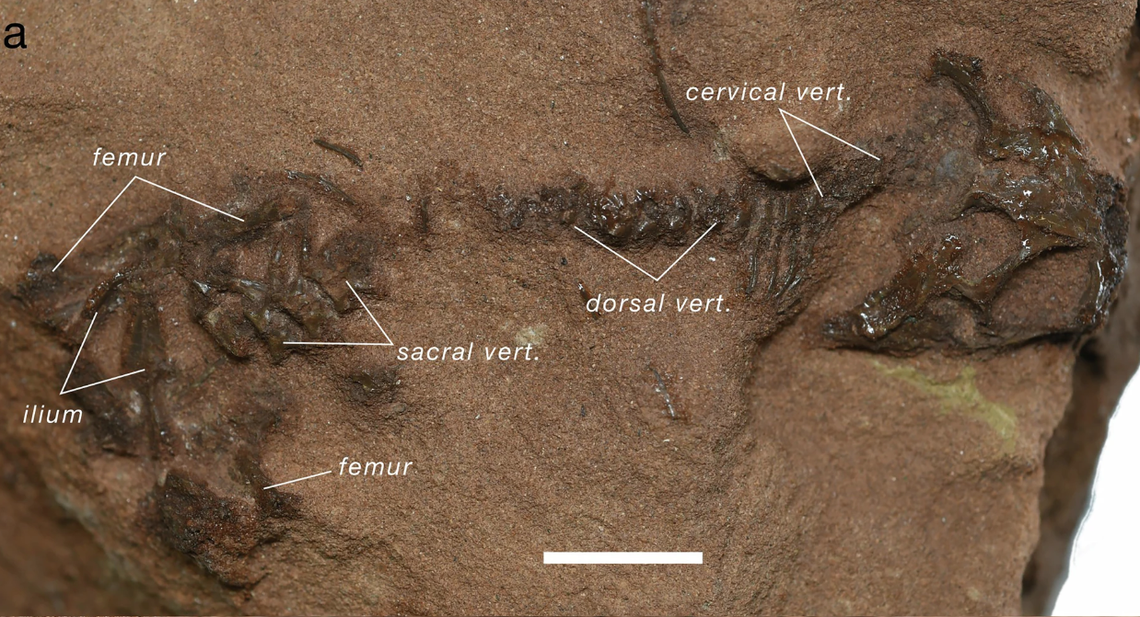
The fossil was dated to the Triassic period, between 252 and 201 million years ago. This specific fossil is about 241 million years old, making it 3 to 7 million years older than any lepidosaur found before, according to the study.
It’s also a new species.
Agriodontosaurus helsbypetrae “is unlike anything yet discovered and has made us all think again about the evolution of the lizard, snakes and the tuatara,” study author Dan Marke said in a Sept. 10 news release from the Natural History Museum of London. “This specimen not only provides important information about the ancestral skull of all lepidosaurs but also builds on growing knowledge of the tuatara. While often called a ‘living fossil,’ this animal belongs to a once-diverse order of ancient reptiles with a rich evolutionary history.”
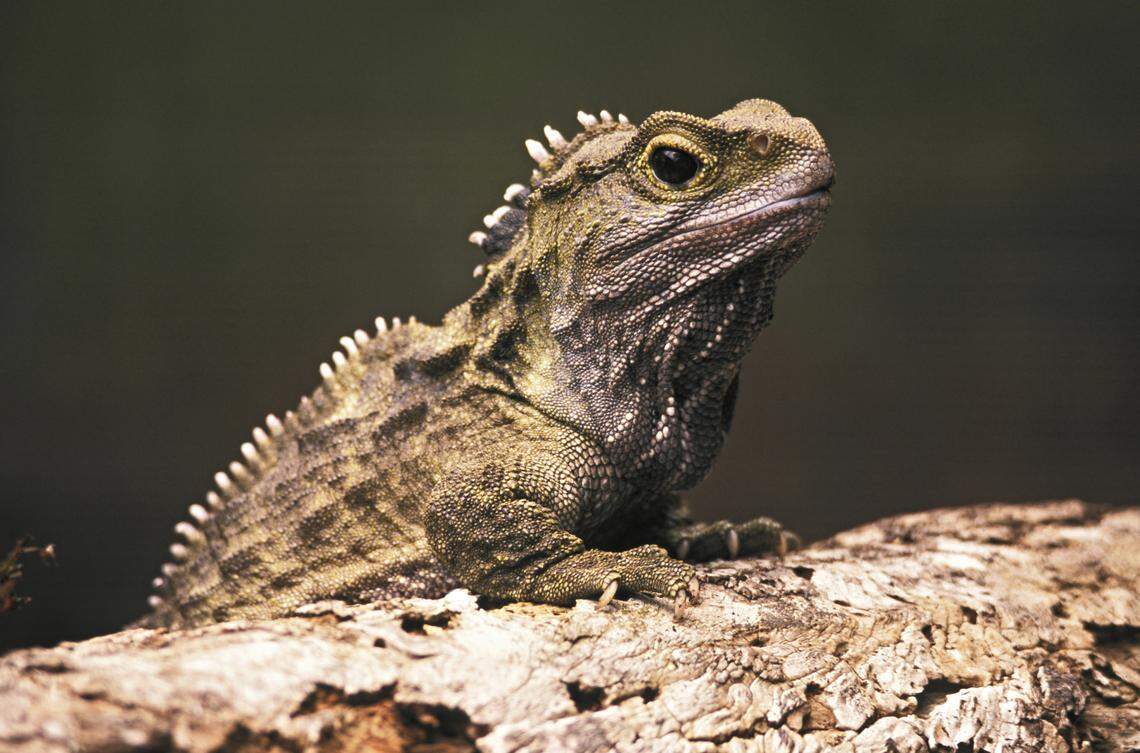
Tuataras are a reptile found exclusively in New Zealand in the modern age and considered the “last survivors” of their ancient order.
The new species earns its name from its noteworthy dentition, researchers said.
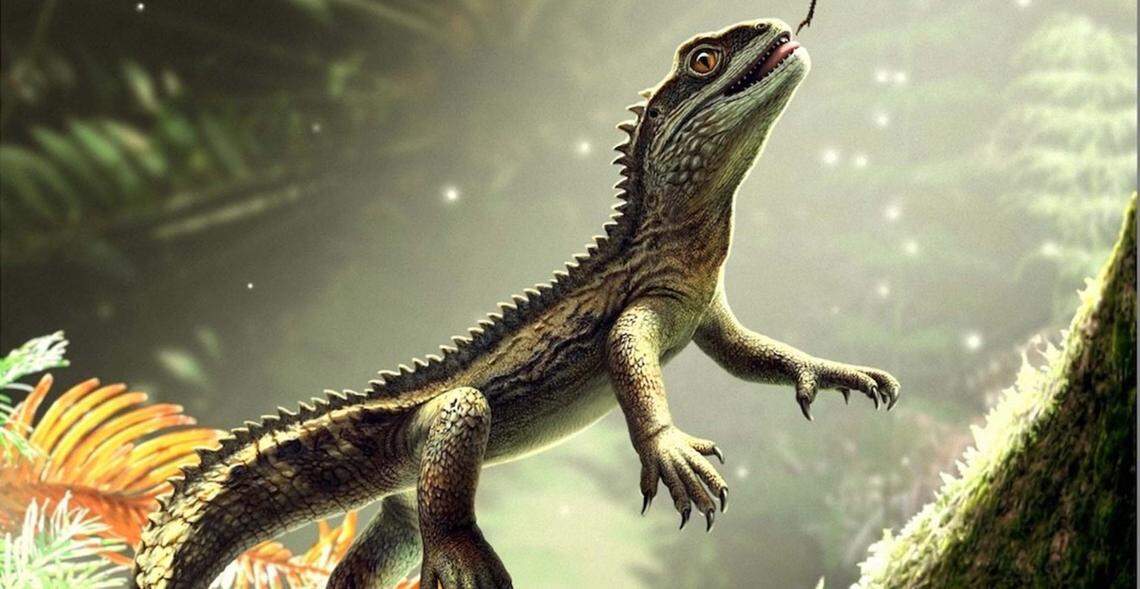
“Agrio” comes from the Greek descriptor of Dionysus, Agrionius, which means fierce. “Donto” comes from the word for “tooth” and references the “remarkably large teeth” in the creature’s jaw. Because “saurus” means lizard, the full name translates to “fierce-toothed lizard,” according to the study.
The species name combines Helsby, where the fossil was found, and “petraea,” meaning rock. Together, the new species is called the Helsby rock fierce-toothed lizard.
Tuatara used their teeth to punch through the exoskeletons of insects and rip them apart, researchers said, so the ancient lizard likely used the same process, though its teeth are much bigger than its known relatives.
It probably ate cockroaches, crickets and grasshoppers, and its large eyes would have been beneficial for hunting prey, according to the release.
Researchers previously believed ancient lizard relatives must have had a partially hinged skull, teeth on the roof of their mouth or a gap in their skull bones which all allow them to stretch out their jaws and swallow large prey, according to the release.
“The fossil shows almost none of the characters we expected,” Marke said. “It has no teeth on its palate and no sign of any hinging, just an open temporal bar.”
This changes lizards’ evolutionary path, suggesting that these features may have evolved more than once over the millennia, rather than stemming from a single common ancestor, according to the release.
This specific fossil is exceptional because the fragile bones of the group of lizards is so rarely preserved this well, according to the study and release.
It joins more than 12,000 species of lepidosaurs, one of the largest groups of land vertebrates, researchers said.
Devon is in southeastern England, about a 170-mile drive southeast from London.
The research team includes Marke, David I. Whiteside, Thitiwoot Sethapanichsakul, Robert A. Coram, Vincent Fernandez, Alexander Liptak, Elis Newham and Michael J. Benton.
This story was originally published September 11, 2025 at 1:48 PM with the headline "‘Fierce-toothed’ creature — 241 million years old — is new prehistoric species."
