
Fossil found by Badlands hiker belonged to farm-like creature — with monkey face
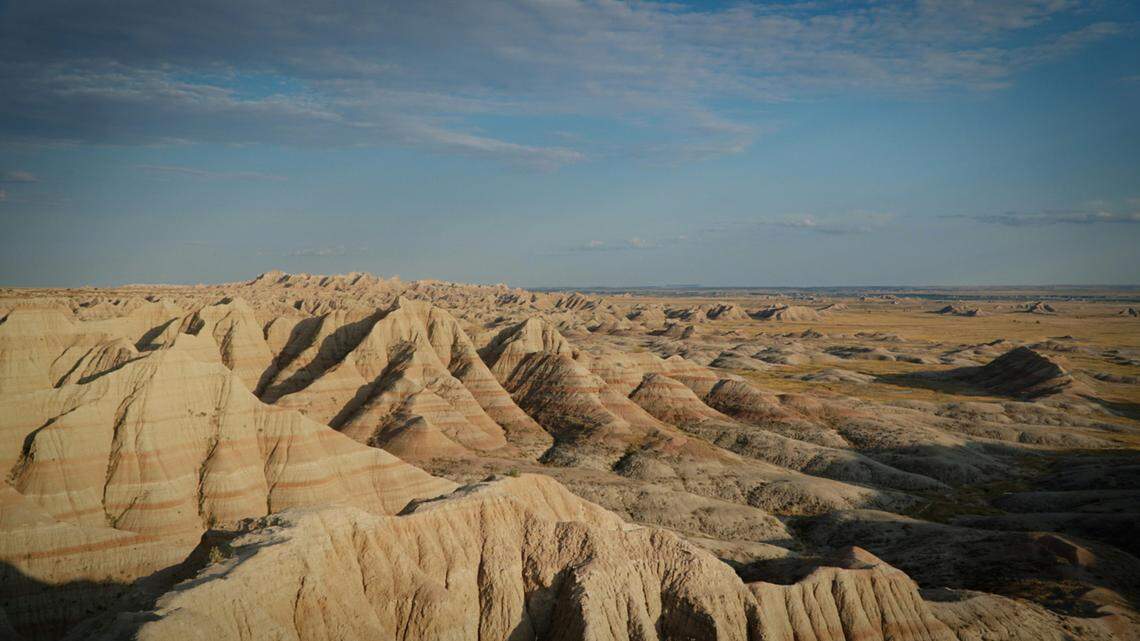
In the sprawling dunes of the Badlands in South Dakota, where layers of sedimentary rock have been shaped by millions of years of erosion, a hiker came upon a discovery that stopped them in their tracks.
Protruding from the “dry, cracked tan soil” of a butte in Badlands National Park was a grayish row of teeth, officials said in an Aug. 1 post on Facebook.
Smaller than a key, as shown by park officials, the fossil was determined to belong to a creature of the Leptauchenia species.
“Leptauchenia means ‘tiny llama,’” park officials said. “They are a type of animal called oreodonts, and paleontologists describe them as monkey-faced little sheep and llama-like animals.”
According to FossilEra.com, it was once believed that Leptauchenia were a semi-aquatic creature, but their fossils have primarily been located within fossil sand dunes, suggesting they were “desert-dwelling animals.”
The species was native to North America and lived until about 16.3 million years ago, researchers say.
Officials said oreodonts are the most common fossil animals in the Badlands. They are described as being herbivores, with their closing-living relatives likely being camels.
Badlands National Park is in southwestern South Dakota.
This story was originally published August 5, 2025 at 12:08 PM with the headline "Fossil found by Badlands hiker belonged to farm-like creature — with monkey face."