Were ancient ‘nailed heads’ symbols of intimidation or respect? New study offers clues
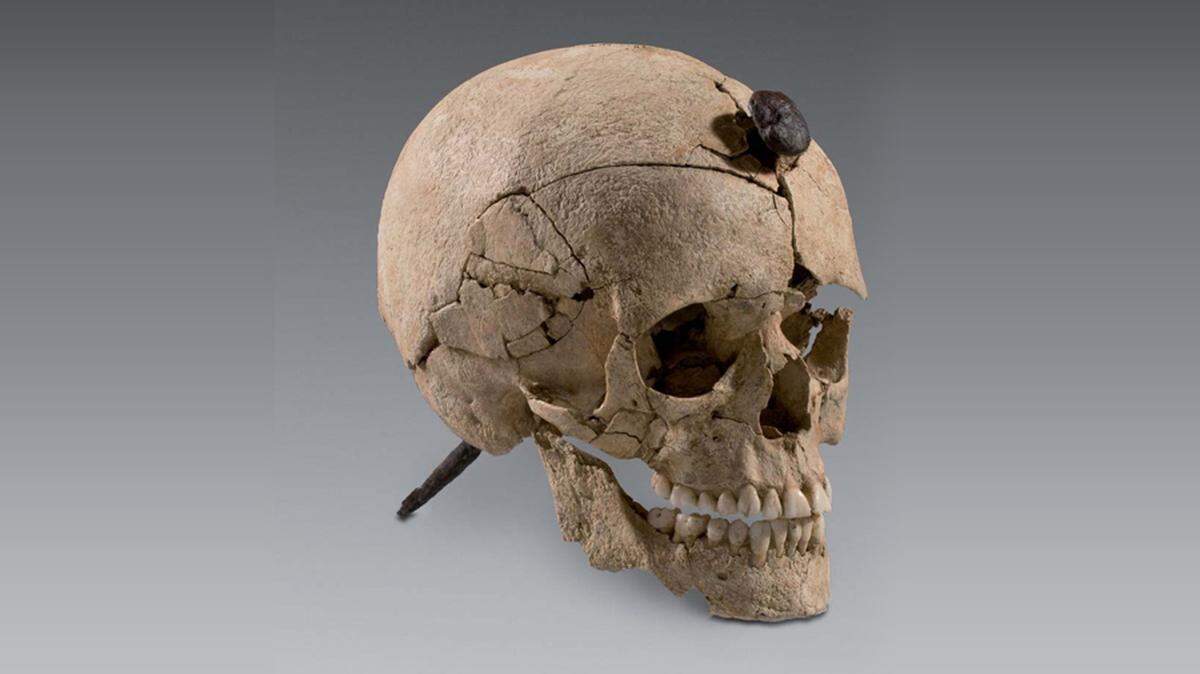
Over the past century, archaeologists in modern-day Spain and Portugal have unearthed more and more violent-looking skulls dating back to the Iron Age. The finds sparked a mystery. Who were these ancient “nailed heads?” And why were their skulls treated this way?
Experts have generally offered two theories about these “severed heads:” Some interpret these skulls as “war trophies” used for intimidating enemies, while others see them as respected “relics of important community members,” the Autonomous University of Barcelona said in a Feb. 21 news release.
“But these hypotheses have not been tested” — until now.
A team of researchers decided to examine four “nailed heads” from the 2,300-year-old settlement of Puig Castellar and three from the 2,400-year-old town of Ullastret, both in northwestern Spain, according to a study published Feb. 13 in the peer-reviewed Journal of Archaeological Science: Reports.
The team assumed that if these skulls were war trophies, they would be non-local people but, if they were respected relics, they would be local people.
But how would researchers know if an ancient skull came from a local or not? The team turned to a relatively new research method known as strontium isotope analysis.
Strontium isotope analysis stems from a simple premise: you are, quite literally, what you eat. Every region has a strontium fingerprint, a “unique composition” of the chemical based on the local rocks and soil. This chemical fingerprint moves “through the food chain” from plants to animals to people, where it is permanently incorporated into tooth enamel during childhood.
When researchers did their strontium isotope analysis, they identified the chemical fingerprints in both the teeth of the “nailed heads” and the surrounding sites. Next, they compared these fingerprints. If they matched, the person was considered a local.
At Puig Castellar, three of the four skulls didn’t match the local strontium fingerprint, the study said. These skulls “were all found in an area of great public exhibition” outside the settlement’s main entrance.”
Meanwhile, at Ullastret, two of the three skulls matched the local strontium fingerprint, researchers said. These skulls were found “in exposed areas within the settlement,” likely “domestic units or dwellings.”
Researchers concluded that the “nailed skulls” of locals were “important inhabitants” and symbols of the local community’s respect for the deceased while the “nailed skulls” of foreigners were symbols of power used for intimidation.
“Our study is a first approach to this archaeological problem using a method that is revolutionising the way we study mobility in the past,” the study’s lead co-author, Rubén de la Fuente-Seoane, said in the news release. “At the same time, it suggests that the selection of individuals for the severed heads ritual was more complex than initially thought.”
Researchers encouraged further work using their methods.
The research team included Rubén de la Fuente-Seoane, Diego López-Onaindia, Ferran Codina Falgas, Gabriel De Prado, Conxita Ferrer Álvarez, M. Carme Rovira Hortalà, Marta Díaz-Zorita Bonilla, Ariadna Nieto-Espinet and M. Eulàlia Subirà.
This story was originally published February 25, 2025 at 3:04 PM with the headline "Were ancient ‘nailed heads’ symbols of intimidation or respect? New study offers clues."