Mysterious ancient amulet turns out to be oldest trace of Christianity north of Alps
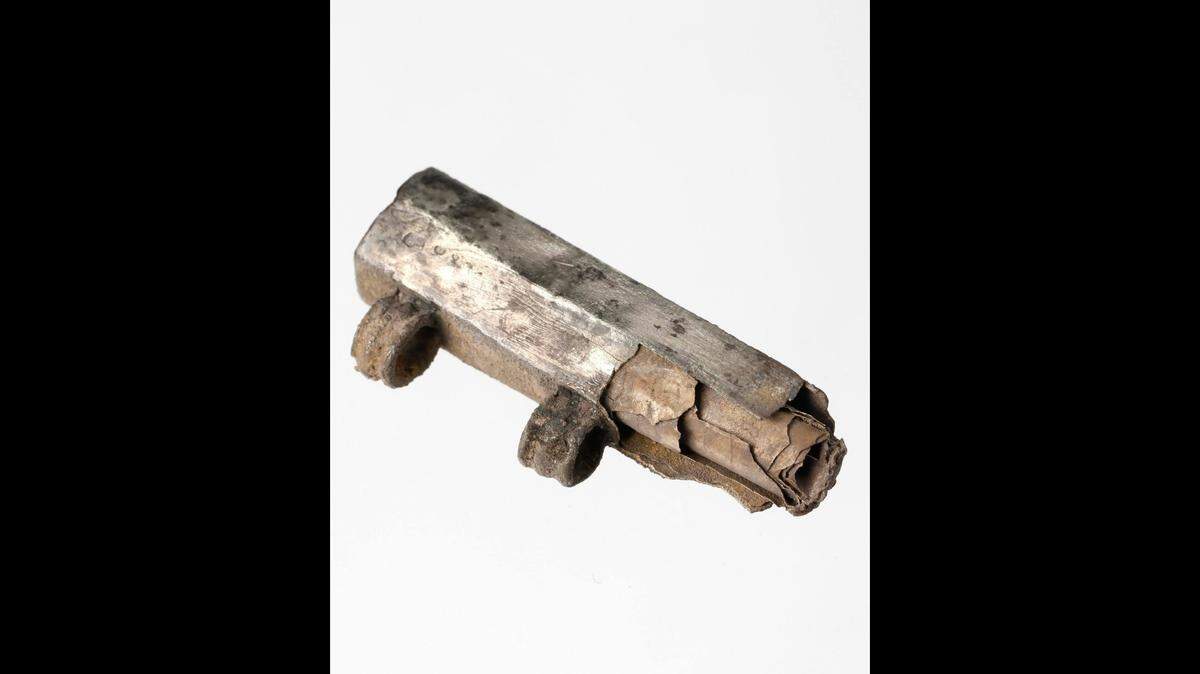
Archaeologists in Germany found a mysterious ancient amulet containing a silver scroll. The fragile note took years to read and turned out to be the oldest evidence of Christianity north of the Alps.
Archaeologists in Frankfurt unearthed the small silver amulet in a 1,750-year-old grave during excavations in 2018, the City of Frankfurt am Main said in a Dec. 11 news release. Immediately, they noticed a small silver scroll tucked inside.
But reading the ancient note proved to be a yearslong process. Experts couldn’t unroll the brittle scroll by hand for fear of it crumbling. They tried using X-rays and microscopes at first but still didn’t make much progress.
Eventually, researchers decided to try a newer 3D X-ray method known as computed tomography. This involved scanning narrow sections of the scroll and piecing the scans together digitally, allowing the note to be “unrolled” virtually.
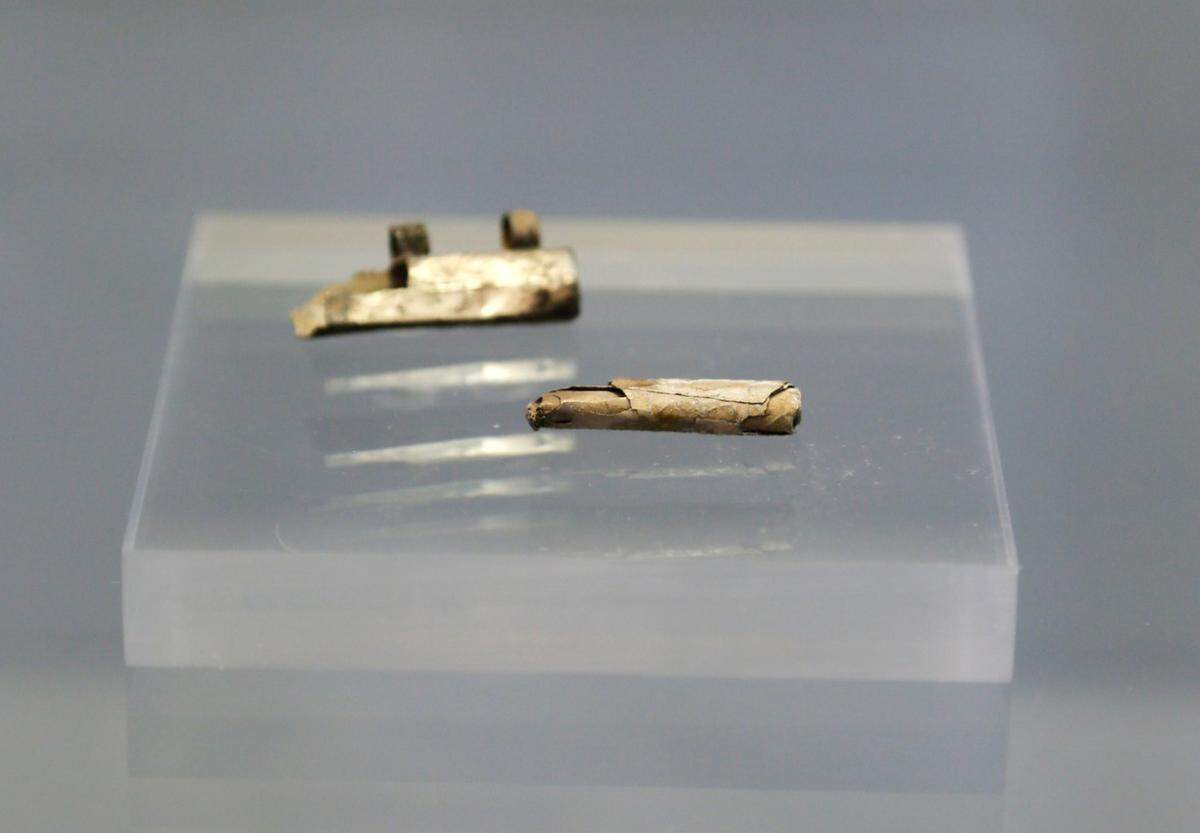
The method worked. Experts found 18 lines of Latin inscription on the delicate scroll, officials said. Linguists spent months deciphering the text, but the result proved to be worth the effort.
The ancient inscription heavily referenced Christianity — the oldest physical evidence of the religion north of the Alps, city officials said.
The translated inscription read: (In the name?) of Saint Titus. Holy, holy, holy! In the name of Jesus Christ, Son of God! The Lord of the world resists with [strengths?] all attacks(?) / setbacks(?). The God(?) grants entry to well-being. May this means of salvation (?) protect the man who surrenders himself to the will of the Lord Jesus Christ, Son of God, since before Jesus Christ every knee bows: those in heaven, those on earth and those under the earth, and every tongue confesses (Jesus Christ).

The amulet dated between 230 to 270 A.D., a period when Christians living under the Roman Empire were persecuted, officials said. The religion was growing in popularity, but being known as a Christian was still risky. At the time, the Romans controlled modern-day Frankfurt.
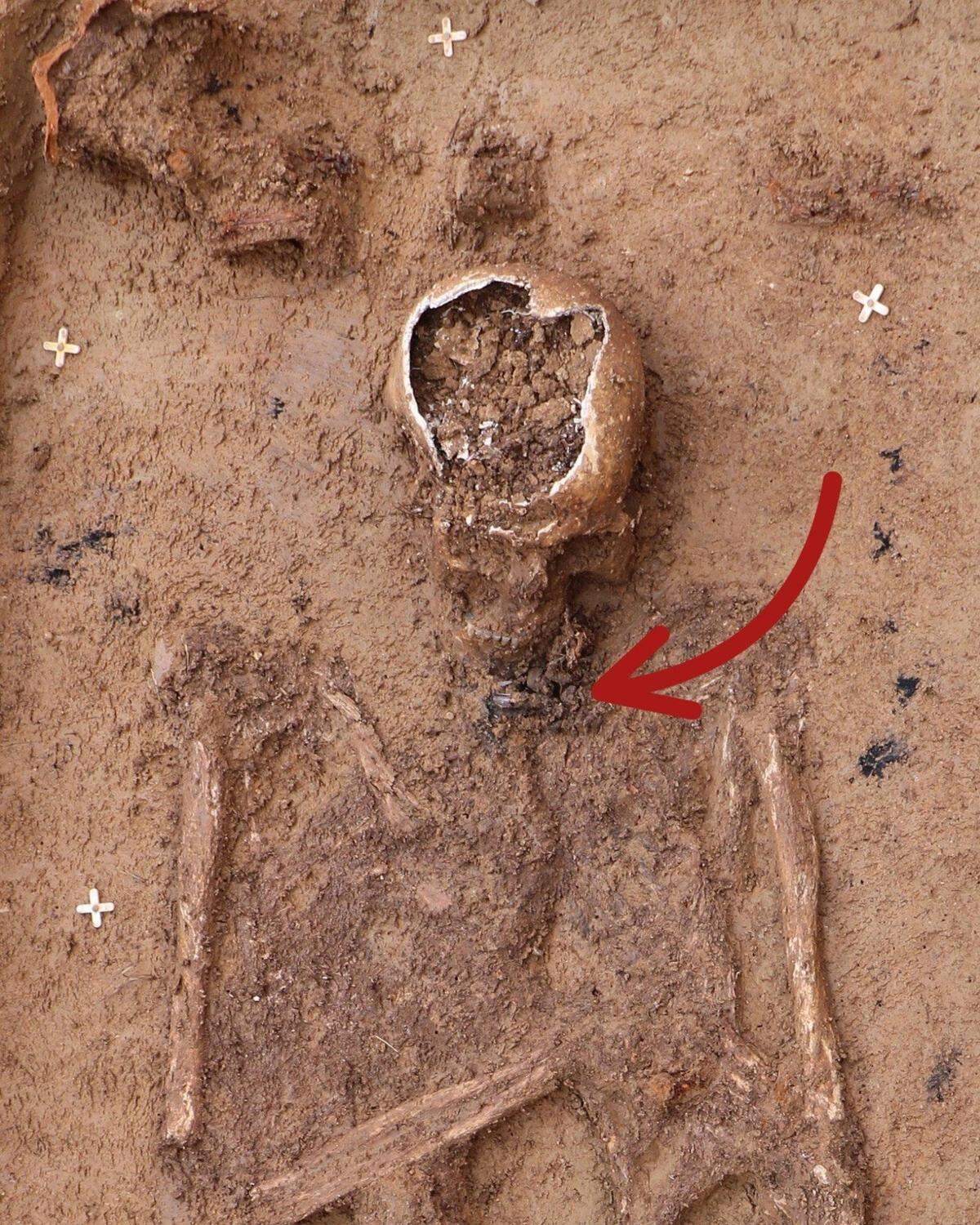
Archaeologists concluded the grave where the amulet was found belonged to a devout Christian man. He likely wore the amulet on a cord around his neck, similar to a phylactery worn by Jews. Experts don’t know if the ancient man kept his faith a secret or if he was able to practice it openly.
City officials shared photos of the amulet, scroll and inscription on Facebook. One photo shows the half-buried amulet during excavations.
Experts described the amulet as extraordinary, sensational and an important find for the history of Christianity. They suspect the text will prompt new questions for archaeologists, historians and theologians.
Previously, the oldest traces of Christianity north of the Alps were historical references to Christian communities and archaeological finds from about 300 A.D. onward.
Frankfurt, officially known as Frankfurt am Main, is a city in central Germany and a roughly 340-mile drive southwest from Berlin.
Google Translate was used to translate the news release and Facebook posts from the City of Frankfurt am Main.
This story was originally published December 12, 2024 at 3:06 PM with the headline "Mysterious ancient amulet turns out to be oldest trace of Christianity north of Alps."