Pile of burned wood found in UK quarry may have hidden ancient Roman well. See it
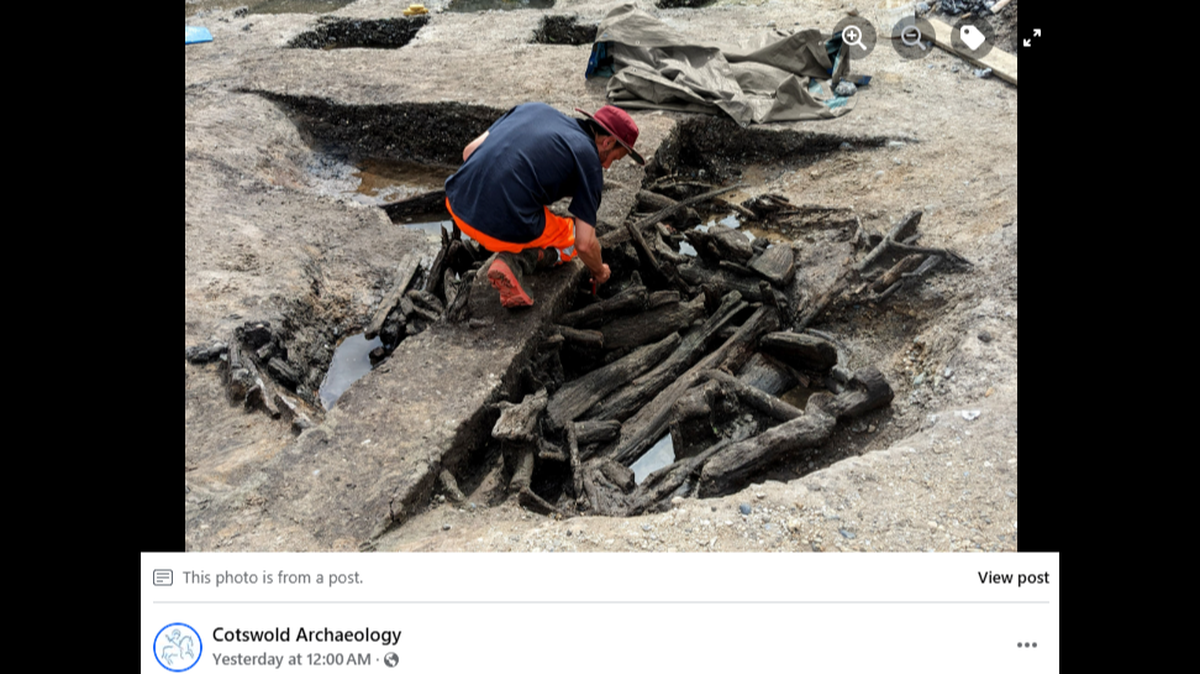
In a quarry in eastern England, archaeologists have been working for a decade to uncover layers and layers of past civilizations.
Cotswold Archaeology, a research and excavation firm, started work on Barham Quarry in 2014, and it has since discovered evidence dating from medieval times all the way back to the Neolithic period, about 5,000 years ago.
Now, the firm has announced its findings from the most recent archaeological season.
“So far, the earliest activity identified at the site is Neolithic to Bronze age in date,” Grace Griffith, Cotswold Archaeology’s publications officer, said in a Dec. 2 news release. “This is mostly in the form of a small number of pits, but also, some worked flints recovered in later features. This is what we call ‘residual finds,’ meaning that the flints would have been on the surface for many years before becoming trapped in the archaeological layers.”
The firm says this kind of artifact shows some background activity, where people were using the land as they were passing through or seasonally.
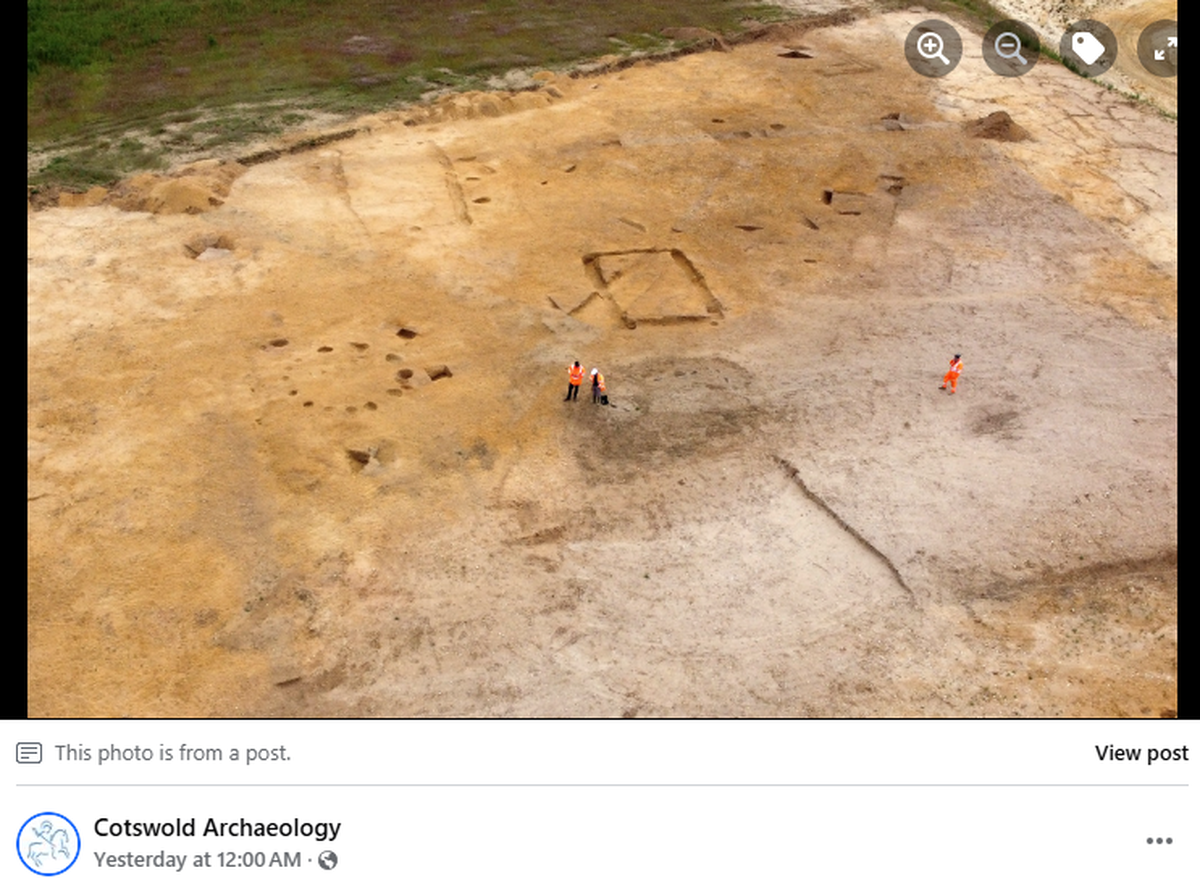
Ditches and pits from the Iron Age were also unearthed, possibly forming a trackway that extends more than 1,300 feet, Griffith said. A “double ditch alignment” had been first discovered in previous seasons, but this year was the first time the trackway could be mapped across three different excavation areas.
The trackway “once guided footsteps and wheels” around the site, according to a Dec. 2 Facebook post from Cotswold Archaeology.
Much of the site is younger, particularly on the northern end, with rectangular structures representing the remains of Roman buildings, according to the firm. Though the structures could be dated, their function is still a mystery.
“Four cremation burials were also identified in the northern excavation which have been tentatively dated to the Roman period,” Griffith said. “Interestingly, these burials were spatially and functionally separated from the majority of the other Roman features which were located further to the east and predominantly served agricultural purposes.”
Five more burials were found on the southern end of the site, but there was even less archaeologists could decipher from these remains, including what time period they came from.
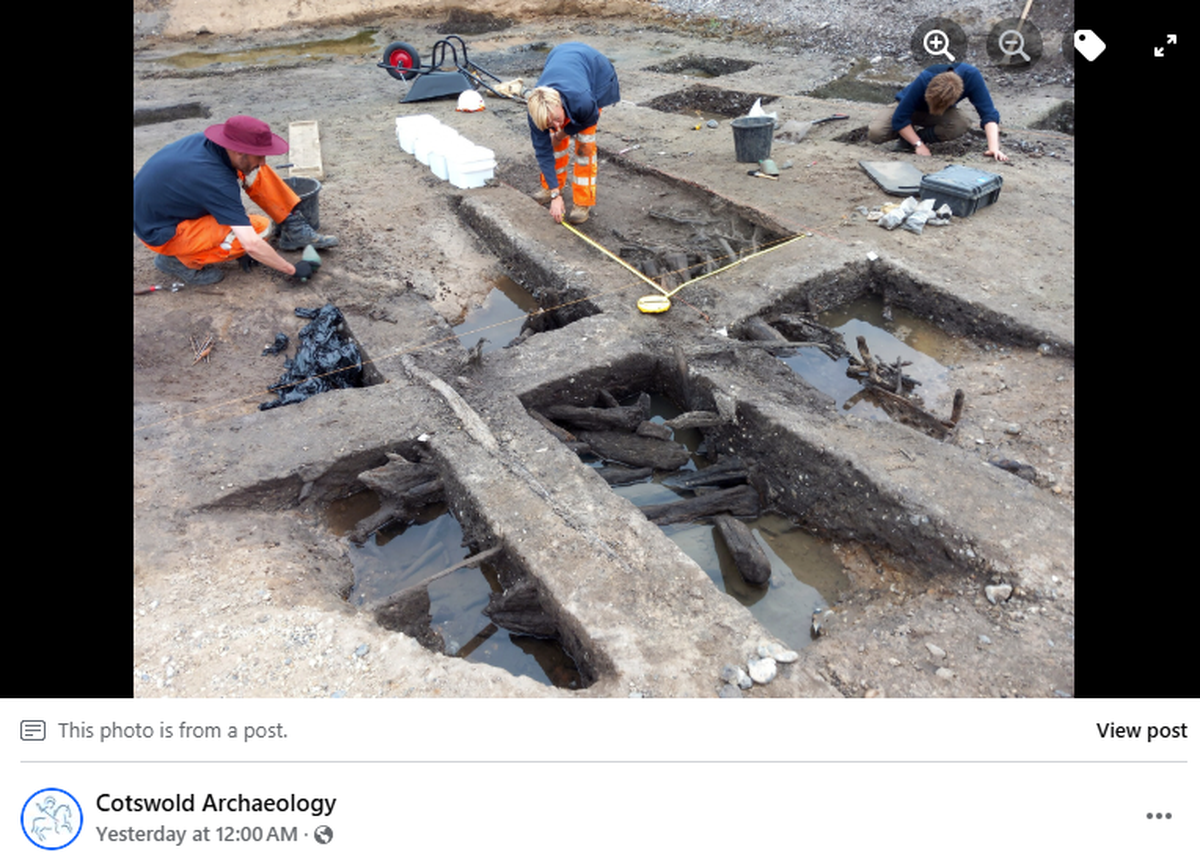
What may have stood out the most, however, was a pile of burned wood found buried below the surface.
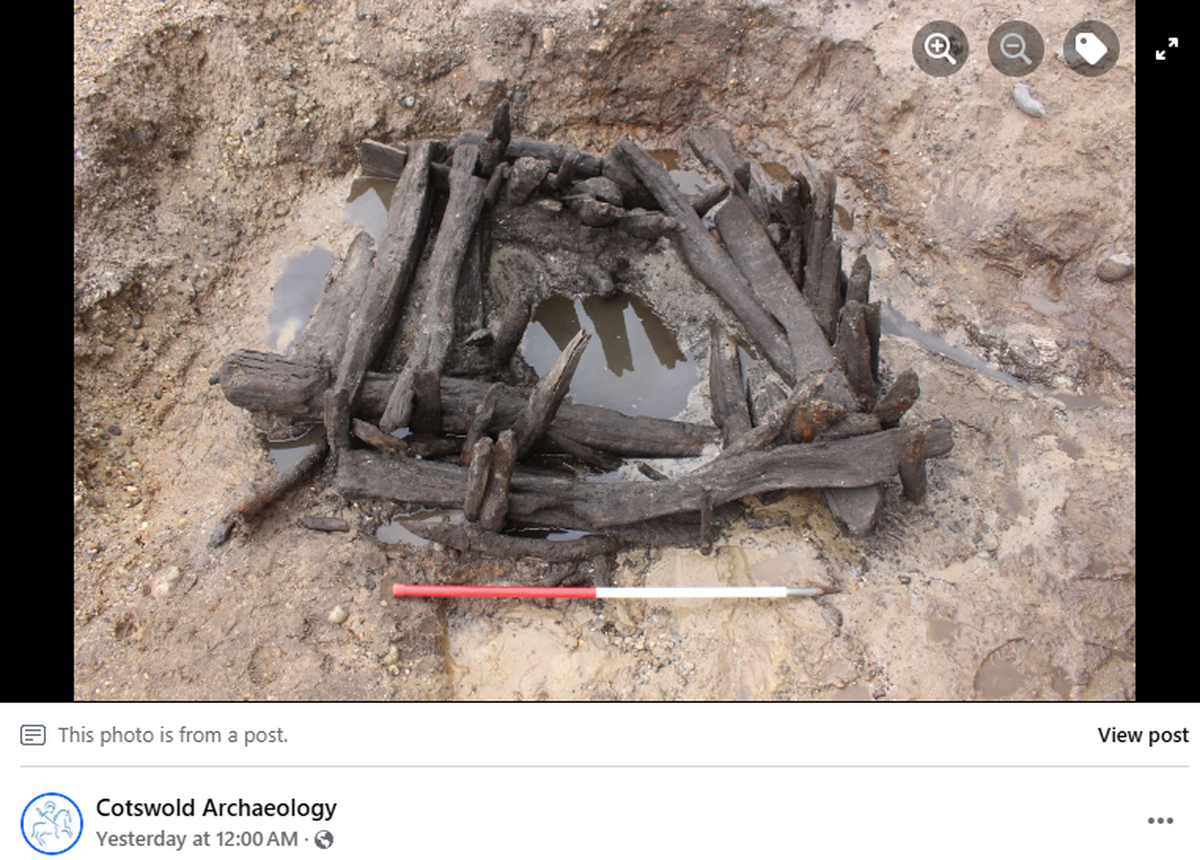
“Of particular note was a burnt mound feature with an associated well-preserved wooden trough or well, which was discovered in the south-western corner of the southern excavation area,” Griffith said. “The feature has also been tentatively dated as Roman, based on a small assemblage of pottery and the Roman woodworking techniques evident on some of the timbers lining the trough/well.”
The construction itself is made from an oak box frame, which was reinforced by placing wooden pieces horizontally and driving vertical stakes into the ground at the corners, the firm said.
This is a typical style and material for the inner linings of Roman wells, archaeologists said, and there are clear signs of woodworking. The ends of the wood pieces have been trimmed with an ax, and in the shape of a square cross-section, another Roman indicator.
“The (majority of the) woodworking has been carried out by a competent but non-specialised woodworker, using one or more axes, which are evidenced by several recordable stop marks,” archaeologist Michael Bamforth said in the release.
Roman wells, sometimes as deep as a two-story building, were feats of engineering at the time and required a significant amount of trial and error, according to the Museum of London Archaeology.
In the case of two wells discovered west of the Barham Quarry site, one of the massive wells had collapsed before it could be used, while the second one was more structurally sound, the museum said. The second well was lined with wooden boards to prevent the hole from caving in.
The Romans occupied England from the years 43 to 410, leaving behind countless wooden structures that reveal the methods behind their construction, the museum said.
Cotswold Archaeology said that despite years working in the quarry, archaeologists are left with “more questions than answers,” and fieldwork seasons will continue.
“Imagine the bustling agricultural activity, trade and community life surrounding the site, all echoing the rhythms of Roman Britain,” the firm said.
Barham Quarry is in Suffolk in southeastern England.
This story was originally published December 3, 2024 at 4:06 PM with the headline "Pile of burned wood found in UK quarry may have hidden ancient Roman well. See it."