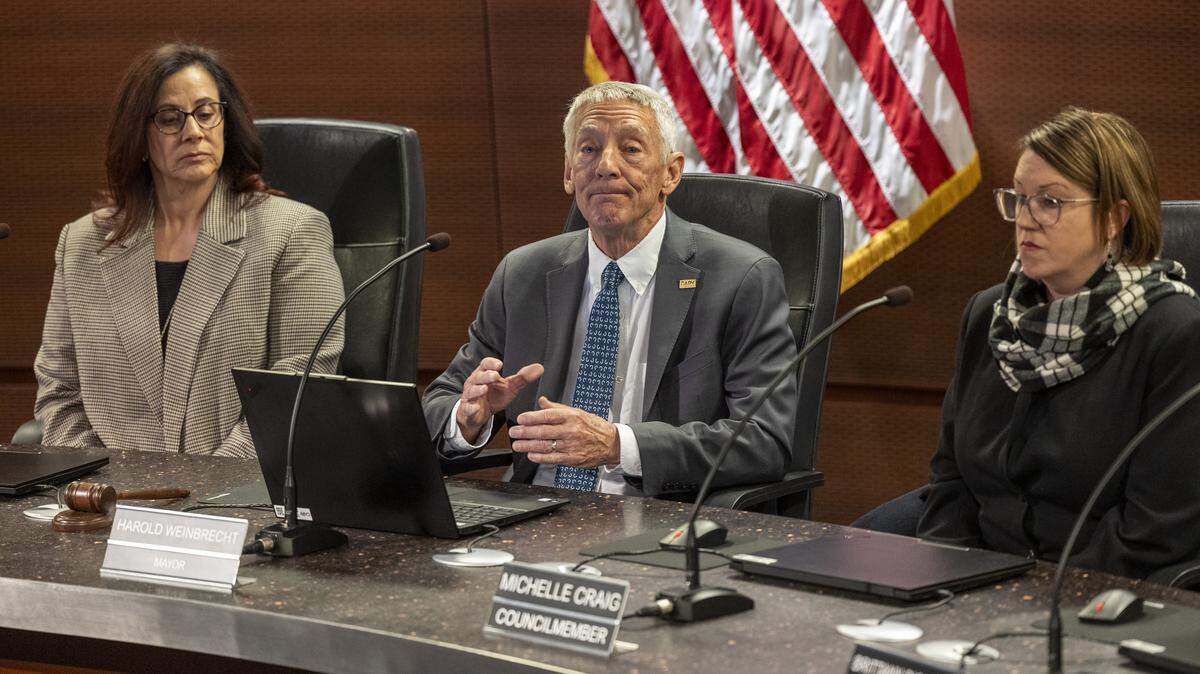
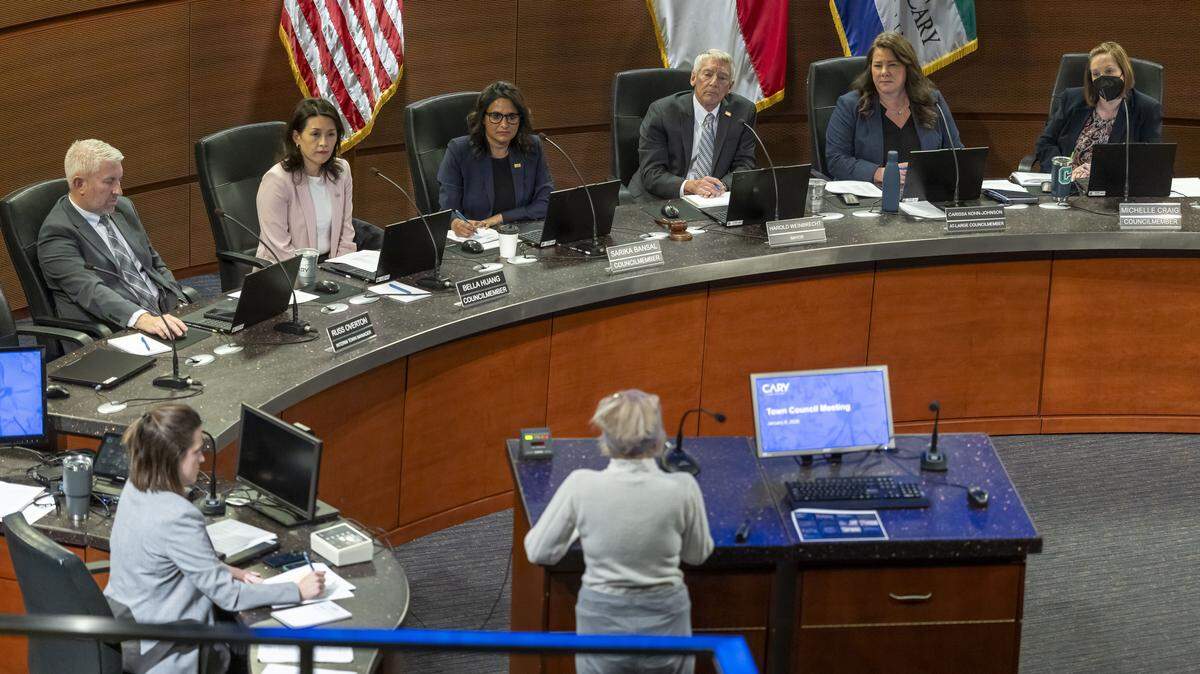
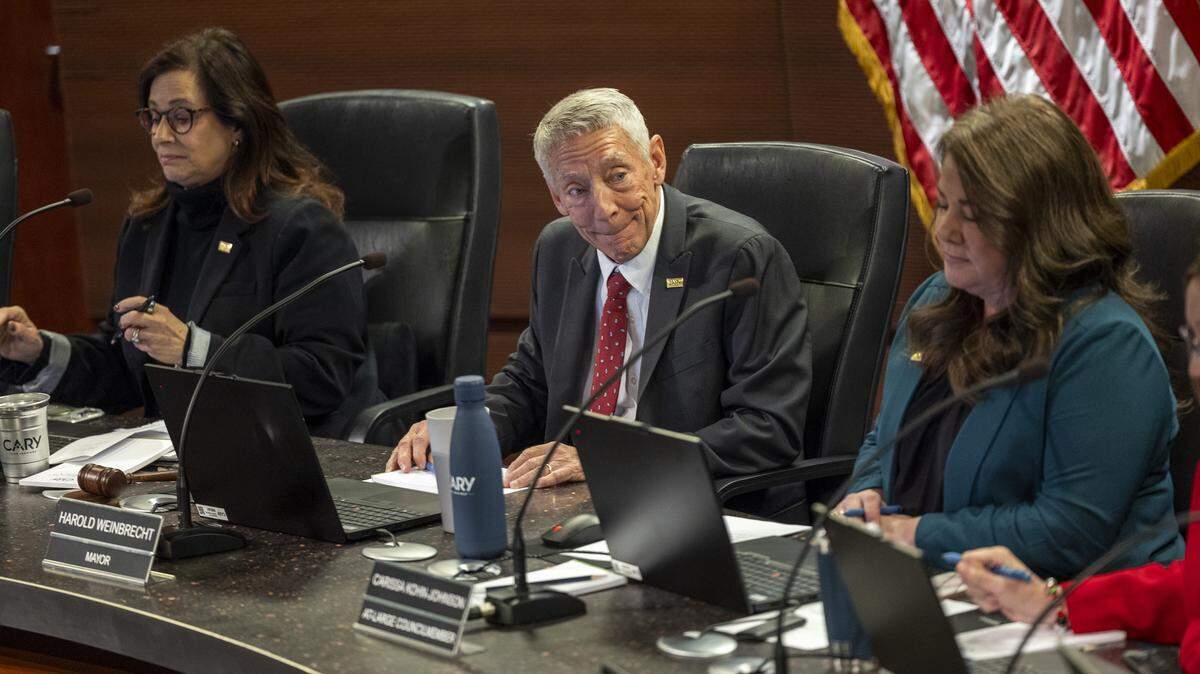
Mayor said non-ADA compliant trolleys Cary bought were returned. That didn’t happen.
AI-generated summary reviewed by our newsroom.
- Cary bought two trolley vehicles in 2022, found ADA defects, mayor said returned.
- Town stored the noncompliant trolleys, return attempts failed, sale followed.
- Cary incurred roughly $259,396 loss after selling two trolleys for $300,000.
READ MORE
Cary under scrutiny
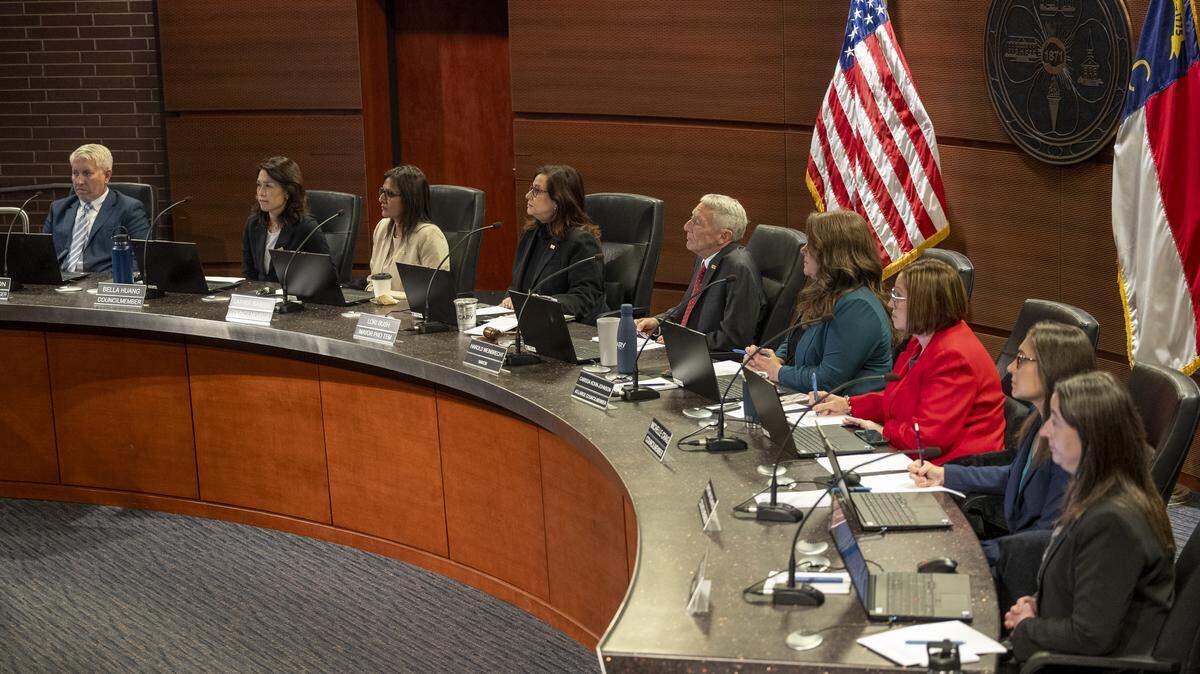
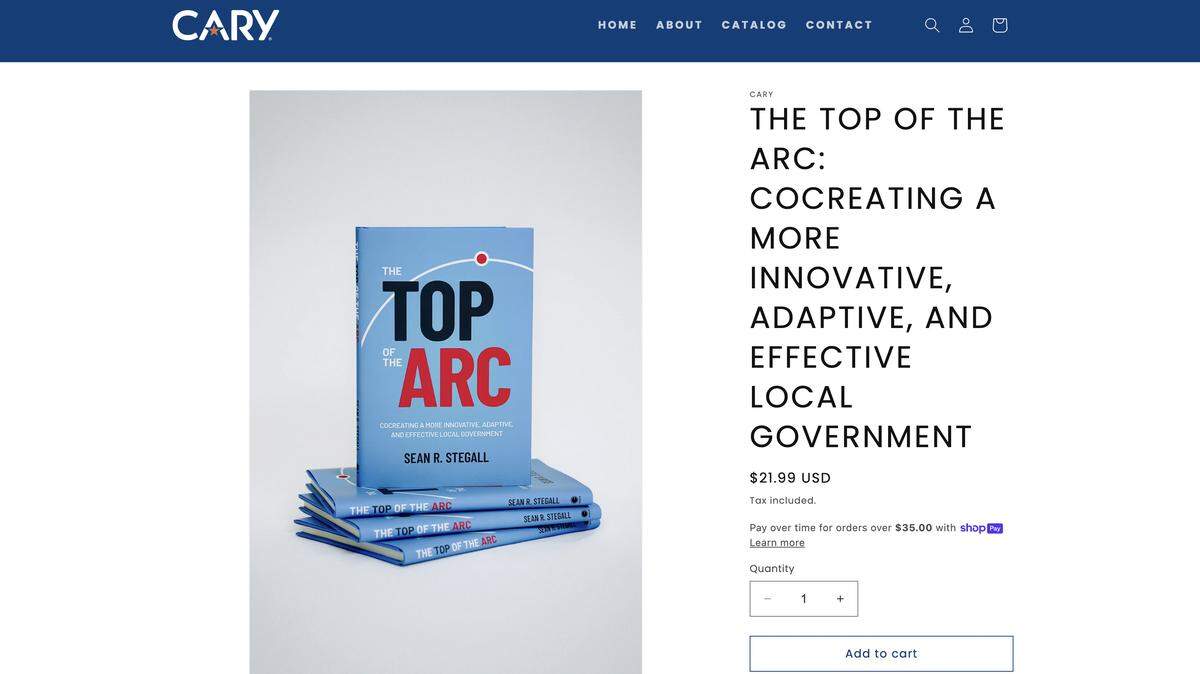
The town of Cary has been in the spotlight since late November, when Town Manager Sean Stegall was put on administrative leave without any explanation from the town. Stegall resigned Dec. 13, 2025, amid reports of questionable spending. Here is ongoing coverage from The News & Observer.
Expand All
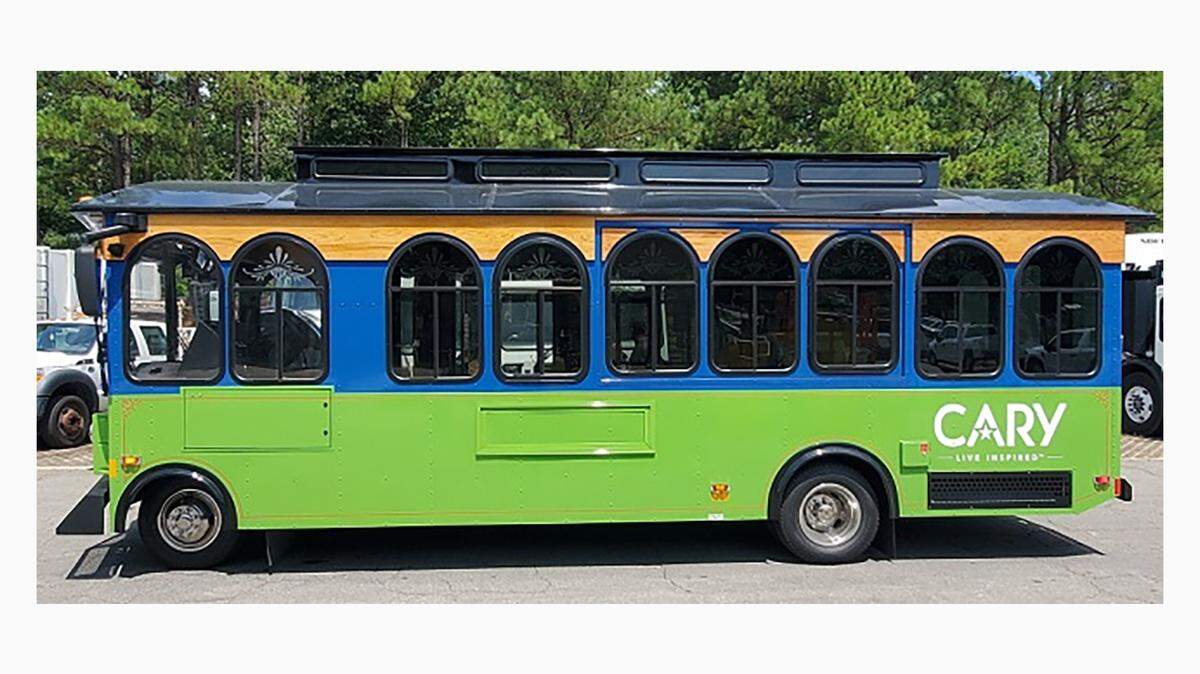
When the town of Cary purchased two trolley cars only to find out they didn’t meet federal accessibility standards, Mayor Harold Weinbrecht in 2023 wrote on his blog that they were sent back.
The town had spent $539,896 to purchase the vehicles from Specialty Vehicles and at least three town staff members had visited Wisconsin to inspect and test ride them before they arrived.
But the trolleys — which are really bus-like vehicles designed to look like old-fashioned streetcars — were not sent back to the seller, the town made public this fall.
Photos of the trolley cars obtained by a town council candidate in April and later a records request surfaced what was really was going on with the vehicles.
The town had stored them until this summer, when they were sold to a California community for $300,000.
Wrong size and slope
The Town Council approved the trolley car purchase in 2022 for a “Downtown Cary Loop” service. The vision was the vehicles would circle downtown to “address perceived parking concerns and to provide a fun and unique mobility experience,” according to the town’s October post addressing their fate.
At least three staffers went to Wisconsin in June 2023 to inspect and test-ride the new trolley cars built by Hometown Manufacturing, according to another post from Weinbrecht’s blog.
The more than 23-foot-long trolley cars arrived in Cary the next month, The Cary Report’s James Tuliano noted at the time. But the next month after that, a serious problem emerged.
The trolley cars didn’t meet Americans with Disabilities Act compliance. For one, the area designed for mobility devices — like wheelchairs — was too small.
And another section was so sloped it would “require the person using the mobility device to ride pitched forward in their seat,” a town staff member said in a 2023 email to the U.S. Department of Transportation’s civil rights division, obtained and reviewed by The News & Observer.
The Federal Transit Administration responded that federal law does not require wheelchairs to have brakes or wheel locks “as would be needed in the situation” on the sloped floor of the trolley, as described by the town.
‘Cary’s trolleys were warehoused’
As far as The N&O could observe, town officials were silent in public messaging about the trolleys — and the money lost in their purchase — until the local candidate raised questions this year.
During her second unsuccessful campaign to try to win a seat on Town Council, Renee Miller received photographs of the allegedly returned trolley cars sitting in storage, she told The N&O.
That prompted her to dig into the issue and post a video on Facebook in October explaining what she had learned, in part from a public records request. The trolleys hadn’t been returned, but were stored for over a year in a “warehouse or garage, reportedly in downtown Cary,” Miller said in her video.
She also laid out a timeline of when the vehicles were purchased, when they were delivered and when town staff realized they didn’t meet ADA standards.
%20(1).png "image (8) (1).png")
Just over two weeks later, details about the trolleys appeared on the town of Cary’s website headlined: Get the Facts: Downtown Trolleys.
Previous links to the loop project on the town’s website were taken down, according to the October post, while staff “worked toward a resolution.
”That process to return the trolleys failed after the broker, Nevada-based Specialty Vehicles, “eventually became unresponsive,” and the plan fell through, according to the text posted online.
“In the meantime, Cary’s trolleys were warehoused for protection,” the town’s website says. Town leaders did not respond when The N&O asked questions about how much money, if any, it spent to warehouse the vehicles.
They sat for over a year before the town was able to find a buyer. The Redding Area Bus Authority, in California, purchased the two trolleys from the town in June of this year — at a significant discount from their original purchase price.
The vehicles were sold to the Redding Area Bus Authority for $300,000 — with the town paying an additional $19,500 to ship the trolley cars to California, the town reported on its website.
The trolleys originally cost Cary $539,896 but their value had depreciated to $314,397.60 by July 2025, according to the town website post.
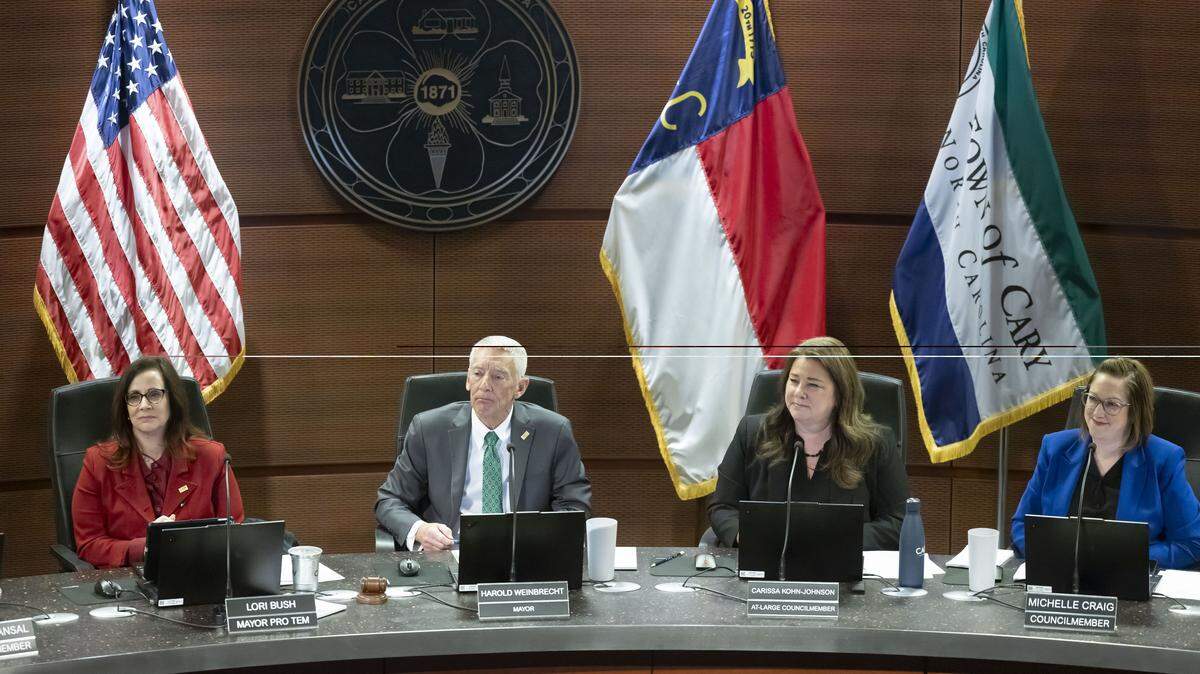
Mayor Weinbrecht and other Cary officials did not respond to The N&O’s calls and emails looking for clarification about what had occurred.
Trolleys gone, a call for transparency
Redding Area Bus Authority Transit Manager John Andoh told The N&O that the California transportation department discovered that Cary was selling the trolleys through Specialty Vehicles.
Both the vehicles had over a thousand miles on them at the time, according to a staff report presented to the Shasta Regional Transportation Agency in California.
When asked about why she thought it was important that the public know Cary had the trolleys for as long as it did, Miller said there needs to be an ongoing dialogue between residents and elected officials about what the government does.
“I don’t think that was happening with regard to the trolley and apparently with regard to some of the other things that have been going on,” Miller said.
Cary’s former Town Manager Sean Stegall resigned this month under highly unusual circumstances. Town leaders have hired a law firm to better understand the scope of “over-the-top” spending, inadequate financial reporting and lack of transparency, Weinbrecht said during an emergency town council meeting on Dec. 15.
This story was originally published December 22, 2025 at 5:30 AM with the headline "Mayor said non-ADA compliant trolleys Cary bought were returned. That didn’t happen.."