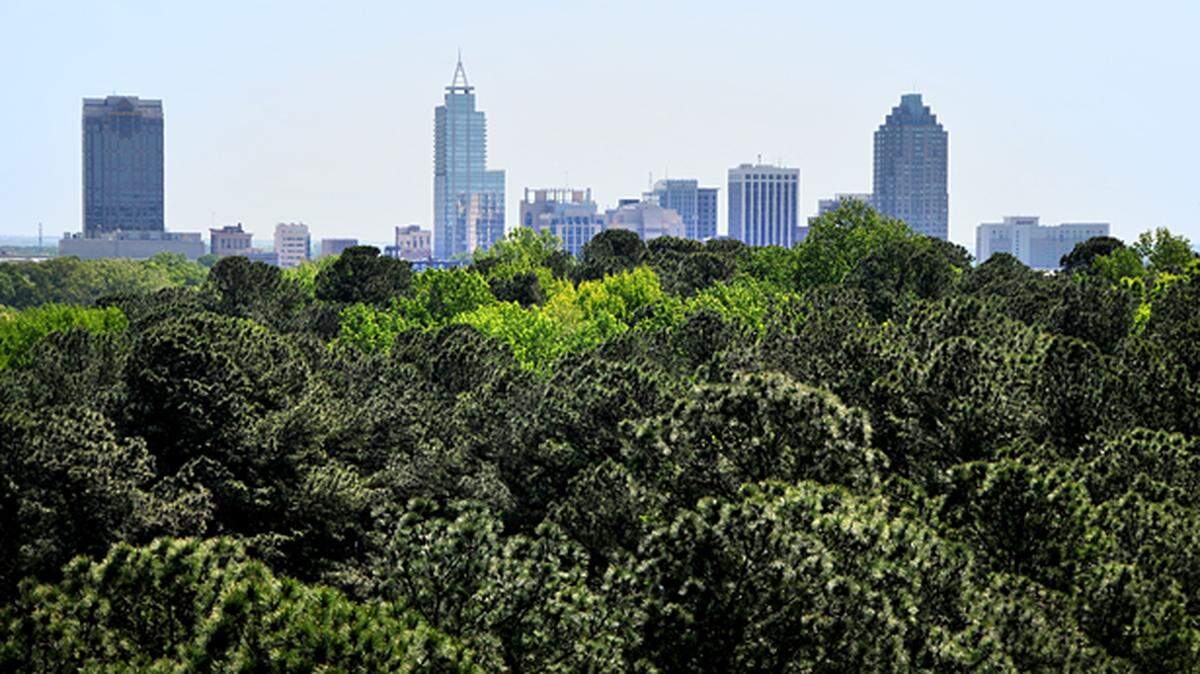
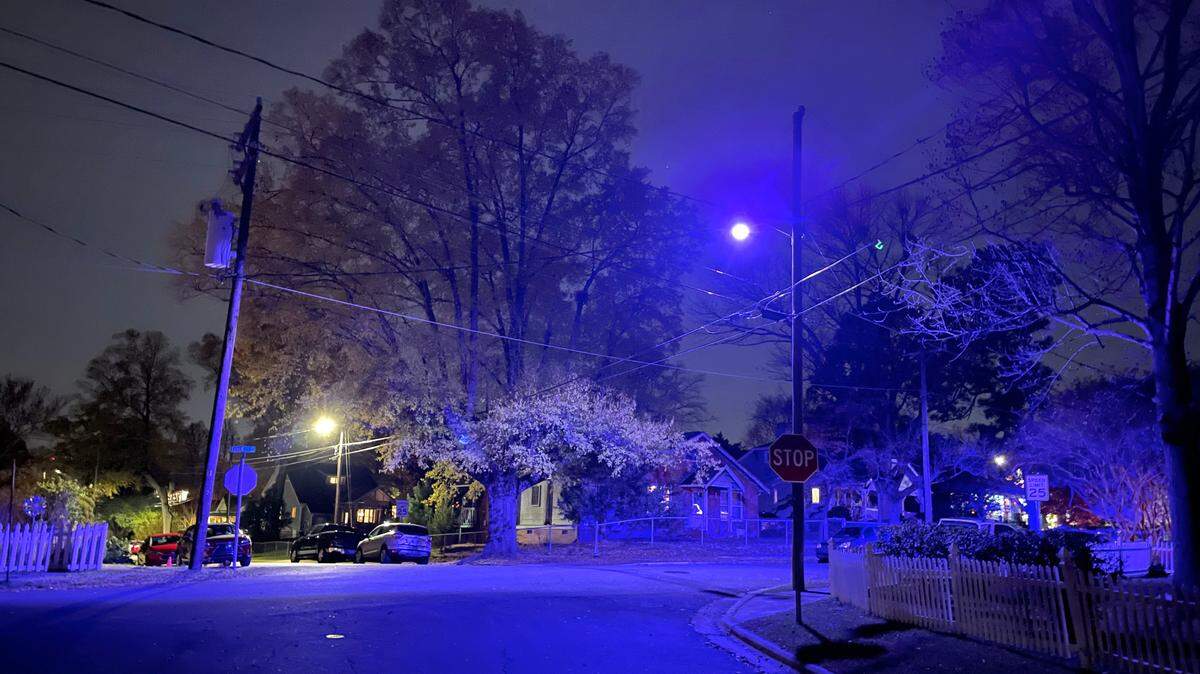
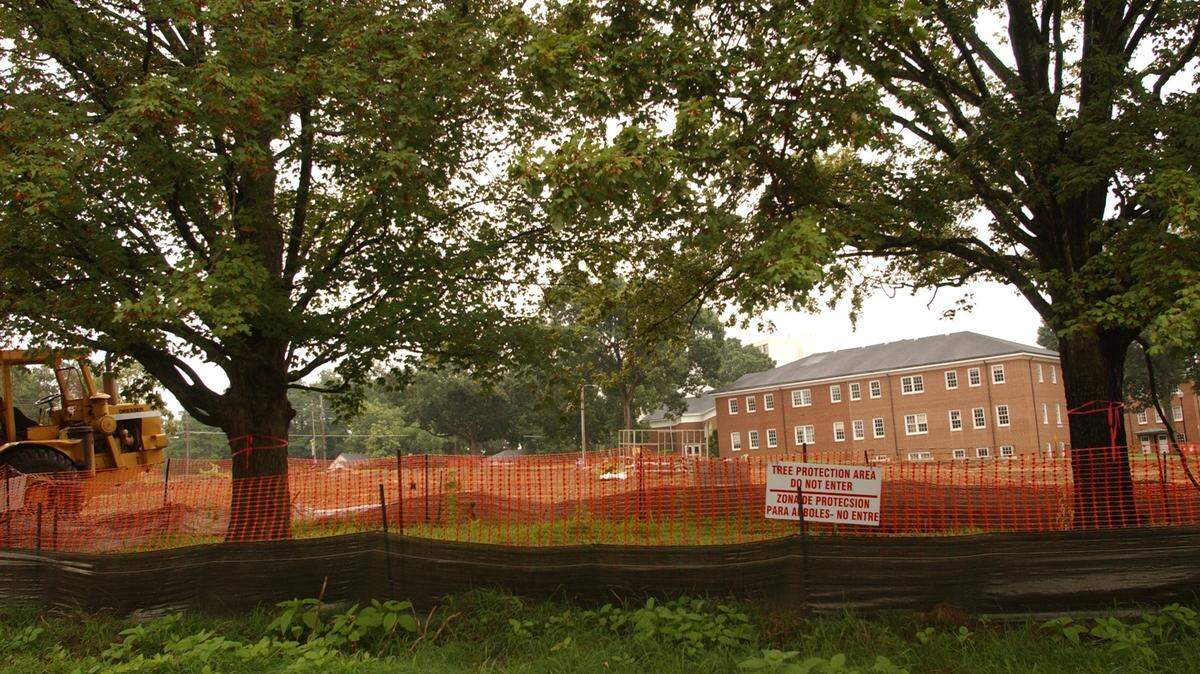
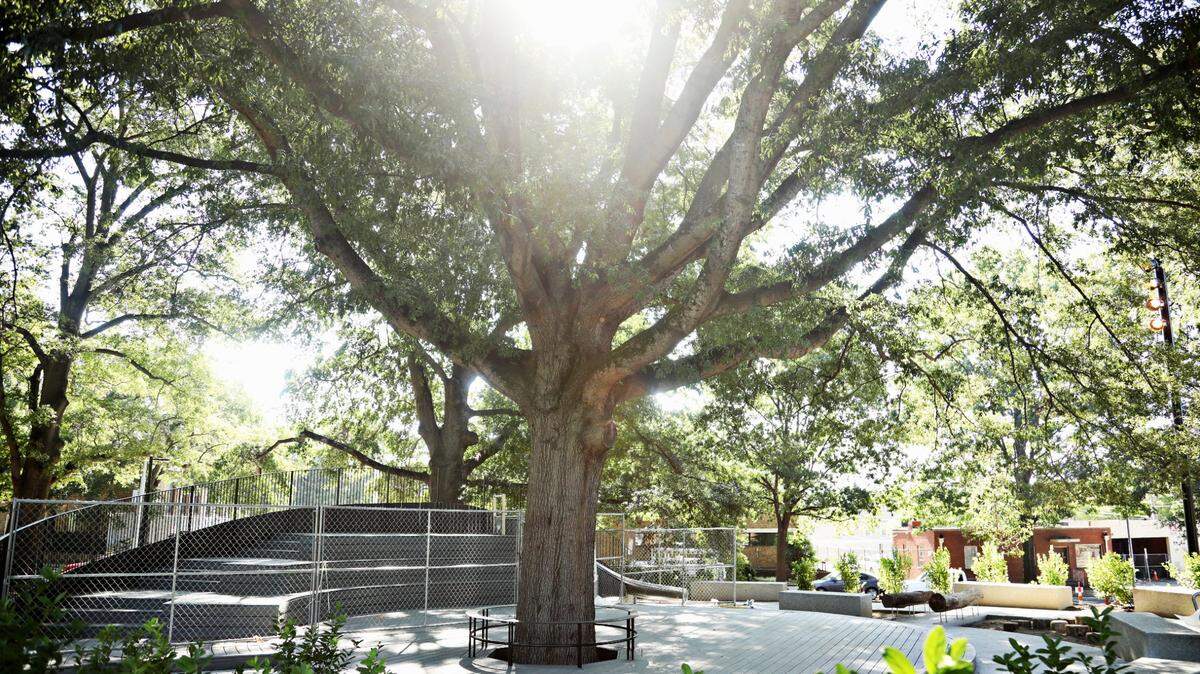
Raleigh is the City of Oaks. But what happens when the oak trees die or disappear?
READ MORE
Read more Triangle Asked & Answered stories
This series from The News & Observer’s Service Journalism team answers questions from readers about the Triangle region (and North Carolina). Here are some of the questions we have answered so far.
Expand All
The latest in our Triangle Asked & Answered series, in which we answer questions from the community, explores the state of Raleigh’s trees.
Raleigh resident Lucinda Thrall wrote to us to say she hopes the City of Oaks can keep its name, but in recent years, she thinks Raleigh seems to be losing lots of its treasured trees.
“Raleigh’s old oaks are stressed and dying, and Raleigh’s NeighborWoods replacement plan was sadly disbanded, so what is being done to maintain our beautiful tree canopy of oaks and other trees?” she asked.
Here’s what we learned.
Why is Raleigh called the City of Oaks?
How many oak trees does Raleigh have?
These large, long-living trees stand out considerably, so it’s natural to feel their absence whenever they’re removed, Manor said.
Are oak trees replaced when they die?
“Our goal is to put the right tree in the right place. A large, maturing tree in a tight place isn’t setting it up for success,” Manor said. “A healthy urban forest needs diversity of tree species, but also different ages and sizes. Today’s little tree is tomorrow’s big tree.”
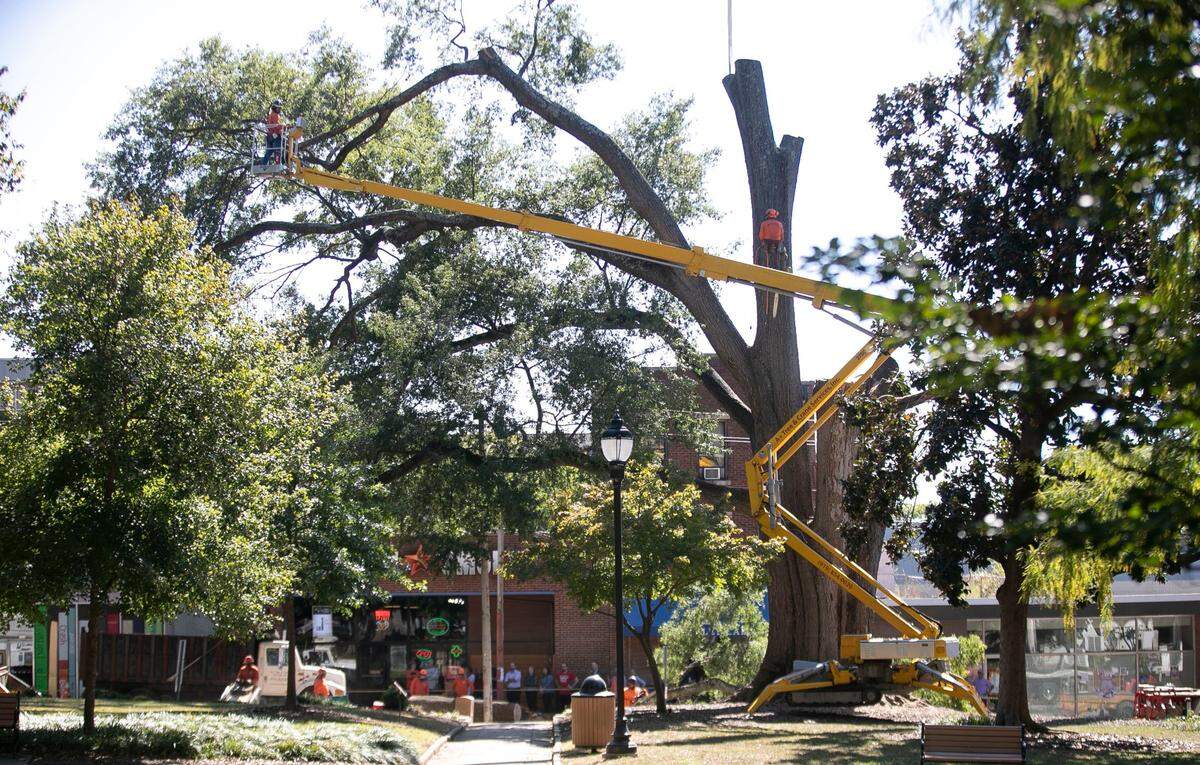
What’s happening to Raleigh’s oak trees?
When parks and neighborhoods are constructed, it’s often the case that all trees are planted at the same time, meaning the trees age and reach the upper limits of their life span together, so they’ll need to be removed and replaced together.
When this occurs in a specific park or neighborhood, this can compound the gap.
Raleigh residents can request free trees to plant
Raleigh’s NeighborWoods program, which ran from 2003 to 2015, gave trees to residents for free, but they had to be planted in a public right of way, properly mulched and watered.
By 2012, the trees planted saved Raleigh nearly $1 million in reduced storm water management, increased air quality, higher property values and more, according to a report from the City of Raleigh.
Urban Forestry still gives trees to Raleigh residents who request them, though trees are now planted in collaboration between the requester and the city, Manor said.
Here’s how this works:
• Yearly tree replacement: Urban Forestry will replace many of the removed trees on city-owned and controlled property on an annual basis.
• Volunteer workdays: If a neighborhood or home owners’ association feels they’re lacking street trees, they can reach out to Urban Forestry and arrange a volunteer workday to plant trees in their area.
Residents are welcome to request specific types of trees, though the city will determine which tree is best for the specific location. Manor said the goal is to put the largest viable tree in place, though that varies from site to site.
To get in touch with Urban Forestry and learn how to request trees, visit raleighnc.gov/parks/tree-planting or email trees@raleighnc.gov.
Last planting season (October to April), Urban Forestry planted:
100 street trees in the right of way to replace trees located downtown, in historic districts and in medians
1,354 street trees as part of new development
20 trees in parks as part of the city’s donor tree program
54 trees in coordination with a neighborhood group
400 trees with volunteer groups in parks and greenways
Raleigh’s forthcoming tree canopy assessment
This spring, Raleigh is participating in a project run by Wake County in which a private company will examine Raleigh’s canopy cover— meaning the proportion of the area covered by trees — as of 2020. This project will compare the current canopy cover to past years, and it’ll highlight areas of loss or gain over time.
This approach will take a vulnerability and equity lens, meaning a special focus will be placed where trees are planted in areas with primarily non-English speaking residents or areas with people with disabilities, for example. This assessment will determine where trees need to be replanted or added in the coming years.
“It’ll help the city get a macro picture of where we have canopies and where we need it, and it’ll help us focus in and see which trees will have the best benefit when working in concentrated areas of the city,” Manor said.
Who plants and protects Raleigh’s trees?
The city’s Urban Forestry Division oversees trees located in the right of way (those square patches of grass between the sidewalk and street), recorded tree conservation areas and protected buffers on properties two acres and larger.
“If a tree falls at 3 a.m., our staff will go out with their flashlights and pick it up,” Manor said. “We like to say we take care of trees from the acorn to the stump grinder.”
Raleigh has been a member of Tree City USA — an initiative of the Arbor Day Foundation to encourage cities to expand and protect their urban forests — for more than 30 years.
This story was originally published February 16, 2023 at 10:07 AM with the headline "Raleigh is the City of Oaks. But what happens when the oak trees die or disappear?."