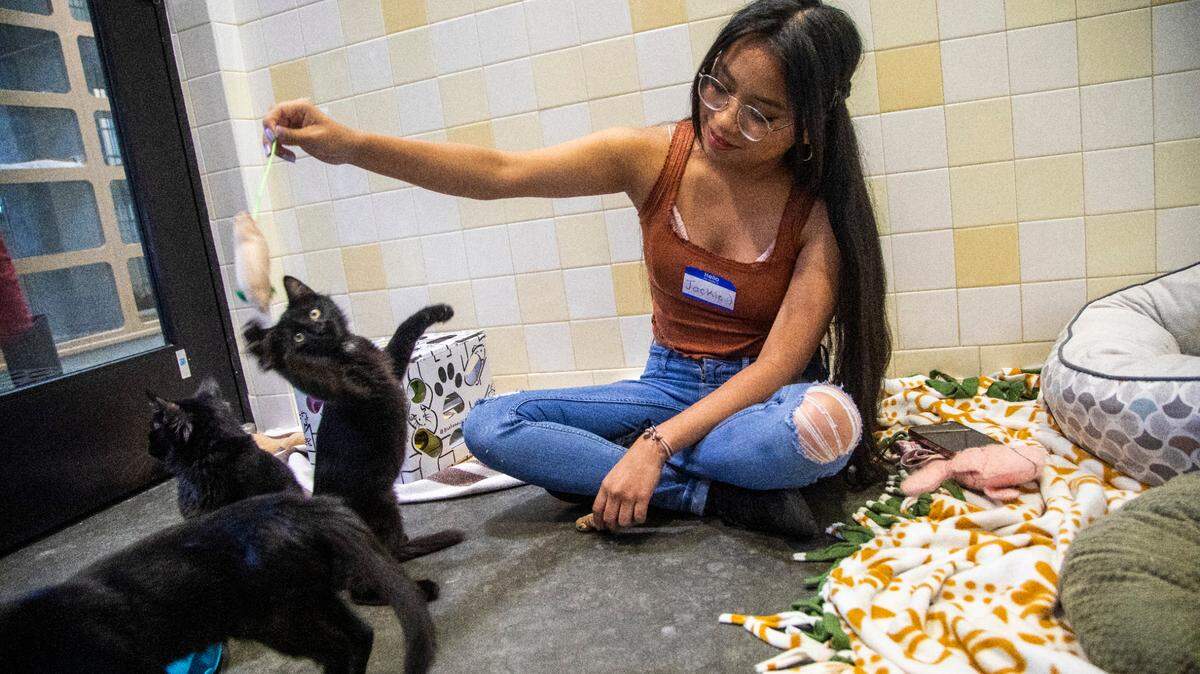
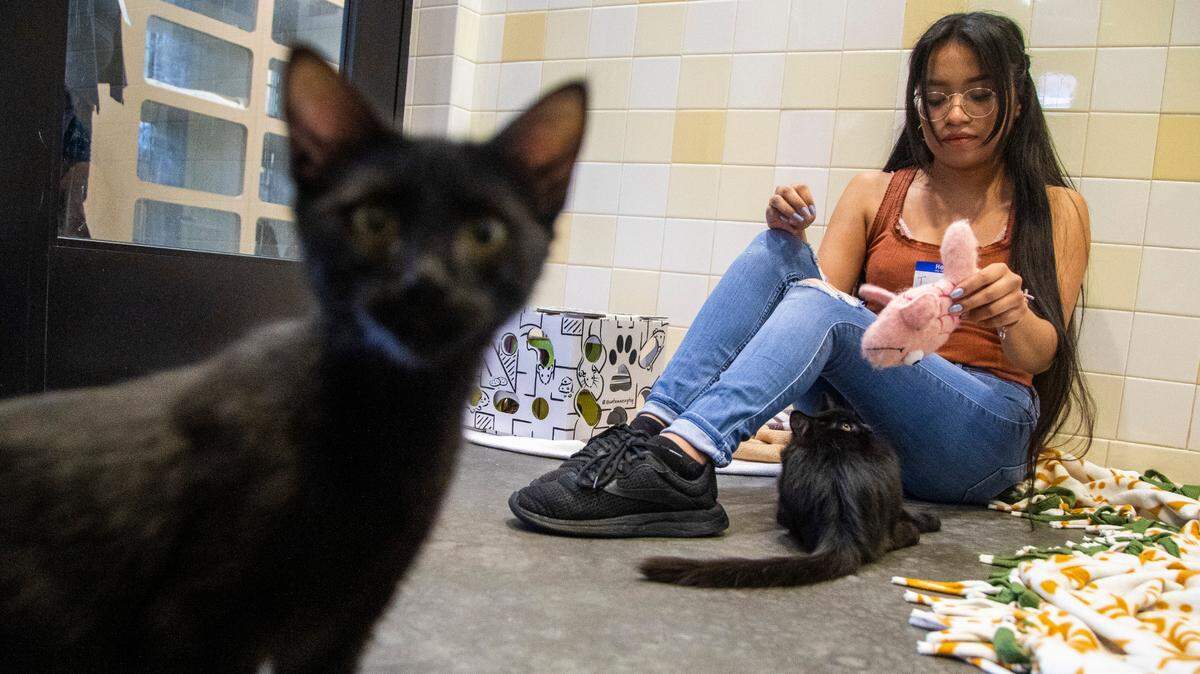
As Triangle shelters fill up, here’s how to keep dogs and cats off the track to euthanasia
READ MORE
Crowded out?
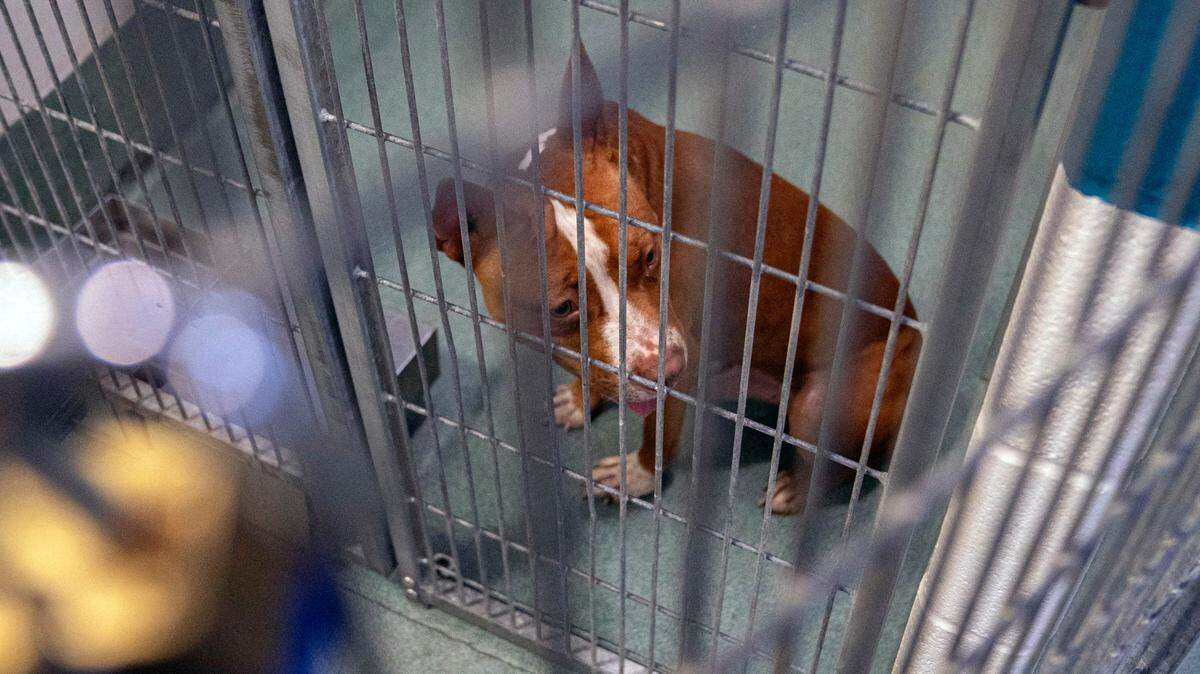
Animal intake rates are spiking across the Triangle. North Carolina has the third-highest rate of animal shelter euthanasia in the country. With many at risk of being put down, will rising numbers of unwanted animals reverse years of progress?
Expand All
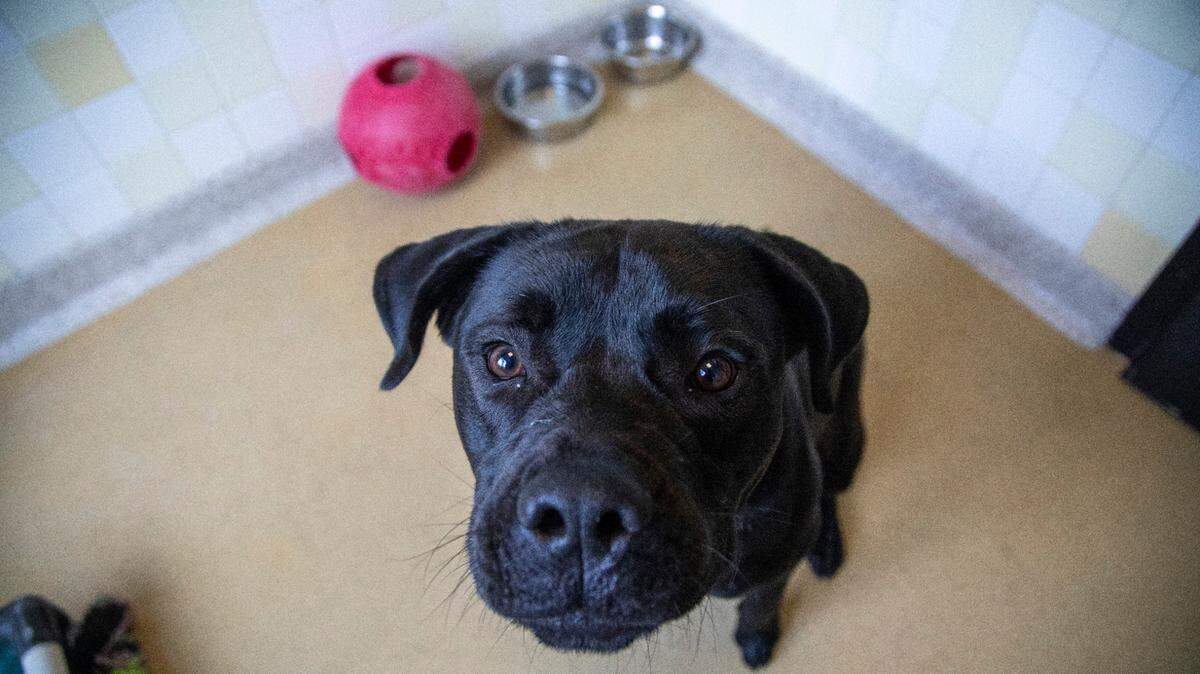
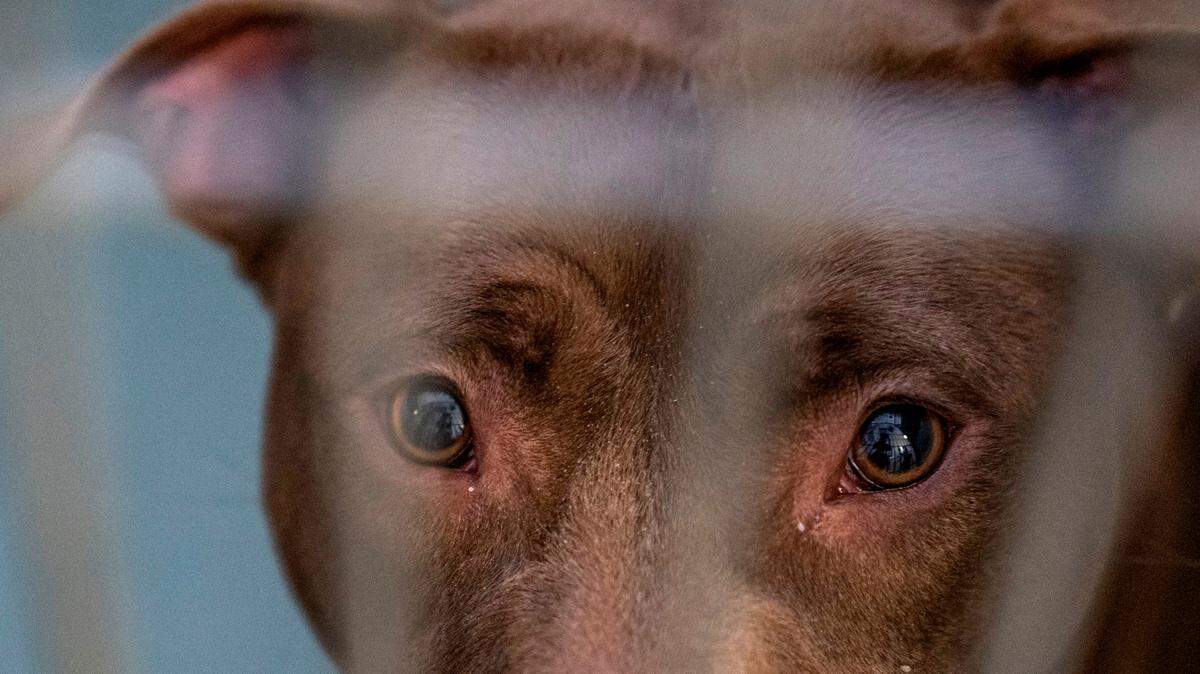
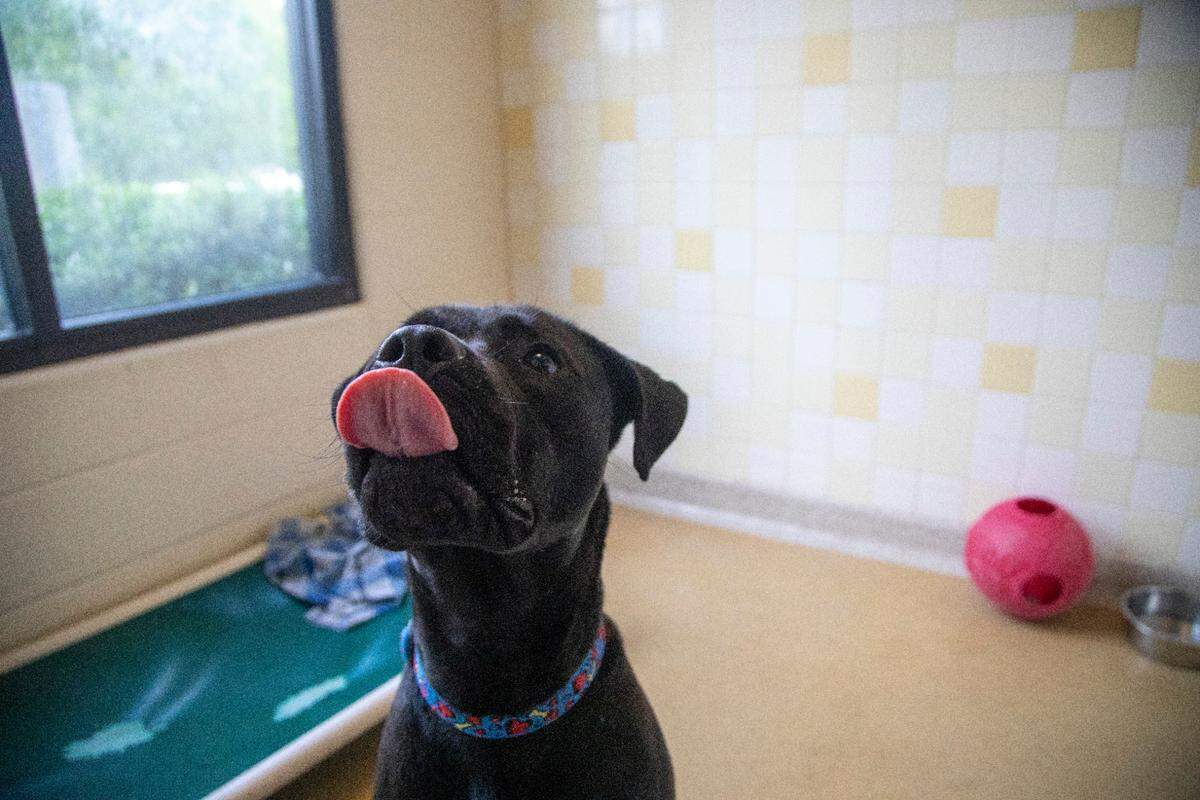
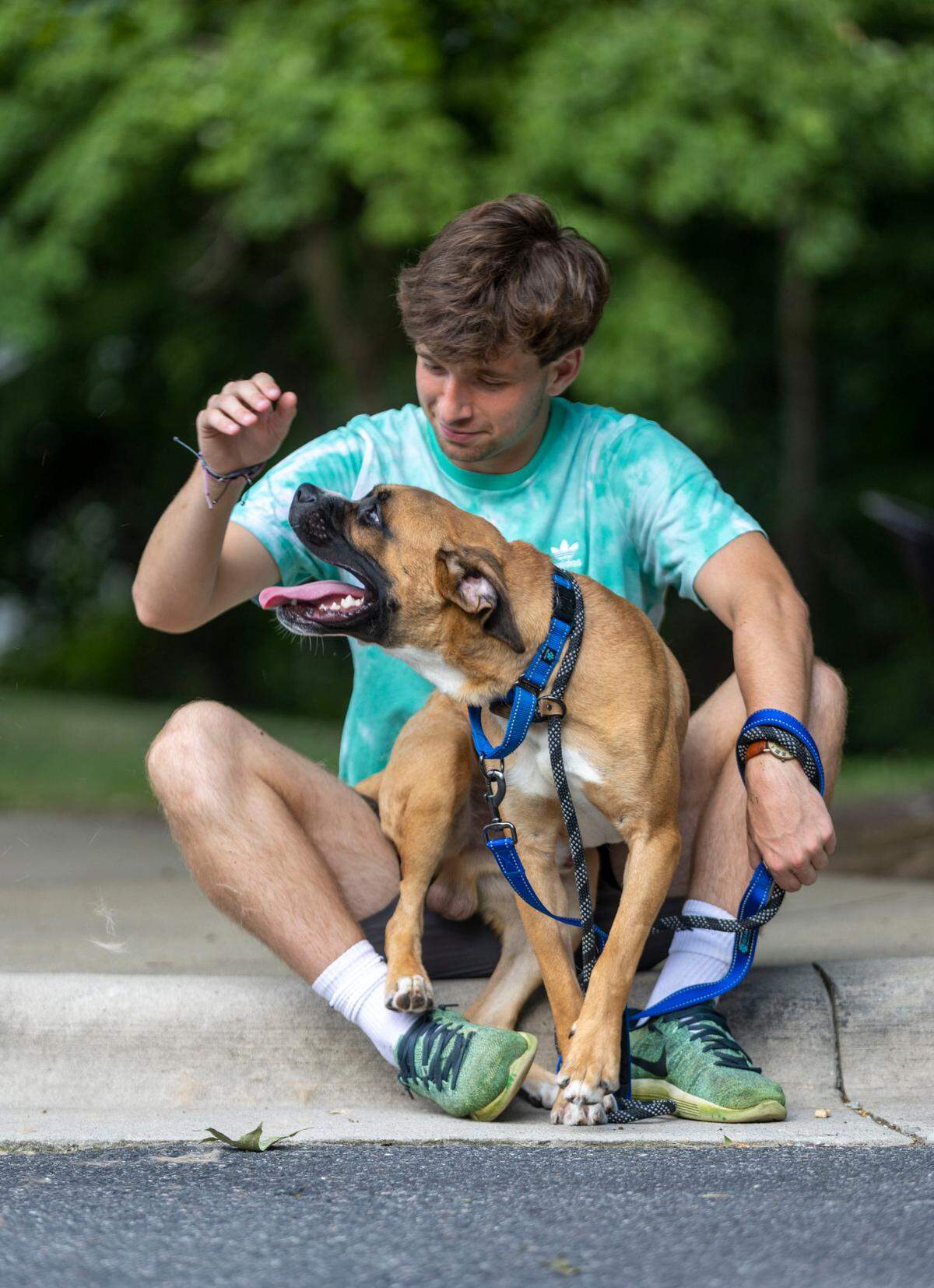
The animal shelter staff can’t figure out why no one has adopted Rameses yet, with his soulful chocolate eyes and his fully paid adoption fee.
“He’s amazing, he’s intelligent, he bounces like a puppy but he can also chill out with you on the couch,” said Tenille Fox, Orange County Animal Services spokeswoman.
The 2-year-old bulldog mix is a master of long stares, winning smiles and tennis ball catch. He’s also the center’s longest resident, there since March 25. The best Fox can figure is it takes him longer to calm down than the 15 minutes allotted for private visits, so maybe adopters see him as too high-strung.
While Rameses may be growing impatient, the former stray is lucky. He will wait in his kennel until a new owner plucks him from the lively adoption floor.
He wouldn’t have made it this far in many North Carolina animal shelters, where stray animals can be put down within 72 hours, and owner surrenders within one day.
North Carolina has the third-highest rate of animal shelter euthanasia in the country, per data from the N.C. Department of Agriculture and Consumer Services, animal welfare nonprofit Best Friends reported. About 21.6% of pets surrendered to county shelters don’t come back out. And though Orange County hasn’t had to euthanize a pet for space reasons in many years, shelter intake is up again statewide after a long reprieve coinciding with the start of the COVID-19 epidemic in 2020. Promoting more adoption isn’t working fast enough.
Now, some shelters and rescues in the Triangle and beyond are reaching out for help and finding creative solutions so they don’t have to double down on euthanizing dogs to make room for more.
Animal intake rates are spiking
The News & Observer spoke to eight shelters and rescues within an hour’s drive of Raleigh. All said they’ve taken in more animals this summer, even those shelters where intake and euthanasia have trended downward in recent years.
Wake County has both a municipal shelter, which takes in all stray animals, and a private SPCA shelter. At the government shelter, euthanasia rates have declined from 23.8% to 7.4% over the last five years, and intake numbers dropped significantly in 2020.
Durham County, which euthanized 30% of cats and dogs last year from 42% five years ago, took in about a thousand fewer cats and dogs than usual in 2020. Similarly, Orange County, where euthanasia dropped from 13% to 8% over the past five years, took in about 700 fewer animals than usual in 2020.
Shafonda Allen, executive director of the Animal Protection Society of Durham, expects euthanasia to spike if the recent intake trend continues — even if the shelter can process more adoptions than before.
“We adopted out maybe 50 more animals last month than we did (that same month) the year before,” Allen said. “But we received 100 more animals.”
The pandemic could be behind the shifts from 2020 to now, said Sandra Strong, animal services director for Orange County. Intake numbers dropped as adults worked from home. Now, animals adopted during the pandemic are returning in droves, Strong said.
From the beginning of June to mid-July, the Wake County municipal shelter took in 1,100 animals. Just over 200 were surrendered by their owners, said county animal services director Dr. Jennifer Federico.
Some animals land at municipal shelters after their owner dies or becomes ill. Some can’t follow their owners through downsizes and divorce. Many landlords enforce breed and size restrictions on tenants’ pets, Allen said.
Strong said students and short-term residents may be more likely to surrender their pets when they move. That’s how Strong got Thunder, her year-old pit bull-Labrador mix, who was surrendered by a college student when their roommate left town.
“I tease him that he grew up in a frat house,” she said.
Keeping a pet can be more expensive than adopters may have realized, said Frankie Nobles, chief of animal services for Vance County. The ASPCA estimates that the first year of dog ownership can cost between about $1,300 and $1,850, including supplies like food and medical bills.
“We’re seeing more and more people just not being able to care for their animals,” said Anna Ellis, the director of the Sampson County shelter.
Molly Goldston, executive director at Saving Grace Animals for Adoption in Wake Forest, said Saving Grace is seeing more young dogs, possibly because many shelters and spay/neuter clinics reduced their hours during the early pandemic, leading to more unwanted litters.
‘Busting out of the seams’
Municipal shelters can double up pets to maximize kennel space. However, that risks spreading disease and starting personality conflicts.
They could move dogs into any available foster homes or make urgent adoption appeals, as the Wake County Animal Center did in June. The center also offered a name-your-price special on cats to free up space during kitten season.
“We don’t want to euthanize for space, and this plea is to make our community aware of the urgent need,” read the center’s June press release.
They can also contact rescues, some of which pull regularly from kill shelters to stay ahead of the 72-hour hold. Goldston visits shelters in counties with high kill rates, including Robeson and Sampson, twice a week to take on as many animals as she can fit on her vast rescue farm. Sometimes, she says, this will clear out a shelter’s euthanasia schedule for the day or week.
Foster placement efforts can allow shelters to take on new animals far beyond their kennel capacity. Saving Grace can hold 100 dogs on site at a time but tends to have up to 300 in foster care, Goldston said. Similarly, the Wake SPCA can hold 500 animals between foster homes and its two buildings.
Many shelters try all of these strategies but remain full.
“We are busting out of the seams,” said Allen. “We have been over capacity with cats for weeks now. Our dogs, our dog kennels are doubled. … We’ve received over 100 more animals last month than we did the previous year, so we are really feeling the crunch.”
There was a time in Durham County when animals were automatically euthanized after they had been in the shelter for a certain number of days, Allen said. While that’s no longer true, she says the shelter’s euthanasia rates tend to mirror its intake rates.
“When we have to make harder decisions is when we know that we do not have any room,” Allen said. “We do know when we are so full that we can’t keep the animals healthy.”

Medical needs of animals
When intake is high, shelters have less time and resources to care for their most vulnerable populations.
Plenty of dogs arrive with medical and behavioral needs that will take longer than 72 hours to address.
These animals can be hard to adopt and may be targeted for euthanasia.
Senior dogs can also be harder to adopt out because they may have demanding medication schedules or prospective owners can’t bear losing their new dog after just a few years, said Mindy Bradshaw, an area coordinator for Carolina Boxer Rescue.
If shelters have the space and time to keep pets indefinitely, some will prioritize seniors and sick pets for short-term or experienced fosters, in a system similar to hospice care.
One Orange County shelter dog, a gray-and-white senior named Max, bounced between foster homes for a year and a half until shelter staff could find an owner willing to take him out for extra pee breaks.
More often, though, hard medical cases become a high priority for transfer to rescues. In Sampson County, transferring sick and injured animals has helped reduce euthanasia from 50% to 40%, said Anna Ellis, director of the Sampson County shelter.
Right now, SPCA Wake is seeing many dogs with heartworm, which spreads through mosquito bites, said Mondy Lamb, vice president of philanthropy at the SPCA of Wake County. Heartworm medication is costly and takes weeks to work. And while a pet can continue heartworm treatment in a foster or adoptive home, some shelters hesitate to send contagious dogs into the wider community, Lamb said.
“Whereas before (shelters) might have given us a selection of dogs, now they’re just able to give us their most medically needy dogs,” Lamb said. “We are the relief valve for pets in medical need.”
Bully breeds and behavior
Bully breeds, including pit bulls and boxers, can be the next to go in overcrowded shelters.
Many “bully breed” and hounds brought to North Carolina shelters were once used for dogfighting or hunting. Some owners abandon old or slow dogs as the season ends, Ellis said.
“We actually see an influx of intake of hounds from Animal Control,” she said, “whether they had gotten loose from the hunt, or if they were just left on the side of the road.”
Allen said while her staff doesn’t see bully breeds as unusually aggressive, many landlords do, forcing residents to leave pit mixes behind.
“I do think that they suffer from discrimination,” Allen said.
However, aggressive or shy tendencies can manifest in shelter dogs over time. Unfamiliar smells and sounds can stress out even the most laid-back dog, Fox said.
Breed-specific rescues have stepped in statewide, including the Carolina Boxer Rescue, which pulls between 200 and 250 boxers from shelters each year. These rescues don’t focus exclusively on crowded or high-kill shelters, but advocates say dogs have better outcomes when placed with owners familiar with their breed.
“They have a lot of energy and their personalities are very large,” said executive director Teresa White. “That sometimes that gets to be overwhelming for people that don’t realize what they’ve gotten into.”
When Valerie Zipf picked up Crow from the Wake County shelter in early July, she already had a boxer-friendly routine down. The skinny, wet-nosed rescue, with silky golden fur and a long whip tail, was her third foster boxer.
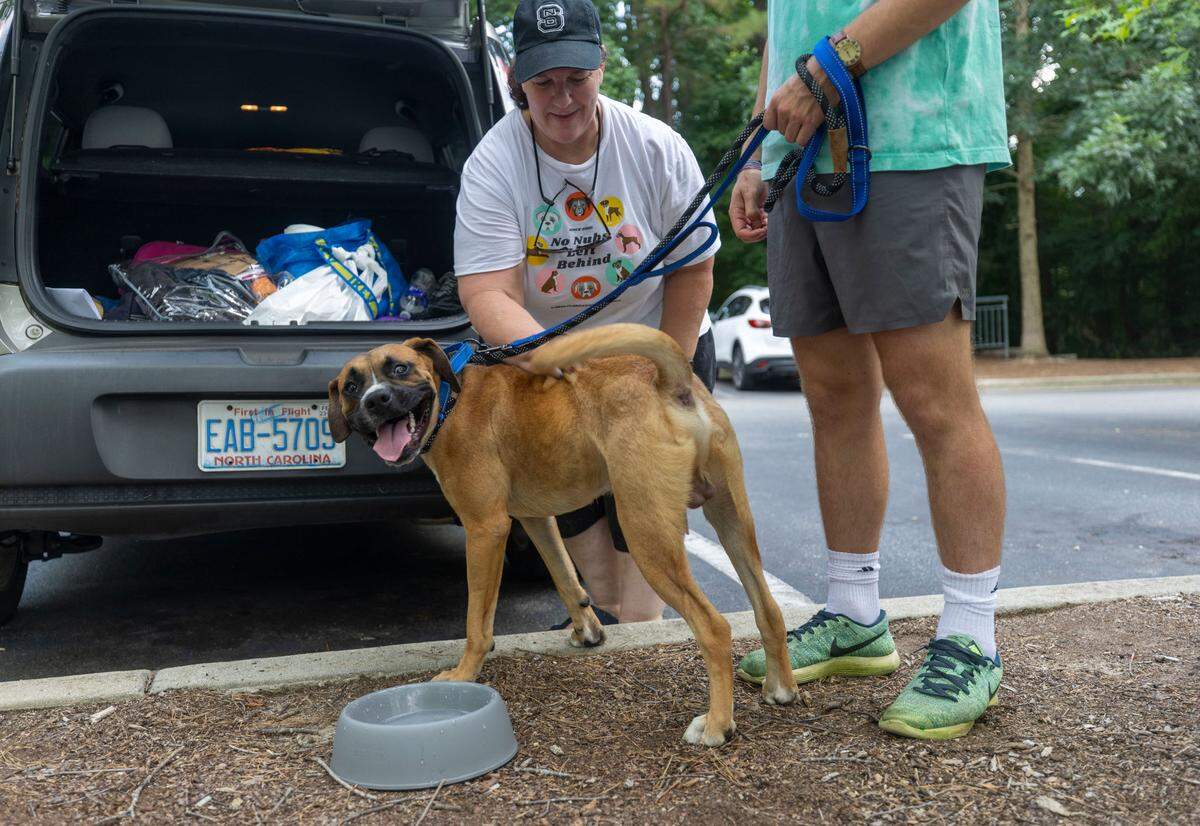
Zipf and her son William greeted Crow with wide arms as he jumped around the shelter lobby, taking him outside once his high-pitched yips stopped. They let Crow run around the parking lot for almost half an hour, smelling everything.
It wasn’t until Crow had settled on his own at William’s side, that Zipf introduced a big bowl of water and a sunny spot in the back seat of her Kia.
“It’s really important that they know they’re going to have a great time,” Zipf said.
Keeping animals out of shelters
Recent efforts to slow euthanasia rates have emphasized rehoming animals before they even pass through the shelter doors.
On a warm Wednesday evening in early July, a young woman cradling a stray cat did a double take on her way into the Wake County Animal Center, glancing at big block lettering on a sign posted outside: “WE ARE FULL.”
“If you are here to give up your pet, please consider every other option first,” the sign continued, in thick capital letters. “Even waiting just a few days could help your pet make it to the adoption floor.”
To give more animals a chance, some shelters are now turning to the internet, encouraging owners to post their pet’s profile on a rehoming website and keep their animals at home or in foster care while a new owner is found.
Kimberly Steiner is the site administrator for Rehome O.C., a petfinder site that the Orange County shelter commissioned with grant funding. The shelter asks owners who want to surrender their pets to list them on the site first, where postings are live for two months, and offers pet food assistance in the meantime.
“(Rehoming) communities are already there,” Steiner said. “And it was just a matter of me tapping into them.” At press time, Rehome O.C. had listed just over 200 pets for adoption.
Durham County also encourages owners to plan ahead using the Adopt-A-Pet rehoming service and the shelter’s pet food pantry.
When owners rehome their own pets, they ensure individualized attention during the adoption process, Federico said.
“There’s a lot of animals,” Federico said. “We’re advocating for all of them here, and owners are advocating for their one pet.”
Moving high-risk dogs out of state
To further reduce euthanasia rates, some shelters are taking to the sky.
On the morning of June 15, Andrew Zeneski and his wife, Anne Zeneski, carefully loaded a laundry basket onto the backseat of their passenger plane. Inside lay seven puppies, all under 2 months old.
Their co-pilot Scarlet, a 75-pound black Labrador, kept watch as the tiny pups, plus nine more in crates, dozed all the way to their adoptive homes in Delaware. The dogs had already flown one leg from Manning, S.C., with a different volunteer pilot.
The Zeneskis are affiliated with Pilots and Paws. The pair focuses mostly on dogs at immediate risk of euthanasia in North Carolina. They also look out for dogs of interest to New England buyers, where stricter spay/neuter laws can leave shelters empty.
North Carolina does not have mandatory spay/neuter laws, though licensing fees are higher for pets that are not spayed or neutered.
“If we can get them out of the Carolinas up to the Northeast, then we’ve saved their lives,” Andrew Zeneski said.
A more typical roundtrip, which the Zeneskis fly about once a month, takes them between 400 and 500 miles with four small dogs or two big dogs.
A lot of dogs who are flown from North or South Carolina end up in New Jersey, said Cindy Snowden, who fosters dogs for Pilots and Paws. Georgia has been popular as well, and while small dogs are in high demand in New England shelters, some Labrador rescues contact Snowden frequently.
“Within two or three weeks, they’re flying to New Jersey,” she said. “Other than pit bulls in their shelters, she said there are no puppies or dogs to adopt up there. So I’m happy to send them.”
Animal rescue flights, though, are only a small part of transportation networks that carry shelter dogs between states.
The Vance County shelter, a Pilots and Paws veteran, works with the Ruin Creek Animal Protection Society to make weekly trips to the New York Tri-State area. Their van can hold up to 60 dogs. A shelter in New York picks up around five dogs from the Sampson County shelter every week.
And last summer, Goldston took a couple of volunteers, loaded the Saving Grace transport van with 20 puppies, and made two separate trips to New York herself.
None of her novice road trippers got breakfast that day, but everyone got a long early morning potty break — with an immediate adoption waiting at the end of the ride.
Spay/neuter programs help to lower euthanasia rates
As shelters work to keep kennels from filling, intake rates have already been slowed by spay-neuter programs across North Carolina.
Sterilizing a pet isn’t mandatory in North Carolina, though pet licensing fees are higher for owners who choose not to spay or neuter their pet.
Snowden said she’s met some owners who prefer keeping their pets intact but then end up with litters of unwanted puppies.
“I’ve heard people say, ‘Oh, well, I’m not going to take their manliness away by neutering them,” Snowden said.
Some owners can’t afford or don’t want to pay for the procedure, which can cost hundreds of dollars.
Those in the rescue and shelter world say spay/neuter programs lower euthanasia rates by reducing the number of animals in the first place.
“It’s preventing these animals from reproducing and entering shelters when we don’t have space for them right now,” said Darci VanderSlik, director of communications at the SPCA of Wake County.
Nobles started working at the Vance County shelter in Henderson about 12 years ago, when the shelter euthanized nearly all its incoming animals. Its euthanasia rate has since dropped below 10%, meeting Best Friends’ standard for no-kill shelters.
Nobles attributes the drop to lots of help from rescues and volunteers — and to the shelter’s free spay-neuter clinic, which opened five years ago.
Spaying female animals by removing their ovaries and neutering male animals by removing their testicles stops dogs from being in heat and have been shown to reduce the risk of certain cancers. Since the clinic opened, Vance County’s intake numbers have dropped by nearly half, from 3,000 to 1,700 animals a year.
“We’re staying completely booked a month to two months ahead,” Nobles said. “We’ve had a lot of good response in our community. We’ve seen our numbers go down.”
Now, counties are working to expand spay/neuter programs to new populations.
One statewide program, SNAP-NC, operates 16 mobile spay-neuter vans. They visit counties that may not have programs nearby to spay dogs at a slight discount; $150-$200 and cats for $90. Many shelters and rescues have also created their own programs.
“Euthanasia is a community issue,” Allen said. “We all need to work together to keep the animals in homes, provide more resources to the community. We need affordable veterinary care and spay-neuter services in the community.”
Rescues, shelters partner up to spay and neuter
Saving Grace opened its own spay/neuter clinic in 2020, when most clinics were closed or operating at half staff, Goldston said. She now employs a full-time vet who completes about 80 surgeries a week.
The rescue also partnered with the veterinary school at N.C. State University, and supplies all of the school’s teaching dogs in exchange for help with the clinic.
The Sampson County shelter partners with a local vet to offer reduced fees, and APS Durham devotes a large part of its budget — plus some donations from shelter staff — to funding $20 spay/neuter vouchers at local vets.
SPCA Wake offers both free and low-cost spay/neuter options out of its clinic, which Lamb credits with helping reduce Wake County euthanasia rates by nearly 75% in the last decade.
Community cat and TNR (trap-neuter-release) programs where feral cats are trapped, spayed or neutered, vaccinated and released can also dramatically reduce euthanasia rates, Fox said. A feral cat that is spayed instead of euthanized will return to its territory, preventing future feral cats from moving in and reproducing.
The Durham County Board of Commissioners approved a countywide TNR program on July 11, joining existing programs in Wake and Orange counties, The N&O previously reported.
“The more animals from our public that we can spay and neuter, the better,” said Lamb. “That’s going to ultimately reduce the next year’s wave of incoming animals to shelters.”
This story was originally published August 5, 2022 at 6:00 AM with the headline "As Triangle shelters fill up, here’s how to keep dogs and cats off the track to euthanasia."