Cruising Across Carolina: Southern Piedmont has treasure to seek and dishes to smash
READ MORE
Cruising Across Carolina
This summer, The N&O’s Martha Quillin is on a road trip across the Tar Heel State’s backroads and byways. And you’re invited. Plus, we have a full guide to NC’s beaches and coastal getaways — and the famed Mr. Beach’s pick for the best beach in the nation, right in our state.
Expand All
This is the third installment in “Cruising Across Carolina,” Martha Quillin’s summer road trip across the Tar Heel State’s backroads and byways.
Between North Carolina’s sunny coast and its scenic mountains lie about 300 miles of rolling terrain known as the Piedmont. Defined geologically as west of the coastal plain and east of the foothills, this area often is regarded as flyover territory. Some travelers see it as just a string of highway exits on the way to the good parts.
But in fact, the Piedmont is the delicious jelly in the North Carolina doughnut.
It’s home to the state’s largest cities: Charlotte, Raleigh, Greensboro, Durham and Winston-Salem —the town where the actual jelly doughnut was perfected by our own Krispy Kreme. Piedmont natives still speak the classic Southern dialect that falls so softly on the ear, with the long “i” and the soft “r.” They never press a button, they mash it, and when they leave a room, they cut out the lights.
I was born in the mountains. The beach is my happy place. But I grew up in the Piedmont, which has given us cotton, textiles, tobacco, furniture, pottery, Cheerwine, tomato-based barbecue, sugar cake, golf, gold and gorillas.
To see it all, you’ll have to live here long enough to be able to win an argument in the eastern-vs-western-style ‘cue debate.
But now is a good time to start.
This week’s Itinerary
The main spots: Lake Norman State Park, Hiddenite, Love Valley, Fort Dobbs Historic Site, a couple of highlights in Statesville, D.E. Turner & Co. Hardware store in Mooresville. Then, the N.C. Transportation Museum, Dan Nicholas Park and The Grievous Gallery, all in or near Salisbury. Optional late-night add-on: a double-feature at the Badin Road Drive-In movie theater in Albemarle.
The journey: From the Triangle to Troutman, camping at Lake Norman State Park and using it as a base for trips to Hiddenite and sites in or near Statesville. Then to downtown Mooresville and on to Salisbury, camping at Dan Nicholas Park before heading home.
Length of trip: Four days.
Day trip option: The N.C. Transportation Museum in Salisbury.
Day trip with little ones: Dan Nicholas Park in Salisbury.
For this excursion, I upgraded from my little pop-up tent and went deluxe, hitching up my 1966 Coachmen Middy, a 13-foot camper I call the Mermaid Mobile, and headed to Lake Norman State Park.
The state’s largest lake
Lake Norman, 20 miles north of Charlotte, is the largest lake in the state, created in the late 1950s and early ‘60s by damming the Catawba River to feed a Duke Power hydroelectric power plant.
Thousands of homes have been built in subdivisions along the lake’s 520-mile shoreline, and several marinas and parks offer public access to the water. The largest is Lake Norman State Park, created in 1962 when Duke Power gave the state more than 1,300 acres on the northeastern shore. If you don’t like camping, VRBO lists hundreds of properties as vacation rentals, and there are nearly two dozen motels at interchanges along I-77 between Huntersville and Mooresville.
The entrance to the park is through Troutman, in Iredell County, about 2.5 hours west of the Triangle.
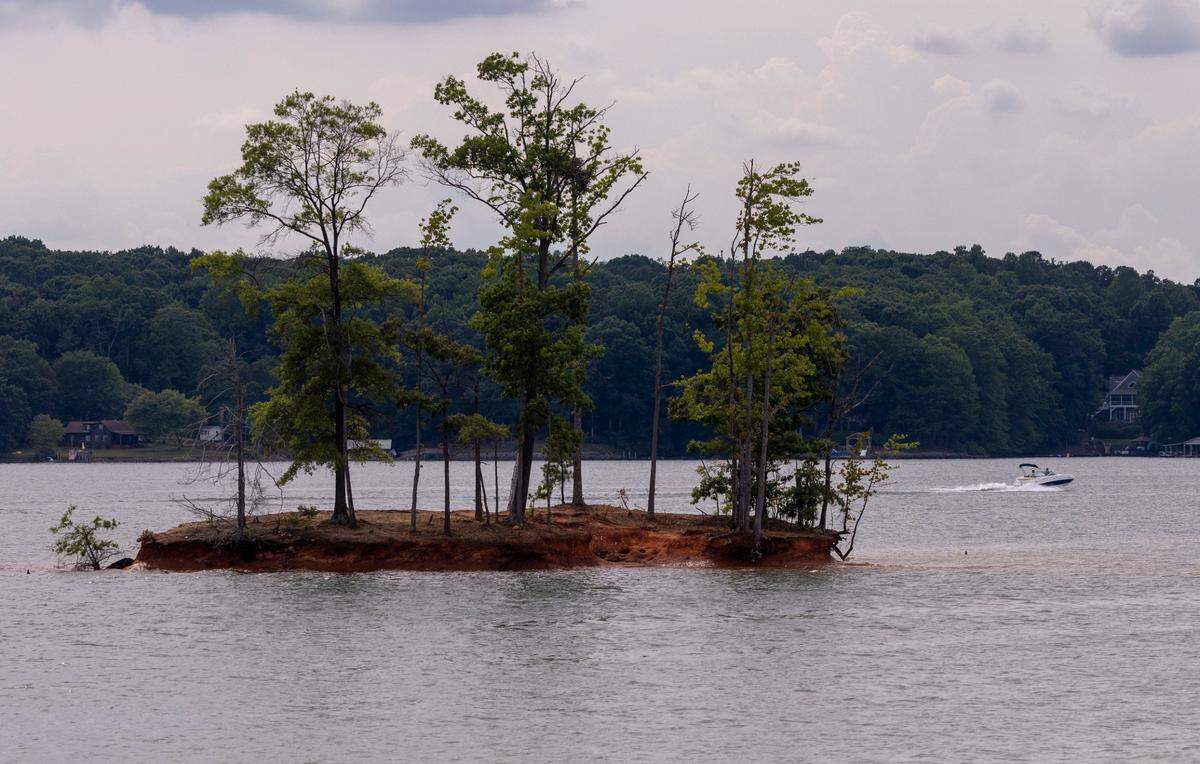
The park has trails for hiking and mountain biking, fishing, picnicking, a swim beach, a boat launch, boat rentals and a campground with more than 40 sites and six rental cabins.
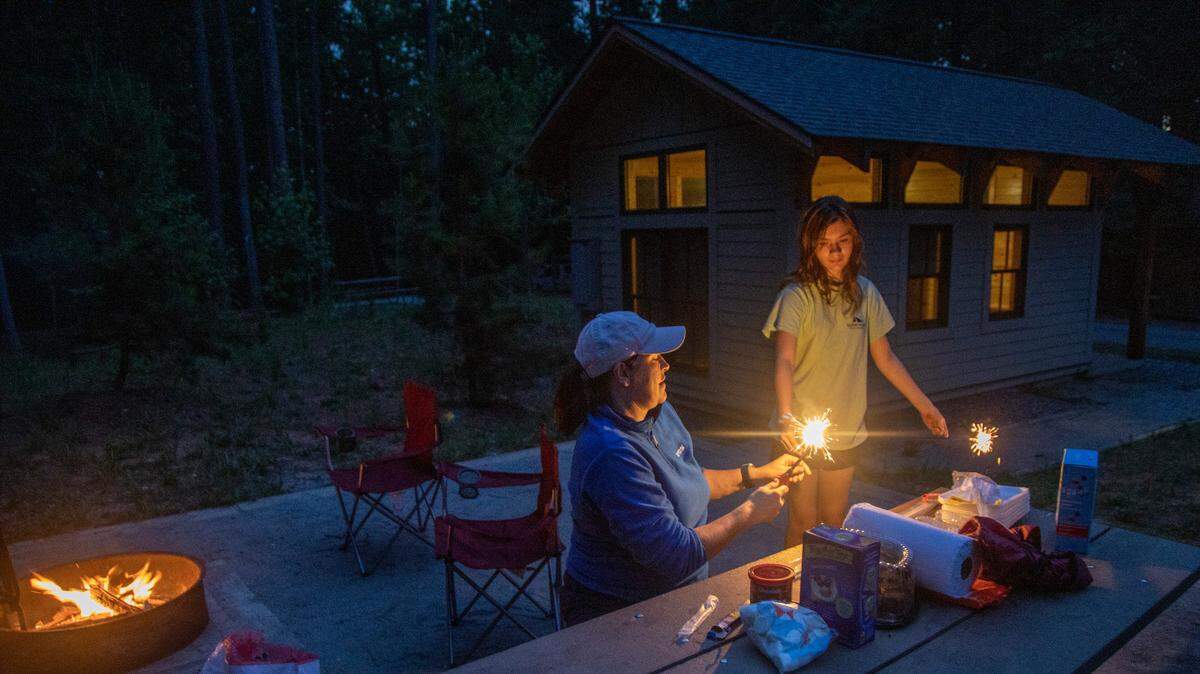
On the two nights I reserved, a Monday and Tuesday, none of the campground’s 11 sites with electricity were available, so I carefully backed my camper between the trees at a tent site and used a lantern for light and a battery-powered fan for sleeping. From my campsite, I could walk a trail to the water’s edge in under 10 minutes.
The Grove Park Inn of bathhouses
Notably, this campground has the Grove Park Inn of bathhouses, the nicest of any state park I have visited and arguably nicer than the ones at my house. It’s hard to compare it to the facilities at William B. Umstead State Park in Raleigh and not think Charlotte is a favorite child that gets the best of everything.
From the park, it’s a 10-minute drive back to the small town of Troutman, which has several restaurants, most of them closed on Mondays. Kyjo’s Japanese, Thai and Sushi in a small shopping center in town was serving, and though the menu didn’t include any fish from the lake, the teriyaki salmon was good.
Locals recommend Randy’s Barbecue, but the Troutman location is only open Wednesday through Saturday, so I missed it.
I had a heavy itinerary on Tuesday. My first foray was to Emerald Hollow Mine, in Hiddenite, billed as “the only Emerald Mine in the world open to the public for prospecting.”
I parked at the first lot I came to, not realizing there were others down the hill, close to the entrance, which would have saved me some walking. I could have used that energy later.
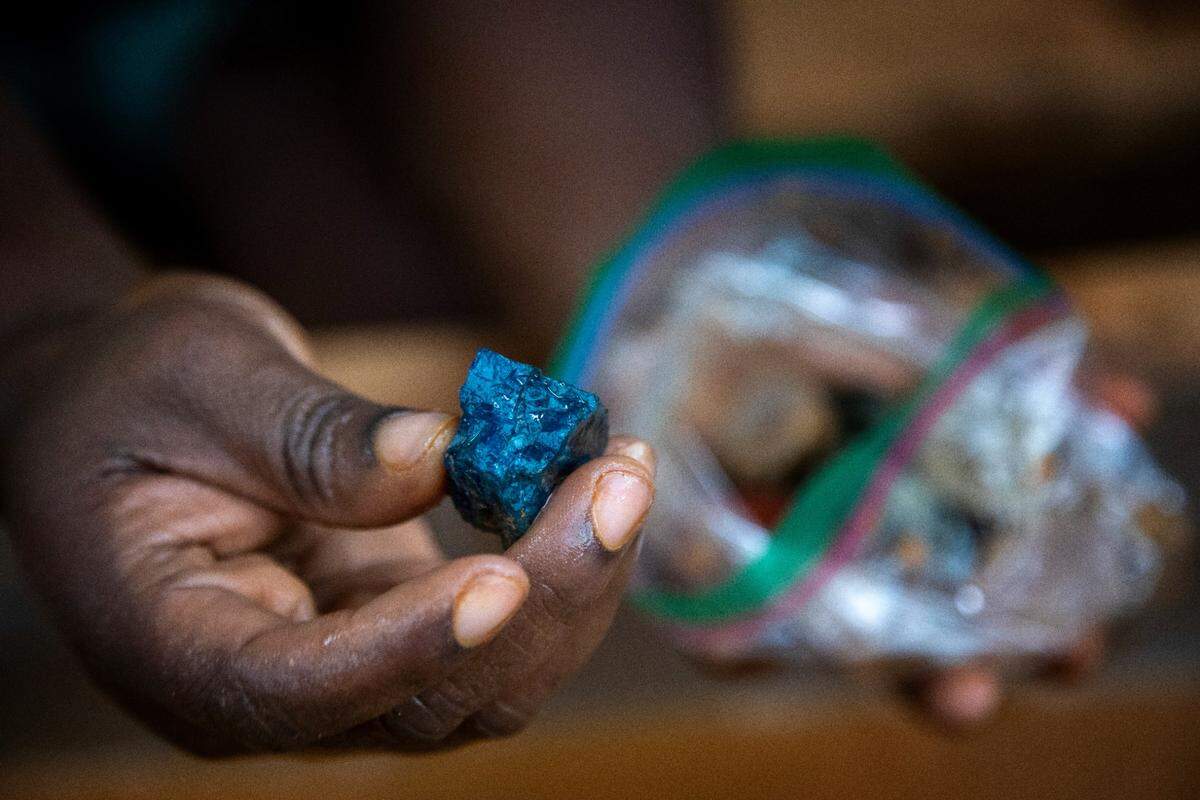
The town of Hiddenite in Alexander County — and the rare green gemstone found there — is named for William Earl Hidden, a mineralogist who was searching for platinum for Thomas Edison around 1879 when he found a green version of spodumene instead. Prospectors now come from all over the world to see what they can find there, also searching for sapphires, emeralds, aquamarines, garnets, amethysts and other sparkling stones.
Digging for treasure
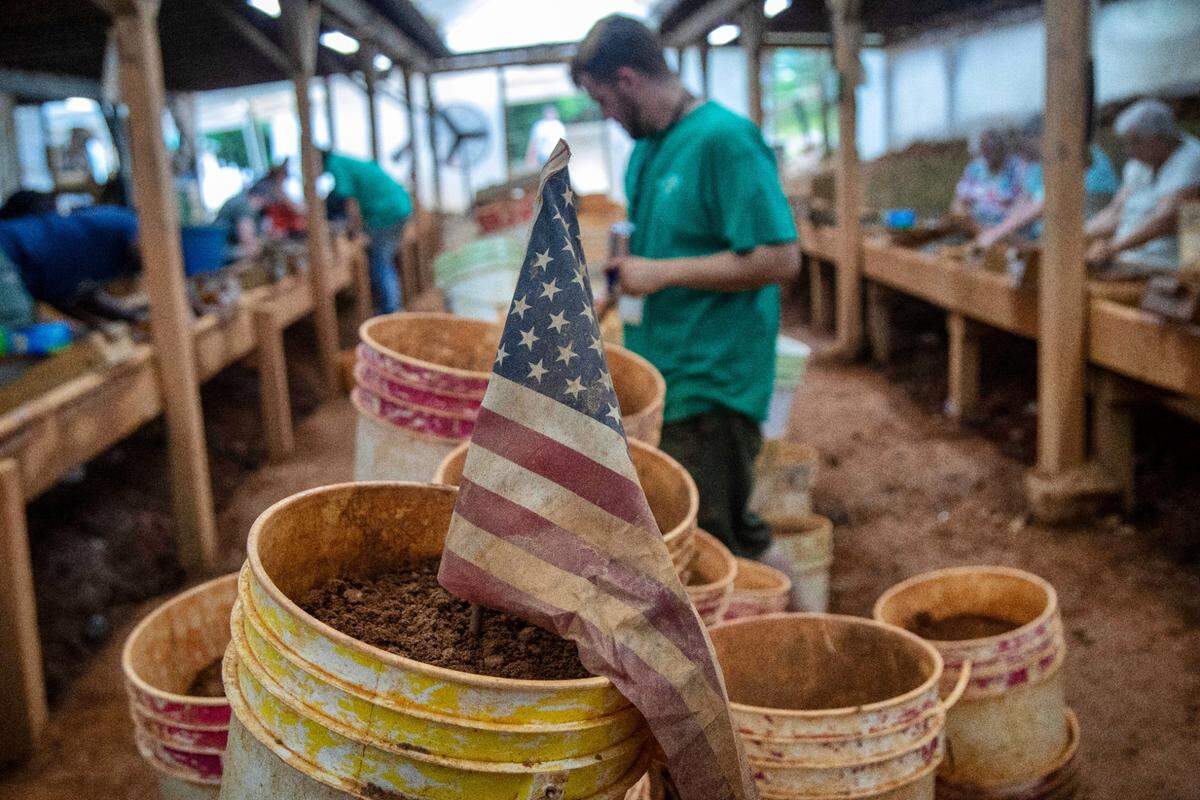
The lady at the admission counter said many people come when the mine opens and stay until it closes, participating in all three enterprises: Sluicing, Creeking and Digging. When I said I needed to choose one that would give the essence of the experience, she pointed me toward a shovel, a five-gallon plastic bucket and a distant hill.
Handwritten signs nailed to the trees or to posts stuck crookedly into the ground lend a cartoonish theme-park feel to the enterprise, and walking alone on the path and into the trees I half-expected one of them to read, “I’D TURN BACK IF I WERE YOU.”
But I soon arrived at “the dig,” a surreally pockmarked, forested hilltop which is actually thousands of digs conducted over decades by people with blunt instruments and rudimentary instructions: dig where you find mica because it indicates the presence of more precious finds. And don’t keep anything you can’t see sunshine through.
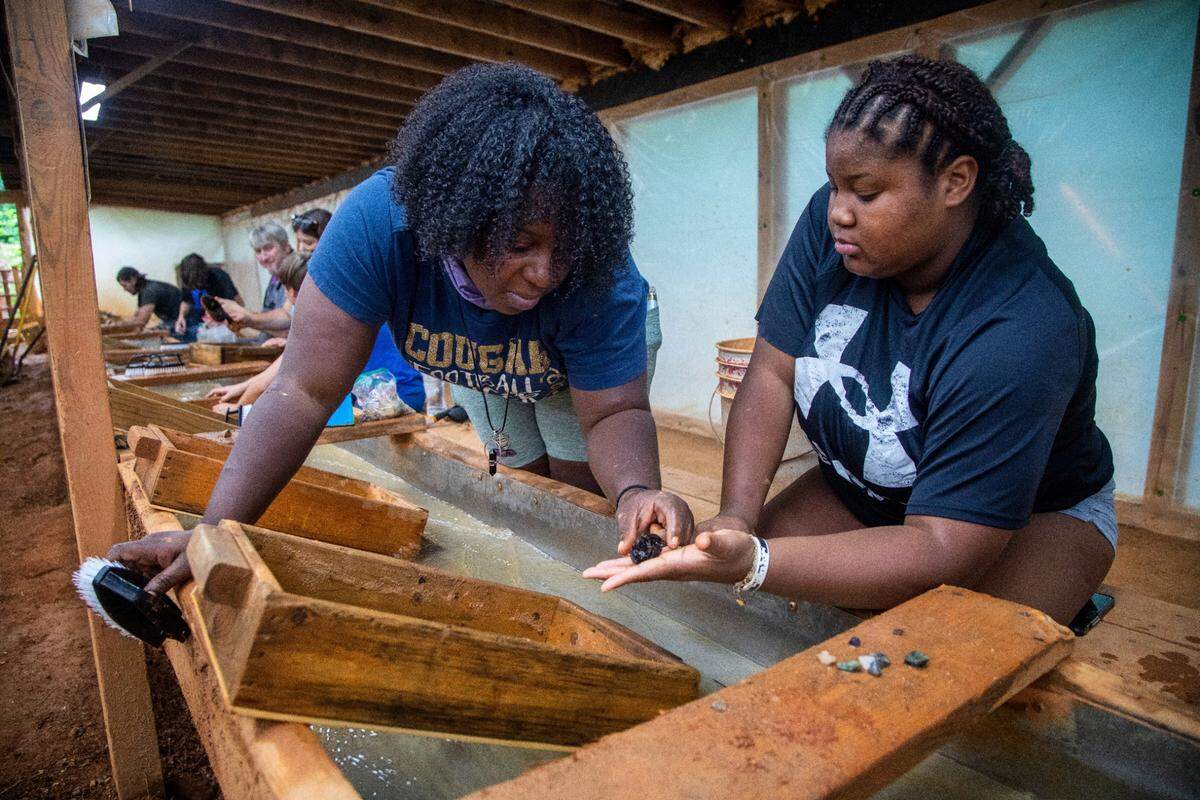
The possibility can be intoxicating, and I stayed twice as long as I had planned, moving to different places and stabbing at the ground just once more, once more, once more. I trudged back down with a few finds rolling around in the bottom of my bucket and the tips of my fingers stained a jaundiced orange-yellow from using them to sift. After sluicing the dirt off, I had a few pieces of quartz and a nice brown paperweight.
The lady at the counter recommended Yellow Deli in town for lunch, and I stopped but the wait was long. So I traveled on to Scotty’s Hometown Grill, which has a Taylorsville address and a great fresh salad to offset the convenience-store pecan pie I had for breakfast and the ice cream I would be enjoying for supper.
For sure, don’t head to Love Valley without eating first. After hearing about “The Cowboy Capital” since the 1970s, I was determined to visit. But I was a decade or two too late. The western town Andy Barker built in the 1950s — which hosted equestrian events, a music festival with 100,000 people in attendance and once had a main street full of businesses whose patrons arrived on horseback — has withered since Barker’s death in 2011.
Where is the Love?
Some people still bring their horses to ride nearby trails, and the Love Valley’s Facebook page shows some activity around holidays. But the place was silent as an abandoned movie set the day I visited except for a country music radio station that played eerily through speakers mounted to a couple of the buildings. I wish I had been there when it was so busy the town council had to post a sign telling people not to ride horses on the boardwalk.
The only horse I saw on my visit was an airbrushed coin-operated children’s ride. It was not on the boardwalk.
By the time I got a cell signal again and found my way to Fort Dobbs State Historic Site, it was too late in the afternoon to get a tour of the building, though the visitor center and gift shop were still open and staffed by a knowledgeable docent.
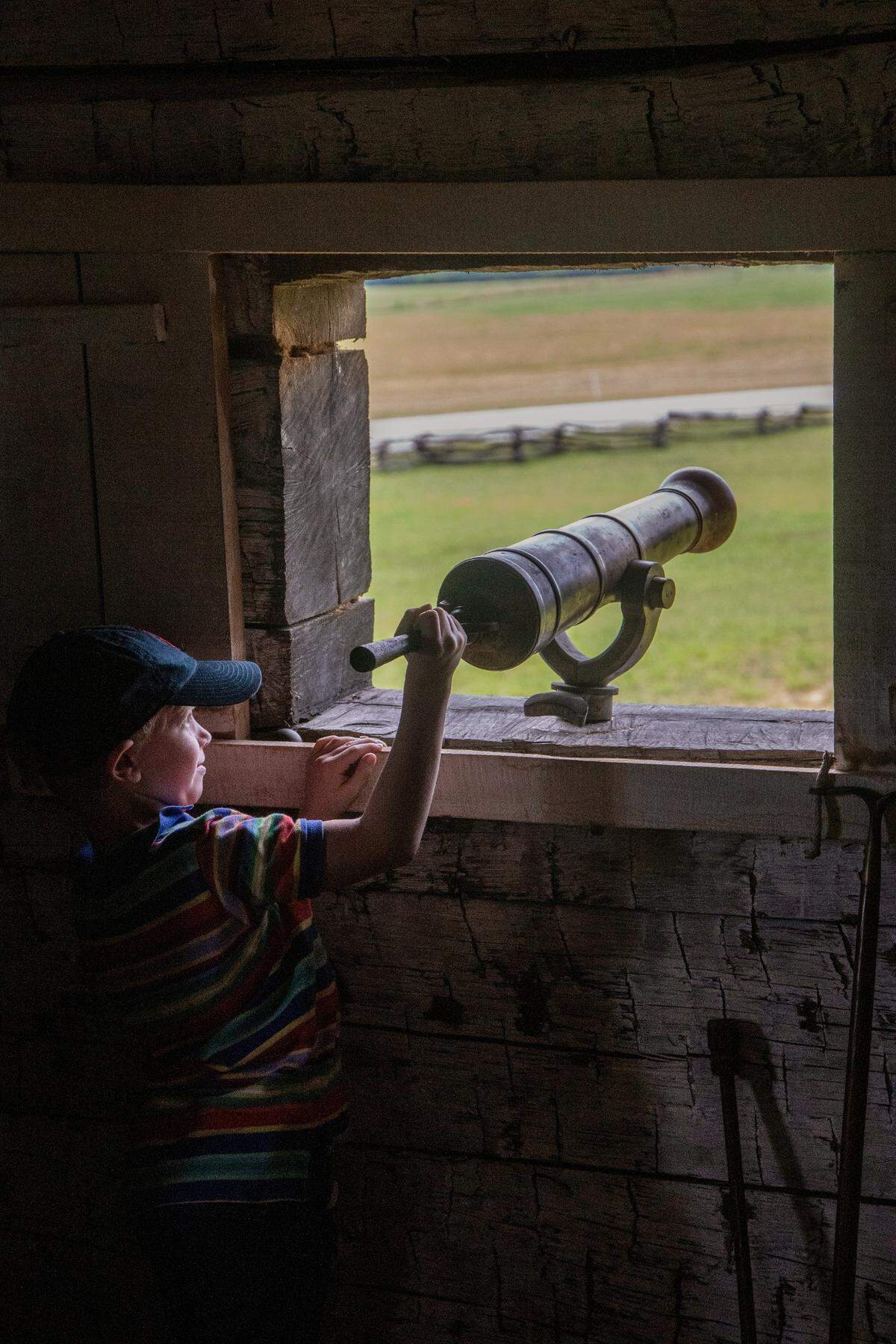
The original Fort Dobbs was built in 1755, when North Carolina was still a colony and the British were battling the French (and Native Americans) for additional territory. Fort Dobbs, the only permanent frontier fort in the colony, was occupied by about 50 soldiers and provided temporary refuge for settlers. The garrison survived an attack by the Cherokee in 1760, and by the next year, the British had won the war and the frontier had advanced, making Fort Dobbs obsolete.
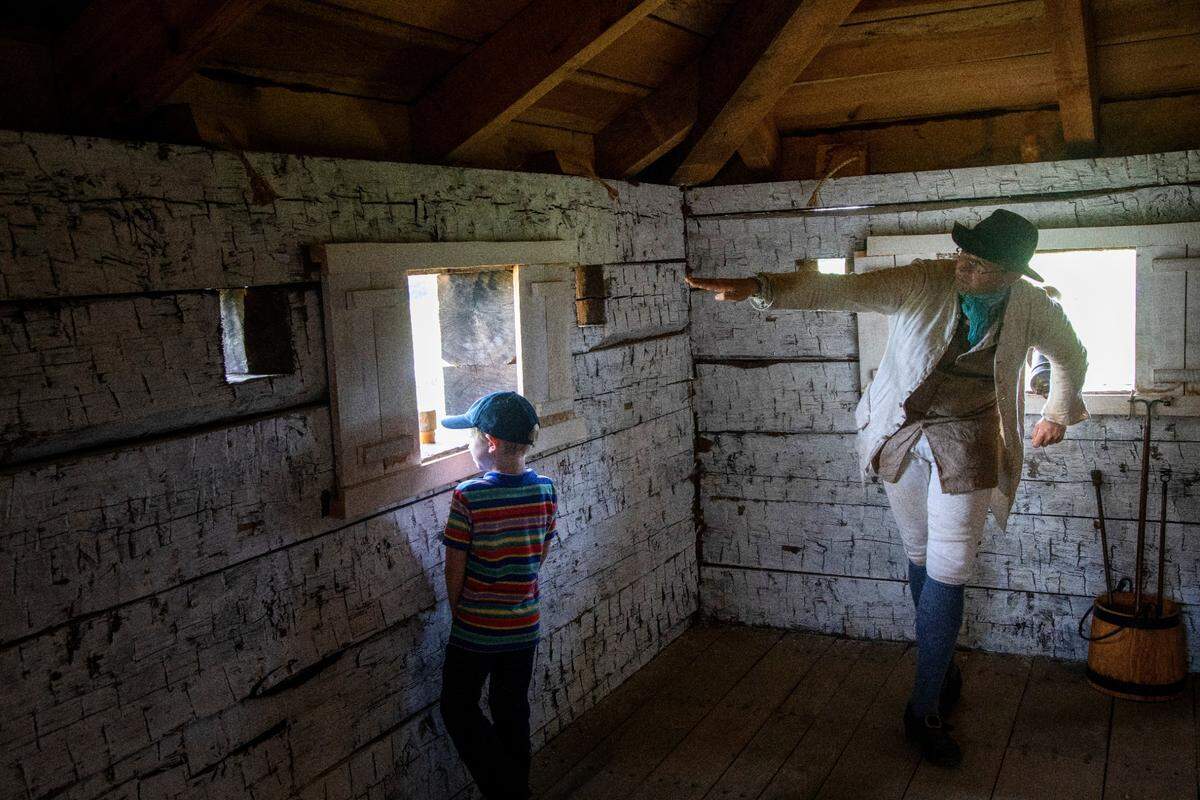
Archaeologists excavated the site in the 1960s, ‘70s and early 2000s, gathering enough artifacts to pair with written records and approximate the building’s style, dimensions and location. The reconstructed building opened as a living history site in 2019, and now hosts re-enactments portraying life on what was the exposed western front of North Carolina during the French and Indian War. It’s the only state historic site connected to that war.
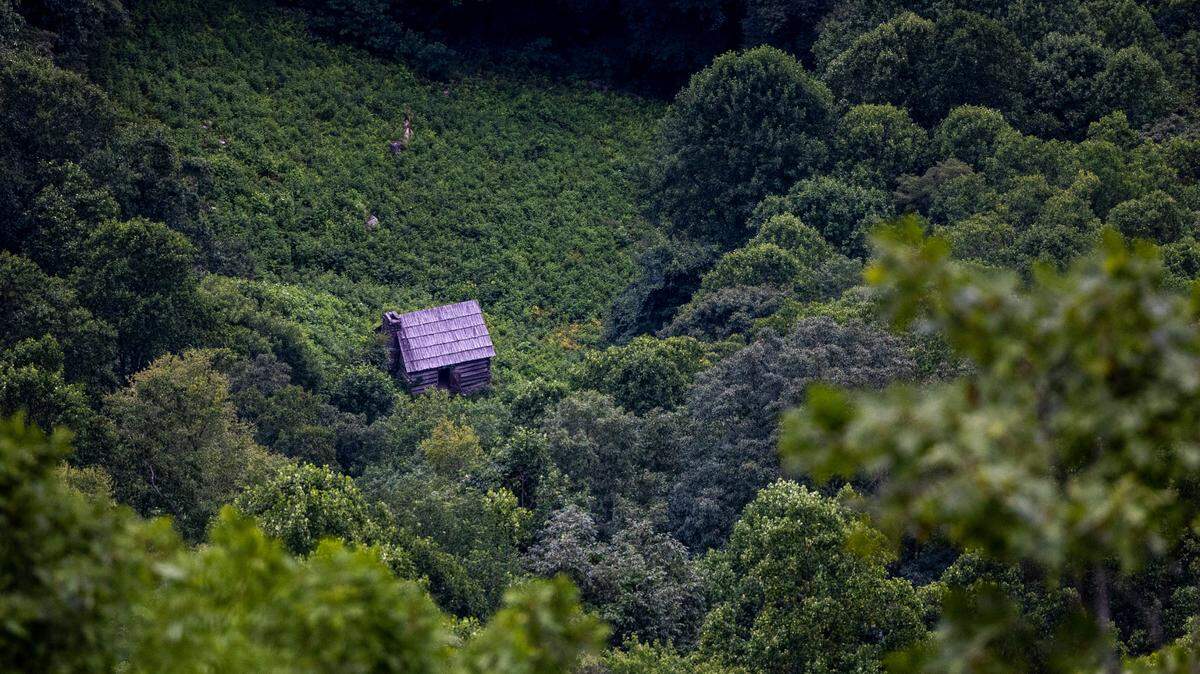
The imposing log building sits in a wide field bordered by trees,. In the late afternoon, with no other tourists around, it’s easy to forget there are residential subdivisions a half-mile away and imagine this being the edge of civilization.
A brownie fudge sundae supper
Happily, it isn’t anymore; it’s only 4.5 miles from The Ice Cream Shoppe at 1902 Newton Drive in Statesville. The stone-faced walkup with the red roof and the neon “OPEN” sign — which goes dark in the winter, when the shop is closed — started in 1952 as a Dairy Queen. It still serves soft ice cream, perfectly swirled in a cone or a cup with your choice of toppings, guaranteed to leave you sticky up to the elbows. When I told Crystal at the counter I would be having this for supper, she said what I needed was the brownie fudge sundae.
She was right.
From there, it’s only a couple of miles to downtown Statesville. When I arrived, most of the retail shops had closed for the evening, but there were plenty of people having drinks or dinner in breweries and restaurants such as Red Buffalo Brewing, Broad Street Burger and The Twisted Oak. Had I not just consumed a half-gallon of ice cream, I might have joined them.
As it was, I walked around looking at buildings in the commercial historic district around Broad and South Center streets dating to the period from 1875 to 1925. The district’s 54 contributing buildings were listed on the National Register of Historic Places in 1980 and reflect the town’s growth from a crossroads to a trading center with the arrival of railroad lines. From 1870 to 1944, the Wallace Brothers in town operated the largest “herbarium” in the country, selling medicinal roots and herbs from a downtown warehouse.
Before it was too dark to appreciate the architecture, I made a quick detour through the campus of what used to be Barium Springs Home for Children, which started as a Presbyterian orphanage in Charlotte in 1883 and relocated to just outside Statesville in 1891. It moved into a failed 30-room resort hotel on a “healing spring” whose waters contained the namesake mineral. Though the hotel burned in November 1891, the orphanage rebuilt and expanded, taking in children from across the region who had lost one or both parents and lacked other family with resources to raise them.
More than a dozen orphanages operated across the state from the late 1800s to the 1920s. In written histories, former residents fondly recalled their years at Barium Springs, though they did chores to keep the place running and may have had jobs in the orchard, print shop or dairy. Children’s Hope Alliance now provides services for children in the region aimed at keeping them with their natural families or helping them to find new ones, and the organization said this year it’s selling about 800 acres of the original campus to a developer.
Driving back to the campground, I hoped the property’s new owners will keep the century-old oaks that grew up with some of the children who lived there.
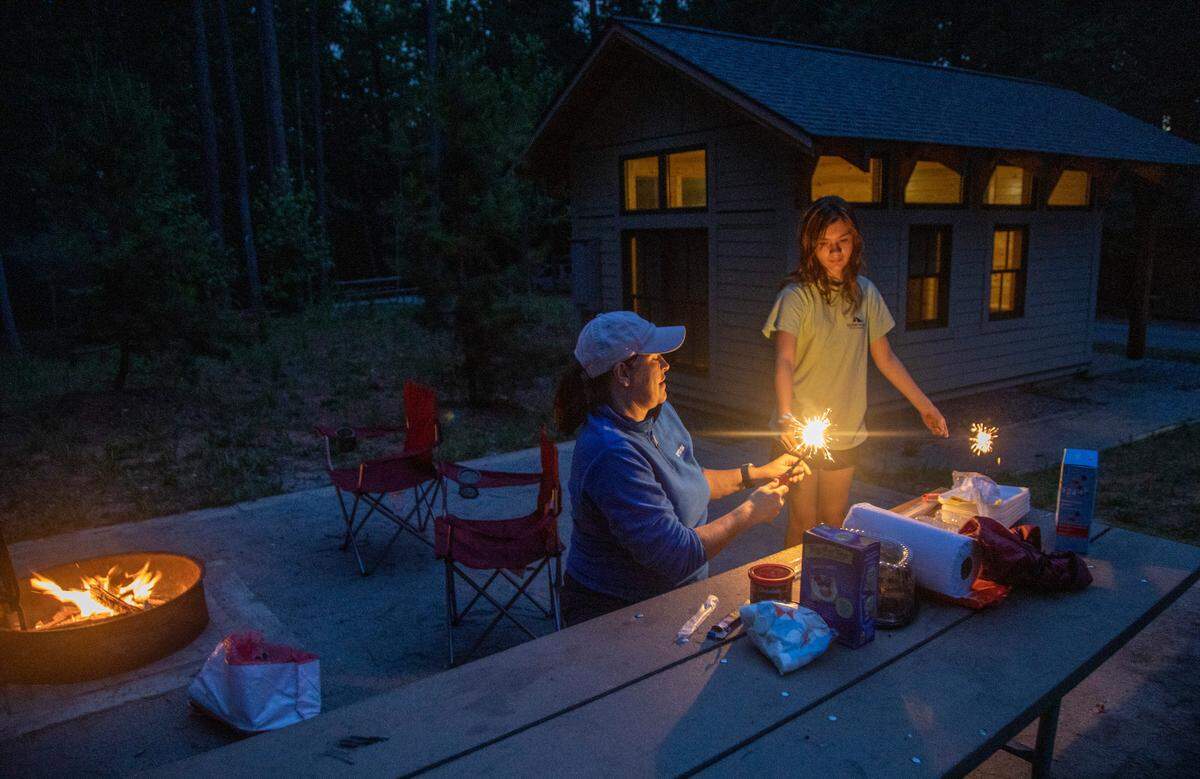
Bad raccoon!
If I hadn’t been camping, I might have blown up my expense account with a night at Front Street Inn, a bed-and-breakfast in a 1917 Edwardian home.
Instead, I had coffee at my campsite at the state park the next morning without the luxury of sweetener, because a raccoon had stopped at my coffee bar during the night, opened the flip-top of my syrup bottle and poured the sugar-free elixir all over the ground like it was trying to save me from myself. I know, because the paw print on my table matched the one on an interpretive sign outside the lovely state park visitor center as perfectly as a fingerprint in the FBI’s database.
Rookie mistake, leaving the syrup out.

The visitor center is also where you go to rent boats, buy Good Humor Ice Cream bars or colorful stickers for your travel mug, or to sit in a rocker on the expansive second-story back deck overlooking a peaceful cove of the lake. Bonus: it has an outdoor electrical outlet where you can recharge the small fan that compensates for the lack of air conditioning at your campsite.
Be polite and latch the cover when you’re done. Or ask a raccoon for help.
With my trailer in tow, I drove to downtown Mooresville, took up several parking spaces at a church and walked to D.E. Turner & Co. Hardware, operating on Main Street since 1899. Behind the counter was Jack Moore, who started working at the store in 1946 at the age of 15, eventually bought it from the founding family and still comes every morning to open it up. The store offers an impressive selection of cast iron cookware and nails by the pound. If he’s there when you go, ask Moore about all the staples embedded in the wood floor by the cash register.
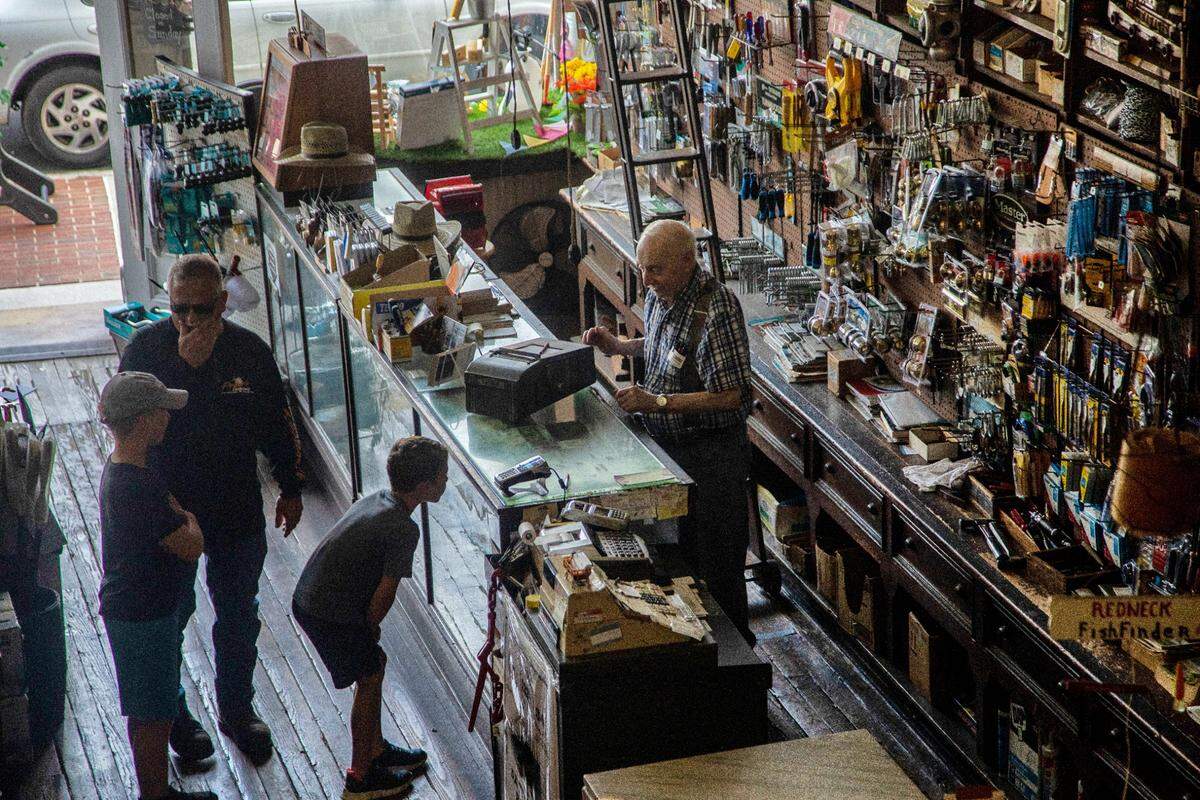
There are several restaurants within walking distance, including a 1960s What-A-Burger on Main Street. Everybody should eat there at least once.
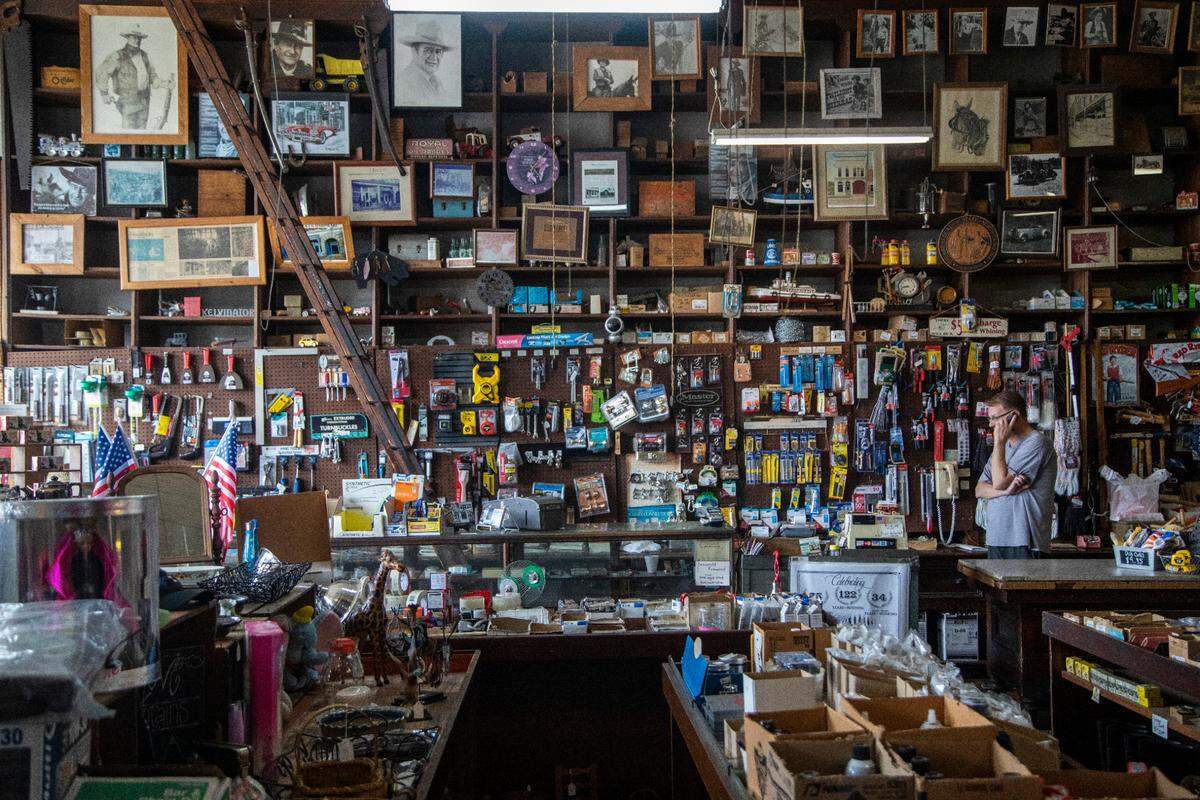
Planes, trains and a Mermaid Mobile
I rolled into the N.C. Transportation Museum with the camper, parked and went in to buy a ticket. The young man at the counter might have thought I was there to try and donate an artifact. The Mermaid Mobile would have been right at home at the museum that includes planes, trains and automobiles from the length of the state’s history.
It takes at least a couple of hours to see all the exhibits, and it’s worth stopping in the gift shop to get a cold drink if you go in summer. Because while there are wheels everywhere, the only way for visitors to get around is by walking.
It’s a big place, more than 60 acres of the former Southern Railway’s Spencer Shops, established in 1896 and becoming the railroad’s largest repair center for steam and then diesel locomotives, with nearly 3,000 employees at its peak. Its circa-1924, 37-bay roundhouse and turntable — among the last remaining in the country — has been designated a Historic Mechanical Engineering Landmark. Drop the extra $1 and take a 360-degree spin on the turntable that moved locomotives to different stalls for specialized service.
If you have weekends free and are one of those people with a deep emotional attachment to the old Piedmont Airlines started in Winston-Salem in the 1940s, join volunteers in the huge rectangular erecting shop at the museum, where they’re refurbishing a Piedmont DC-3.
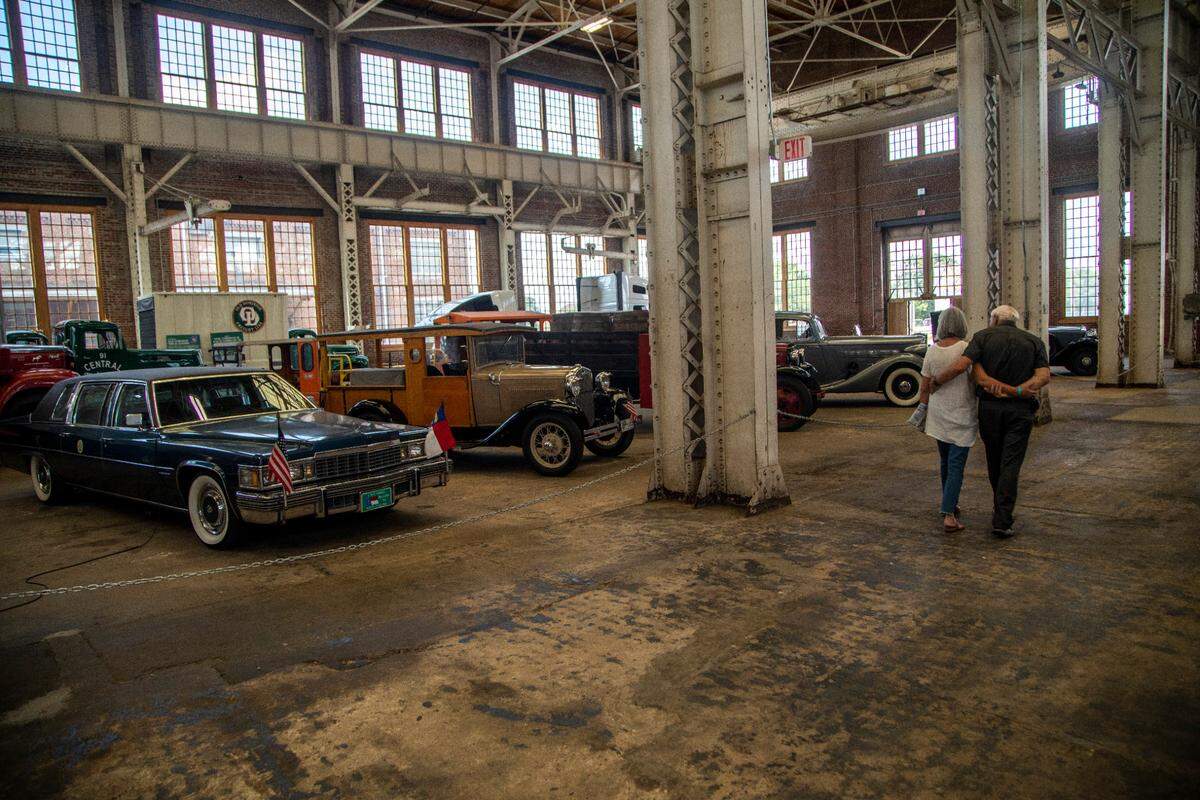
Leaving Spencer Shops, I headed for Dan Nicholas Park, in Rowan County, just over 5 miles from the museum, where I had a reservation at the campground. It looked easy enough to get there, but once I hit the road, neither Google nor Apple had the correct map location for the park’s address. I stopped and asked directions from actual humans and eventually found it. But if you go, put in these GPS coordinates: N 35° 38’ 27.4”, W 80° 21’ 14.7”. Staff has helpfully added these to the paper map they give you after you’ve already found the park.
The campground is open all year and has sites for tents, travel trailers and RVs, as well as a half-dozen rental cabins, with two that are handicap-accessible. There are two bathhouses. All sites have electricity, and you’ll need it to leave a light on so you can find your spot if you have to walk to a bathhouse during the night. Between its rural location and its dense tree cover, this is the darkest campground I’ve ever visited except for the one in the Cape Hatteras National Seashore on Ocracoke.
Let’s go smash some stuff
You can buy wood at the camp store (don’t bring your own, to prevent spreading pests) and enjoy a restful evening by the fire. Or, if passive emotional restoration feels too slow a process, you can drive to downtown Salisbury and pay somebody to let you smash stuff.
The Grievous Gallery, on West Bank Street (use the 28144 ZIP code to avoid getting mapped to an address in nearby but incorrect Granite Quarry), is only open at night, like a fine restaurant. And it’s full of dishes, wine glasses and beer bottles. But they’re empty except for whatever emotions patrons want to pour into them before shattering them into a million pieces.
Reservations are required and groups are encouraged. Morgan Demers, who runs the business with her father, says bringing friends along gets people in the mood to unshackle feelings they don’t even know they harbor. When you come in, you’re taken into the back of the former manufacturing building that’s been sectioned into rooms. Demers or a colleague gives you plastic goggles and spreads an array of breakables across a long counter.
Each room has a Bluetooth speaker so patrons can play music from their phones. The curtain is closed and the flinging starts.

Fees are $25 to $75 and depend on package size. Large comes with “Four full place settings just like Thanksgiving Dinner: Dinner plates, saucer, mug, wine glass, wine bottles and more!”
I’ve clenched my teeth through some holiday meals where people probably wanted to throw their dishes. But they never actually did. Generally, I’d be more likely to pay someone NOT to destroy a set of china.
So it took me a bit to see the cathartic value of hurling glass into what looked like a colorfully lit garage after an earthquake. Even then I stuck to beer and wine bottles and dishes that already were damaged. I told myself I was hastening the recycling process.
I walked out of there thinking it was one of the weirdest business models ever. But a week later when I got really upset about something important, I took a long look at my own recycling bin at home.
All that glitters isn’t gold
For some reason, a giant veggie burrito goes well with emotional release, so consider eating at Go Burrito! a couple of blocks away near the Bell Tower Green, a downtown city park that offers outdoor movies and music during the summer.
This could all have you returning to Dan Nicholas Park after hours, when you will be met by a locked entrance gate. If you were paying attention at check-in, you know how to open it, close it back and drive quietly to your campsite.
Set aside an hour or more the next day for seeing the park’s other attractions: a carousel, pedal boats, mini golf, nature center, splash pad, hiking trails, a tractor-speed train ride for little ones and the Miner Moose Gem Mine, where you buy a salted bucket of dirt and sift out anything that sparkles. As the sign says, “Sluice line water will be turned off during thunder and lightning.”
Mining is a big thing out here, dating to the mid-1800s when North Carolina was a leading gold producer.
In the early afternoon, I headed home, pulling the Mermaid Mobile along two-lane highways where drivers pass so close in the opposite direction, some smile and wave.
Kind of makes a person feel rich.
Coming up: The next installment of Cruising Across Carolina will be July 27, when I venture across the state’s northern Piedmont.
This story was originally published July 6, 2022 at 6:00 AM with the headline "Cruising Across Carolina: Southern Piedmont has treasure to seek and dishes to smash."