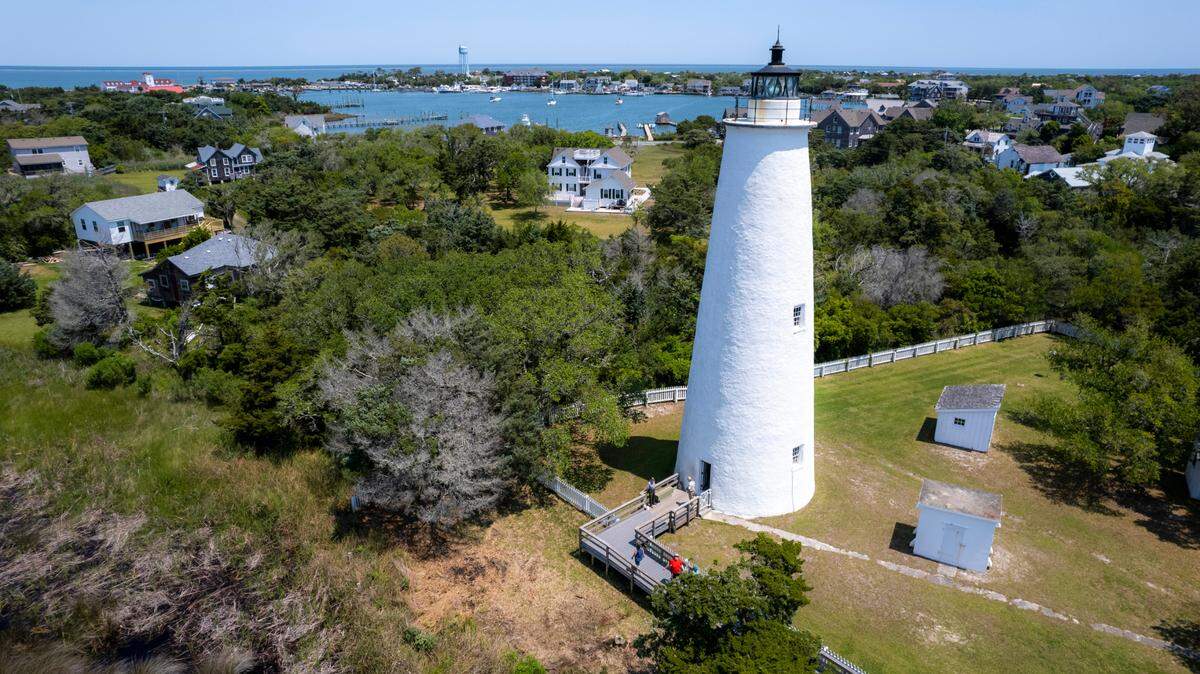
Cruising Across Carolina: Southern coast offers glamping, lasers and a missile museum
READ MORE
Cruising Across Carolina
This summer, The N&O’s Martha Quillin is on a road trip across the Tar Heel State’s backroads and byways. And you’re invited. Plus, we have a full guide to NC’s beaches and coastal getaways — and the famed Mr. Beach’s pick for the best beach in the nation, right in our state.
Expand All
This is the second installment in “Cruising Across Carolina,” Martha Quillin’s summer road trip across the Tar Heel State’s backroads and byways.
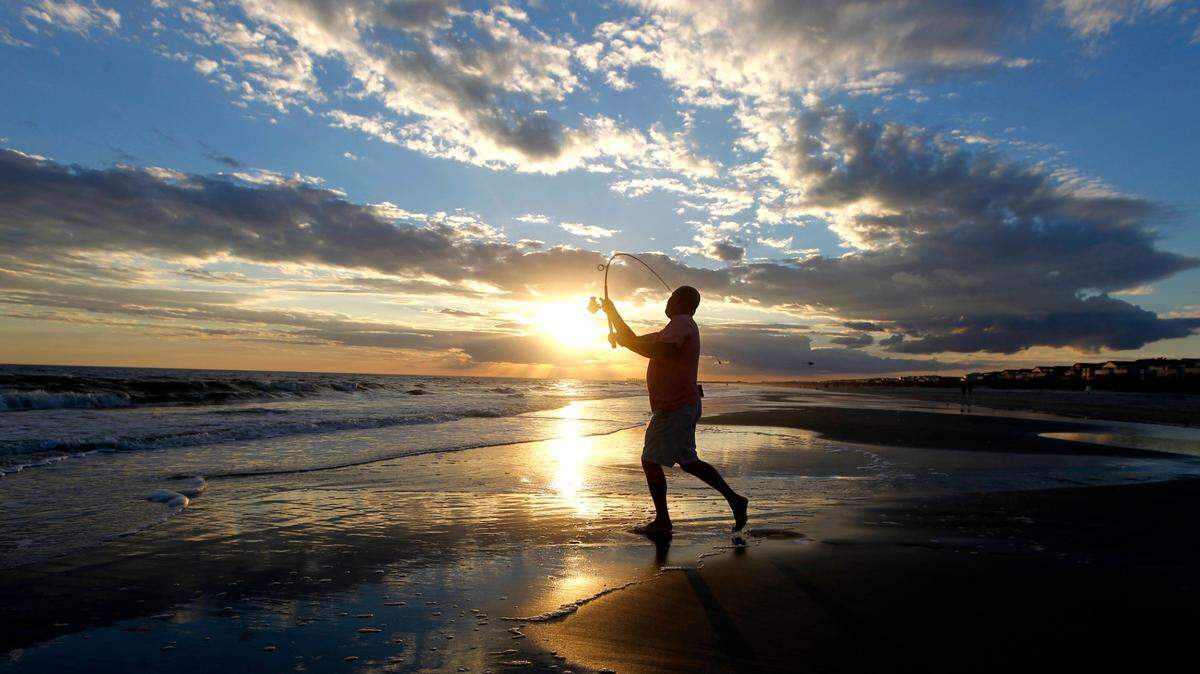
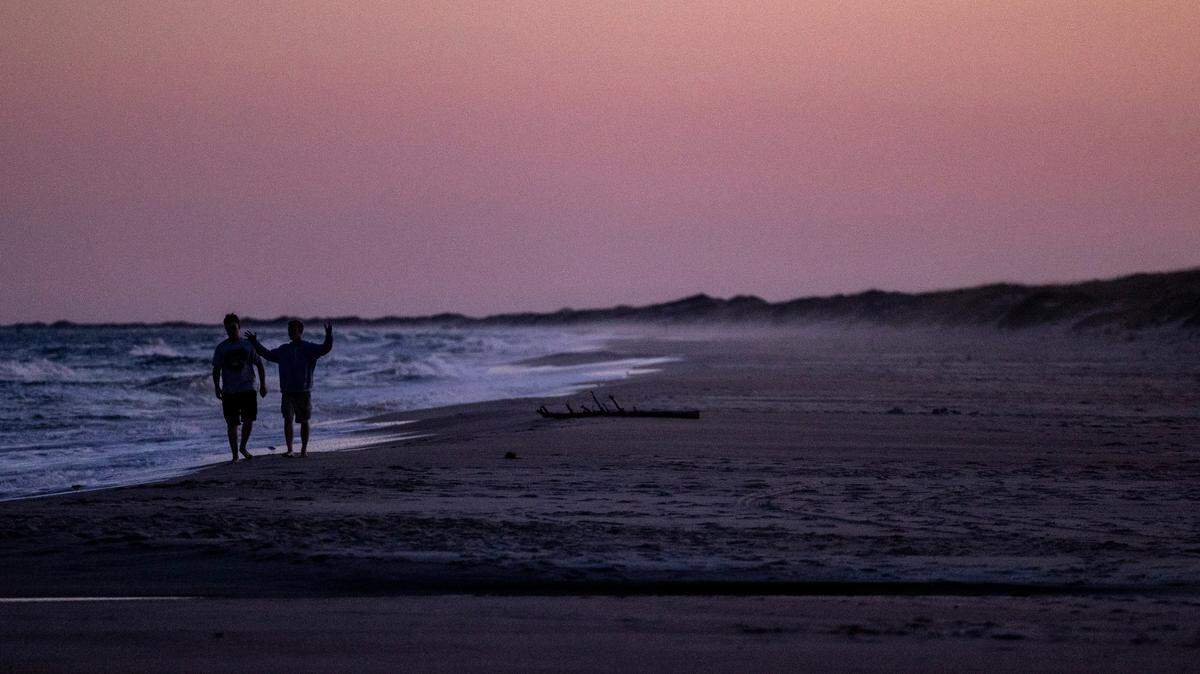
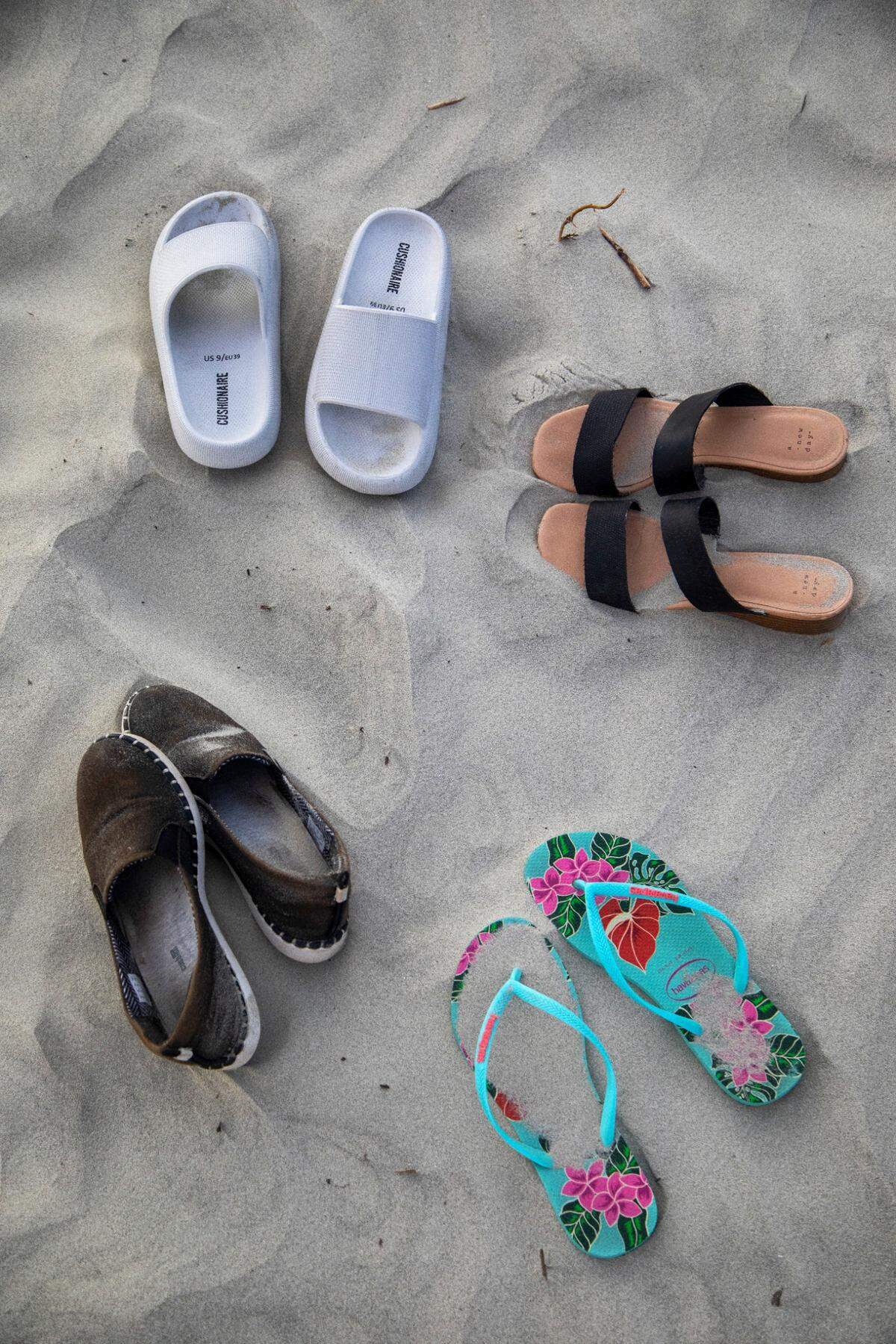
When last we spoke, I had just swept in from the northern coast of North Carolina, where I spent a week exploring just as the region was getting ready to greet tourists again. I arrived home with my head full of painterly images of sunsets and windswept maritime forests and my floorboard full of sand.
A week later, I shook out the floor mats, put a paycheck’s worth of gas into the tank and pointed all four cylinders toward the southern coast.
Keeping with a theme, I went in the direction of the big major attractions — the beaches — but made my way circuitously, the way the kids in the classic comic strip “The Family Circus” meander when taking out the trash.
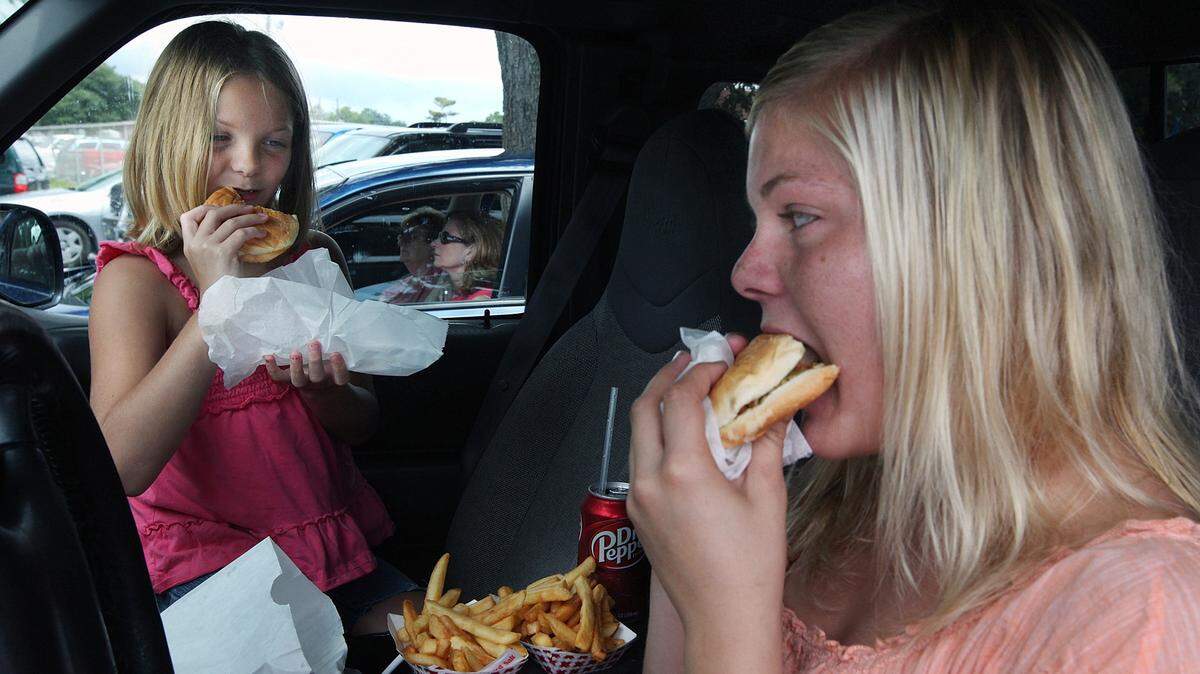
There’s a setting on an app for that. Google Maps allows you to “Avoid Highways” when plotting a route. Doing so automatically extends the ETA at your final destination; just accept that it doesn’t matter. While everybody else is jacking up their blood pressure in delays on I-40, you’ll be rolling down a two-lane toward a delicious handmade burger. You’ll all get to the beach eventually and with stiffer arteries.
Some of you will enjoy the ride.
This week’s itinerary
The main spots: Lake Waccamaw, Brunswick County beaches, then Pleasure Island (Fort Fisher, Kure and Carolina beaches in New Hanover County), Topsail Island (Topsail Beach, Surf City and North Topsail Beach in Onslow County) and the Cargo District in Wilmington.
The journey: From the Triangle to Elizabethtown, Lake Waccamaw and Holden Beach, using Holden as a launch pad to Sunset Beach, Ocean Isle and Oak Island. From there to Southport, where you catch a ferry to Fort Fisher and drive to Kure and Carolina beaches before going north to Topsail Island. Back home by way of Wilmington, because I forgot to stop there on the way north.
Length of trip: A week to hit everything, but at least two segments can be done as day trips.
From the Triangle, Elizabethtown is about two-thirds of the way to the southeastern corner of the state, a little less than a two-hour drive. Plan to arrive downtown around lunchtime, and head for Melvins’ Hamburgers and Hot Dogs, a storefront on Broad Street that started in 1938 as a grill for a pool hall.
I’d heard of the Carolina Burger nearly all my life, but never had one until this trip. Melvin’s just calls it a burger “all the way,” with mustard, chili, onions and slaw. Sit down at one of the booths to eat it or you’ll be wearing it.
Along Broad Street are several locally owned clothing stores and gift shops, plus a coffee shop.
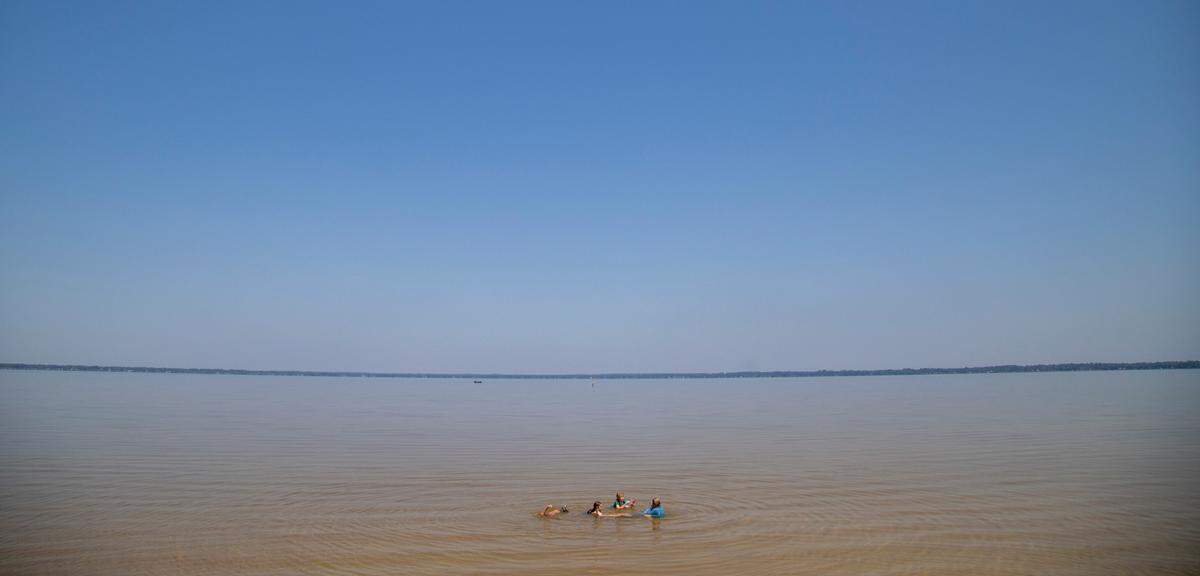
From there, make a 40-minute jog over to Lake Waccamaw State Park for a trail hike through the forest or along the shore of the largest of the water-filled “Carolina bays,” mysterious egg-shaped depressions for which scientists have never found a satisfactory explanation. The visitor center displays the skull and jawbone of an extinct baleen whale found in the lake in 2008, believed to be 2.75 million years old and the most complete example in the world. The remains were found when residents stubbed their toes on what they thought was a cypress stump.
The visitor center also has trail maps.
The Venus fly trap’s only home
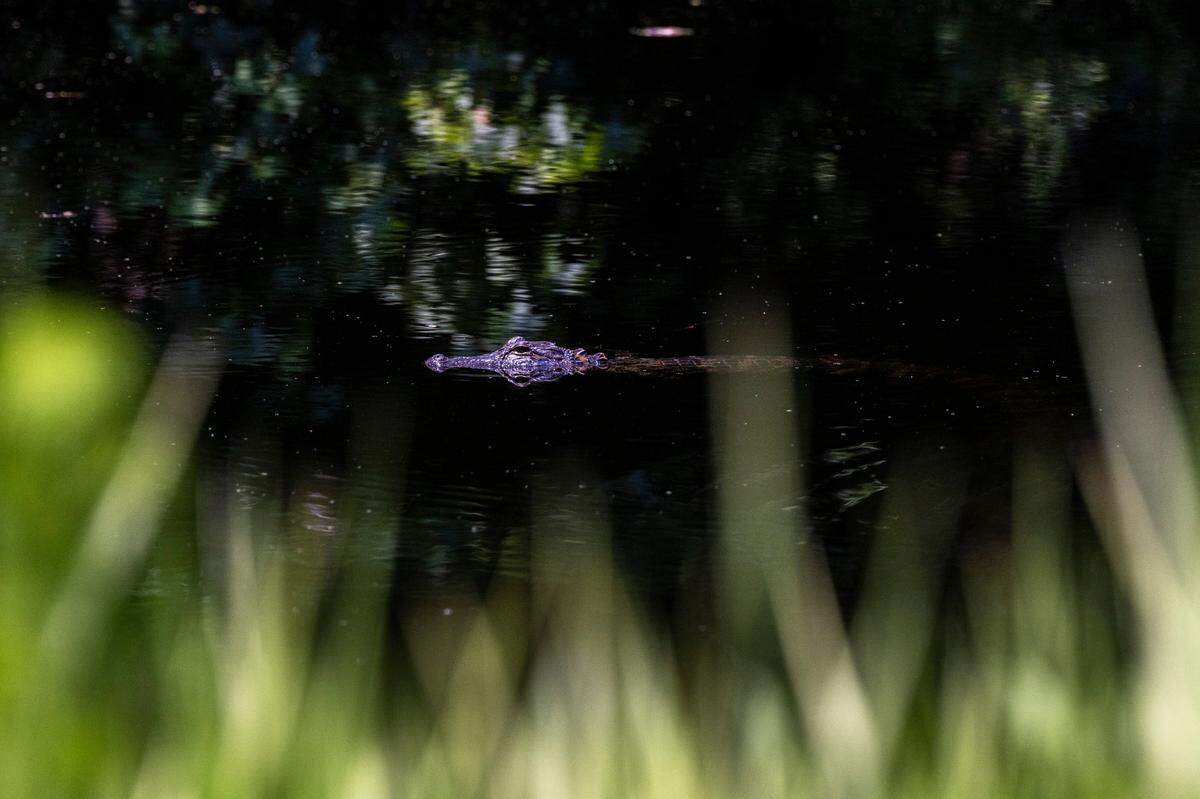
Melvin’s and Lake Waccamaw would make a great day trip, and did, in the 1800s when two passenger trains a day stopped at the Lake Waccamaw Depot and a steamboat took people out on the water. The change in topography and flora make the region feel much farther from Raleigh than it is, and even a short hike connects you to the place in a way driving past never can. The lake is one of the most biologically diverse in the state, and the park is home to the snappy, carnivorous Venus fly trap, which grows only in about a 60-mile radius of Wilmington. It’s a felony to take them, so look but don’t touch.
From Lake Waccamaw, it’s about 45 minutes to Holden Beach. There is one small motel on the causeway leading to the island, the Gray Gull, but hundreds of homes and condos are available through local real estate companies.
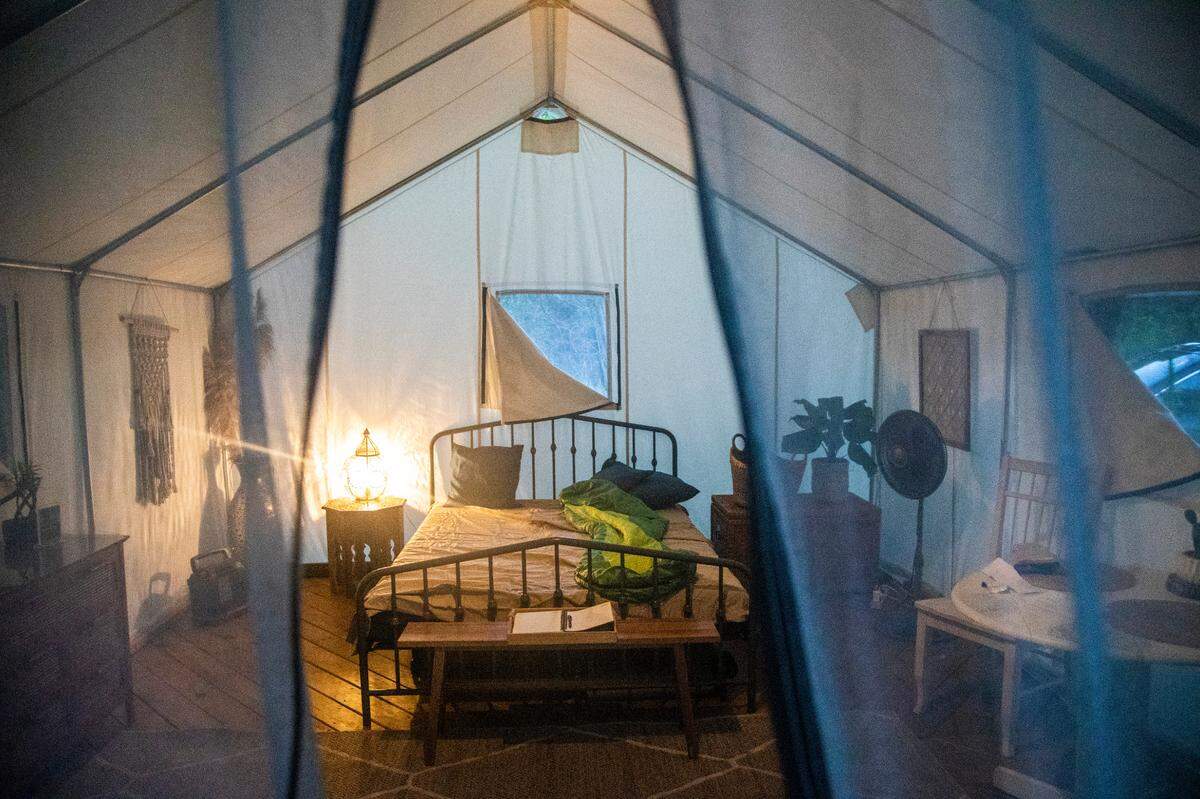
I “glamped” for two nights in one of three safari-style canvas tents on platforms on the back side of the Holden Beach RV Campground, on the mainland just a few minutes from the island. Listed separately from the campground as Holden Beach Glamping, the tents are offered in three sizes with distinct decorating themes. The largest has a portable air conditioner that runs off stored solar power, detracting slightly from the “Out of Africa” effect but probably making it easier to sleep. Fans, also solar-powered, cool the other two.
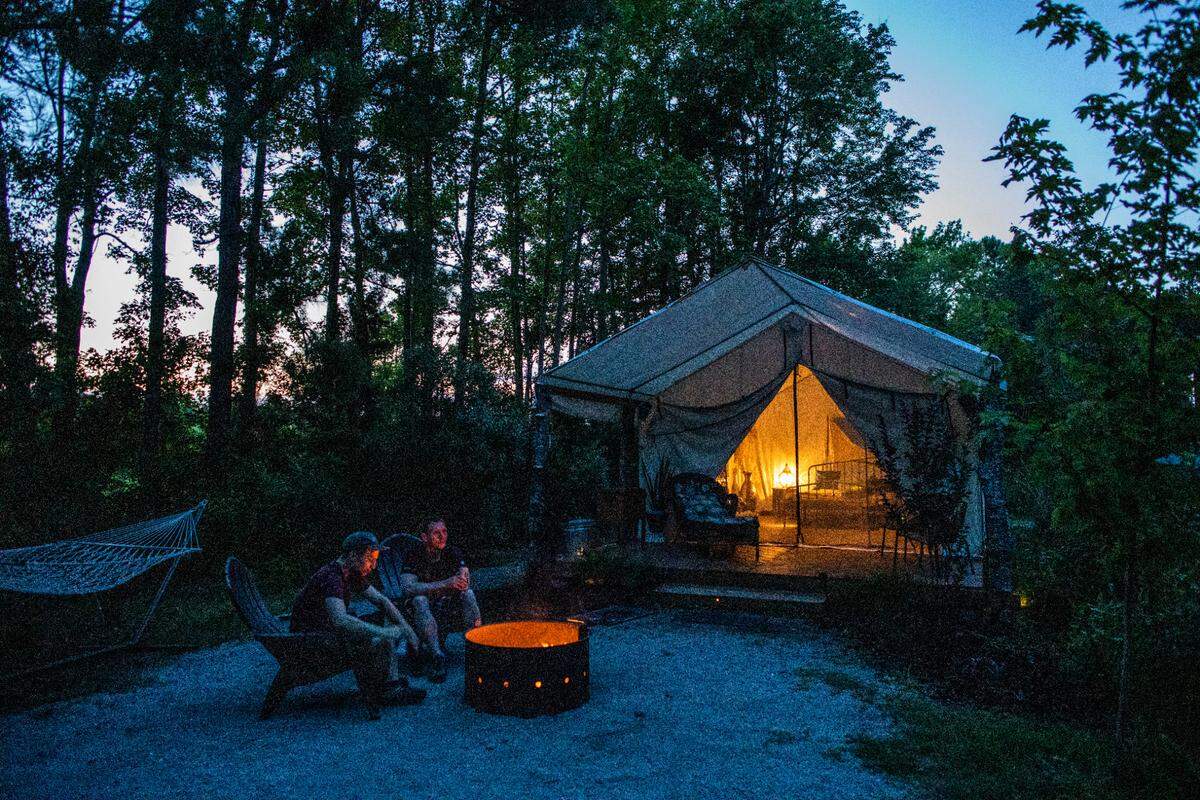
For now, all three share a porta-potty and handwashing station, but renters have access to the new, super-clean bathhouses with showers at the adjacent campground.
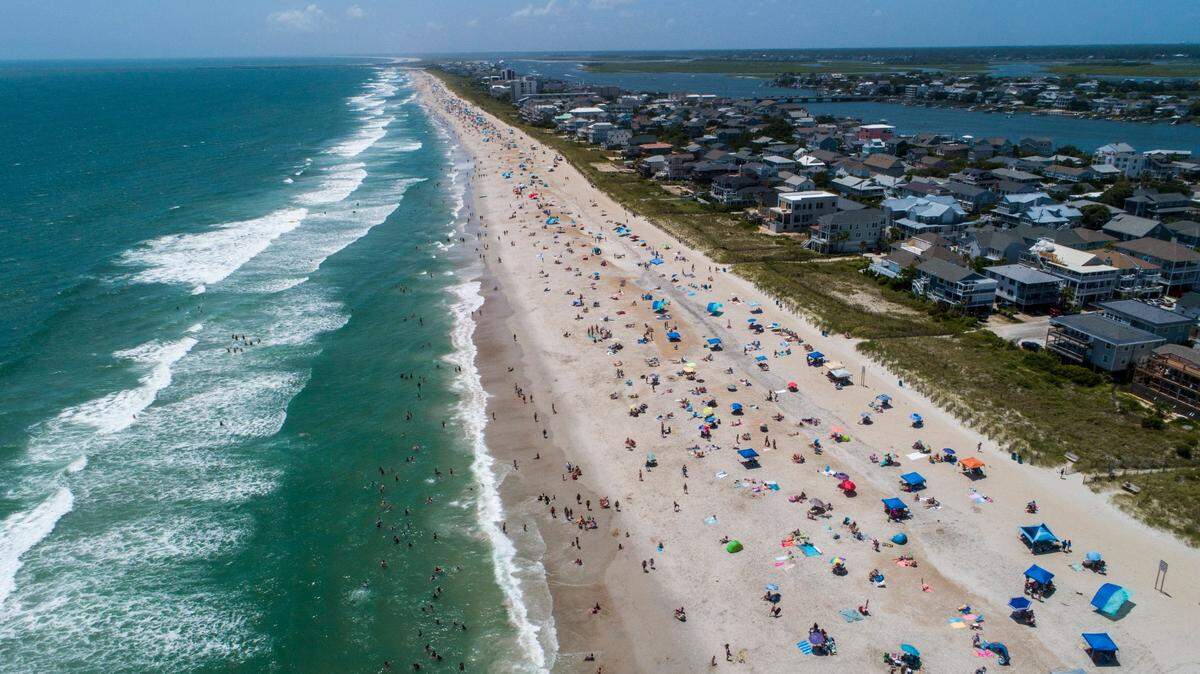
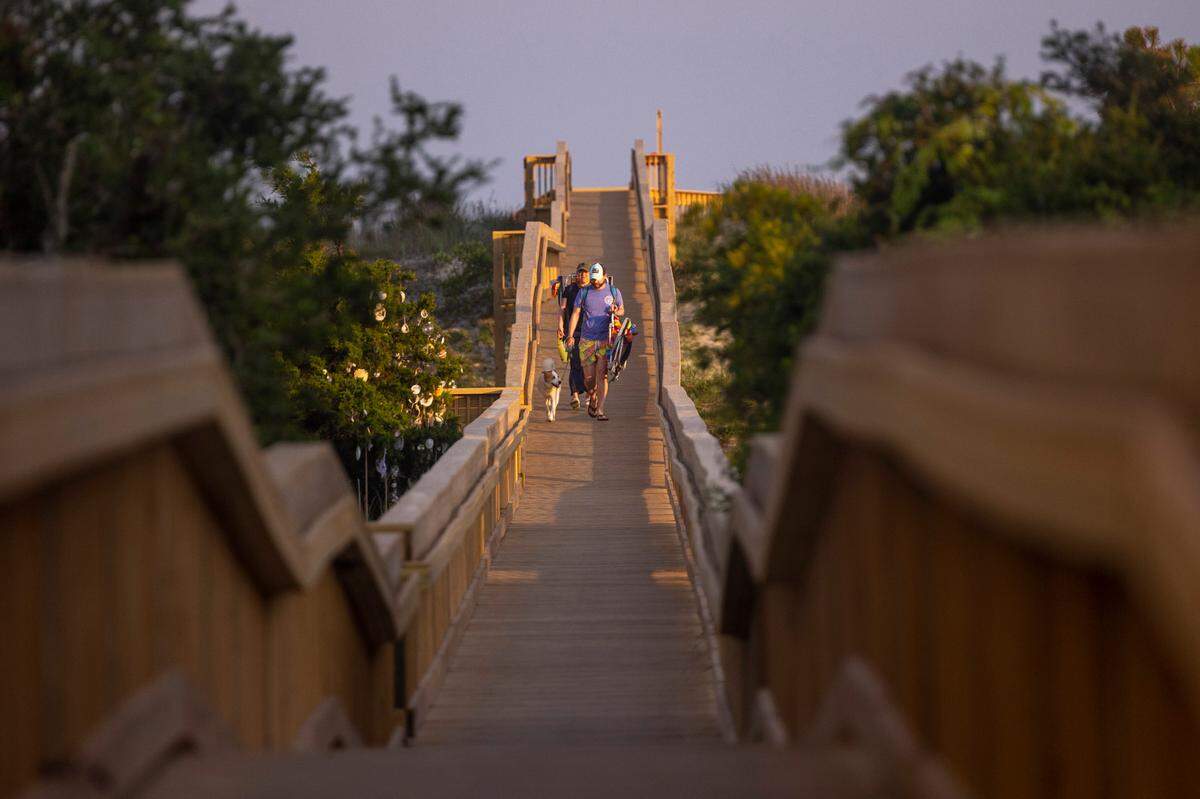
Though the campground runs a tram to and from Holden Beach, I drove over the Holden Beach bridge, parked on a side street and used a public beach access to reach the sand.
Beach parking: It’s complicated
A word about parking in North Carolina beach towns, including this one. In recent years, most beach towns have contracted with private companies to manage however much public parking they have. The towns establish the rates and the rules about where and when it’s legal to park. The parking companies collect the fees through phone apps or websites. Town police officers issue tickets for violations, and those fines are collected by the parking companies.
Families who don’t own beach houses and can’t afford to rent them rely on the state’s network of 459 public accesses to beaches and waterways, but they have to have a place to park in order to use them.
So you know: Holden Beach enforces parking rules the way some North Carolina towns are known to enforce speed limits. If a sign in Holden Beach says an area is intended for “low-speed vehicles” only, it means a golf cart. And if you happen to walk up on the officer as he finishes writing the ticket for your non-golf-cart, and he tells you that if you pay it the same day the $50 fine will drop by half, he is mistaken.
There is nothing the Holden Beach Police Department will do for you even if you skip lunch and go there in person, wrapped in a beach towel, because that’s all in the hands of the private company the town pays to manage the parking. The parking company also will claim to be unable to help, saying the town sets and enforces the rules.
None of that Catch-22 is the fault of Mermaid’s Island Grill near the bridge, so if you get a ticket, just pay it through the app and don’t skip lunch. The grilled shrimp in lemon butter will almost make you forget about the poorly worded parking signs and the abdication of municipal responsibility.
Just a couple of weeks before my arrival, Holden Beach had wrapped up a renourishment project that deposited sand on the beach pulled from somewhere apparently undisturbed for eons. As a result, wave action was turning up so many olive shells and concretized sea urchins that I sunburned my neck looking for treasures.
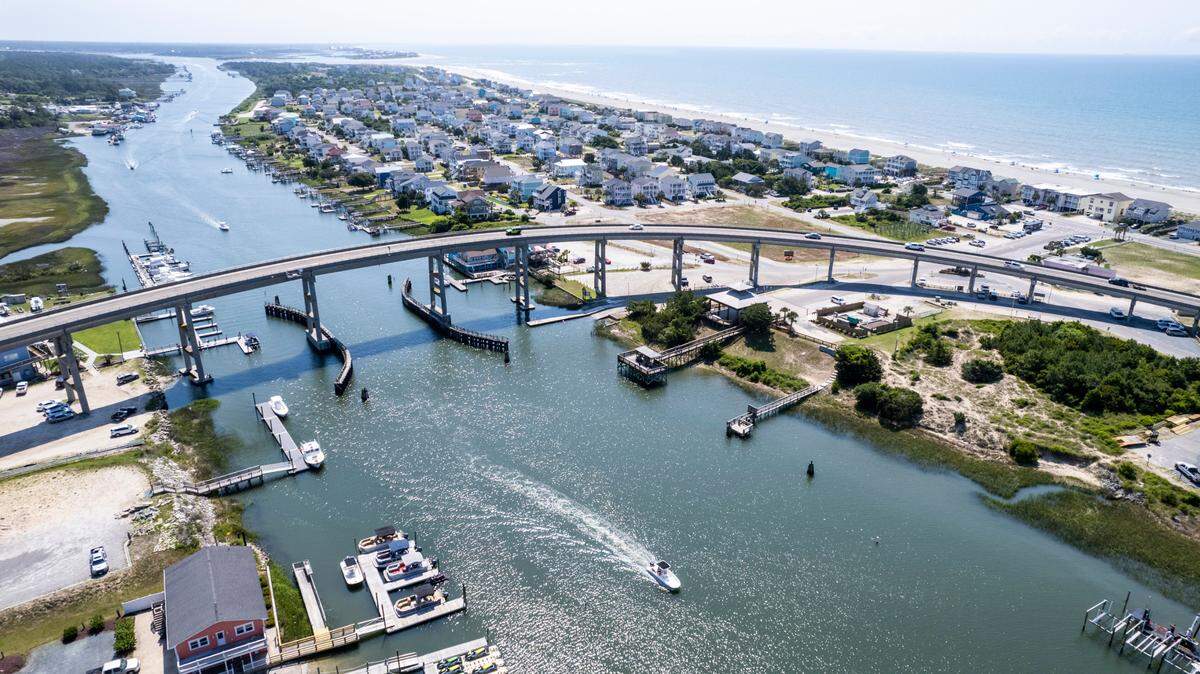
In the past, bridges leading to the islands along this part of the coastline — separated from the mainland by the Intracoastal waterway — were raised and lowered or pushed sideways mechanically to allow boats to pass, often creating long waits for cars trying to get on- or off-island. High-rise bridges have replaced those and traffic circles keep cars moving, mostly.
People still don’t want to leave once they get to one of the islands, but now it’s just because they like the vibe.
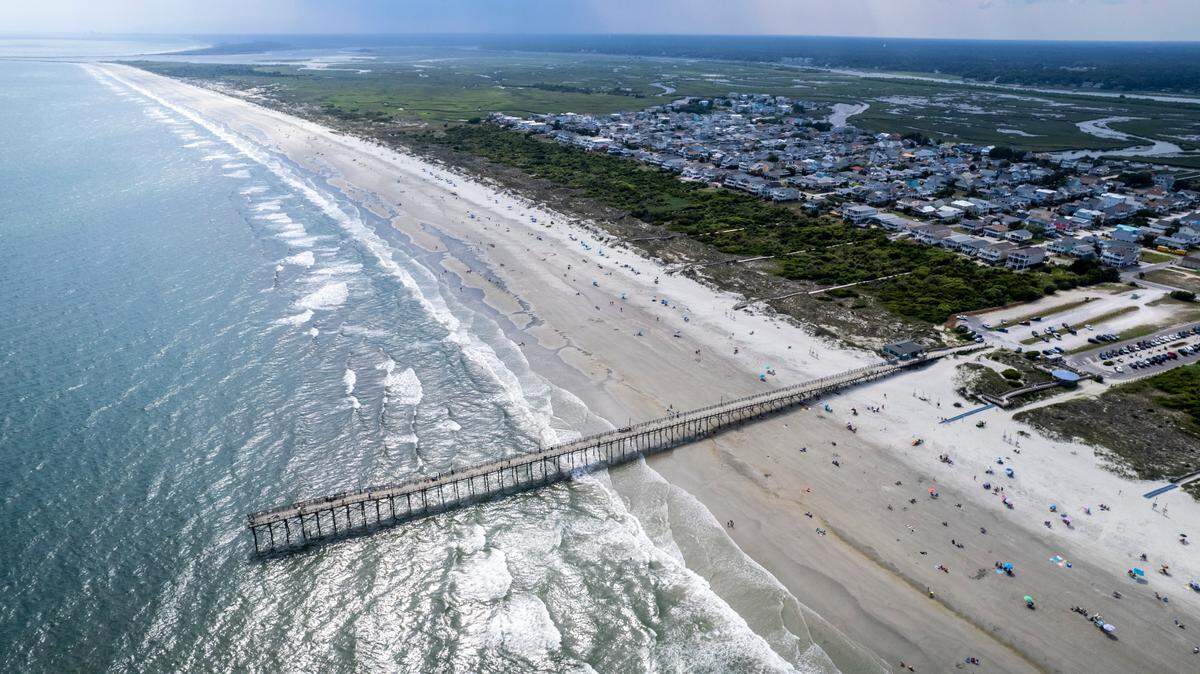
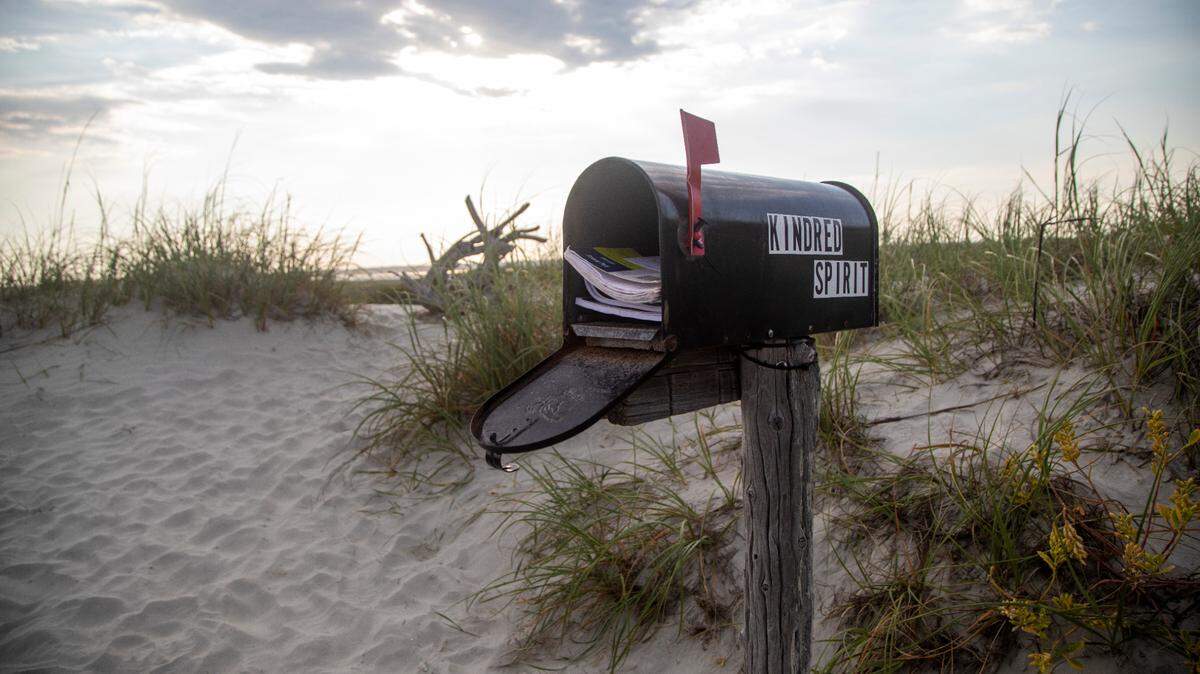
If you rent a house or hotel room for a week at one of the islands, you may not see a reason to hop to any of the neighboring ones. Between photojournalist Travis Long and me, we hit them all. He went to Sunset Beach, the southernmost developed island in the state, and from there hiked over to Bird Island, which the state purchased in 2018 and 2019 to make into a coastal reserve after years of litigation by previous owners who wanted to build on it. As it has for decades, Bird Island still features a mailbox for missives addressed to a “Kindred Spirit.”
A David Bowie light show and trippy dreams
While your sunburn heals, visit the Museum of Coastal Carolina in Ocean Isle Beach and learn about the creatures and ecology of the shoreline. Isaac, the docent on duty at the museum’s touch tank when I stopped in, could be a life coach. He was so supportive and patient even I reached into the water and made contact with both a sea urchin and a horseshoe crab. He high-fived me. (Isaac, not the crab.)
A few miles away on the mainland near Sunset Beach is the Ingram Planetarium, started by the same family that built the Museum of Coastal Carolina. It offers educational programs throughout the day and, several nights a week, laser shows choreographed to music.
I caught the newest and most graphically elaborate laser show the planetarium has created so far, set to the music of David Bowie. It was captivating, predictably bright and loud, and probably the reason I had trippy dreams that night back at my glamping tent.
Best to reserve a seat in advance and, while you’re at it, make a dinner reservation at nearby La Cucina Italian Grill for a great meal before or after. Order the calamari.
Locals also recommend the homemade breakfast biscuits sold at the Citgo gas station called the Quick’N Easy 5, on the mainland on Holden Beach Road Southwest. The morning I stopped, the cook had not shown up for work. I’d have opted for homemade ice cream for breakfast from Beaches–n-Cream instead, but they don’t open until noon. They do promise to stay open until “9:00 at least.”
Peaches, strawberries, ice cream and a waffle cone
Thwarted, I headed up Sabbath Home Road toward Oak Island, stopping for a sandwich at the Sea Biscuit Cafe in Supply. Tucked into a residential area, it lacks waterfront charm, but you can order the tasty fried green tomato BLT with homemade chips and ranch dressing to go, and enjoy it at a sheltered picnic table at nearby Jesse R. Caison Park.
I got my ice cream fix at OKI Scoop Shop & Donuts on Oak Island. On the server’s recommendation, I tried OKI Sunrise, with peaches and strawberries, in a homemade waffle cone.
Oak Island has tons of visitor-friendly beach-proximate public parking and more public beach accesses — 65 — than any other NC beach community. At least 11 of those are wheelchair accessible and at least nine have restrooms. The island also has the Hope Chest 3 Thrift Store, run by Hope Harbor to help fund its work for victims of domestic and sexual violence. If you break a wine glass at your rental, this is a good place to hunt for a replacement. (And you should replace it.)
From there it’s a short hop to the town of Southport, which has been hit directly or indirectly by more than 30 hurricanes since 1950 but wears it well. In fact, most of the times I had visited there until this trip were in anticipation of storms, and it was disorienting to see the businesses open and no waves crashing over the bulkhead along the Cape Fear River. A string of popular restaurants along the waterfront also serve as theater seating for sunset watchers, and the small downtown is crowded with shoppers and coffee drinkers.
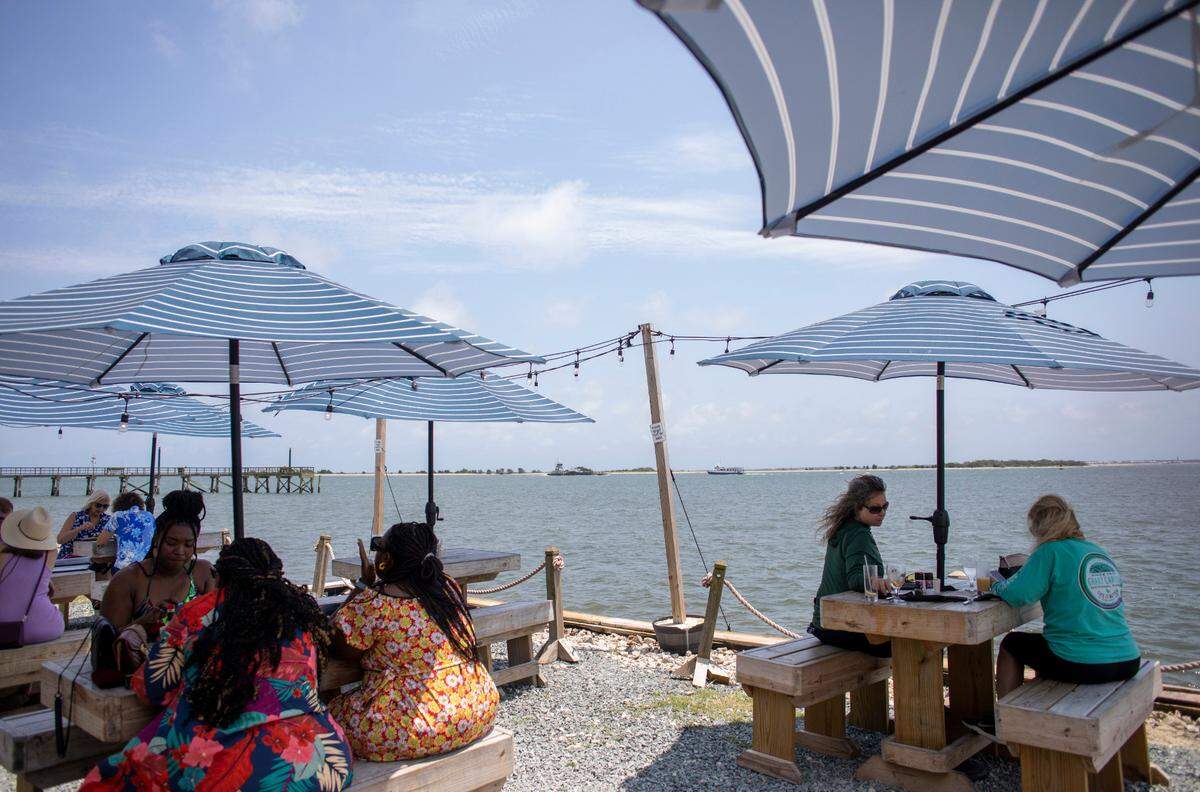
Southport hosts a terminal for the state-run ferry to and from Fort Fisher, a 35-minute ride across the Cape Fear. Fares are $5 for cars, $1 for bikes and it’s first-come, first-served.
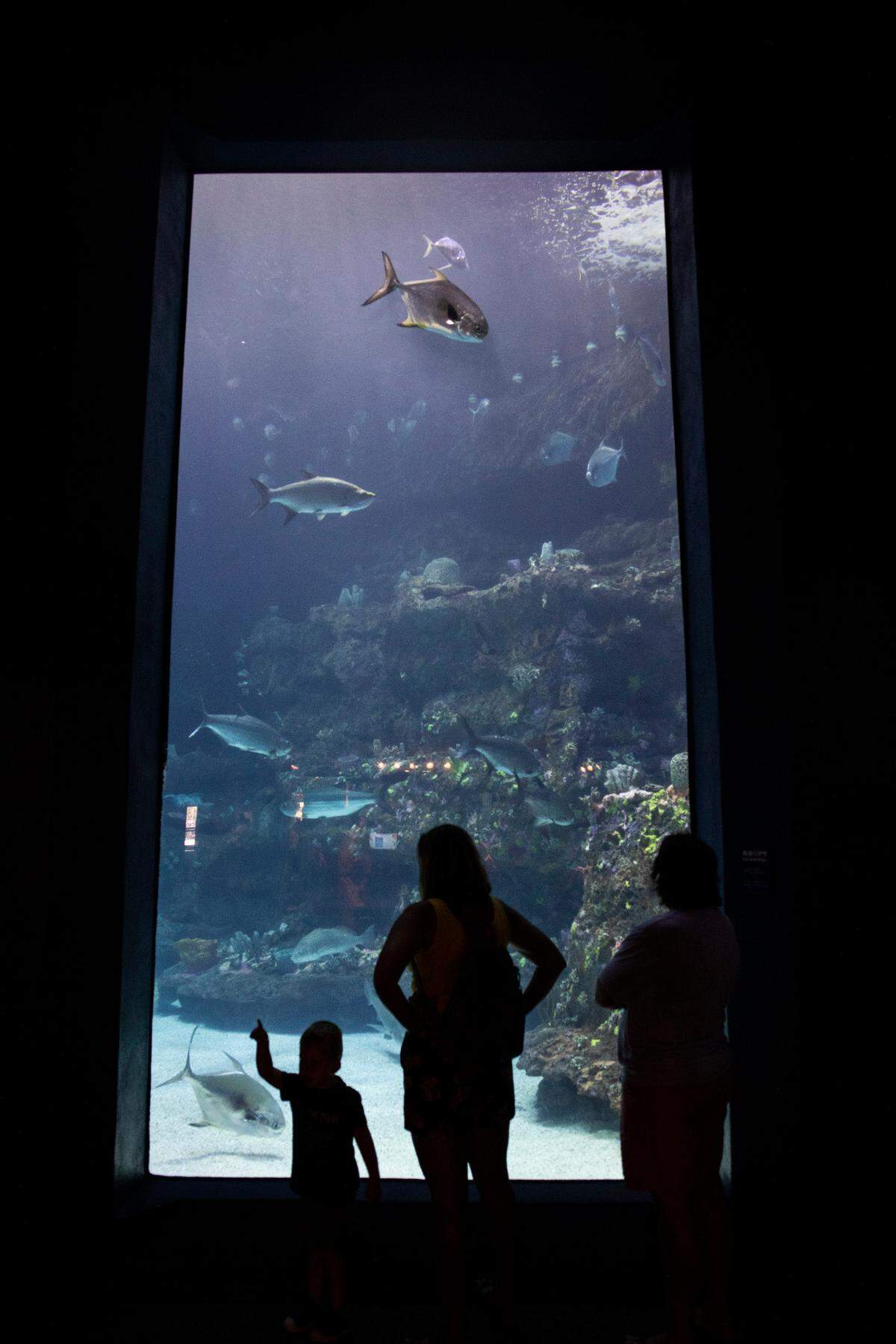
Depending on when you make the trip, you can go straight to the N.C. Aquarium at Fort Fisher or visit Fort Fisher itself and learn about the pivotal battle there.
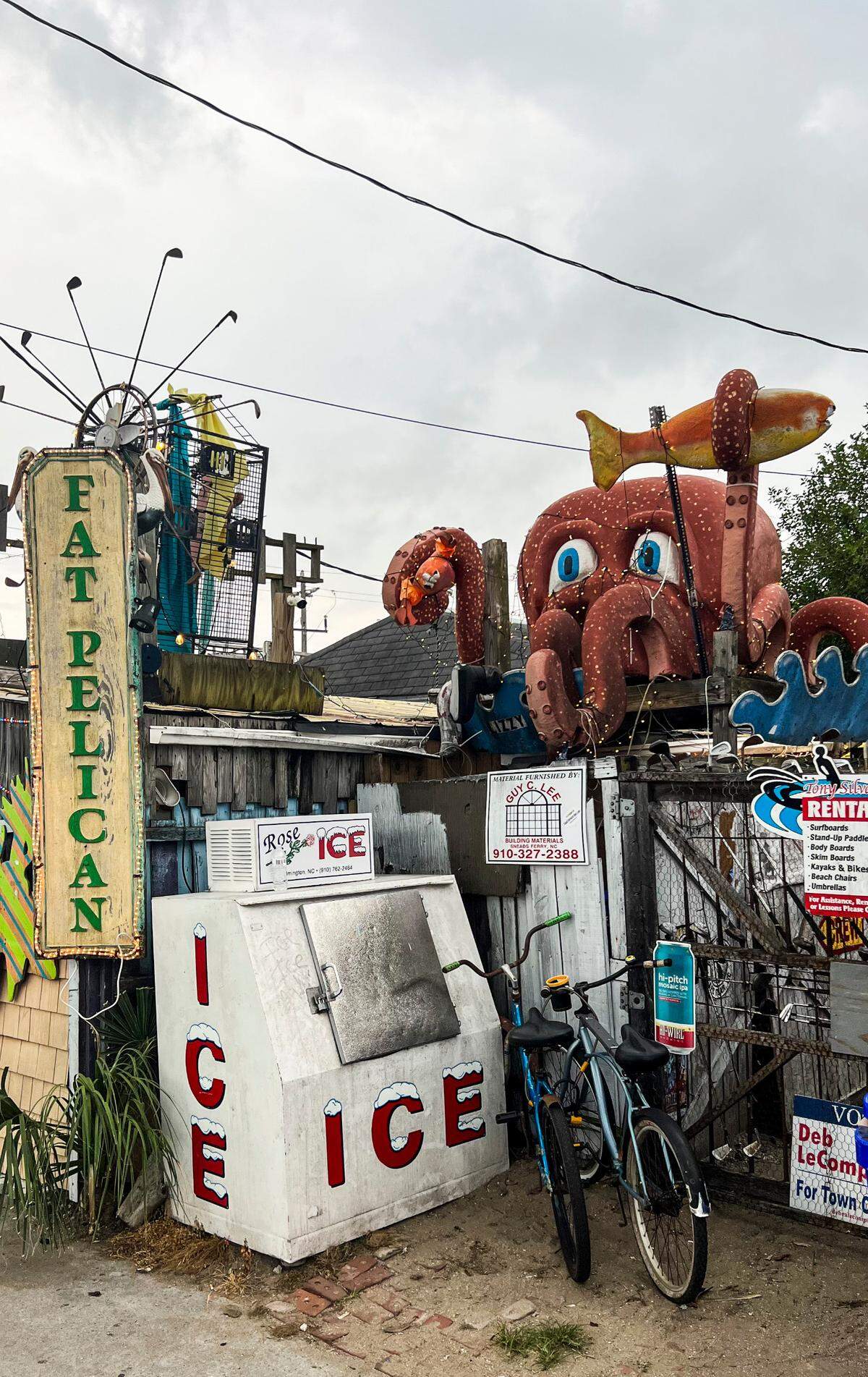
The Kure Beach Pier, open 24/7 during the summer, charges a nominal fee for fishing but walking out to enjoy the view is free. The pier house has great air hockey tables, a vast array of souvenirs and clever hats, and fresh popcorn served in a grease-spotted red-striped paper bag. You can almost smell it through the beach cam mounted on top of the building.
During the Jim Crow era, Freeman Beach on the island was one of a handful of oceanfront destinations where African Americans were allowed. Freeman Park is a remnant of the site.
Along the length of the island, houses, condos and motels provide accommodations for visitors. A handful of buildings survive from the 1930s and ‘40s, but most were built after Hurricane Hazel wrecked the island in October 1954. In the past decade, many older cottages have been torn down to be replaced with modern structures, but dozens of two-story motels and motor courts still stand.
Bruised, scraped and sooty, but unbroken
On this trip, I tent-camped at Carolina Beach State Park on the Cape Fear River side of the island. It wasn’t a Thursday, so there were no fireworks on the Carolina Beach Boardwalk, so I went to Michael’s Seafood Restaurant for a bowl of chowder and headed back to the campground where people gather to watch the sun set near the marina.
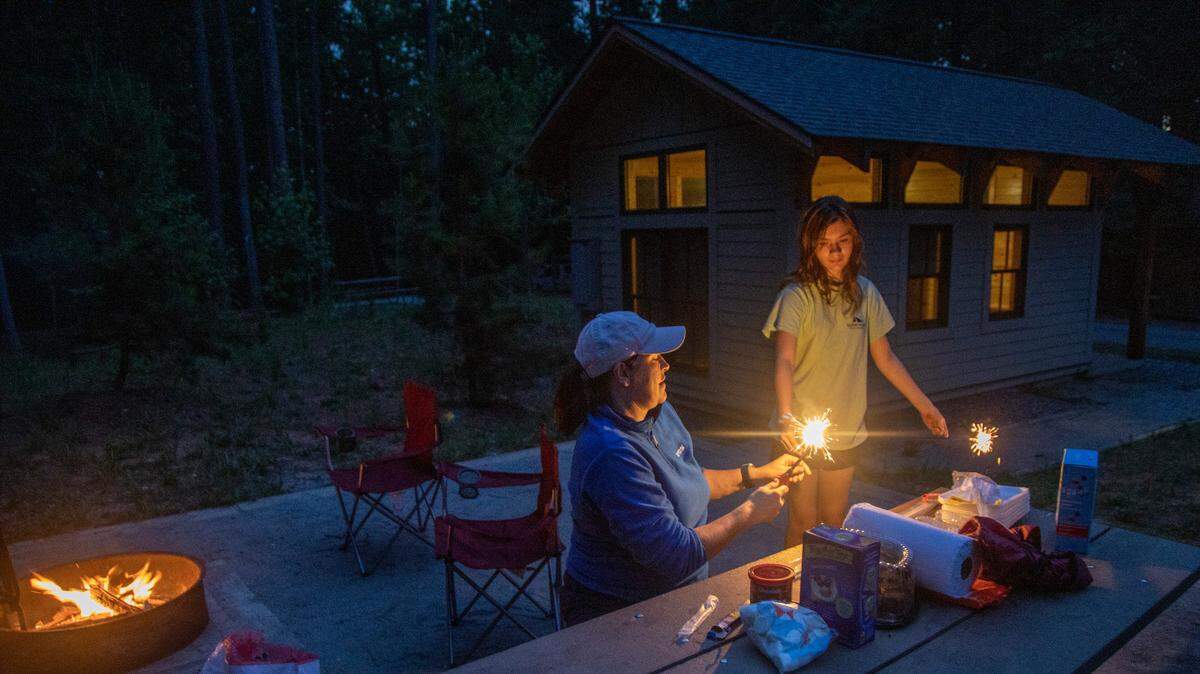
The campground, which has a half dozen cabins and some sites with electrical hookups, is heavily wooded and the sites are pretty private. I appreciated that the next morning when, as I was shaking dry my groundcloth in the breeze, I tripped on the fire pit and tumbled in backward. When the ride came to a complete stop, I was inside the iron fire ring, my arms and legs lapped over like I was riding it out to sea.
Bruised, scraped and sooty but unbroken, I climbed out and appreciated the fact there is no adventure without the risk of misadventure.
The Carolina/Kure Beach leg of the trip, minus the spectacular stumble, is a favorite day trip of mine. The trick is to arrive early and snag a parking space in one of the many municipal lots. Public restrooms are downtown, just off the boardwalk. If you only have time for one meal before going home, a fish taco at Nollies is a good one.
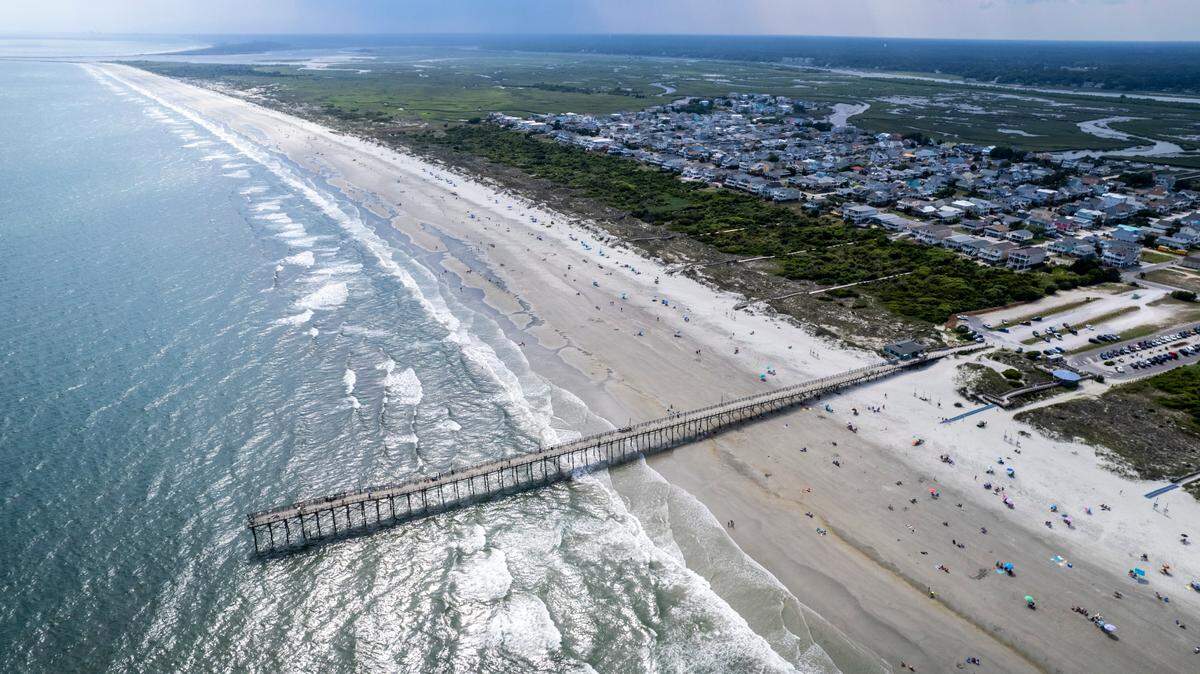
I must have been dazed from my fall as I left Carolina Beach, because I completely forgot to make a planned side trip to the Cargo District in Wilmington and went straight instead to Topsail Island. I rode down to Topsail Beach to visit the Missiles and More Museum which describes how the military used this barrier island and the role it played in the development of supersonic flight. The museum is housed in the building where the U.S. Navy secretly built guided missiles from 1946-48. Exhibits there also explain the square observation towers that can still be spotted around the island.
In Surf City, which sits between the towns of Topsail Beach and North Topsail Beach, stop at Hot Diggity Dogz for a “main street dog” with mustard, chili and onions, which you can eat at a painted picnic table. Locals also recommend Buddy’s Crab House and Oyster Bar, across the street on the ocean.
Need an NC map? I have plenty
It was my last night at the beach before finding the creases in the far-right sections of my state map and turning my attention inland. (By the way, do you need a new state map? I called and asked for one to replace my 2015 edition, and they sent me a box of 200.)
After a plate of fried oysters at Daddy Mac’s Beach Grille, I spent the night at the Loggerhead Inn, a refurbished late-’50s motor court in Surf City. It was clean and centrally located but they should warn people that the toilets flush so loudly you wonder if the military might still be testing ordnance.
Leaving the island, I backtracked to Wilmington to the Cargo District, arriving about the time its food hall and beer garden began to fill up with people getting off work and starting the weekend. The shtick is that the buildings are mostly reused shipping containers like the ones that come in through the busy Port of Wilmington.
I sniffed out the Blue Cup Roastery and got a tall something with a flavored syrup, and strawberry and blueberry muffins.
Just enough to buzz me back home.
Coming up: The next installment of Cruising Across Carolina, when I head inland, will be July 6.
This story was originally published June 22, 2022 at 6:00 AM with the headline "Cruising Across Carolina: Southern coast offers glamping, lasers and a missile museum."